

Welcome to Global Tech Council
Global Tech Council is a leading platform uniting tech enthusiasts and professionals from around the world to share knowledge, passion, and vision. Specializing in AI, Cybersecurity, and cutting-edge Technology certifications and courses, we empower individuals to fast-track their career growth with globally recognized credentials.
Global Tech Council — A proud extension of Blockchain Council's legacy of excellence.
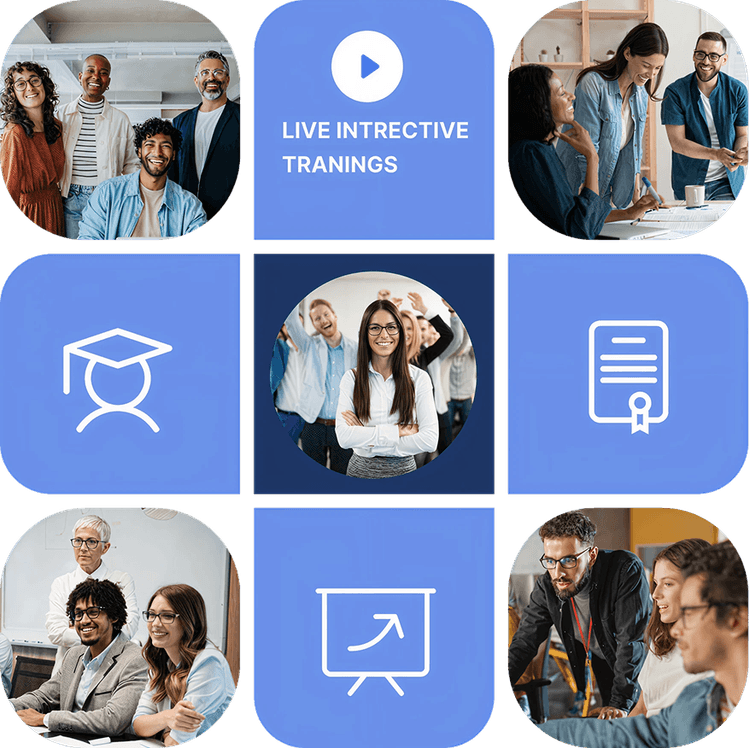
5,400+
Research Articles
500+
Certifications
1M+
Global Learners
145+
Countries
Everything you need to advance your career
Enroll today and gain access to exclusive features through our top-rated certifications in emerging technologies.
Meticulously Designed Curriculum
Benefit from a meticulously designed curriculum covering all aspects of emerging technologies.
Comprehensive Support
Receive comprehensive support throughout your training program.
Increase Employability
Increase your employability with industry-recognized certifications.
Lifetime Access
Enjoy lifetime access to all course resources.
Gain Recognition
Gain recognition by getting certified and featured on our website.
Join a Global Community
Join a dynamic global community of tech enthusiasts at Global Tech Council.
Most Popular Certifications
Why Must You Join?
Learn & Grow
Learn the breadth and depth of numerous in- demand, futuristic technologies from the industry leader Global Tech Council.
Certified
Get certified by Global Tech Council. Gain globally acknowledged certifications and escalate your career.
Succeed
After completing the certification you will get the highest paid jobs in your career.
Our Global Alumni

Alumni
50K+

Manuel Leuzzi
LinkedIn Followers: 145k+
"My Global Tech Council certification gave me a real edge at work. The material was practical, easy to follow, and directly relevant to the projects I handle every day. I genuinely feel more confident in my technical decisions now."

Sarah Chen
LinkedIn Followers: 98k+
"What stood out about Global Tech Council was how current and well-structured the curriculum is. It helped my team move from theory to actually shipping production-ready solutions, and the credential carries real weight with our clients."

David Okonkwo
LinkedIn Followers: 76k+
"I enrolled with Global Tech Council to formalize years of hands-on experience, and it paid off quickly. Within months of certifying I was leading a cloud migration project I would not have been trusted with before."

Priya Nair
LinkedIn Followers: 54k+
"As someone switching careers into tech, Global Tech Council gave me a clear, structured path instead of random tutorials. The certification opened doors in interviews that my self-taught background alone never could."

Lucas Bergmann
LinkedIn Followers: 61k+
"The instructors at Global Tech Council clearly come from industry, not just academia. Every concept tied back to a real-world use case, which made it far easier to apply what I learned the moment I was back at my desk."
Certified Agentic AI Developer™ Interactive Live Training
Certified Agentic AI Developer™ Interactive Live Training is a hands-on, instructor-led program designed to help professionals build, deploy, and manage intelligent AI agents and autonomous AI applications for modern enterprises.
Enroll NowCertified Agentic AI Expert™ Interactive Live Training
Certified Agentic AI Expert™ Interactive Live Training is a hands-on, instructor-led program designed to help professionals build, deploy, and manage autonomous AI systems across modern enterprises.
Enroll NowCAIE Certified Artificial Intelligence (AI) Expert® Interactive Live Training
CAIE Certified Artificial Intelligence (AI) Expert® Interactive Live Training is a hands-on, instructor-led program designed to help professionals master Artificial Intelligence technologies, intelligent automation systems, and enterprise AI transformation workflows.
Enroll NowFor Organizations
Enterprise-Grade Certification Solutions
Empower your workforce with globally recognized blockchain and AI certifications. Custom learning paths, dedicated account management, and detailed analytics for organizations of all sizes.

500+ Companies
Trust our programs
Begin Your Certification Journey
Join over one million professionals worldwide who have advanced their careers with globally recognized blockchain and AI certifications.