


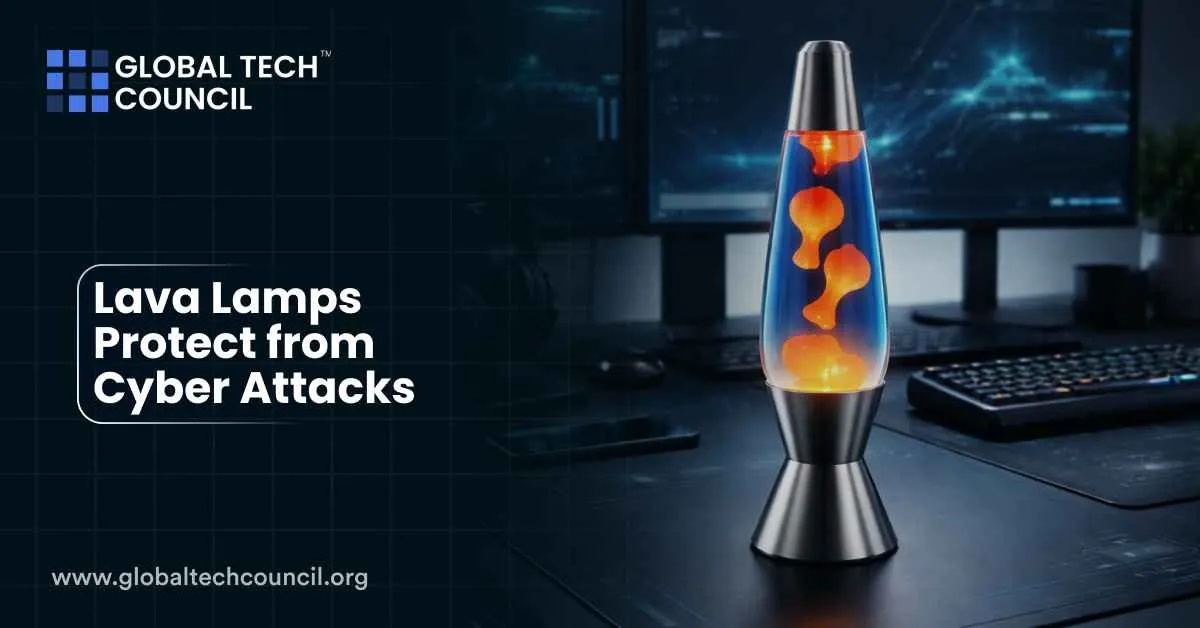
 The idea that lava lamps help protect the Internet often sounds like a joke or a marketing myth. Lava lamps do not block hackers, stop malware, or prevent phishing attacks. Their real role is far more subtle and far more important. Lava lamps are used as a source of physical randomness, also known as entropy, which strengthens cryptographic systems that secure modern digital infrastructure.
Understanding how security depends on reliable randomness is increasingly important for engineers and system designers. Many professionals build this foundation through structured learning such as a Tech certification, where the focus is on how real systems maintain trust and resilience rather than surface level security tools.
What the Claim Really Means
When people say lava lamps protect the Internet, they are using shorthand. Lava lamps are not defensive technologies like intrusion detection systems or firewalls. Instead, they provide unpredictable physical motion that can be converted into high quality randomness.
Cryptography relies on randomness to generate encryption keys, session tokens, and secure identifiers. If that randomness is weak or predictable, even the strongest encryption algorithms can fail. Lava lamps help reduce that risk by introducing a source of unpredictability that software alone cannot easily simulate or reproduce.
Why Randomness Is Critical to Security
Computers are deterministic machines. Given the same inputs, they produce the same outputs. This makes generating true randomness difficult. Most software based random number generators rely on algorithms that approximate randomness, often seeded with system data like timestamps or hardware signals.
In most cases, this is sufficient. However, at massive scale, rare failures matter. If a random number generator behaves incorrectly across many systems at once, attackers may be able to predict keys or tokens. That is why organizations operating global infrastructure look for additional, independent entropy sources.
Who Uses Lava Lamps in Practice
The most widely known real world implementation comes from Cloudflare, a major Internet infrastructure provider. Cloudflare operates a system commonly referred to as LavaRand, which uses physical chaos inside its offices as an added entropy source.
This setup is not decorative. It is part of a serious security architecture designed to strengthen cryptographic randomness. The lava lamps are mounted on walls in secure locations and continuously monitored by cameras.
How the Lava Lamp System Works
The system follows a clear and practical process.
First, a wall of lava lamps is installed. The wax inside each lamp moves unpredictably due to heat, fluid dynamics, and small environmental variations.
Second, cameras continuously capture images of the lamps. Each frame records a unique arrangement of blobs and motion.
Third, the images are converted into numerical data. Every pixel has a value, and those values change in ways that are extremely difficult to predict from one frame to the next.
Finally, this data is fed into cryptographic random number generation systems. The resulting randomness is mixed into entropy pools used by servers.
That randomness helps generate encryption keys, session identifiers, and other security sensitive values that protect data in transit and at rest.
An Important Design Detail
Lava lamps are not the only source of randomness used. Cloudflare has been clear that physical entropy sources supplement, rather than replace, other entropy mechanisms.
This approach is known as defense in depth. By combining multiple independent entropy sources, systems avoid relying on a single component that could fail under rare conditions. This layered thinking is similar to how distributed systems are designed to reduce reliance on any single point of trust. Engineers studying resilient architectures often explore these principles through a deep tech certification that focuses on system level robustness.
What Physical Entropy Helps Protect Against
Physical entropy sources reduce several categories of risk.
- They help protect against software bugs that weaken random number generation.
- They reduce systemic failures where identical systems generate similar keys due to shared flaws.
- They also mitigate risks during system startup, when entropy levels can be low and early keys may otherwise be generated under weak conditions.
In simple terms, physical randomness makes it harder for attackers to predict values that should be unpredictable.
What Has Changed in Recent Years
Cloudflare has expanded the concept beyond lava lamps alone. In March 2025, the company publicly described adding wave motion machines at its Lisbon office as another entropy source.
These machines generate continuous, chaotic movement similar to ocean waves. The motion is captured by cameras, converted into data, and mixed into cryptographic randomness, just like the lava lamps.
The key idea is diversification. Instead of relying on a single physical phenomenon, the system uses multiple forms of physical chaos from different environments. This reduces correlated risk and increases resilience.
Why Physical Entropy Still Matters
Modern hardware often includes built in entropy sources. These are effective, but organizations operating at global scale prefer additional independent inputs. Physical chaos is difficult to influence remotely and nearly impossible to predict without physical access.
For infrastructure providers handling massive volumes of encrypted traffic, even extremely rare weaknesses can have a large blast radius. Adding physical entropy reduces the likelihood that a single flaw compromises a wide range of systems.
What Lava Lamps Do Not Do
It is important to be clear about limitations.
Lava lamps do not prevent phishing, malware, credential theft, or denial of service attacks.
- They do not replace patching, monitoring, or access controls.
- They are not visible to users and do not change how applications behave day to day.
- They strengthen one foundational layer of security. That layer quietly supports everything else.
Why This Story Matters
The reason this example is often shared is not because lava lamps are unusual. It is because they illustrate how serious security engineering works.
Strong systems assume failure is possible.
- They add redundancy.
- They diversify inputs.
- They combine digital and physical safeguards.
This mindset appears across critical infrastructure, from encryption systems to distributed networks.
Teams designing secure platforms often pair technical understanding with broader organizational awareness. Communicating why such measures exist and how they protect users is part of building trust. Leaders often develop this perspective through frameworks taught in a Marketing and business certification, where transparency and credibility matter as much as technical rigor.
Broader Implications for Modern Systems
As systems become more automated and interconnected, the importance of unpredictability increases. AI systems, encrypted communications, financial platforms, and authentication services all depend on randomness at some level.
The lava lamp example shows that resilience sometimes comes from unexpected places. It also shows that physical reality can strengthen digital systems when software assumptions are not enough.
Conclusion
Lava lamps do not protect the Internet by stopping attacks directly. They protect it by contributing true physical unpredictability to cryptographic systems. That unpredictability strengthens the randomness used to generate keys, sessions, and secure identifiers across the web.
The real lesson is not about novelty. It is about resilience. Strong security systems are built by layering independent safeguards and by respecting the limits of purely digital assumptions.