

Why Every Business Needs An Artificial Intelligence Strategy?
 Toshendra Sharma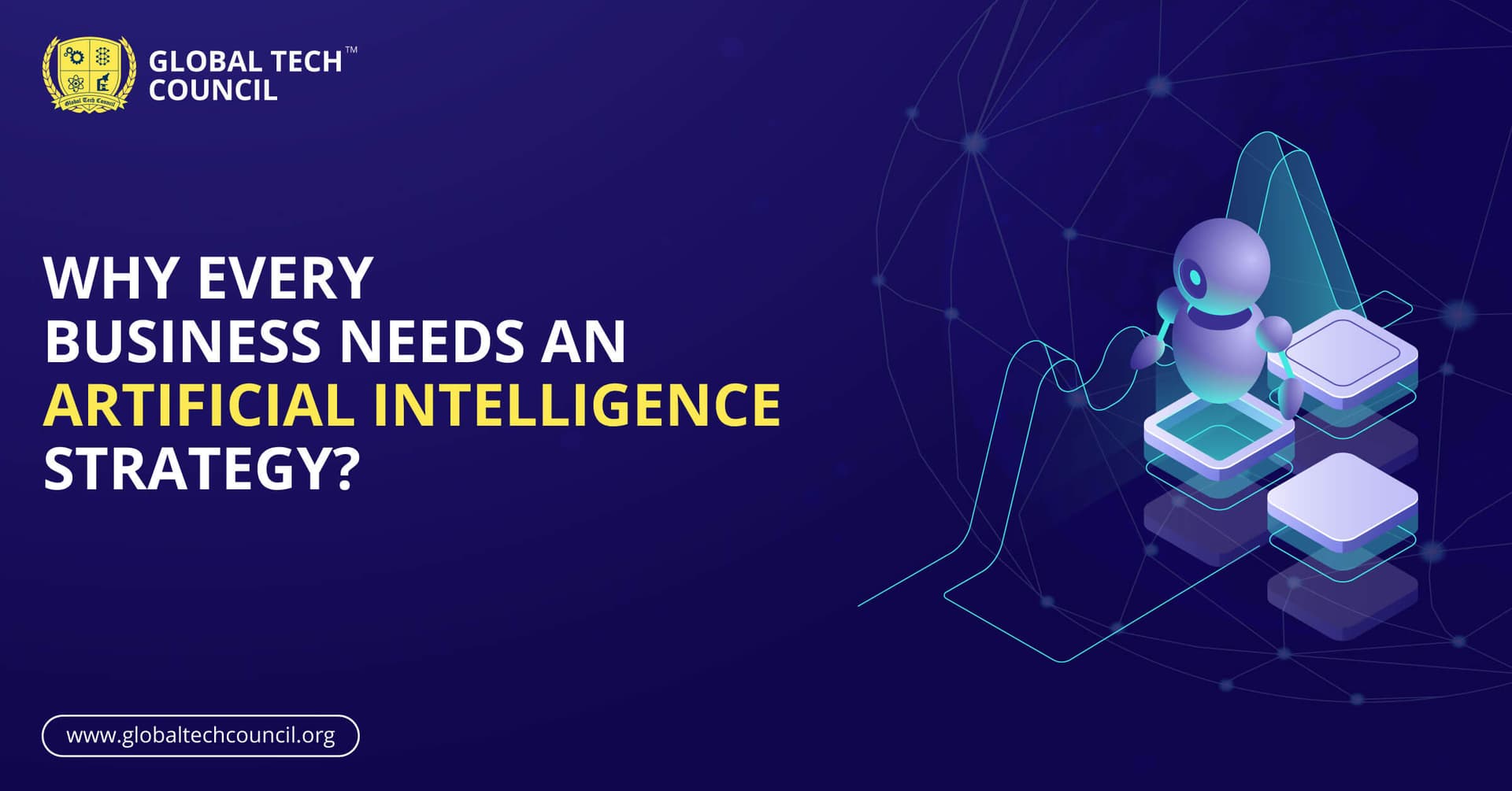
While Amazon is using artificial for enhanced personalized recommendations, Google is making self-driving cars. Undoubtedly, artificial intelligence is bringing transformation in many giant tech businesses and high-end corporates. However, we believe artificial intelligence can bring transformation in every business out there.
Although you may be wondering how AI can transform your small retail business or small-scale manufacturing unit, this technology has the power to bring a change in every industry. This technology is not far away from your reach, it is approaching in your direction rapidly.

However, for that to happen, every business needs an AI strategy first. Start by defining the goals of your organization, which focus on business priorities and objectives. Generally, it is observed that most businesses either want to make intelligence services/products or formulate intelligent process or do both. Let’s understand both the factors in detail.
Intelligent Services and Products
One of the greatest benefits of AI that we all know is its ability to make machines intelligent. Imagine how incomplete our life would be without health bands, smartphones, and personal assistants to guide and help us. These technological advancements make day-to-day working extremely hassle-free. Hence, every organization is trying to find a way to make their products and services more intelligent. Take Alexa, for instance. Many people rely on this small piece of technology that can do wonders.
Keeping aside how AI empowers new products to behave like humans, AI is enhancing traditional products as well. For example, the cars we drive now are 10 times more intelligent and smarter than cars that were available a decade back. Many functionalities are powered by AI, which is simply making our lives easier. Hence, every business that offers services can use AI to enhance customer experience and the one that offers products can improve product usefulness.
Intelligent Processes
Automating repetitive task through artificial intelligence helps many businesses optimize their working. These processes may include suggesting a relevant product to the users based on their purchase history and internet searches. Honestly, every organization can differently utilize artificial intelligence in a different manner. For instance, banking organizations can detect the chances of fraud by tracking activities every second. A credit score company, on the other hand, may use AI to make better decisions for assessing borrower’s capability of returning a loan. Many manufacturing companies are using AI to detect the machines that need repair or are about to encounter failure. Chatbots are the most common application of AI we see today. It is everywhere and almost every customer-service business is using the chatbots for enhancing the customer experience.
Implementing AI in Your Organization
Every organization can utilize artificial intelligence in some of the other manners. AI does not always mean high-tech life-like robots, it is rather ingrained in the simplest tech products of our life. Using the capabilities of AI, businesses can improve customer experience, enhance functioning by automating repetitive tasks and make advanced AI-powered products.
Related Articles
View All
Artificial Intelligence
How can you use Artificial Intelligence in Business?
Artificial intelligence can help businesses automate repetitive work, improve customer service, personalize marketing, forecast demand, detect fraud, analyze data, optimize supply chains, and support faster decision-making. Businesses are also adopting generative and agentic AI for document processing, software development, finance, HR, and workflow automation, though governance and human oversight remain important.
Artificial Intelligence
How Can Blockchains Transform Artificial Intelligence?
Blockchain can complement artificial intelligence by providing tamper-resistant records, decentralized identity, data provenance, and programmable smart contracts. Together, the technologies can support auditable AI workflows, secure data sharing, decentralized AI marketplaces, and clearer tracking of models and digital assets. The combination has potential, although scalability, privacy, governance, and integration remain significant challenges.

Artificial Intelligence
How Artificial Intelligence Can Shape the Future of Transportation?
Artificial intelligence can shape the future of transportation through autonomous vehicles, smarter traffic management, predictive maintenance, route optimization, and safer mobility systems. AI can also help public transit agencies analyze real-time data, improve scheduling, reduce congestion, and make transportation networks more efficient and responsive.
Trending Articles
The Role of Blockchain in Ethical AI Development
How blockchain technology is being used to promote transparency and accountability in artificial intelligence systems.
AWS Career Roadmap
A step-by-step guide to building a successful career in Amazon Web Services cloud computing.
Top 5 DeFi Platforms
Explore the leading decentralized finance platforms and what makes each one unique in the evolving DeFi landscape.