


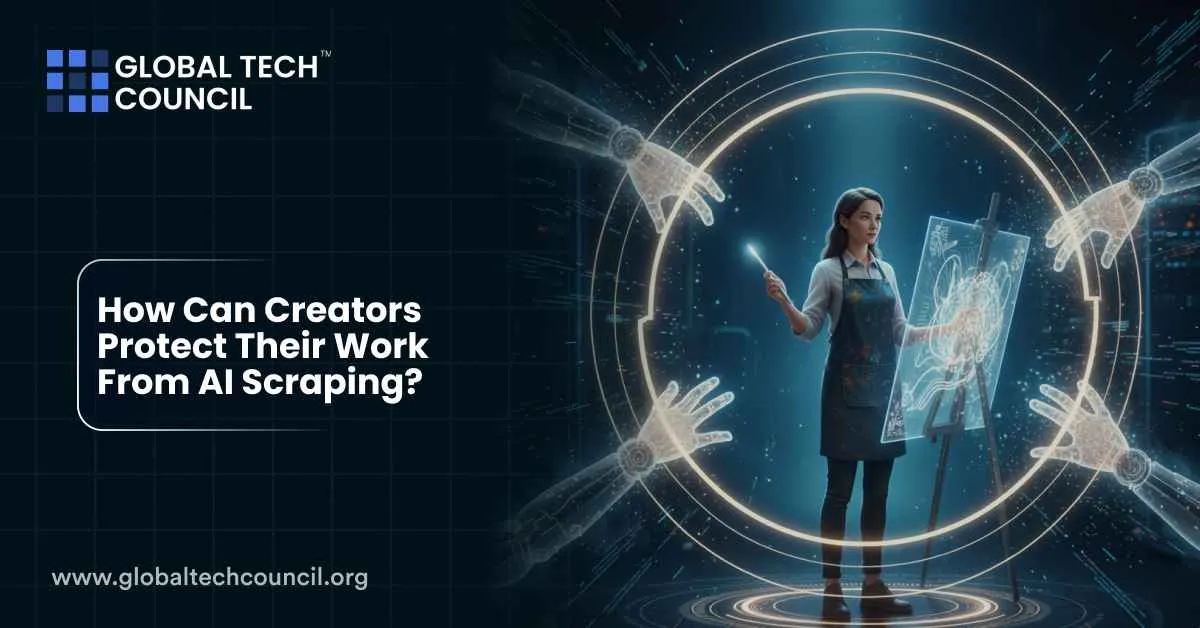
 The rise of generative AI has brought with it a new problem: widespread scraping of online content to train models. Articles, images, and even entire datasets are pulled from the web—often without the consent of the creators who made them. This practice sparks concerns about copyright, control, and fair use. For those who want to understand the mechanics of AI models and their relationship to online content, an artificial intelligence certification can provide the necessary background to navigate both risks and opportunities.
Why AI Scraping Is a Concern
AI developers often argue that if something is publicly accessible online, it can be used for training. Yet legal challenges show the opposite. A notable example is Thomson Reuters v. Ross Intelligence, where the court ruled against the use of copyrighted legal summaries for AI systems under “fair use.” At the same time, governments are stepping in. The EU’s AI Act requires providers to respect intellectual property rights and, in some cases, seek licenses before using copyrighted material.
For creators—whether they are writers, photographers, musicians, or educators—this means that protecting their work is no longer optional. Without proactive steps, content risks being absorbed into datasets without credit or compensation.
Strategies to Protect Work
The first line of defense is technical. Using tools like robots.txt or “do not scrape” protocols helps signal that content should not be accessed by crawlers. But these aren’t foolproof, since not all crawlers respect such restrictions. Metadata and invisible watermarking are also gaining traction. Embedding ownership data in images, videos, or documents strengthens the case for attribution and can serve as evidence in legal disputes.
Contractual protections are equally important. Clear terms of service or licensing agreements make it explicit when and how content can be used. This gives creators leverage if their work is misused. Monitoring tools also help track whether content has been scraped or reused without permission. Reverse image searches, plagiarism checkers, and even AI-powered detection systems are emerging to help creators act quickly when violations occur.
Balancing Visibility and Protection
The challenge is that protecting content sometimes reduces exposure. Blocking crawlers can affect search engine visibility, making content harder to discover by legitimate audiences. Creators need to weigh the risks: protect aggressively and reduce reach, or stay open but vulnerable to scraping. This balance is particularly tricky for small businesses or independent artists who rely heavily on visibility for growth.
Building Skills for the AI Era
Beyond technical fixes, professionals can strengthen their understanding of AI and content protection through education. A deep tech certification offers insights into advanced systems like AI and blockchain that shape how digital rights are enforced. For those handling datasets, a Data Science Certification provides tools for assessing how data is collected and used responsibly. Leaders in creative and commercial industries may prefer a Marketing and Business Certification, which ties AI awareness to brand strategy and customer trust.
Ways Creators Can Protect Their Work From AI Scraping
| Method | How It Helps |
| Robots.txt / opt-out protocols | Signals crawlers not to access certain content |
| Clear licensing terms | Establishes legal grounds against unauthorized AI training |
| Metadata embedding | Tags ownership into digital files for attribution |
| Invisible watermarking | Creates tamper-resistant ownership markers |
| Paywalls and access controls | Restricts public crawling of valuable content |
| Opt-out options on platforms | Lets creators refuse inclusion in AI datasets |
| Monitoring and detection tools | Alerts creators to unauthorized reuse of their content |
| Takedown requests & legal notices | Enforces rights when violations are found |
| Protective perturbation tools (e.g., ExpShield) | Makes scraped text harder to exploit in model training |
| Dual watermarking for images | Strengthens evidence for copyright enforcement |
Conclusion
AI scraping is reshaping how creators think about ownership online. While technology makes it easier to produce and share content, it also makes it easier for that content to be repurposed without credit. The solution is not a single tool but a combination of technical safeguards, legal protections, and proactive monitoring.
Leave a Reply