


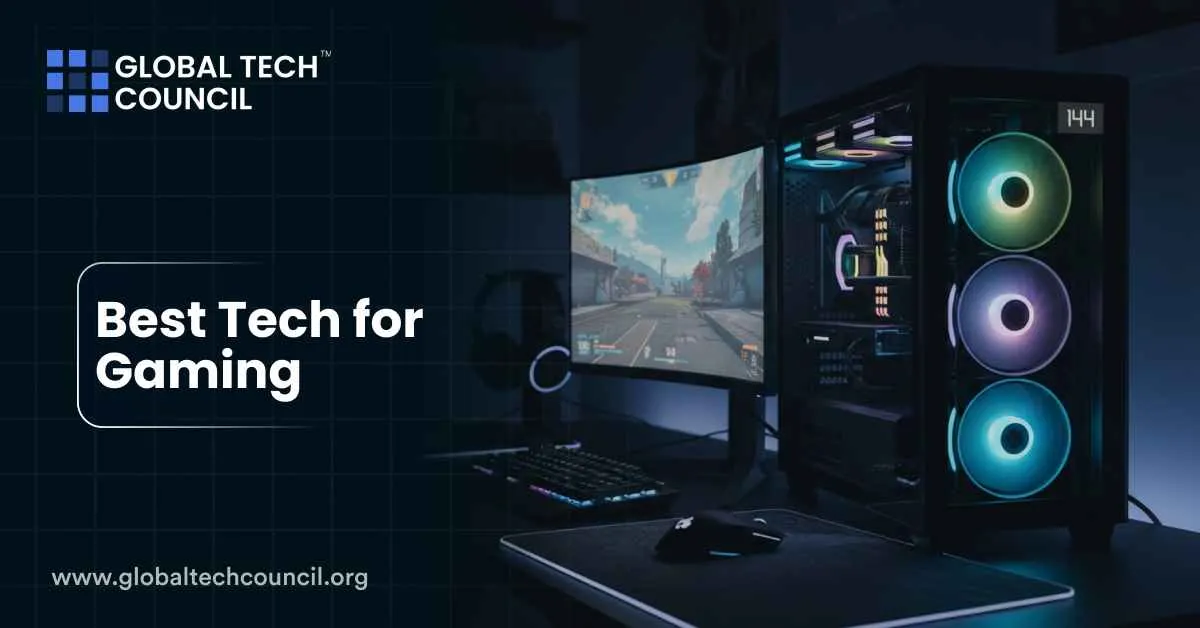
 Best tech for gaming is not about chasing the most expensive hardware or the newest buzzword. It is about choosing the right combination of systems, devices, and platforms that actually improve how games run, look, and feel in real-world use. Over the last few years, gaming technology has shifted from single devices to entire ecosystems where hardware, software, networks, and services work together.
This shift has made it important to understand gaming as a technology stack rather than a single product. Many people exploring this space begin by understanding how computing systems, operating environments, and performance metrics fit together through structured learning such as the Tech Certification, which explains the technical foundations behind modern digital platforms, including gaming.
How the Definition of Best Tech for Gaming Has Changed
Ten years ago, best tech for gaming mostly meant owning a powerful console or a high-end gaming PC. Today, that definition is broader. It includes CPUs and GPUs, but also displays, controllers, cloud platforms, operating systems, network infrastructure, and even AI-driven software tools.
This change became more visible between 2023 and 2025, when cloud gaming matured, handheld gaming PCs entered the mainstream, and display technology pushed refresh rates far beyond what most players thought possible.
Processors and Graphics Cards That Set the Standard
At the core of any gaming setup is processing power. In 2025, two CPUs consistently appeared at the top of gaming benchmarks.
The Intel Core i9-14900K gained attention for its strong single-thread performance, which directly affects frame rates in many AAA games. On the AMD side, the Ryzen 9 7950X3D stood out because of its 3D V-Cache technology, which improved performance in CPU-intensive titles such as large open-world games and real-time strategy games.
Graphics cards remained the biggest factor for visual quality. NVIDIA’s GeForce RTX 4090 Ti dominated 4K gaming benchmarks throughout 2025, particularly in ray-traced titles using DLSS 3.5. AMD’s Radeon RX 7900 XTX offered strong competition at 1440p, especially for players focused on high frame rates rather than maximum ray tracing.
These components defined what high-end gaming looked like on PCs during this period.
Consoles and Handhelds Redefine Flexibility
Consoles continued to play a major role in best tech for gaming, especially for players who value simplicity and exclusive titles. The Xbox Series X and PlayStation 5 remained dominant through 2025, delivering consistent 4K performance with fast SSD-based load times.
A major shift came on 16 October 2025, when Asus and Microsoft Gaming released the ROG Xbox Ally. This handheld gaming PC ran Windows 11 and supported full PC games without streaming. With AMD Ryzen Z2 processors, up to 24 GB of RAM on higher-end models, and a 120 Hz Full HD display, it showed that handheld gaming no longer required major compromises.
This release marked a clear moment when portable gaming became part of the best tech conversation rather than a secondary option.
Displays That Changed Competitive Gaming
Displays became one of the most overlooked but important pieces of gaming technology.
On 12 December 2025, Philips and AOC announced dual-mode gaming monitors capable of reaching 1,000 Hz refresh rates at 1080p, with an alternative 500 Hz mode at 1440p. These monitors targeted esports and competitive players, where smoother motion and reduced input latency can affect performance outcomes.
For players focused on immersion rather than competition, 4K monitors with 144 Hz refresh rates and HDR support remained popular, especially for story-driven and visually rich games.
Cloud Gaming Becomes Part of the Best Setup
Cloud gaming moved from experimental to practical between 2024 and 2025.
NVIDIA GeForce NOW upgraded its service to emulate RTX 5080-class performance in the cloud, offering resolutions up to 5K at 120 frames per second. By mid-2025, the platform supported over 4,500 games, including many major PC titles. This allowed players to access high-end gaming without owning expensive local hardware.
Xbox Cloud Gaming also expanded its reach, particularly for console titles, making it easier for players to switch between devices without losing progress.
Best tech for gaming now often includes a cloud component, especially for players who value flexibility.
Operating Systems and Software Catch Up
Gaming performance is no longer just about hardware. Software optimization matters.
Microsoft confirmed that Windows 11 would receive dedicated gaming performance updates in 2026, including improved background task management and system-level upscaling features. These changes were designed specifically for gaming handhelds and hybrid devices, reflecting how usage patterns had shifted.
On the mobile side, Google announced Play Games Sidekick in September 2025, an AI-powered assistant that offers in-game help without forcing players to leave the game. This showed how AI was becoming integrated into gameplay rather than remaining a separate tool.
Understanding how these software layers interact with hardware requires deeper knowledge of systems architecture, which is why advanced learning paths such as Deep Tech Certification programs have gained relevance among professionals working at the intersection of gaming, AI, and immersive systems.
Peripherals That Actually Matter
Accessories often get treated as afterthoughts, but they directly affect gameplay.
Mechanical keyboards with low-latency switches, precision gaming mice with adjustable DPI, and high-quality headsets with low-latency wireless connections all contribute to better control and awareness during play.
Controllers have also improved. Modern console controllers include haptic feedback and adaptive triggers, while third-party controllers offer modular designs for competitive players who want fine-tuned control.
Networking as a Core Gaming Technology
Internet quality has become part of best tech for gaming.
Low-latency connections, stable routers, and optimized home networks are essential for multiplayer games and cloud streaming. Many competitive players now treat network setup with the same seriousness as hardware selection.
As games rely more on real-time synchronization and live services, network reliability directly affects gameplay quality.
Market Growth Reflects the Importance of Gaming Tech
The global gaming market was estimated at USD 269.06 billion in 2025 and is projected to reach USD 435 billion by 2030. This growth is driven not only by game sales, but by hardware upgrades, subscription services, cloud platforms, and esports ecosystems.
Companies building products or services around gaming need to understand both the technology and the business models behind it. That is where broader strategic frameworks, such as those taught in the Marketing and Business Certification, become relevant for positioning, monetization, and long-term engagement.
Conclusion
Best tech for gaming is moving toward integration rather than isolated upgrades. Hardware, software, cloud services, and AI tools are becoming parts of a single system. Players expect to move between devices, maintain performance, and keep their progress intact.
The setups that define best tech today are those that balance power, flexibility, and reliability. Gaming technology is no longer about owning one powerful device. It is about building an ecosystem that works consistently across how and where people play.