


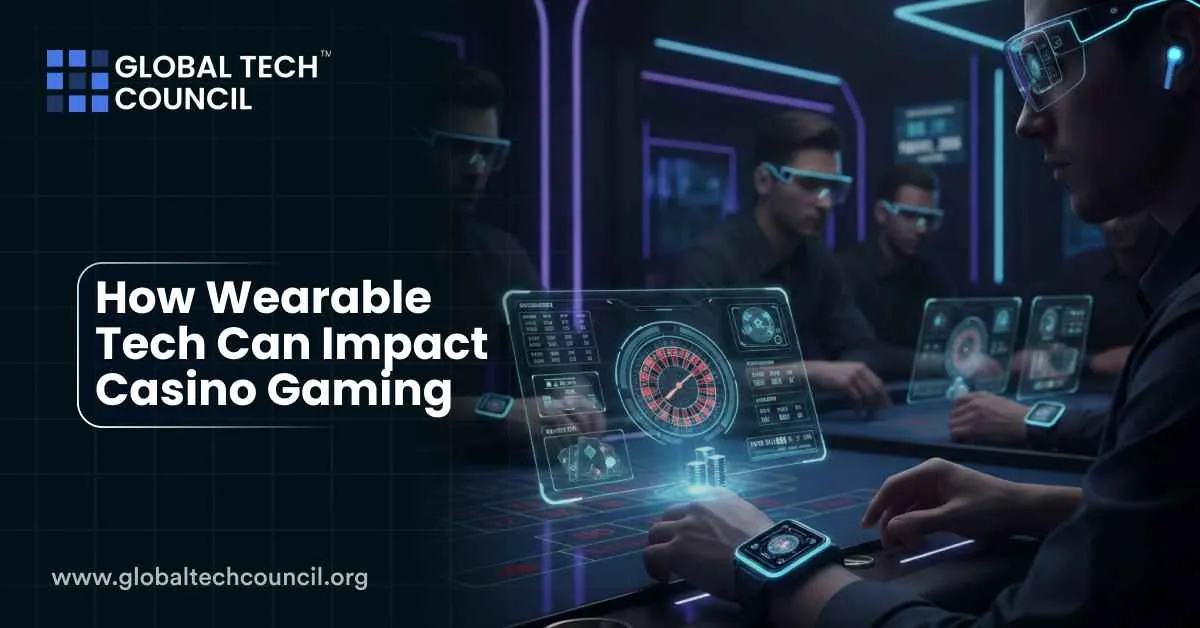
 How wearable tech can impact casino gaming is best understood by looking at what casinos already do today, what regulators explicitly allow, and where real money and identity systems are being redesigned. This is not about futuristic concepts. It is about operational changes that have already begun inside regulated casino environments and are expanding step by step.
Casinos are not ordinary entertainment venues. They are financial systems with gaming devices, payment rails, surveillance layers, and compliance obligations operating in real time. Any technology introduced into this environment must integrate with those layers without breaking regulatory rules. Wearable tech is being explored precisely because it can sit at the intersection of identity, payments, loyalty, and floor operations.
To understand how this works in practice, it helps to understand how modern casino systems are built and governed, which is why many professionals studying regulated digital environments start with foundational knowledge such as the Tech Certification to understand platform architecture, access control, and system-level integration.
Why Casinos Started Looking at Wearables in the First Place
The push toward wearable tech did not start with gadgets. It started with cashless gaming.
Between 2020 and 2023, multiple US states amended gaming regulations to allow digital wagering accounts linked to mobile applications. Nevada, New Jersey, Pennsylvania, and Michigan were among the early adopters. These systems allowed players to fund accounts electronically instead of carrying cash or tickets.
Once wallets became digital, the next question became interface. Phones worked, but casinos quickly saw limits. Phones get lost, run out of battery, and are not always convenient on a crowded gaming floor. Wearables offered a more persistent interface tied to the guest rather than the device.
Cashless Wagering Rules Set the Boundaries
Wearable tech in casinos is constrained by regulation, not imagination.
In Nevada, cashless wagering is defined as a computerized method where the value and validity of wagering instruments are determined and tracked by a central system. This definition includes electronic transfers between wagering accounts and gaming devices. On 02 December 2025, the Nevada Gaming Control Board circulated draft amendments to technical standards clarifying how wagering account transfers must be logged, monitored, and audited.
These rules matter because they determine whether a wearable can initiate a wager directly or merely authenticate a player who then authorizes a transaction through an approved system.
In practice, most current pilots treat wearables as authentication and initiation tools, not standalone wallets.
How Wearables Actually Function on a Casino Floor
In real deployments, wearable tech typically plays one of four roles.
First, access control. RFID and NFC wristbands are already used in integrated resorts for room access, spa entry, and event venues. Extending that same identity token to casino loyalty systems is straightforward and already happening.
Second, payment initiation. A wearable can signal a cashless wallet to authorize a transaction. The money still moves through a regulated wagering account. The wearable does not hold value itself.
Third, loyalty and recognition. A wearable tied to a verified player profile allows instant recognition at tables, slots, restaurants, and entertainment venues.
Fourth, staff operations. Hosts, security teams, and floor managers increasingly use wearables or wearable-adjacent devices to receive alerts, guest information, and operational signals without pulling out phones or radios.
Resorts World Las Vegas as a Reference Point
Resorts World Las Vegas provides one of the clearest public examples of how this evolution works.
The resort launched its cashless gaming system well before wearables entered the conversation, allowing players to fund wallets via mobile apps, debit cards, and approved digital methods. By 2024, the system supported slot play, table games, dining, and retail spending through a single account.
Wearables fit naturally into this model. They do not replace the wallet. They act as the physical interface to it.
Friction, Spending, and Regulatory Concern
Casinos are careful because reduced friction increases risk.
Industry discussions throughout 2024 and 2025 repeatedly highlighted concerns about overspending and dispute resolution in cashless environments. On 07 November 2025, industry reporting focused on how payment processors and casino operators must detect unusual spending patterns, enforce cooling-off periods, and manage chargeback risk.
Wearables intensify this issue. A wristband or ring removes even more friction than a phone. That is why regulators expect additional controls such as daily limits, session timers, and real-time monitoring.
Responsible Gaming Shifts From Policy to System Design
Wearable tech makes responsible gaming enforceable at a system level.
Instead of relying only on signage or voluntary self-exclusion lists, casinos can design automated responses. These include alerts after predefined loss thresholds, temporary lockouts after long sessions, and staff notifications when certain behavioral patterns emerge.
Because wearables are linked to identity rather than location, these controls follow the player across the property.
AR Glasses and the Reality of Augmented Casino Floors
Augmented reality often gets overstated, but casinos are exploring narrow, practical uses.
On 17 March 2025, Snap expanded its AR Spectacles platform with GPS support and an AR keyboard, making location-aware overlays technically feasible. While consumer adoption remains limited, the technology demonstrated how controlled environments could support spatial overlays.
In casinos, realistic AR use cases include navigation assistance, contextual loyalty offers, and staff-only operational overlays. A host could see guest preferences discreetly. Security staff could receive alerts without breaking engagement with the floor.
What casinos are not doing is overlaying betting odds or gameplay through AR glasses for players. That would raise immediate regulatory and fairness concerns.
Security and Privacy Are the Hardest Problems
Wearables create new failure modes.
A lost wristband must be disabled instantly. Identity binding must prevent transfer between users. Behavioral data collected from wearables raises privacy questions, especially in jurisdictions with strict data protection laws.
These challenges are why wearable deployments remain tightly controlled and heavily audited. The technology exists. The risk tolerance does not.
Designing these systems requires expertise in secure identity frameworks, cryptographic authentication, and real-time monitoring, which falls into advanced system design areas commonly explored through Deep Tech Certification programs focused on regulated and high-stakes environments.
Market Signals Explain Why Casinos Keep Experimenting
The global wearable technology market was valued at USD 78.40 billion in 2024 and projected to reach USD 86.78 billion in 2025, with strong growth expected through the next decade.
Casinos follow technology trends that improve operational efficiency and guest lifetime value. Wearables support both, which explains why pilots continue even under strict oversight.
Business Strategy and Guest Experience
Wearable tech forces casinos to rethink guest journeys.
Identity becomes persistent. Loyalty becomes continuous. Payments become invisible. This changes how guests perceive spending and engagement.
For executives, the challenge is not technical feasibility. It is balancing convenience with compliance and experience with responsibility. This is why casino operators increasingly look at broader strategy frameworks, including those covered in the Marketing and Business Certification, to understand how technology reshapes consumer behavior without eroding trust.
Conclusion
How wearable tech can impact casino gaming is not about replacing chips or dealers. It is about tightening the connection between identity, money, and experience.
When done carefully, wearables reduce friction, improve service, and strengthen compliance. When done poorly, they increase risk and regulatory exposure.
The technology itself is neutral. The system design determines whether wearable tech becomes a quiet operational advantage or a liability casinos cannot afford.