


 The Fastest Way to Launch a Modern Website
 The Fastest Way to Launch a Modern Website
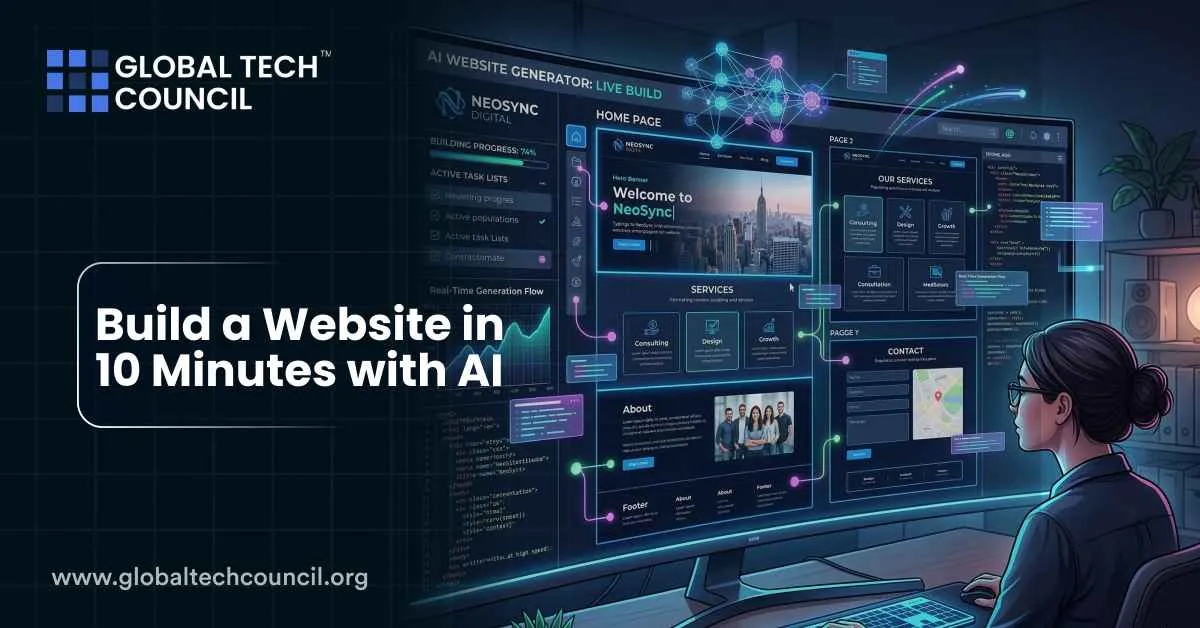
Building a website used to be a slow and expensive process. You needed a designer, a developer, a content writer, and enough patience to survive theme settings, plugin conflicts, and endless edits. Today, artificial Intelligence has changed that model. Businesses, freelancers, and creators can now build a website in 10 minutes with AI by using prompt-based site builders, automated design tools, and AI-generated content.
This shift matters because speed is now part of business strategy. A fast launch helps entrepreneurs validate ideas, attract leads, test messaging, and create a digital presence before competitors can move faster. Instead of waiting weeks to publish a website, users can now describe their brand, services, and goals and let AI produce a polished first draft almost instantly.
AI website creation is not just about convenience. It also improves accessibility. Non-technical users can create professional websites without learning code, while experienced teams can use AI to shorten production time and focus on strategy. The result is a smarter, faster, and more scalable way to go online.
Why AI Website Builders Are Growing So Quickly
The popularity of AI website builders is not accidental. Several trends have made them more powerful and practical for everyday use.
First, AI design generation has improved. Modern tools can build complete page layouts based on a few prompts, including homepage sections, service pages, contact areas, testimonials, and calls to action. Users no longer need to start with a blank canvas or sort through endless templates.
Second, AI writing tools now produce stronger website copy. Earlier systems often generated generic text, but newer models can create clearer headlines, better service descriptions, and more relevant marketing language. That makes website creation much faster because writing is often the most time-consuming part of the process.
Third, website platforms have become more integrated. Hosting, design tools, content editing, SEO settings, analytics, forms, and publishing options increasingly exist in one place. That removes many of the technical barriers that once slowed website launches.
Another major factor is the growing interest in advanced AI workflows. Businesses want tools that do more than answer prompts. They want systems that can complete connected tasks, such as writing content, suggesting layouts, generating metadata, preparing visuals, and helping publish the final product. That is why many professionals are exploring an Agentic AI certification to better understand how autonomous AI systems can improve digital workflows and business operations.
What You Can Really Build in 10 Minutes
It is important to set realistic expectations. Building a website in 10 minutes with AI does not usually mean creating a massive custom platform with advanced integrations, legal review, and fully tailored branding. What it does mean is launching a functional, attractive, and usable first version.
In that short time, AI can usually help you create:
- a homepage
- an about page
- a services or product page
- a contact section
- clear navigation
- AI-generated website copy
- branded design suggestions
- SEO-focused headings and metadata
For many small businesses, consultants, coaches, and startups, that is enough to get online and start generating attention. The first version can later be improved with custom visuals, stronger messaging, and deeper optimization.
This makes AI website building ideal for people who need speed without sacrificing professionalism. A fast launch is often better than waiting months for a perfect site that never goes live.
A 10-Minute AI Website Framework That Actually Works
Minute 1: Clarify the Website Goal
Every good website starts with one question: What should this site achieve? Some websites aim to collect leads, some promote services, some showcase portfolios, and others sell products. The clearer the goal, the better the AI output.
A useful prompt could be: “Create a modern website for a local law firm with a professional tone, a homepage, service pages, client testimonials, and a contact form.”
A specific prompt helps AI generate a stronger structure, better copy, and more relevant design choices.
Minutes 2 to 3: Select the Right AI Platform
Different AI website builders serve different needs. Some prioritize speed, while others focus on design flexibility or e-commerce functionality. Platforms such as Wix, Squarespace, Framer, Shopify, Hostinger, and Durable all offer AI-assisted website creation, but the right choice depends on the project.
If you need a small business website, a simple platform may be enough. If you want advanced customization or a strong visual identity, a more flexible builder may be the better option.
Minutes 4 to 5: Generate the Website Draft
Once you enter your business description, the AI can generate layouts, page sections, suggested text, colors, and visual style. This is the stage at which the website begins to take shape.
Review the structure carefully. Check whether the site clearly explains what the business offers, whether the navigation makes sense, and whether the call to action is easy to spot. AI can save time, but it still needs human direction.
Minutes 6 to 7: Improve Messaging and Branding
The next step is refinement. Replace vague lines with specific, value-based statements. For example, instead of saying, “We offer quality service,” use “We help small retailers reduce inventory waste and improve ordering decisions.”
Also review the visuals. AI can suggest illustrations, stock images, and icons, but those choices should support the brand rather than merely fill space. Relevant visuals build trust. Random generic imagery does not.
Minutes 8 to 9: Add Conversion Elements
A website should not only look good. It should persuade users to act. That means adding elements that support trust and conversion, including testimonials, phone numbers, forms, FAQs, pricing summaries, social proof, and clear buttons.
This is where many AI tools are surprisingly helpful. They can recommend content blocks and generate FAQ suggestions based on the type of business.
Minute 10: Publish and Test
Before going live, test the mobile layout, click through the menu, check the contact form, and review the content for errors. Then connect the domain and publish the site.
That first version may not be perfect, but it creates momentum. A live website can begin attracting search traffic, customer inquiries, and business opportunities right away.
How AI Improves SEO From the Start
One reason AI website building has become so valuable is that many tools now support search engine optimization from the beginning. Instead of treating SEO as an afterthought, AI can help structure the site for better visibility from day one.
AI tools can assist with:
- keyword-focused headlines
- page titles and meta descriptions
- internal linking ideas
- image alt text
- structured page sections
- blog topic suggestions
- content flow based on search intent
This matters because a website without visibility is just a digital brochure floating in the void. AI helps users create pages that are easier for search engines to understand and rank.
For professionals working at the intersection of emerging technology and digital systems, broader upskilling also matters. A strong DeepTech Certification can be useful for understanding the wider technology ecosystem that supports innovation in AI, automation, blockchain, and digital transformation. That broader perspective helps businesses think beyond page design and focus on long-term capability.
Real-World Use Cases for AI Website Creation
AI website builders are useful across many industries because they reduce time, cost, and technical complexity.
A freelance designer can create a portfolio site with service sections, testimonials, and a contact form in a single session. A restaurant owner can launch a website with menus, location details, hours, and reservation information. A coach can create a lead-generation website with booking functionality and persuasive service copy. A startup founder can build a landing page to validate a product idea before investing in a full development cycle.
These use cases matter because they show what AI does best. It helps people move from idea to execution quickly. That speed is especially valuable in competitive markets where timing affects visibility and growth.
The Business Value of Speed
There is a strategic advantage to publishing quickly. Businesses that launch earlier can test customer reactions sooner, collect feedback faster, and improve their messaging based on real behavior rather than assumptions.
For example, a consultant can create a website in an afternoon, start running ads the next day, and learn within a week which service message converts better. A small business can create seasonal pages or promotional landing pages in minutes instead of waiting for a full design cycle. A startup can use AI to test multiple positioning angles without spending heavily on development.
Speed does not replace quality, but it improves agility. In modern business, agility matters.
Where Human Input Still Makes the Biggest Difference
AI is powerful, but it is not flawless. It can create polished pages quickly, but it may still generate generic language, repetitive layouts, or messaging that lacks emotional precision. That is why human review remains essential.
The most important areas for human input are the following:
Brand Positioning
AI can describe what a business does, but humans still make the best decisions about how a brand should sound and what makes it distinct.
Accuracy and Trust
Prices, policies, legal information, claims, and service details should always be checked before publishing. Confident wording means very little if the content is wrong. Machines have not yet developed shame.
Customer Experience
A good website should guide people naturally. It should answer key questions, reduce hesitation, and make the next step obvious. Human judgment is still critical here.
Common Mistakes to Avoid When Using AI
The first mistake is treating AI output as final. AI gives you a very strong draft, but most websites still need editing before they are ready to represent a real business.
The second mistake is focusing only on design. A beautiful site with weak messaging, unclear offers, and no call to action will not perform well.
The third mistake is ignoring SEO. If the site is not well structured for search, it may look great and still attract no traffic.
The fourth mistake is giving poor prompts. Better input creates better output. When users describe their audience, services, location, tone, and goals clearly, AI usually performs much better.
Skills That Make AI Website Building More Powerful
The future of website creation is not only about using AI tools. It is about knowing how to direct them effectively. That includes prompt writing, digital marketing, automation thinking, content strategy, and understanding how websites convert traffic into results.
This is why ongoing learning matters. Technical skills help businesses customize and scale what AI builds. Marketing skills help them turn traffic into leads and revenue. For professionals who want to strengthen growth strategy, a digital marketing certification can support better decision-making in SEO, lead generation, conversion optimization, and campaign planning.
In other words, AI accelerates execution, but skills still shape outcomes.
Conclusion
Building a website in 10 minutes with AI is no longer a futuristic claim. It is a practical method for launching faster, testing ideas sooner, and creating a credible online presence with less friction. AI website builders now support design, copywriting, SEO, and launch preparation in ways that were impossible just a few years ago.
Still, the strongest results come from combining AI speed with human thinking. AI can generate the framework, but people still provide strategy, differentiation, and judgment. Businesses that use AI wisely can reduce costs, improve speed, and compete more effectively online.
The real promise of AI website building is not just that it saves time. It is that it removes barriers. It allows more people to publish, test, improve, and grow without being blocked by technical complexity. That makes it one of the most practical applications of AI in business today.
FAQs
1. Can AI really build a website in 10 minutes?
Yes. AI can generate a functional first version of a website in about ten minutes.
2. Is an AI-generated website good for beginners?
Yes. Most AI website builders are designed for users with little or no coding experience.
3. Is AI website creation SEO-friendly?
Yes. Many AI tools support SEO through headings, metadata, keywords, and content structure.
4. Can I customize the website after AI creates it?
Yes. You can edit the content, design, branding, and layout after generation.
5. What kinds of websites can AI build quickly?
AI can build portfolios, service websites, landing pages, local business sites, and simple online stores.
6. Does AI replace web developers?
No. AI speeds up basic creation, but developers are still important for advanced features and custom functionality.
7. Can AI write website content too?
Yes. AI can create headlines, service descriptions, page copy, FAQs, and calls to action.
8. What is the biggest limitation of AI website builders?
The biggest limitation is generic output if the content is not reviewed and refined by a human.
9. Why is SEO important for AI-generated websites?
SEO helps the website get found in search engines, which increases traffic and business opportunities.
10. Which skills improve results with AI website builders?
Prompt writing, SEO, branding, automation knowledge, and marketing strategy all improve final outcomes.