

Meta’s AI Glasses Got a Hearing Update

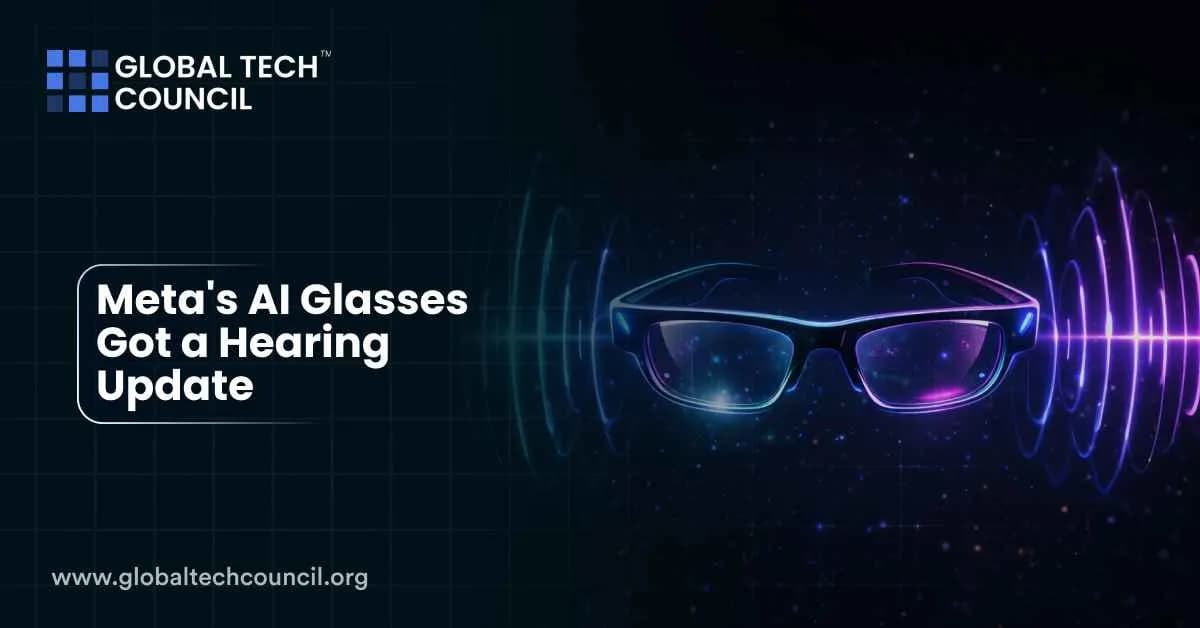
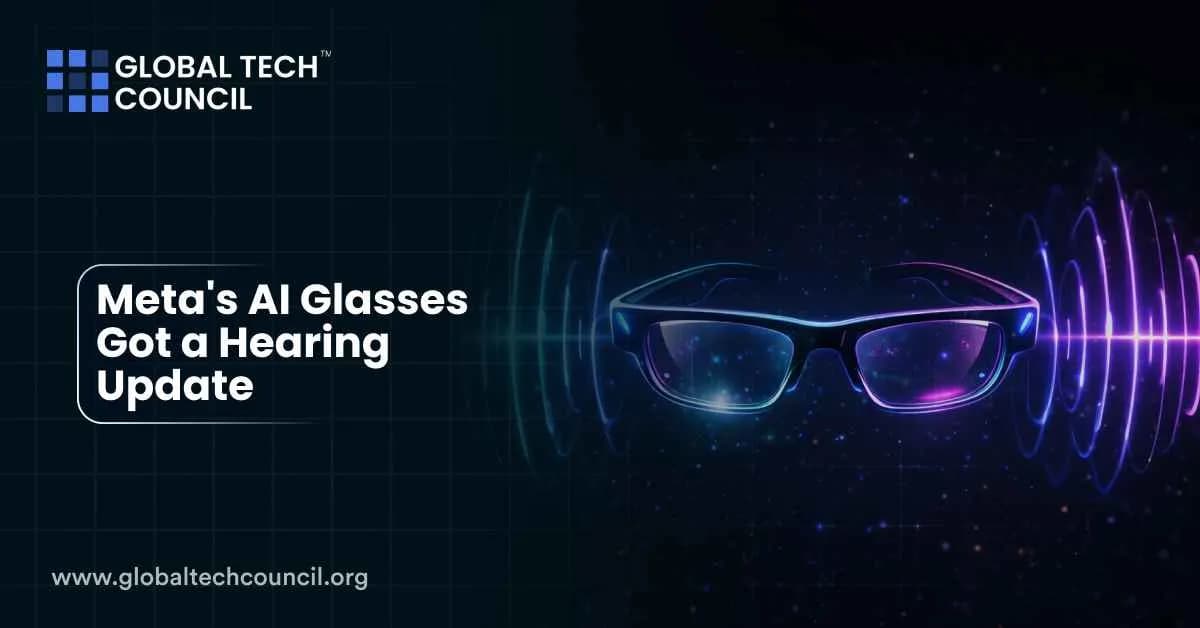 Meta’s AI glasses have moved beyond cameras and voice commands into something far more practical. With a new hearing-focused update released in mid-December 2025, Meta is positioning its smart glasses as everyday assistive devices rather than novelty wearables. The update, delivered through software version 21, introduces a feature called Conversation Focus, designed to help users hear speech more clearly in noisy environments.
This shift reflects a broader change in how wearable technology is being built. Smart glasses are no longer just about capturing content or issuing commands. They are starting to enhance human perception itself. That change sits at the intersection of hardware design, real-time processing, and systems engineering, which is why many professionals working around connected devices and embedded systems build their foundation through a Tech Certification that emphasizes reliability and real-world performance rather than demos.

What the hearing update actually adds
Conversation Focus is a speech enhancement feature that selectively amplifies the voice of the person directly in front of the wearer while reducing surrounding background noise. Unlike traditional noise cancellation, this does not block the environment entirely. Meta’s AI glasses use open-ear speakers, meaning users still hear ambient sounds like traffic, announcements, or alarms.
The update is available on Ray-Ban Meta smart glasses and Oakley Meta HSTN models. Both devices include multiple microphones and onboard processing capable of handling audio analysis in real time. Meta has stressed that this is not a medical hearing aid and is not marketed as one. It is an assistive listening feature intended to reduce listening strain in everyday situations like cafés, social gatherings, and public transport.
When and where it is rolling out
The hearing update began rolling out through Meta’s Early Access Program in the United States and Canada starting around 15 December 2025. Wider availability is expected once Meta gathers usage feedback and performance data.
Alongside Conversation Focus, the same update also expanded language support for voice interactions in several European languages and refined audio controls, signaling that Meta is continuing to invest heavily in the glasses as a long-term platform rather than a static product.
How Conversation Focus works under the hood
The technical challenge behind this feature is significant. The glasses rely on a combination of beamforming and AI-based speech separation. Beamforming allows the microphones to prioritize sound coming from a specific direction, usually straight ahead. The AI layer then identifies speech patterns and separates them from non-speech noise in real time.
All of this processing happens on the device, not in the cloud. That decision reduces latency and improves privacy, which is crucial in social settings. It also means the hardware has to be efficient enough to run these models continuously without overheating or draining the battery too quickly.
This kind of work sits firmly in the deep research layer of consumer AI. It blends signal processing, machine learning, and hardware constraints into a single system. These are the same domains explored in advanced programs often described as deep tech, such as those offered through Blockchain Council, where the focus is on foundational systems rather than surface-level applications.
Why Meta is adding hearing features now
Meta’s move into hearing assistance is not accidental. Wearables adoption tends to accelerate when devices solve subtle but persistent problems. Difficulty following conversations in noisy environments affects a wide range of people, not just those with diagnosed hearing loss.
By addressing that pain point, Meta makes its AI glasses more useful throughout the day. This also aligns with Meta’s broader strategy of making its AI more context-aware and less intrusive. Instead of pulling users into screens, the glasses quietly improve perception while letting users stay engaged with the world around them.
What this means for wearable computing
The hearing update suggests a future where smart glasses act as perceptual filters. Vision, audio, and AI are combined to prioritize what matters most to the user at any moment. Today that means speech clarity. Tomorrow it could mean dynamic audio focus based on where the user is looking or who they are interacting with.
This direction also blurs the line between consumer electronics and assistive technology. While Meta avoids medical claims, features like Conversation Focus demonstrate how everyday devices can deliver meaningful accessibility benefits without stigma or specialized hardware.
Conclusion
From a market perspective, this update strengthens the value proposition of Meta’s AI glasses. Practical features drive repeat usage, which is essential for wearables that people must choose to wear daily. It also gives Meta a clearer story to tell consumers, partners, and developers about why these glasses matter.
Translating technical capability into widespread adoption requires careful positioning. Users need to understand the benefit without feeling overwhelmed by jargon or unrealistic promises. That balance between innovation and communication is a business challenge as much as a technical one, often addressed through frameworks taught in a Marketing and Business Certification.
Meta’s AI glasses hearing update does not claim to reinvent hearing technology. What it does is take a real, everyday problem and apply AI in a way that feels natural and unobtrusive. That focus on quiet usefulness may be the most important signal about where wearable AI is heading next.
Related Articles
View All
AI & ML
What Is Kimi K3?
Kimi K3 is a large language model developed by Moonshot AI, designed for advanced reasoning, coding, multilingual understanding, and AI agent applications. Learn how Kimi K3 works, its key features, use cases, and how it compares with other leading AI models.
AI & ML
How GPT-Live Changes Real-Time AI Assistance for ChatGPT Users
GPT-Live brings full-duplex voice, smarter turn-taking, live translation, and GPT-5.5-backed reasoning to ChatGPT Voice for real-time AI assistance.
AI & ML
GPT-Live-1 and GPT-Live-1 Mini Explained: Features, Use Cases, and Global ChatGPT Access
GPT-Live-1 and GPT-Live-1 Mini bring full-duplex voice, live translation, multimodal answers, and wider ChatGPT access to free and paid users.
Trending Articles
The Role of Blockchain in Ethical AI Development
How blockchain technology is being used to promote transparency and accountability in artificial intelligence systems.
AWS Career Roadmap
A step-by-step guide to building a successful career in Amazon Web Services cloud computing.
Top 5 DeFi Platforms
Explore the leading decentralized finance platforms and what makes each one unique in the evolving DeFi landscape.