


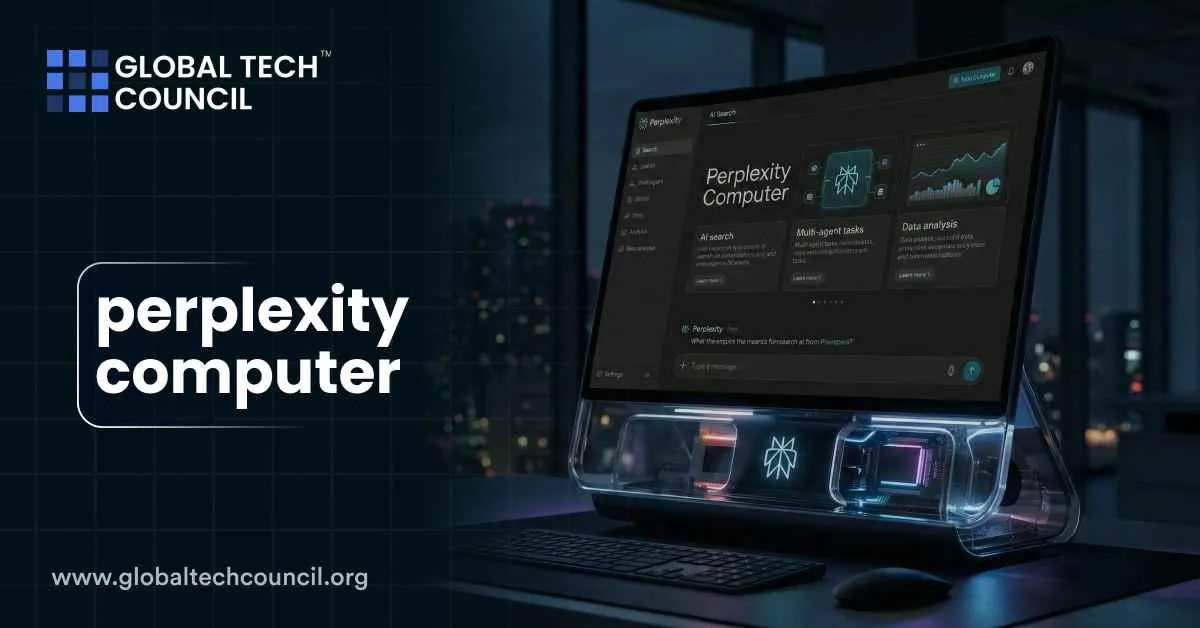
 Artificial Intelligence is reshaping how information is discovered, analyzed, and delivered. At the center of this shift is perplexity computing, a concept tied to how AI models understand and generate language. While technology giants such as Google and Microsoft dominate the AI infrastructure landscape, emerging platforms built around perplexity-driven systems are beginning to challenge traditional search and computing models.
Perplexity AI has quickly gained attention because it focuses heavily on perplexity computing to power an answer-first search experience. Instead of simply listing links, the platform analyzes information, synthesizes responses, and presents citations. This approach is prompting many industry experts to ask whether a specialized AI company could compete with established technology leaders.
Understanding Perplexity Computing
To understand the competition, it is important to understand what perplexity computing actually means. In artificial Intelligence, perplexity measures how accurately a language model predicts the next word in a sequence. Lower perplexity usually indicates that the system understands context and language patterns more effectively.
In modern AI systems, perplexity computing helps generate clearer answers, improve conversational interactions, and produce more reliable summaries of information. These capabilities are particularly important for AI search tools that aim to deliver precise responses rather than simple lists of webpages.
Because of this, companies building advanced AI assistants are investing heavily in improving perplexity scores and model efficiency.
Google and Microsoft’s AI Advantage
Despite the innovation happening around perplexity computing, Google and Microsoft still maintain significant advantages. Both companies operate global cloud infrastructure, massive data centers, and some of the world’s most advanced AI models.
Google integrates AI across its search engine, Android ecosystem, and productivity tools. Microsoft, meanwhile, has expanded its presence through Azure AI services and Copilot products integrated into software such as Office and Windows.
These ecosystems provide enormous computational resources and distribution channels. As a result, even as new technologies like perplexity computing evolve, startups must compete with companies that already serve billions of users worldwide.
Why Perplexity AI Is Gaining Attention
Perplexity AI has built its platform specifically around perplexity computing and real-time information retrieval. The system combines language models with web search, enabling users to ask questions and receive summarized answers supported by sources.
This design offers several advantages:
- Faster research and knowledge discovery
- Clear citations for transparency
- Conversational interaction with data
- Context-aware responses
For professionals and researchers, these features can significantly reduce the time needed to gather reliable information.
The popularity of this model shows that AI search is moving toward deeper understanding rather than simple keyword matching.
Real-World Example of Perplexity Computing
Consider a business analyst researching global AI adoption trends. Using a traditional search engine may require opening several pages, comparing data, and compiling insights manually.
With perplexity computing, an AI platform can analyze multiple sources simultaneously and provide a structured summary with references. The analyst can then ask follow-up questions and refine the research in seconds.
This illustrates how perplexity-driven AI systems are transforming productivity in fields such as marketing, finance, consulting, and technology research.
Challenges Perplexity Faces
Even though perplexity computing offers powerful capabilities, competing with companies like Google and Microsoft is not easy.
Infrastructure Scale
AI models require enormous computing power. Big Tech companies invest billions of dollars into data centers and advanced chips. Startups must rely on partnerships and external infrastructure to reach similar levels of performance.
Market Reach
Google’s search engine still processes the majority of global searches, while Microsoft’s ecosystem connects enterprise software, cloud services, and productivity tools. This reach gives them a major advantage in distributing AI features.
Ecosystem Integration
Google and Microsoft embed AI across their platforms. Email systems, productivity tools, browsers, and operating systems all include AI capabilities. This interconnected ecosystem makes it difficult for smaller platforms to compete directly.
Areas Where Perplexity Could Compete
Despite these challenges, perplexity computing provides unique opportunities for innovation.
Specialized Research Tools
Perplexity AI focuses strongly on knowledge discovery and research. This specialization allows it to build features tailored for professionals who require accurate summaries and cited information.
Faster Innovation
Startups often introduce new features more quickly than large corporations. By focusing on improving perplexity computing, smaller AI companies can experiment with new user experiences and capabilities.
Changing User Behavior
The way people search for information is evolving. Many users now prefer conversational AI interfaces rather than traditional search results. If this trend continues, platforms built around perplexity computing could gain a larger share of digital discovery.
Skills Needed in the Era of Perplexity Computing
As AI continues to evolve, professionals must understand how systems powered by perplexity computing operate. Knowledge of AI tools, automation, and digital strategy is becoming increasingly valuable.
Many professionals develop these skills through structured programs such as a Tech certification, a deep tech certification, a prompt engineer certification, or a marketing certification. These credentials help individuals understand AI models, content strategies, and real-world applications of emerging technologies.
Organizations like Global Tech Council and Universal Business Council offer training designed to prepare professionals for industries increasingly influenced by AI.
The Future of Perplexity Computing
The future of AI competition will likely revolve around advancements in perplexity computing, model efficiency, and user experience. Large companies will continue investing heavily in infrastructure, while smaller innovators push new ideas and specialized platforms.
Rather than a simple battle between startups and tech giants, the future may involve collaboration, partnerships, and integrated AI ecosystems.
As technology improves, users will benefit from smarter tools that deliver accurate information faster than ever before.
Conclusion
Perplexity computing is becoming an important force in modern AI development. Platforms built around this technology are redefining how search, research, and information discovery work.
Although Google and Microsoft still dominate AI infrastructure and global distribution, companies focused on perplexity computing are introducing new ways to interact with knowledge. These innovations may not immediately replace the tech giants, but they are reshaping expectations for AI-powered tools.
As the AI landscape continues to evolve, competition between large technology companies and specialized innovators will play a major role in shaping the future of intelligent computing.