


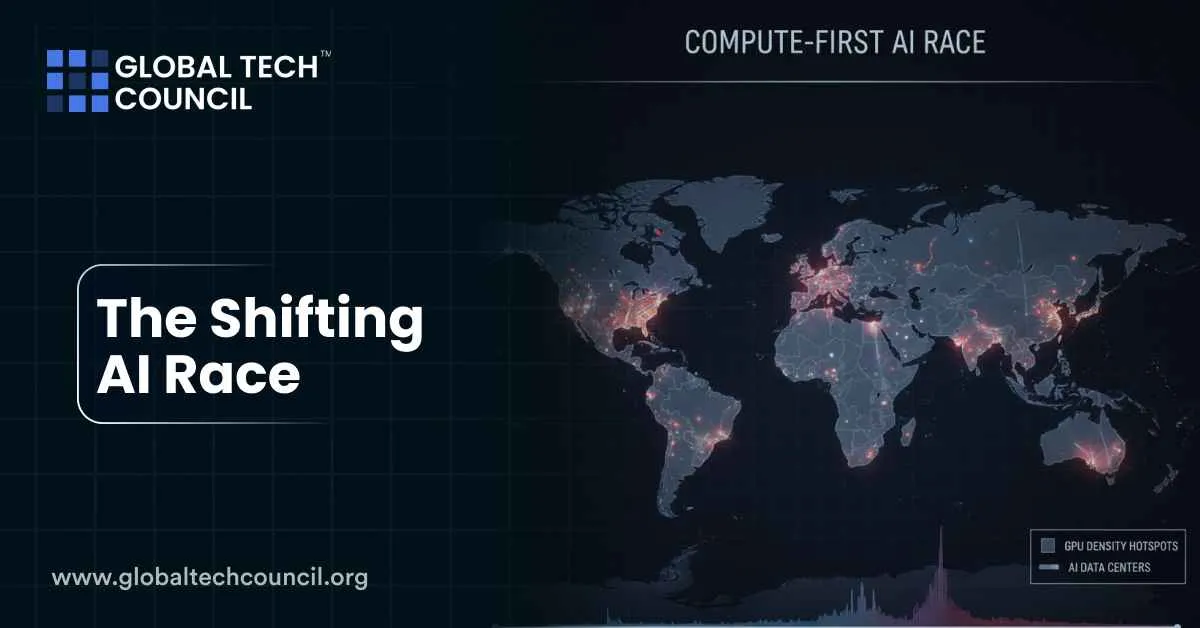
 The AI world is moving so quickly that even people who follow it closely feel like their footing slips every few weeks. One big announcement resets expectations, a surprise model release shifts confidence, and suddenly the winner of last month feels less secure. It shows an AI landscape that is not just competitive but unstable in a way we haven’t seen before, where momentum moves in sharp swings rather than long cycles.
This article breaks down those shifts in a detailed, conversational way while connecting them to real world behavior from the market, users and companies. For readers exploring the deeper technical foundations of this fast moving space, programs like Tech Certification can help build the fundamentals that make these developments easier to understand.
As we go through each section, you’ll see how the AI race is evolving, why power keeps shifting between companies, and what lessons professionals and innovators should take from it.
The AI Race Is No Longer About Single Model Wins
One of the strongest themes is that the AI race is no longer determined by a single flagship model beating another. Instead, the competition has become a rolling set of micro battles across reasoning, memory, speed, personality, cost and integration into real workflows.
When one company pulls ahead in raw intelligence, another catches up in creativity. When one dominates benchmarks, another steps forward with better real world performance. And when one leads in coding, another improves rapid reasoning or agentic reliability.
This constant cycling is what makes the race feel so chaotic. It also means professionals must track not just who is winning but why they are winning at that moment.
Why Power Keeps Shifting Between AI Labs
Product velocity is now a competitive weapon
A key insight is that sheer release speed has become a strategic edge. Companies no longer wait for perfect models. They ship rapidly, let users test in the wild, and adapt in near real time.
Google, OpenAI, Anthropic, Meta and even unexpected players like xAI are pushing updates so often that users barely have time to settle before the next version appears.
This creates a split between:
- Users who want stability and predictable behavior
- Users who want the newest capabilities even if they are volatile
This tension is shaping the entire AI ecosystem.
Community sentiment now matters almost as much as capability
The situation repeatedly highlights how exaggerated reactions on social platforms shape the perceived winners and losers. A model might be only slightly better technically, but if the community turns it into a narrative victory, that becomes the reality people respond to.
This emotional volatility plays a huge role in shaping which companies feel “up” and which feel “down”.
Companies are chasing very different endgames
Another important observation is how AI labs are no longer aligned in their goals. Some want:
- Agents that take increasingly autonomous action
- Models optimized for reasoning depth
- Tools designed for collaboration
- Personality driven companions
- Infrastructure dominance
This divergence means the race is not one race at all. It is several overlapping races happening at once. That alone guarantees constant movement.
The Most Important Drivers of the New AI Landscape
It outlines many dynamics that shape the shifting leader board. These are the most important ones.
The agent era is arriving faster than expected
Half the breakthroughs revolve around early agent behavior. Models are improving at staying focused, breaking down tasks, and regulating their own thinking steps.
These changes are happening before full agents exist at scale, which means the shift will accelerate once tools for long running tasks, world models and persistent reasoning mature.
Benchmarks no longer settle debates
Benchmark saturation has made it difficult to use traditional numbers as a clear measure of strength. It is clear that subjective tests, real world trials and user perception often matter more.
This is why a model may “win” but still feel less impressive to people actually using it.
The rise of personality as a product differentiator
One of the most surprising insights is how strongly personality now shapes model preference.
Users want models that:
- Think clearly
- Stay consistent
- Follow instructions
- But also feel warm
- And feel engaged
- And feel like an actual collaborator
This shift signals that we are entering a new phase where AI companies must master not just intelligence but communication style, emotional tone and even likability.
What Companies Need to Understand About the AI Shifts
Stability will become as important as capability
Users are increasingly frustrated with unpredictable model behavior. Companies that provide rock solid reliability, even if they are not the absolute smartest, will win large segments of the enterprise market.
This is one reason many business leaders pursue structured learning programs like the Marketing and Business Certification to understand how to evaluate AI systems beyond hype.
Interoperability is becoming a strategic moat
We can highlight how rapidly companies are integrating models into platforms, workflows and domain specific solutions.
A model’s success now depends on how easily it fits into the real world. Those who do not build ecosystems will fall behind.
Trust is becoming an enterprise differentiator
As AI becomes more influential, trust in the model’s judgment, safety and consistency is becoming critical. This is especially true for finance, healthcare, education and enterprise transformation.
What Professionals Need to Understand About AI Shifts
Your ability to use AI effectively is now a career skill
It is clear that thousands of professionals have already turned AI into a daily companion for thinking, planning, analysis and decision making.
People who excel at AI assisted thinking will have major advantages over those who resist it.
This is why many professionals invest in programs like the Deep Tech Certification to build mastery around AI fundamentals, multi model workflows and advanced use cases.
The real winners will be those who learn to think with AI
People who get the most out of AI treat it as a partner in decision making, not just a tool for shortcuts.
The future will reward people who can:
- Frame better questions
- Break down complex problems
- Communicate expectations clearly
- Iterate quickly
- Evaluate AI reasoning with expertise
This kind of human AI collaboration is where the biggest productivity gains will happen.
The Key Forces Shaping the Shifting AI Race
| Force Reshaping the Race | Why It Matters | Impact on Companies and Users |
| Rapid Release Cycles | Companies ship fast, learn fast | More volatility but faster improvements |
| Personality Driven Models | Users expect warmth and clarity | Models must communicate as well as they think |
| Agent Evolution | Early forms of autonomy are emerging | Workflows will transform sooner than expected |
| Ecosystem Integration | Tools must fit into real products | Companies with stronger platforms pull ahead |
The Biggest Takeaway
The AI race is shifting not because companies are unpredictable, but because AI itself is evolving in ways no one fully anticipated. Models are becoming:
- More adaptive
- More emotionally intelligent
- More capable at reasoning
- More stable in long tasks
- More aligned with real world workflows
These improvements make it impossible for leadership positions to last long. Every few weeks, the center of gravity moves again.
Final Thoughts
World today paints a clear picture. The AI race is no longer a linear contest. It is a dynamic, constantly evolving landscape where each company has strong weeks and weak weeks.
What matters most is not who is ahead today but who is building the systems, trust, ecosystems and long term capabilities needed to stay relevant as the race keeps shifting.
The clearest message is this:
AI is not slowing down. The race is only getting more unpredictable, and that unpredictability is now the defining feature of the whole industry.