


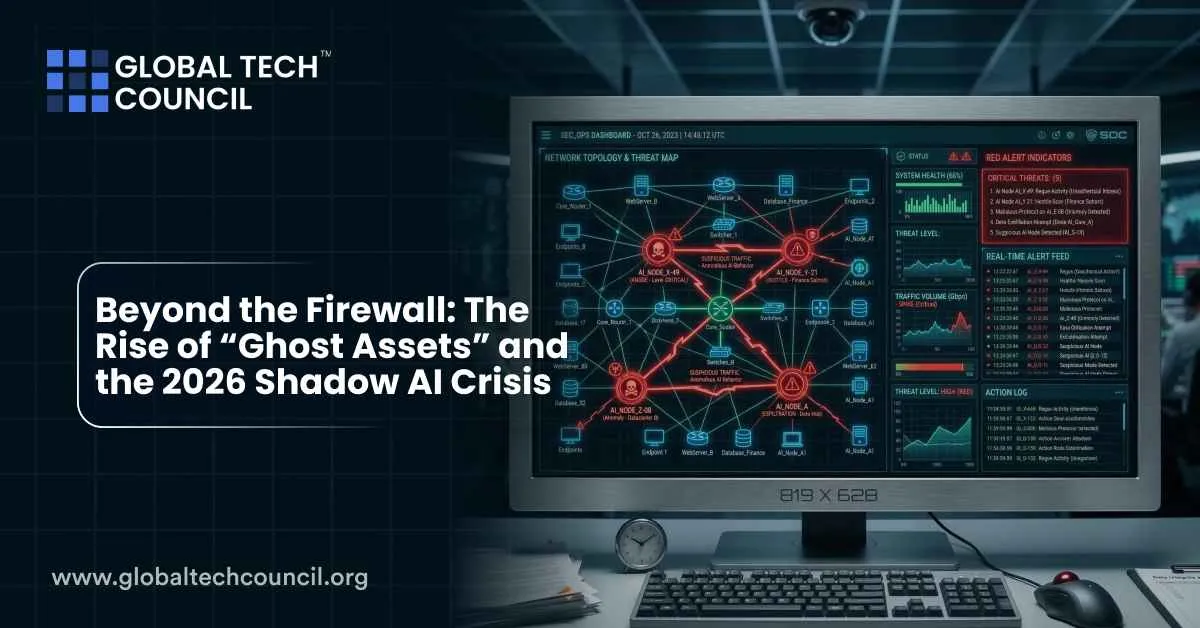
 For years, cybersecurity conversations almost always started with the firewall. If a company could lock down its network perimeter, control logins, and keep an eye on employee devices, the thinking went that most threats would stay outside.
That model worked reasonably well in the early days of corporate IT.
But it doesn’t reflect how companies operate anymore.
By 2026, most organizations run on a patchwork of cloud platforms, SaaS tools, remote work setups, and connected devices constantly sending data back and forth. The modern company network is no longer a neat system behind one digital wall. It’s more like an ecosystem that keeps expanding.
Every new integration promises speed, automation, or scalability. Yet each one also introduces another layer of complexity. From a security perspective, the environment becomes harder to map, harder to monitor, and ultimately harder to defend.
You can see this shift even in everyday habits. Employees who work remotely often rely on tools like a VPN for Windows PC when accessing internal systems from outside company networks. This is an insignificant example, but it shows that cybersecurity duties increasingly go outside the office.
What’s catching many organizations off guard is that the biggest risks aren’t always external attackers trying to break in. More and more often, the weaknesses already exist inside the infrastructure.
Forgotten cloud resources, abandoned development servers, experimental AI tools, and connected devices that nobody actively monitors can quietly remain part of a system for months or even years. Security professionals have started referring to these hidden components as “ghost assets.”
At the same time, another trend has been growing quietly inside companies: Shadow AI. Employees are experimenting with generative AI tools to speed up tasks or automate workflows, often without approval from IT teams.
These changes aren’t bad in and of themselves. But when they are all together, they make blind spots that security personnel have trouble seeing.
That’s why 2026 seems like a big year for cybersecurity.
Stopping intruders at the entrance is no longer enough to protect systems. Increasingly, it’s about figuring out what’s already inside the building.
The Vanishing Boundary of Modern Infrastructure
Not long ago, most companies operated within a fairly clear digital boundary. Data was stored on corporate servers, employees utilized company networks to access systems, and security teams worked to protect that perimeter.
That concept changed when cloud computing came around.
Data now flows all the time between applications, storage services, APIs, and remote devices, instead of just sitting in one location.
A single workflow might involve several cloud platforms communicating with one another in real time.
- From the user’s perspective, this feels seamless.
- From a security perspective, it’s a very different story.
Every time you connect two systems, you make a new point of failure. Attackers may be able to get in if authentication is weak, permissions are set up incorrectly, or a device connects without being properly checked.
Many experts say that the cloud itself isn’t the main problem, which is interesting. Many of the biggest cloud providers spend a lot of money on security. The harder part is how businesses set up and use those platforms.
A small mistake, like leaving storage open or giving too many rights, can generate a hole that spreads swiftly in a linked environment.
And complexity keeps increasing.
Many companies now rely on multiple cloud providers at the same time. The strategy makes sense from a business standpoint because it prevents dependency on a single vendor. But it also means security teams must oversee several environments that follow different rules and configuration systems.
It can be hard to keep track of who has access to what.
Then there’s the explosion of connected devices.
Factory sensors, smart cameras, industrial equipment, and home devices used by remote workers—all of them can connect to cloud infrastructure and exchange data. Individually, these devices might not seem risky.
Collectively, they create thousands of potential entry points.
The old idea of a neat security boundary has quietly disappeared. Security teams aren’t just guarding a single network anymore—they’re monitoring a constantly shifting digital landscape.
The Rise of Ghost Assets
One of the unexpected side effects of rapid cloud adoption is the appearance of ghost assets.
These are systems that are still theoretically part of an organization’s infrastructure but have been forgotten about.
Sometimes it’s a test server made during a development project.
Sometimes it’s an old storage bucket that still has data in it, even though no one uses it anymore.
In larger organizations, it might even be legacy software quietly connected to internal systems. Because these assets aren’t part of daily operations, they often slip off the radar.
No updates. No monitoring. Sometimes, not even documentation.
From an attacker’s perspective, that makes them attractive targets. Instead of trying to break through heavily protected systems, cybercriminals often search for neglected infrastructure where defenses are weaker.
This is easier now that we have cloud environments. Developers can quickly add new services, which is fantastic for innovation, but it also means that environments can soon fill up with old or underused parts.
Over time, the infrastructure grows faster than teams can keep track of it.
Security professionals sometimes describe it as digital clutter. Unfortunately, attackers are very good at spotting clutter.
Shadow AI and the Invisible Workforce
If ghost assets come from infrastructure growth, Shadow AI comes from people.
Across many organizations, employees have started experimenting with generative AI tools to simplify everyday work. They summarize documents, generate code snippets, draft emails, or analyze data with the help of AI assistants.
Often, they do this without asking IT departments first. The motivation is rarely harmful. In fact, most employees simply want to save time.
But security teams worry about something else: visibility.
When workers upload internal documents to external AI tools, sensitive data may leave the organization without anyone realizing it. When AI platforms connect to internal databases or cloud storage services, they can create new data pathways that security teams never approved.
In other words, the tools that improve productivity can quietly introduce new risks.
This challenge has started appearing more frequently in industry discussions, including research highlighted on our website in the text about exploring the role of AI in threat detection and modern security strategies.
Because AI adoption is happening so quickly, Shadow AI is unlikely to disappear anytime soon. Organizations will simply have to learn how to manage it.
AI-Powered Threats Are Changing the Way Attacks Happen
While companies are figuring out how to deal with AI internally, cybercriminals are already using it in their attacks.
Attackers can now use machine learning tools to automate actions that used to need human effort. These algorithms can find weak spots in networks, produce phishing messages, and look for possible entry ways far faster than people can.
Technology journalists have been paying close attention to this shift. Reports from outlets like WIRED describe how generative AI tools are enabling attackers to scale phishing campaigns and identify weaknesses in software at unprecedented speed.
The result is a new type of cyber threat—one that evolves as it unfolds.
Traditional security tools often rely on patterns. They find malware by checking files against known signatures or behaviors that have been set up ahead of time.
But modern attacks don’t always follow those patterns. They adapt.
AI is also making deception easier. Fake emails, voice messages, and even video impersonations can now be produced with convincing realism. For employees or customers receiving these communications, distinguishing legitimate messages from fraudulent ones becomes increasingly difficult.
Over time, that uncertainty begins to erode trust in digital communication.
And because defenders are also adopting AI-powered security tools, cybersecurity is starting to resemble a technological arms race.
Each side improves its tools, and the other side quickly responds.
The Growing Attack Surface of Cloud Infrastructure
Another challenge lies in the sheer scale of cloud environments.
As organizations move more services online, they inherit the responsibility of managing thousands of settings, permissions, and data flows operating behind the scenes.
Many breaches still happen for surprisingly simple reasons.
Storage containers are left publicly accessible. Permissions to access are too broad. Services are deployed without proper security checks.
These issues rarely occur because someone intentionally ignored security. More often, they happen because cloud systems prioritize speed.
Developers can launch new services in minutes. Security reviews sometimes happen later. Over time, small configuration mistakes accumulate. Eventually, those small gaps become real vulnerabilities.
Connected devices provide another level of danger. Many IoT systems have weak security measures, which makes them easy targets for attackers. If one device is connected to cloud platforms, a weakness in that device might put the whole system at risk.
For security professionals, keeping an eye on these kinds of environments has become one of the hardest things to do in modern cybersecurity.
From Perimeter Defense to Continuous Visibility
Because digital infrastructure has changed so dramatically, security strategies are evolving too.
The old concept of perimeter defense—protecting a clearly defined network boundary—simply doesn’t reflect how modern systems operate.
Instead, many organizations are shifting toward what security professionals call visibility-first security. The principle is simple: you can’t safeguard a system if you don’t know it exists.
Organizations can find configuration errors, keep track of sensitive data, and keep an eye on who has access to cloud environments with the help of tools like Cloud Security Posture Management (CSPM) and Data Security Posture Management (DSPM).
Zero Trust architecture is another idea that is becoming more popular. This method doesn’t automatically trust any device, person, or system. Every request for access must be checked, no matter where it comes from.
It’s a new way of thinking.
Instead of thinking that breaches can always be stopped, new security tactics focus on recognizing strange behavior early and acting promptly when something doesn’t seem right.
The Road Ahead: Protecting a World Full of Hidden Systems
There’s a strange dichotomy in cybersecurity in 2026.
Technology has never been more powerful or connected than it is now. Yet understanding what’s happening inside digital infrastructure has become increasingly difficult.
Ghost assets, shadow AI tools, and sprawling cloud systems all contribute to environments where parts of the infrastructure may exist without anyone actively watching them.
Those blind spots are exactly what attackers look for.
Fixing this challenge won’t come from adding yet another security tool. Organizations will need better ways to track their infrastructure, establish clearer rules for AI adoption, and maintain visibility across systems employees use every day.
The companies that change the fastest will probably be the ones that keep an eye on what’s going on in their environments and act rapidly when anything changes.
That means that cybersecurity teams won’t be able to work alone anymore.
Collaboration with engineers, data specialists, and business leaders will become essential.
For years, the firewall symbolized the edge of digital security. Today, that edge is much harder to define.
In 2026, the real challenge isn’t just protecting the network—it’s understanding and securing the many invisible systems quietly powering the digital economy.