


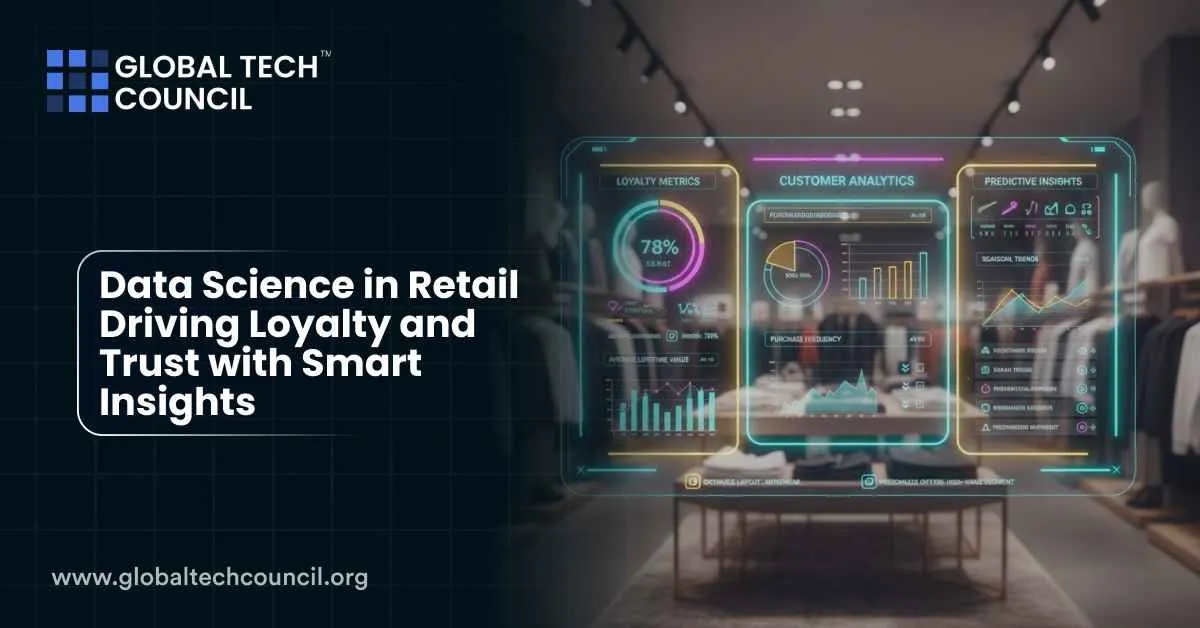
 Retailers have always known that loyalty and trust are the lifelines of long-term success. But in 2025, with rising customer expectations and fierce competition, the way to earn both has changed. Shoppers no longer settle for generic rewards or blanket promotions. They expect retailers to understand them, respect their privacy, and deliver experiences that feel personal and transparent. That’s where data science steps in—helping retailers turn raw information into smart insights that build stronger bonds. For professionals who want to shape these solutions, a Data Science Certification provides the foundation to work with analytics pipelines and loyalty-focused models effectively.
Loyalty Programs Enter a New Era
The classic points-based programs are fading into the background. Today’s loyalty systems prioritize emotional connection and seamless experience. Retailers are blending personalization with experiential rewards, such as exclusive offers or early product access. According to recent reports, the global loyalty management market is expected to grow from about $13 billion in 2024 to more than $41 billion by 2032. This growth is fueled by data-driven approaches that keep customers engaged longer and raise lifetime value.
Personalization Through Data Science
Personalization has become more than a buzzword—it’s now the default expectation. Retailers are leveraging predictive analytics to suggest products, recommend bundles, or create targeted promotions. Omnichannel analytics ensures that whether a customer shops online or in-store, the experience feels consistent and relevant. This type of personalization not only boosts sales but also deepens trust by showing customers that brands pay attention to their preferences.
For leaders looking to connect analytics-driven personalization with broader growth strategies, a Marketing and Business Certification offers the skills needed to integrate data-driven approaches with brand positioning.
Building Trust with Transparency
Trust is built when customers feel their data is used responsibly. Transparency is critical: consumers want to know how their information is collected and what it’s being used for. Ethical AI frameworks are becoming part of retail strategies, ensuring that algorithms avoid bias, respect privacy laws, and include feedback loops from consumers. Retailers that openly communicate their data practices are better positioned to win long-term loyalty.
Smart Insights That Retain Customers
Data science helps retailers spot at-risk customers—those likely to switch brands—and allows them to act early with retention offers or tailored engagement. In-store analytics, powered by IoT sensors, also play a role. By analyzing traffic flows, shelf interactions, and product engagement, retailers can make shopping easier and more enjoyable, which directly influences loyalty.
Challenges on the Road
While the benefits are clear, several challenges stand in the way. Integrating data from multiple sources—online channels, stores, third parties—remains complex. Privacy regulations require strict handling of sensitive information, and retailers must prove ROI from loyalty programs beyond short-term sales. Finally, there’s the skills gap. Successful programs need data scientists, engineers, and privacy specialists working side by side with retail experts.
How Data Science Strengthens Retail Loyalty
| Focus Area | Impact on Loyalty and Trust |
| Personalization | Delivers offers and recommendations tailored to individual shoppers |
| Omnichannel Analytics | Creates seamless experiences across online and offline channels |
| Loyalty Program Optimization | Shifts from points-based rewards to personalized experiences |
| Customer Risk Detection | Identifies churn risks and enables proactive retention |
| In-store Analytics | Improves layouts, reduces friction, and enhances satisfaction |
| Transparency & Ethics | Builds trust through clear data practices and bias-free models |
| Real-time Insights | Provides immediate adjustments to promotions and stock levels |
| Predictive Analytics | Anticipates demand, preventing stockouts and lost sales |
| Privacy Compliance | Ensures safe and responsible data use |
| Consumer Feedback Loops | Incorporates customer input to strengthen trust and fairness |
Looking Forward
The future of retail loyalty lies in balancing personalization with responsibility. Data science will continue to refine how retailers forecast behavior, tailor offers, and ensure fairness in AI-driven systems. As loyalty programs evolve into holistic relationship builders, the winners will be those who respect trust as much as they value data. For professionals eager to design scalable and ethical systems, a deep tech certification offers advanced training in the tools that will define the next decade of retail analytics.
Conclusion
Data science is transforming retail from a model of mass promotions to one of individualized experiences and ethical engagement. By using smart insights, retailers can go beyond simple transactions to build loyalty based on trust. The challenges of integration, privacy, and governance are real, but so are the rewards: stronger relationships, longer customer lifetimes, and sustainable growth. Those who master both the analytics and the ethics will shape the future of retail loyalty.
Leave a Reply