


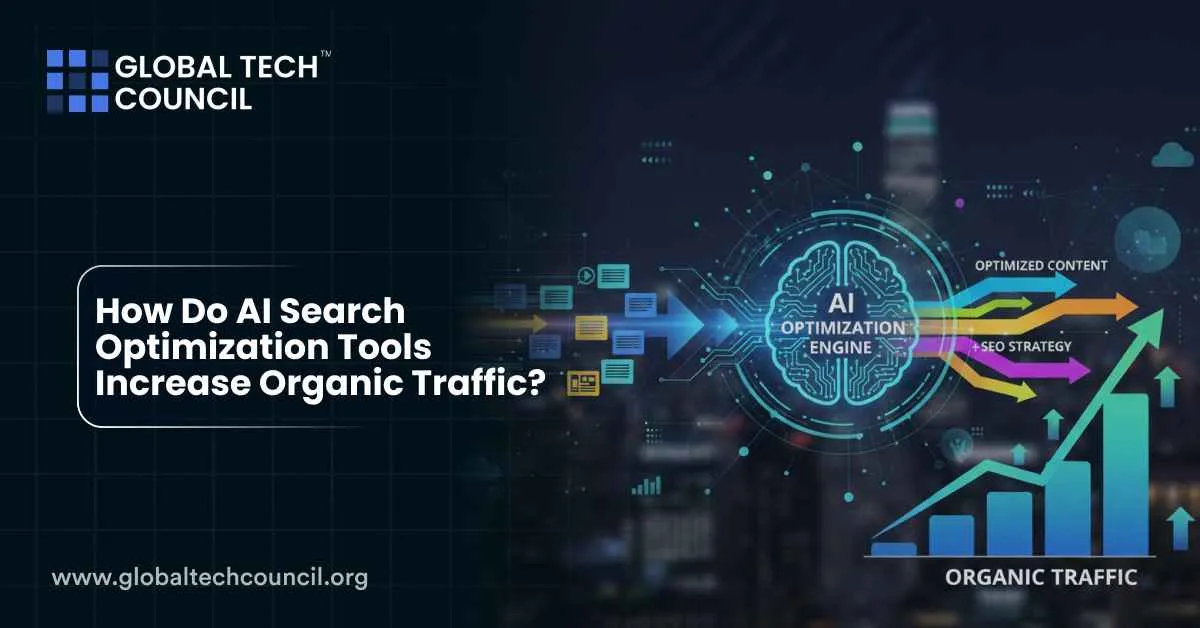
 AI search optimization tools increase organic traffic by helping teams align content with how modern search systems actually understand relevance. Instead of guessing what to write or endlessly tweaking keywords, these tools show what search engines and AI answer systems expect to see, what competitors already cover, and where gaps are limiting visibility.
Most teams turn to these tools when they notice the same patterns. Pages rank but stop climbing. Older articles slowly decline. New content takes too long to plan and publish. AI search optimization tools are designed to remove that friction and make improvement systematic rather than reactive.
A clear understanding of how search systems process content usually comes first through a Tech Certification, which explains structure, entities, and intent beyond traditional keyword logic.
What these tools do
In real workflows, AI search optimization tools help teams:
- Build content briefs based on top-performing pages
- Identify missing topics, entities, and questions
- Refresh existing articles to recover lost visibility
- Track presence inside AI answers like Google AI Overviews, ChatGPT, and Perplexity
They are not just writing assistants. They guide planning, coverage, and optimization so search engines and AI systems can clearly understand what a page is about and when to surface it.
Intent matching
One of the most common reasons content underperforms is intent mismatch.
AI optimization tools analyze leading pages and highlight:
- Core subtopics that consistently appear
- Questions users expect answers to
- Definitions, comparisons, and clarifications competitors include
This replaces guesswork with evidence. Writers stop wondering what to include and start covering what searchers are clearly looking for. Better intent alignment improves relevance signals, keeps users engaged longer, and stabilizes rankings over time.
Topical depth
Search engines reward pages that fully cover a topic.
These tools surface gaps such as:
- Missing sections or explanations
- Follow-up questions left unanswered
- Important concepts and entities present across top results
When a page answers more of the topic in one place, search systems have fewer reasons to rank competing content above it. This is where deeper system understanding helps. Teams with experience from Deep Tech Certification programs tend to use these insights more effectively because they understand how structure and context influence visibility.
Faster content refreshes
Refreshing existing content is often the fastest path to organic growth.
AI search optimization tools make this efficient by showing:
- What competitors have updated recently
- Which sections feel thin or outdated
- Where examples, steps, or definitions need improvement
Many teams report stronger results from refresh-first strategies than from publishing entirely new articles. Pages with history and authority often respond quickly to focused updates.
Publishing speed
Even when rankings do not jump immediately, teams using these tools usually move faster.
Common improvements include:
- Faster brief creation
- Clearer outlines for writers
- Quicker revision cycles
- Less back and forth between SEO and content teams
Speed matters. Consistent publishing and regular updates compound over time, which directly impacts impressions and long-term traffic growth.
Structure and internal links
AI optimization tools also encourage better structure.
They nudge teams to:
- Improve heading hierarchy
- Strengthen section flow
- Add relevant internal links
- Fix thin areas that cause users to leave
These changes help both users and crawlers understand how content fits together. Over time, this strengthens topical authority across the entire site.
Real-world results
Across case studies and practitioner discussions, two patterns appear.
Positive outcomes often include:
- Noticeable traffic lifts after optimizing existing articles
- Strong impression growth before clicks fully recover
- Faster recovery for declining content
Negative experiences usually happen when:
- Tools are treated like rigid checklists
- AI-generated text is published without judgment
- Automation replaces editorial thinking
The difference is not the tool. It is how the tool is used.
What to expect
AI search optimization tools work best when they are used to:
- Match search intent more precisely
- Improve depth and clarity
- Update existing content intelligently
They are not shortcuts to rankings. They amplify good strategy and expose weak strategy. That is why many teams pair these tools with broader decision-making skills from a Marketing and Business Certification to connect traffic growth with conversions, revenue, and brand impact.
Final takeaway
AI search optimization tools increase organic traffic by making content clearer, more complete, and easier for both users and search systems to understand. They shine when used as structured planning and optimization assistants, not as automated publishing engines.
Used thoughtfully, they help teams focus on what actually drives visibility. Answering real questions better than competitors and improving content continuously instead of guessing and hoping for rankings to improve.