


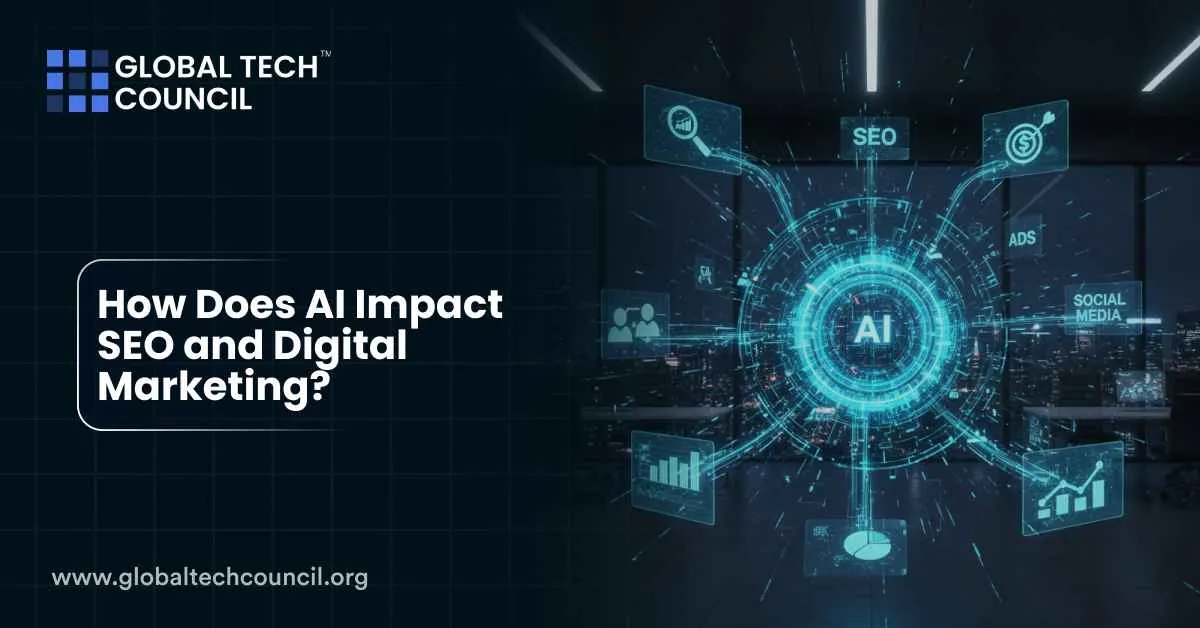
 AI is reshaping how search and digital marketing work. From automated keyword research to AI-powered search results that deliver instant answers, businesses are rethinking how they get discovered online. This shift affects not only content strategy but also visibility, engagement, and customer trust. To understand the underlying mechanics of these systems, an artificial intelligence certification offers a structured way to learn how AI models influence search rankings and digital campaigns.
AI and the New SEO Ecosystem
Traditional SEO revolved around keywords, backlinks, and metadata. Now, AI introduces a new layer: Answer Engine Optimization (AEO). Search tools like Google’s AI Overviews generate summaries directly on results pages, meaning fewer clicks flow to websites. Businesses must optimize for both human readers and AI systems that surface content in these overviews.
Generative AI in Marketing
Generative AI tools are increasingly used to draft blogs, ad copy, and social posts. While they save time, low-quality or spammy content is penalized more strictly by search engines. Google has ramped up crackdowns on thin AI-generated content. Quality, originality, and credibility are more critical than ever.
Predictive Power and Personalization
AI doesn’t just automate; it predicts. Tools analyze user data to forecast search trends, identify rising keywords, and deliver targeted marketing campaigns. Personalization goes further too—chatbots and recommendation engines can tailor messages for specific customers. To prepare for these shifts, a deep tech certification introduces professionals to the wider innovations, including AI, that drive predictive and personalized marketing.
Opportunities for Marketers
Marketers are now using AI to manage real-time campaign adjustments, performance reporting, and cross-channel optimization. The integration of AI across platforms also brings new skill requirements. A Data Science Certification equips marketers to interpret audience data effectively. For those focusing on strategy and growth, a Marketing and Business Certification connects AI’s technical capacity to customer experience and brand building.
Challenges Businesses Must Navigate
The rise of zero-click searches is one of the biggest hurdles. With AI giving answers directly, some sites see traffic dips. Another challenge is bias and factual accuracy, as AI tools sometimes present misleading or incomplete information. Transparency and explainability are becoming priorities so businesses can understand how their content is ranked or displayed.
The Future of SEO with AI
How AI Is Reshaping SEO and Digital Marketing
| Area of Impact | Current AI Influence |
| Keyword Research | Automated tools predict trending keywords in real time |
| Content Creation | Generative AI drafts blogs, ads, and product descriptions |
| Search Visibility | AI overviews reduce clicks, raising need for Answer Engine Optimization |
| Personalization | User data drives tailored recommendations and campaigns |
| Campaign Optimization | Real-time AI tools adjust targeting and spend |
| Customer Engagement | Chatbots and AI assistants provide immediate responses |
| Analytics | AI systems generate detailed reports and insights |
| Compliance | Regulators monitor AI-generated content quality and accuracy |
| Spam Control | Google cracks down on low-effort AI-generated pages |
| Future Outlook | Quantum computing and advanced AI may redefine SEO speed and scale |
Conclusion
AI’s influence on SEO and digital marketing is undeniable. It powers predictive insights, automates tasks, and creates new opportunities for personalization and growth. At the same time, businesses face challenges with reduced traffic from zero-click searches, concerns over content quality, and the demand for greater transparency. Those who adapt by combining technical know-how with marketing strategy will stay ahead.
Leave a Reply