


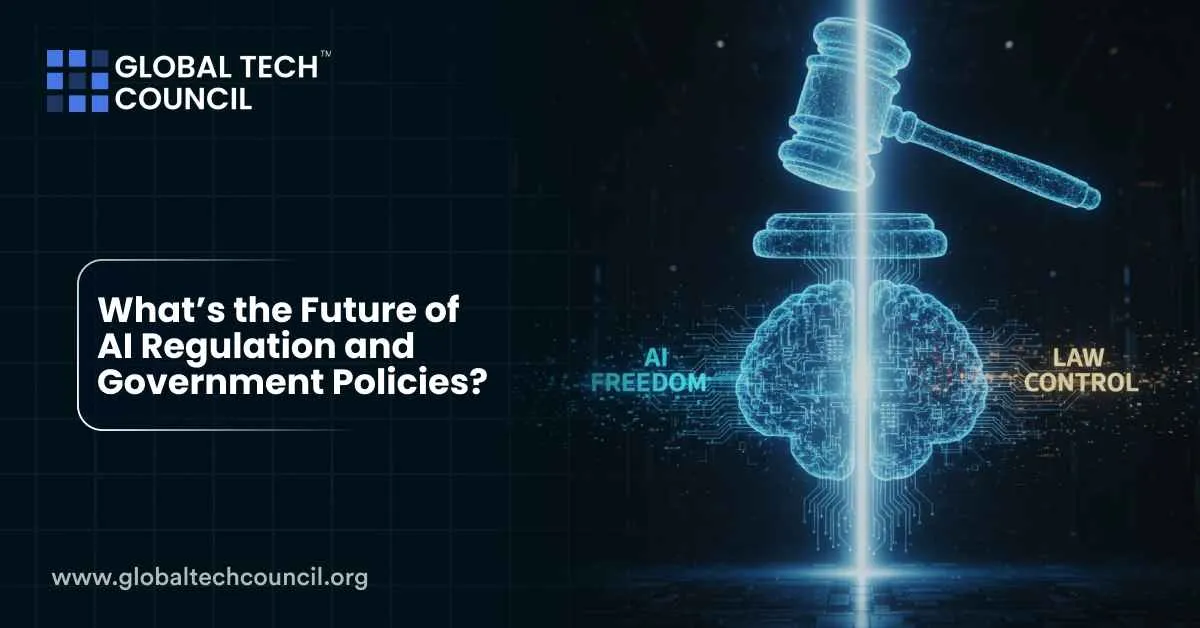
 Artificial Intelligence is moving faster than laws can keep up, and governments worldwide are racing to set rules that protect people without stalling innovation. New legislation is emerging, from Europe’s AI Act to the U.S. executive orders, each with a slightly different approach. For anyone looking to truly understand the mechanics behind these systems and their regulation, an Artificial Intelligence Certification is one of the best ways to gain both technical and ethical context.
How Governments Are Acting Now
Italy became the first EU country to pass a comprehensive AI law, requiring human oversight in healthcare and education, while also setting restrictions on under-14 users. South Korea’s Basic Act on AI, rolling out in 2026, emphasizes transparency, safety, and fairness, complete with a national AI control tower. In the U.S., the shift has been toward promoting leadership and innovation, with Executive Order 14179 aiming to remove barriers rather than add heavy restrictions. For those curious about the broader infrastructure that enables such policies to be effective, a Deep Tech Certification gives a broader view of the systems governments are trying to regulate.
Shared Themes and Tensions
Despite differences in tone, several themes repeat across policies. Governments are demanding more transparency about how AI is trained and used, particularly in sensitive sectors like healthcare and criminal justice. Oversight is being strengthened, requiring companies to accept responsibility when AI systems cause harm. At the same time, policymakers struggle with the balance between protecting citizens and encouraging innovation. The EU leans toward risk-based regulation, while the U.S. favors innovation-first strategies.
International Coordination Efforts
Regulation is not just happening within borders. The Council of Europe’s Framework Convention on AI has over 50 signatories committing to accountability, fairness, and the right to challenge AI decisions. The EU AI Act continues to serve as a reference point for other regions. Global summits like the 2025 AI Action Summit show that cooperation is growing, especially around inclusivity and digital equity. These moves suggest a future where international alignment, at least on principles, may help reduce regulatory fragmentation.
Challenges That Remain
The biggest issue is uneven implementation. Enforcement lags behind legislation, leaving questions about how penalties will work in practice. Definitions of terms like “frontier models” or “high-risk AI” are still vague. Meanwhile, smaller economies worry about the resources needed to comply with strict rules, while major powers debate how much freedom companies should have to innovate. For professionals navigating these complexities, the Data Science Certification provides essential skills for assessing compliance, bias, and accountability.
Implications for Businesses
Businesses must prepare for stricter reporting and disclosure requirements, especially around the provenance of AI-generated content and the risks of deepfakes or misuse. As rules expand, companies that build trust with users will have a competitive advantage. Leaders focused on scaling AI products responsibly often turn to the Marketing and Business Certification to align regulatory compliance with consumer expectations.
AI Regulation Landscape in 2025 and Beyond
| Region / Policy | Key Focus | Implementation Challenges |
| EU AI Act | Risk-based regulation, bans on harmful uses, transparency requirements | Enforcement across member states still developing |
| Italy AI Law (2025) | Human oversight, child protection, sector-specific rules | Integrating with EU AI Act, ensuring compliance |
| South Korea Basic Act (2026) | Transparency, fairness, AI safety institute | National-level enforcement complexity |
| US Executive Order 14179 | Removing barriers, boosting innovation and competition | Lack of strict safety mandates sparks debate |
| Council of Europe Framework Convention | Human rights, accountability, non-discrimination | Voluntary adherence, varying enforcement strength |
| AI Action Summit (2025) | Global cooperation, inclusivity, digital equity | Translating summit pledges into real action |
| Child Protection Rules | Age restrictions, parental consent in AI use | Monitoring and enforcement at scale |
| IP & Training Data Rules | Copyright, data provenance, ownership of AI outputs | Defining rights and auditing massive datasets |
| Frontier AI Oversight | Extra scrutiny for large-scale or high-risk models | Defining thresholds, global coordination |
| Standardization Efforts | ISO and national standards on bias, robustness | Keeping pace with rapid technical change |
Conclusion
The future of AI regulation will not be about one law or one country—it will be about a patchwork of policies that gradually align. Nations are experimenting with rules that emphasize transparency, oversight, and responsibility, while also trying not to hold back progress. Businesses and individuals will need to keep pace, not just with the technology, but with the frameworks that govern its use.
Leave a Reply