

Top 10 Uses of AI in Healthcare
 Tosh Marketing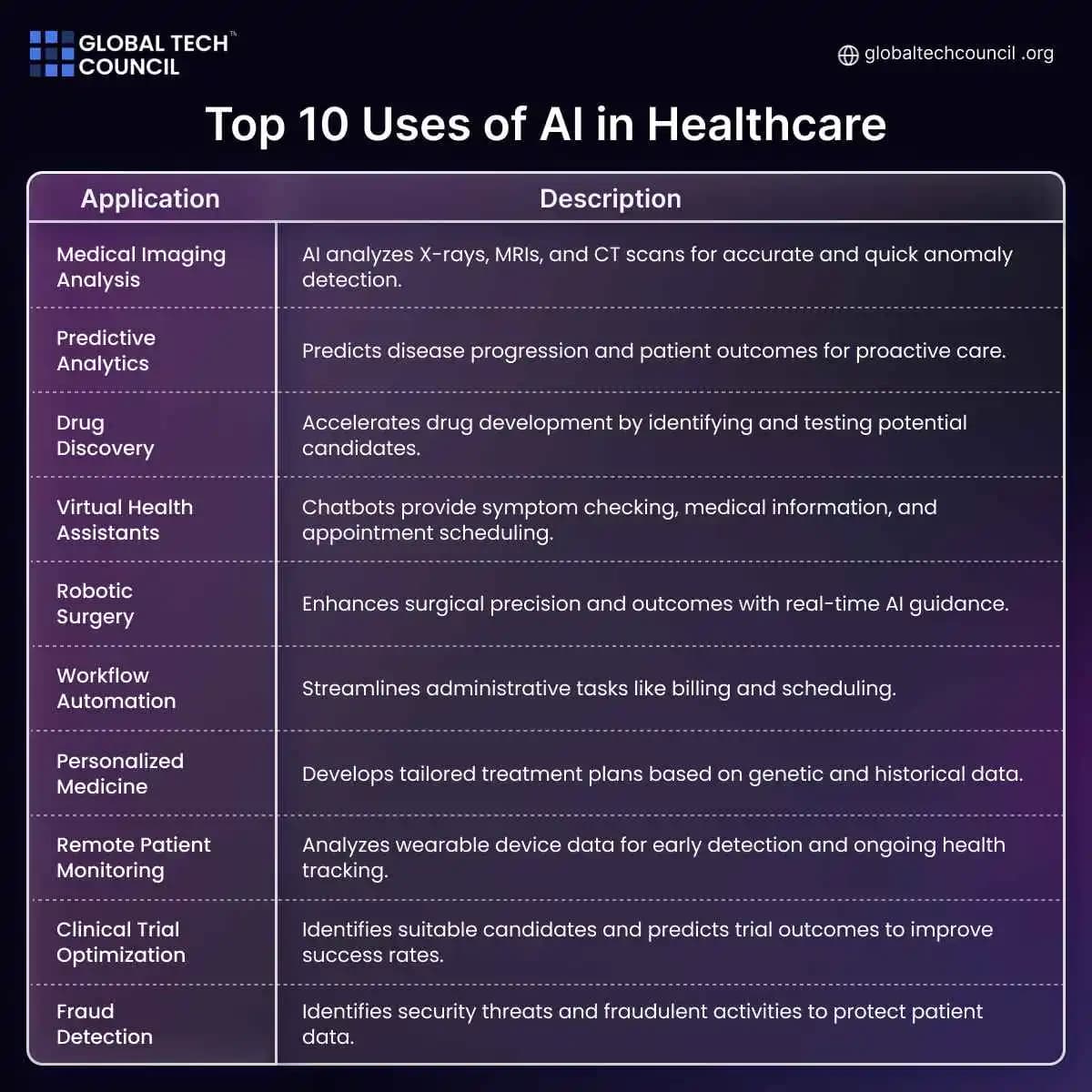
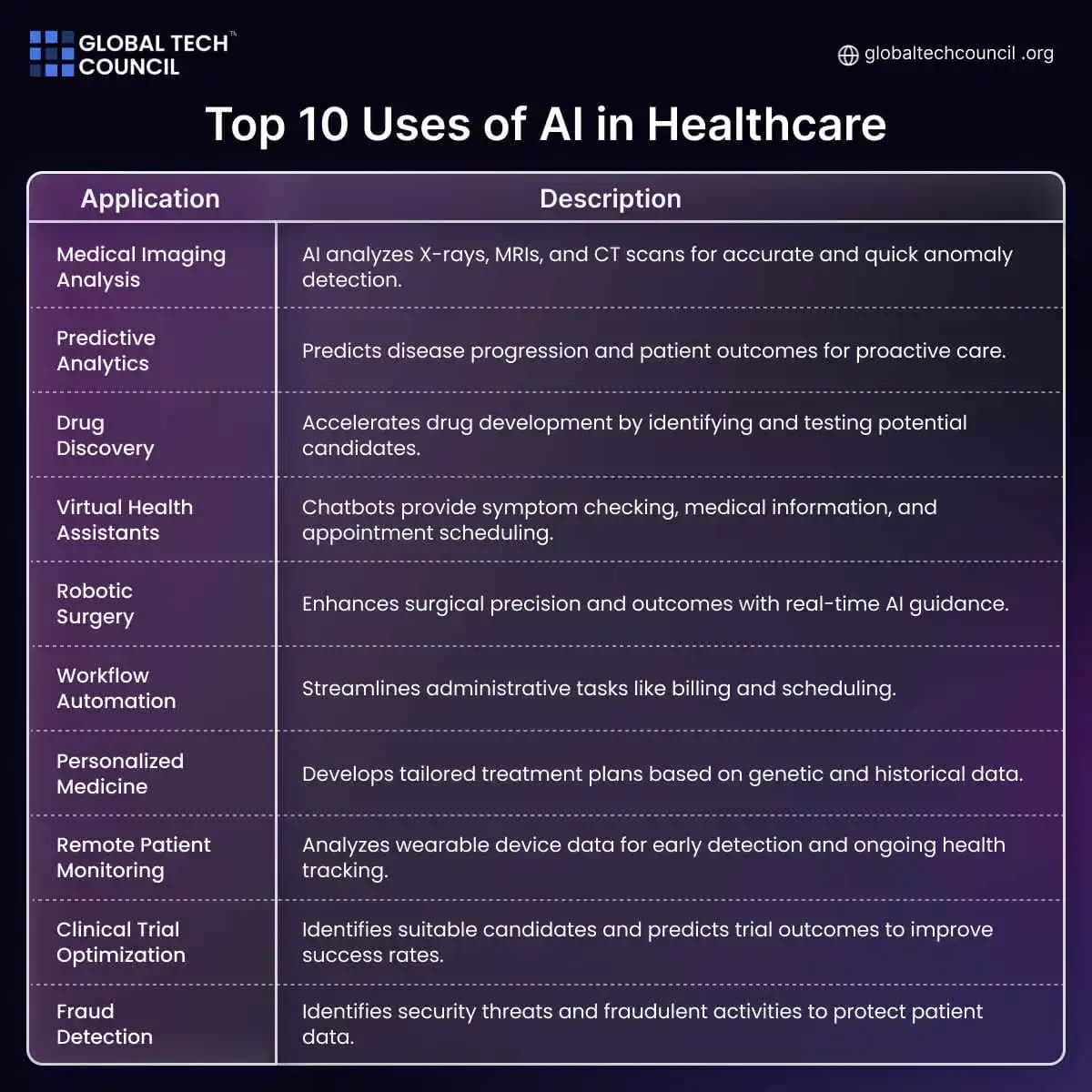
Artificial Intelligence (AI) is significantly transforming the healthcare industry by enhancing the efficiency, accuracy, and effectiveness of various medical processes. From diagnosis to treatment and beyond, AI’s impact is profound and far-reaching. Let’s dive into the top ten applications of AI in healthcare and how they are shaping the future of medical care.

Enhancing Diagnostic Accuracy with Medical Imaging
AI algorithms excel in analyzing medical imaging such as X-rays, MRIs, and CT scans. By quickly identifying anomalies, AI improves diagnostic accuracy and speeds up the treatment process, allowing for earlier intervention.
Predictive Analytics for Proactive Health Management
Through predictive analytics, AI forecasts disease progression and patient outcomes. This capability enables healthcare providers to offer proactive, personalized care, optimizing patient management and improving health outcomes.
Accelerating Innovations in Drug Discovery
AI significantly reduces the time and cost associated with drug discovery by identifying and testing potential drug candidates more efficiently. This not only accelerates the development process but also increases the likelihood of breakthroughs in treatment options.
Virtual Health Assistants and Robotic Surgery
Virtual health assistants use AI to manage patient interactions, from symptom checking to scheduling appointments, enhancing accessibility and patient engagement. In the operating room, AI-driven robotic systems enhance surgical precision and outcomes by providing real-time guidance to surgeons.
AI in Personalized Medicine and Remote Patient Monitoring
AI contributes to personalized medicine by developing customized treatment plans based on genetic and historical patient data. Additionally, AI analyzes data from wearable devices for early detection and continuous monitoring of patient health, enabling remote care.
Optimizing Clinical Trials and Enhancing Security
AI streamlines clinical trials by identifying suitable candidates and predicting outcomes, which improves success rates and efficiency. In the realm of security, AI detects and mitigates potential fraud, protecting patient data and healthcare systems.
Conclusion
As AI continues to evolve, its integration into healthcare becomes increasingly essential. For healthcare professionals looking to harness the full potential of AI, becoming a CAIE Certified Artificial Intelligence (AI) Expert® through the Global Tech Council offers the necessary expertise. This certification empowers individuals to implement AI solutions effectively within healthcare settings, leading to improved patient care and operational efficiencies.
Related Articles
View All
Infographics
Top 5 Sectors Using Big Data Analytics
Big data is growing every day and becoming a very popular word in the tech world. This infographic explains how 5 industries benefit the most from big data insights.
Infographics
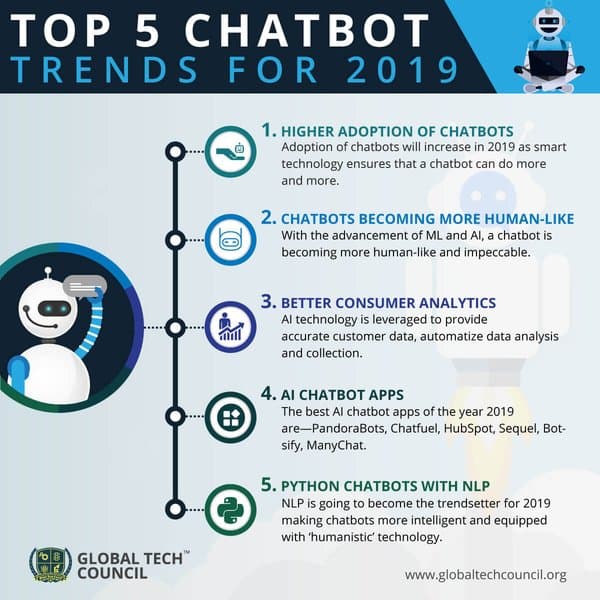
Top 5 Chatbots Trends For 2019
Chatbots help in creating business brands and giving the best customer services. Here is an infographic illustrating the top trends of chatbots.
Infographics
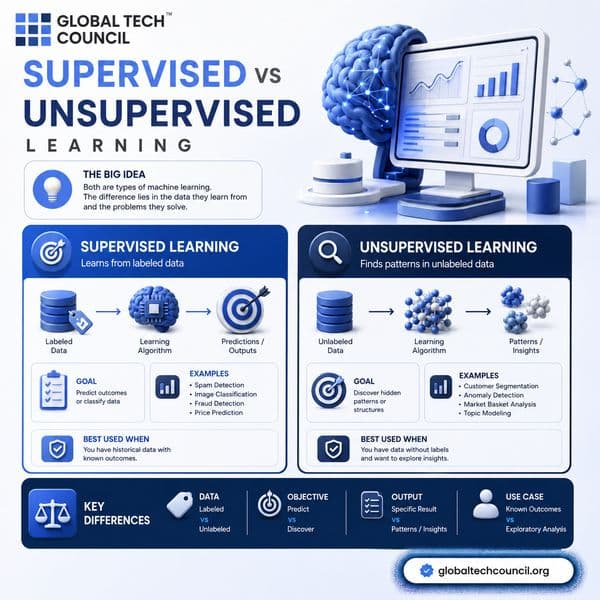
Supervised vs Unsupervised Learning
Supervised and unsupervised learning are two fundamental machine learning approaches used to train AI models. Supervised learning relies on labeled data to make predictions, while unsupervised learning identifies hidden patterns in unlabeled data. This guide compares their methods, benefits, limitations, and practical applications to help you understand when to use each technique.
Trending Articles
The Role of Blockchain in Ethical AI Development
How blockchain technology is being used to promote transparency and accountability in artificial intelligence systems.
AWS Career Roadmap
A step-by-step guide to building a successful career in Amazon Web Services cloud computing.
Top 5 DeFi Platforms
Explore the leading decentralized finance platforms and what makes each one unique in the evolving DeFi landscape.