


 Cyber security today is no longer only about firewalls, antivirus tools, or incident response teams reacting after something goes wrong. As organizations became more digital, more regulated, and more interconnected, leaders realized that security decisions needed structure, accountability, and visibility at the business level. This is where GRC entered the picture. To understand modern cyber security, it is essential to understand what is GRC in cyber security and why it has become a core pillar of how organizations protect themselves.
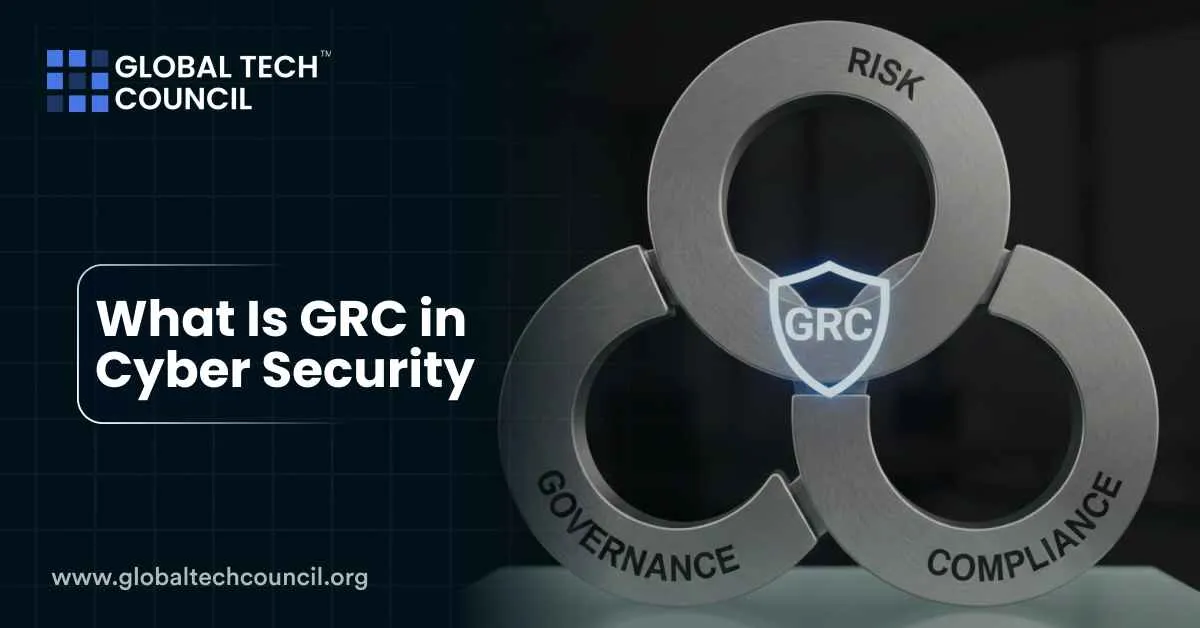
GRC stands for Governance, Risk, and Compliance. In cyber security, it refers to a structured approach that helps organizations define how security decisions are made, how cyber risks are identified and managed, and how regulatory and legal obligations are met consistently. Rather than treating security as a collection of tools or isolated controls, GRC connects policy, risk awareness, and compliance into one operating model.
For professionals entering or advancing in this space, foundational knowledge often starts with programs such as Cybersecurity certifications, which focus on how real organizations operationalize governance, assess cyber risk, and demonstrate compliance under scrutiny. Without this foundation, technical controls often fail to align with business reality.
Where GRC Came From and Why It Matters Now
The concept of GRC did not appear overnight. It gained prominence in the early 2000s after major corporate scandals and regulatory failures exposed how disconnected governance and risk practices had become. The Open Compliance and Ethics Group formally defined GRC as an integrated system that enables organizations to achieve objectives, address uncertainty, and act with integrity.
Cyber security accelerated the importance of GRC as digital systems began handling sensitive data at scale. Data breaches were no longer just IT issues. They became legal, financial, and reputational crises.
A turning point came on 25 May 2018, when the European Union’s General Data Protection Regulation went into effect. GDPR introduced fines of up to 4 percent of global annual revenue for serious violations. Cyber incidents now had direct regulatory consequences. Organizations could no longer claim ignorance or rely on informal processes.
Since then, similar regulations have expanded worldwide. On 26 July 2023, the US Securities and Exchange Commission adopted new rules requiring public companies to disclose material cyber incidents within four business days. These rules explicitly pushed cyber risk into board level governance discussions.
Governance, Risk, and Compliance
To fully understand what is GRC in cyber security, each pillar needs to be viewed in practical terms rather than abstract definitions.
Governance defines how decisions are made. In cyber security, this includes who owns security policies, how accountability flows from the board to management, and how priorities are set. Governance answers questions like who approves security investments, who accepts residual risk, and how incidents are escalated. Without governance, even strong security teams operate without direction.
Risk management focuses on identifying, analyzing, and prioritizing cyber threats based on business impact. This is not about eliminating all risk, which is impossible. It is about understanding which risks matter most. A ransomware attack on a hospital system has a very different impact than the same attack on a test environment. Risk management helps organizations decide where to invest time and resources.
Compliance ensures that laws, regulations, and contractual obligations are met. In cyber security, this includes standards like ISO 27001, SOC 2, PCI DSS, HIPAA, and GDPR. Compliance does not mean security is perfect, but it provides evidence that controls exist, are documented, and are followed consistently.
Why GRC Became Central to Cyber Security Strategy
One of the biggest lessons from major breaches is that technical defenses alone are not enough. Many organizations that suffered high profile incidents already had security tools in place. What they lacked was coordination and oversight.
Consider the 2017 Equifax breach, disclosed publicly on 7 September 2017. The vulnerability exploited was known and had a patch available months earlier. The failure was not purely technical. It involved governance gaps, poor asset visibility, and ineffective risk communication. GRC failures amplified the impact of a technical flaw.
GRC helps prevent this by forcing organizations to document systems, assign ownership, track risks, and verify controls. It creates traceability. When regulators or auditors ask why a control failed, GRC provides the evidence trail.
How GRC Works Inside Organizations
In practice, GRC operates across departments rather than sitting inside one team. Boards and executives define governance expectations. CISOs and security leaders translate those expectations into policies and controls. Risk teams assess threats and vulnerabilities. Compliance teams map controls to regulations and prepare for audits.
Many organizations now use dedicated GRC platforms to centralize this work. These tools track policies, risk registers, audit findings, and remediation tasks in one place. Automation reduces manual reporting and provides real time visibility into risk posture.
This structured approach is especially critical as environments become more complex with cloud infrastructure, third party vendors, and remote workforces.
The Human Side of GRC and Why It Is Often Misunderstood
One reason GRC is misunderstood is because it is often associated with paperwork and audits. In reality, good GRC reduces friction. When governance is clear and risks are prioritized, security teams spend less time reacting and more time preventing incidents.
GRC also bridges the gap between technical teams and leadership. Executives rarely want vulnerability scan results. They want to understand business impact. GRC translates technical risk into language leaders can act on.
This translation requires more than policy knowledge. It requires deep understanding of systems and threats, which is why many professionals complement GRC expertise with advanced learning such as Deep Tech Certification programs. These help practitioners evaluate whether controls actually work in real world environments rather than only on paper.
Regulatory Pressure and the Cost of Getting GRC Wrong
The financial impact of weak GRC can be severe. According to the IBM Cost of a Data Breach Report published on 24 July 2024, the global average cost of a data breach reached $4.45 million. Organizations with strong governance and automated compliance processes experienced significantly lower breach costs and faster recovery times.
Regulators increasingly examine governance failures after incidents. Fines, legal action, and executive accountability often follow. In some jurisdictions, directors can be held personally responsible for negligence in oversight.
This reality has turned GRC from a support function into a strategic necessity.
Careers and Skills in Cyber Security GRC
GRC has also become a major career path within cyber security. Roles such as GRC analyst, risk manager, compliance lead, and security governance manager are now common across industries.
These roles require a blend of technical awareness, regulatory knowledge, and communication skills. Professionals must understand threats well enough to assess risk, while also explaining implications to non technical stakeholders.
This is where business literacy matters. Cyber risk discussions often influence investment decisions, mergers, and strategic planning. Many professionals strengthen this capability through programs like Marketing and Business Certification, which improve how security leaders communicate value and risk to decision makers.
Conclusion
So, what is GRC in cyber security really about? It is about creating order in an environment defined by uncertainty. It ensures that security is not reactive, isolated, or purely technical. Instead, it becomes measurable, auditable, and aligned with business goals.
As digital systems expand and regulations tighten, GRC will only grow in importance. Organizations that treat it as a checkbox will struggle. Those that embed it into culture and decision making will adapt faster and recover better when incidents occur.
GRC does not eliminate cyber risk. It makes risk visible, manageable, and accountable. In a world where cyber threats are constant, that clarity is what separates resilient organizations from vulnerable ones.