

Generative AI Explained (2026 Guide)
 Tosh Marketing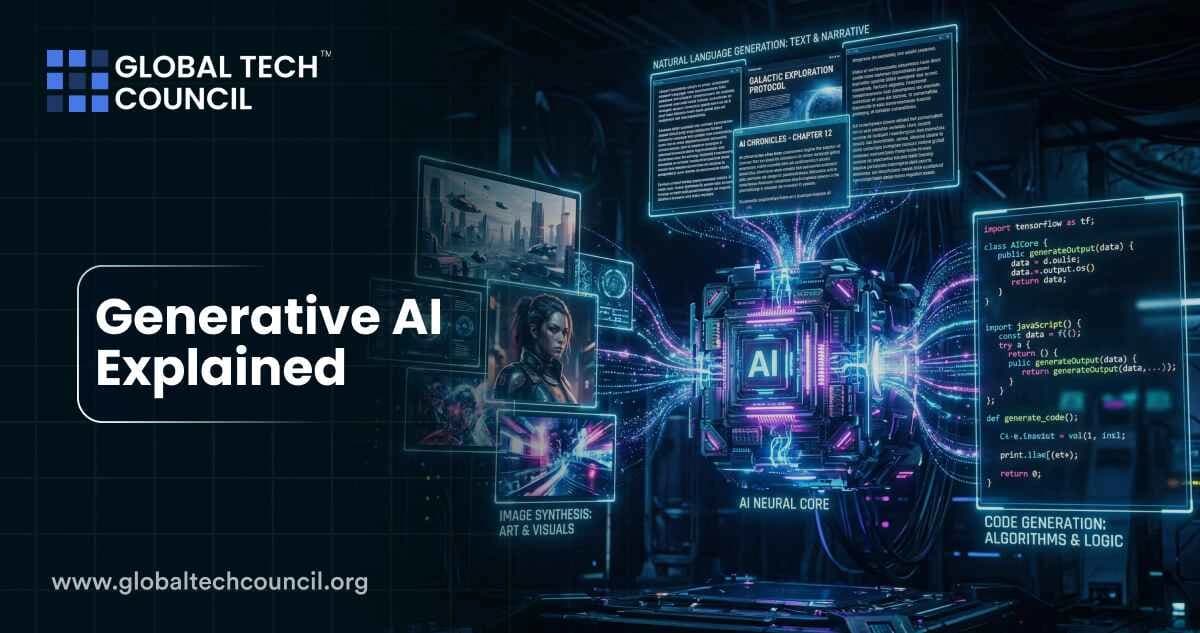
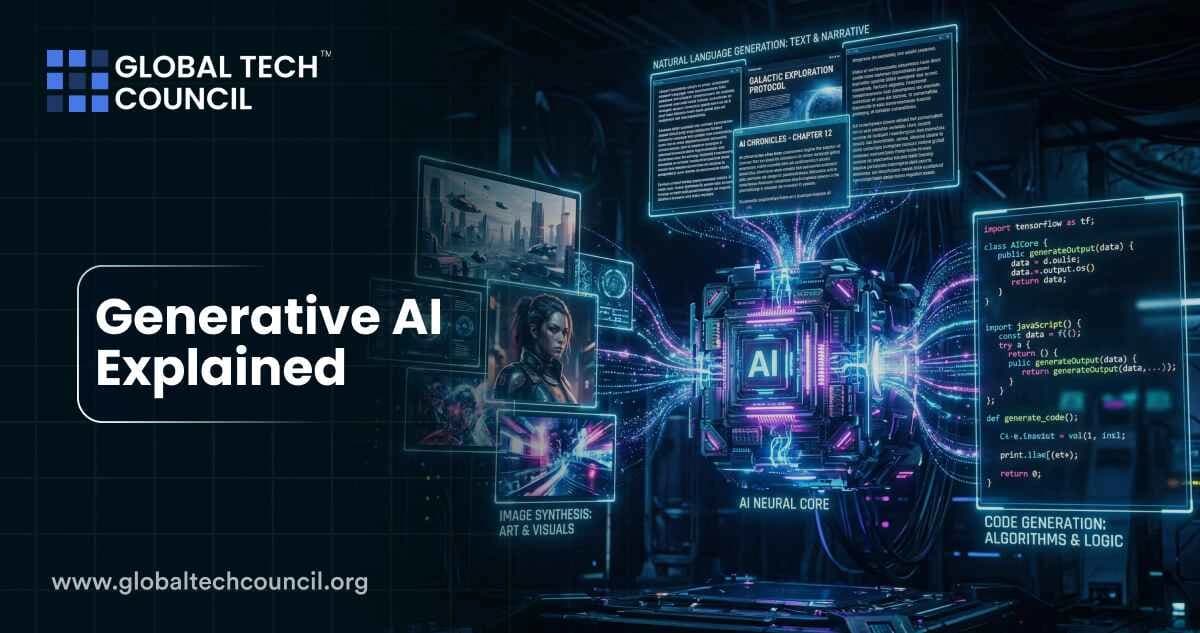 Generative AI has become one of the most influential technologies of the modern era. In 2026, it is no longer just a trend associated with chatbots or AI image tools. It now plays a central role in software development, content creation, automation, customer support, marketing, education, and business operations.
Organizations across industries are adopting generative AI to increase efficiency, reduce repetitive work, improve decision-making, and unlock new forms of creativity. At the same time, professionals are trying to understand how this technology works, why it matters, and how they can build skills to stay competitive in an AI-driven economy.

For those who want to build a strong foundation, learning through an AI Expert certification and an Agentic AI certification can provide practical knowledge of how intelligent systems are transforming modern workflows.
This guide explains generative AI in a simple, practical, and SEO-friendly way. It covers how it works, where it is used, what makes it different in 2026, and what the future may look like for businesses and professionals.
What Generative AI Really Means Today
Generative AI refers to artificial intelligence systems that can create original content based on patterns learned from large datasets. Unlike traditional AI, which often focuses on analysis or prediction, generative AI is built to produce something new.
That output can include:
- Articles and written content
- Images and visual concepts
- Software code
- Audio and voice
- Video clips
- Product descriptions
- Summaries and reports
- Marketing assets
For example, a traditional AI tool might identify whether a customer review is positive or negative. A generative AI system can write a personalized response, summarize customer feedback, and even draft improved product messaging based on that review.
This shift from analysis to creation is what makes generative AI so powerful in 2026.
How Generative AI Works Behind the Scenes
Although generative AI may appear highly advanced from the user’s perspective, its basic function is centered around learning patterns and predicting outputs.
Learning from Massive Data Sources
Generative AI models are trained on large volumes of information, including books, websites, code repositories, images, documents, and structured datasets. During training, the system learns how language, visuals, and logic are formed.
This allows the AI to understand patterns such as:
- Sentence structure
- Context and meaning
- Visual composition
- Coding syntax
- Content flow
- User intent
Generating Responses Based on Prompts
Once trained, the AI uses a prompt to predict and generate the most relevant output. For example, if you ask it to write a blog introduction, summarize a document, or explain a concept, it generates a response based on the patterns it has learned.
Fine-Tuning for Real-World Use
Most modern generative AI systems are further refined after training. This process helps improve quality, safety, usability, and performance in practical business and technical settings.
As a result, the AI systems used in 2026 are far more useful, accurate, and adaptable than earlier versions.
Why Generative AI Matters More Than Ever in 2026
Generative AI is more important in 2026 because it has moved from novelty to real-world utility. It is no longer just interesting. It is productive.
It Saves Time Across Workflows
One of the biggest reasons businesses are adopting generative AI is speed. It can help complete time-consuming tasks such as:
- Writing first drafts
- Creating summaries
- Drafting emails
- Organizing ideas
- Producing marketing copy
- Generating support replies
This reduces manual effort and allows professionals to focus on higher-value work.
It Supports Creativity and Innovation
Generative AI is also becoming a strong creative assistant. Writers use it for brainstorming, marketers use it for campaigns, designers use it for concept exploration, and developers use it for faster prototyping.
It Improves Personalization
Modern customers expect tailored experiences. Generative AI makes it easier to personalize communication, recommendations, onboarding flows, and digital content at scale.
It Increases Business Efficiency
By helping teams work faster and more intelligently, generative AI improves productivity without necessarily increasing staffing requirements.
This is one of the main reasons the technology is now seen as a serious business asset rather than a short-term innovation trend.
The Different Forms of Generative AI in 2026
Generative AI is not limited to one kind of output. In 2026, the most advanced systems are capable of working across multiple content formats.
1. AI for Text Creation
This is the most widely used form of generative AI. Text-based systems can help create:
- Blog posts
- Emails
- Scripts
- Reports
- Product descriptions
- FAQs
- Social media captions
Businesses use these tools to support communication, content production, and internal knowledge sharing.
2. AI for Image Creation
Image generation tools can create visuals from text prompts or reference images. These are useful for:
- Marketing campaigns
- Ad creatives
- Product mockups
- Brand concepts
- Presentation visuals
This has become especially valuable for creative teams that need faster design iteration.
3. AI for Software Development
One of the most practical applications of generative AI is in coding and software engineering. AI-powered development tools can now help with:
- Writing code
- Explaining functions
- Debugging errors
- Refactoring old systems
- Generating tests
- Improving productivity
Professionals who want to develop technical AI skills in this area can explore the AI Powered coding expert certification, which is highly relevant for building intelligent coding workflows.
4. AI for Audio and Voice
Generative AI is also being used to create:
- Voiceovers
- Audio narration
- Speech synthesis
- Music drafts
- Podcast support
This is becoming more useful in content creation, training, media, and customer experience.
5. AI for Video Generation
Video generation tools are improving rapidly and are now being used for:
- Short promotional videos
- Explainer content
- Visual storytelling
- Social media clips
- Educational content
While still evolving, this area is becoming more commercially useful every year.
6. Multimodal AI Systems
One of the biggest developments in 2026 is the rise of multimodal AI. These systems can understand and generate across text, images, audio, and documents within a single workflow.
This makes AI significantly more practical than it was just a few years ago.
Where Generative AI Is Making the Biggest Impact
Generative AI is already being used across industries in ways that directly improve business performance and productivity.
Marketing and Content Strategy
Marketing teams use generative AI to create:
- SEO blog drafts
- Email campaigns
- Ad copy
- Landing page ideas
- Social media content
- Product messaging
This allows marketers to move faster while still focusing on strategy, targeting, and brand voice.
Professionals who want to understand this shift more deeply can explore the AI powered digital marketing expert pathway to learn how AI is transforming modern marketing operations.
Software and Product Development
Developers and product teams use generative AI for:
- Code generation
- Documentation
- Feature ideation
- Testing support
- Rapid prototyping
This is one of the clearest examples of AI acting as a productivity partner rather than a replacement.
Education and Learning
Generative AI is helping students, teachers, and professionals by supporting:
- Lesson planning
- Study assistance
- Concept explanation
- Personalized tutoring
- Simplified learning materials
This is making knowledge more accessible across different learning levels and industries.
Customer Support and Service Operations
Support teams are using generative AI to:
- Draft replies
- Summarize conversations
- Organize tickets
- Suggest helpful responses
- Improve support speed
This improves response quality while reducing repetitive manual effort.
Research and Knowledge Work
Researchers, analysts, and knowledge professionals are using AI to summarize reports, organize findings, compare ideas, and explore large volumes of information more efficiently.
Generative AI vs Agentic AI: What Is the Difference?
This is one of the most important AI concepts to understand in 2026.
Generative AI Creates Outputs
Generative AI focuses on producing things such as:
- Written content
- Images
- Code
- Summaries
- Marketing copy
- Reports
Agentic AI Executes Tasks
Agentic AI goes a step further. It is designed to plan, decide, and take action across workflows.
For example:
- A generative AI tool might write a sales email.
- An agentic AI system might identify leads, personalize outreach, schedule follow-ups, and log activity automatically.
This shift from content generation to task execution is shaping the next phase of AI adoption across industries.
The Biggest Advantages of Generative AI
Generative AI offers several important benefits when used correctly.
Faster Output
Tasks that once took hours can now take minutes.
Better Scalability
Teams can create more content, experiments, and solutions without increasing effort at the same pace.
Enhanced Creativity
AI helps users brainstorm, prototype, and explore new directions more efficiently.
Easier Access to Information
Complex ideas can be summarized and simplified for broader understanding.
Cross-Department Usefulness
The same technology can support marketing, development, research, operations, customer support, and education.
The Main Challenges and Risks of Generative AI
While generative AI is highly useful, it also comes with limitations that users must understand.
Hallucinations
AI can generate information that sounds accurate but is actually incorrect.
Inconsistency
The same prompt can sometimes produce different results.
Bias and Safety Concerns
If not properly managed, AI systems can reflect bias or produce problematic outputs.
Weak Verification
AI often sounds confident, even when it is wrong. That is why human review remains essential.
Over-Reliance
Organizations that depend too heavily on AI without oversight may reduce quality and weaken decision-making.
The smartest way to use generative AI is with supervision, not blind trust.
Why Deep Tech Matters in the Growth of Generative AI
Generative AI is part of a larger movement of emerging technologies that includes machine learning, intelligent automation, robotics, blockchain, and advanced computing systems.
Professionals who want to explore this broader innovation landscape can use deeptech certification resources to better understand how advanced technologies are shaping the future of work, digital transformation, and intelligent systems.
Generative AI is not an isolated trend. It is part of a much larger technological shift.
Essential Skills for Working with Generative AI
To use generative AI effectively in 2026, professionals need more than curiosity. They need practical, adaptable skills.
Prompting and Instruction Writing
Clear and structured prompts lead to better AI output.
Critical Thinking
Users must evaluate whether AI-generated content is accurate, useful, and aligned with the task.
Subject Knowledge
AI works best when guided by someone who understands the topic well.
Workflow Design
The most effective professionals use AI as part of repeatable systems rather than for isolated tasks.
AI Literacy
Understanding how AI works, where it fails, and how to use it responsibly is becoming increasingly important across industries.
These are the kinds of skills that help professionals move from basic usage to real value creation.
What the Future of Generative AI Looks Like Beyond 2026
The future of generative AI is likely to be shaped by several major trends.
More Specialized Models
Smaller, task-specific models are becoming more useful and affordable for businesses.
More Autonomous AI Systems
The industry is moving toward systems that can complete multi-step tasks with less human prompting.
Stronger Business Integration
AI is becoming more embedded into software tools, workflows, and digital products.
Better Governance and Control
Businesses increasingly want transparency, permissions, compliance, and secure AI deployment.
Higher Expectations from Users
People now expect AI to be useful, reliable, and practical, not just impressive.
That is a sign that the technology is maturing.
Final Thoughts
Generative AI in 2026 is one of the most important technologies shaping the digital world. It is changing how people create, communicate, code, market, learn, and solve problems.
Its true value lies not just in what it can generate, but in how effectively people and businesses use it.
When used thoughtfully, generative AI can improve productivity, unlock creativity, reduce repetitive work, and help organizations operate more intelligently. But success with AI still depends on human judgment, strategic thinking, and responsible implementation.
Generative AI is no longer just something to watch.
It is something to understand, apply, and master.
Frequently Asked Questions
1. What is generative AI in simple words?
Generative AI is a type of artificial intelligence that creates new content such as text, images, code, audio, or video based on learned patterns from data.
2. Why is generative AI important in 2026?
It is important because it improves productivity, supports creativity, enhances personalization, and is now integrated into many business workflows.
3. How does generative AI differ from traditional AI?
Traditional AI usually predicts or analyzes information, while generative AI creates original outputs such as written content, code, and visuals.
4. Where is generative AI used most often?
It is widely used in marketing, software development, education, customer support, design, research, and business automation.
5. What is the difference between generative AI and agentic AI?
Generative AI creates outputs, while agentic AI can plan and complete tasks more independently.
6. Can generative AI help with coding?
Yes, generative AI can write code, explain functions, fix bugs, generate tests, and support software development workflows.
7. Is generative AI useful for digital marketing?
Yes, it is highly useful for SEO content, email campaigns, ad copy, social media planning, and personalized marketing.
8. What are the biggest risks of generative AI?
The biggest risks include factual errors, hallucinations, bias, inconsistency, and over-reliance without human verification.
9. Is generative AI replacing human workers?
In most cases, it is augmenting human work by handling repetitive or time-consuming tasks rather than fully replacing people.
10. How can I start learning generative AI?
You can start by understanding AI basics, experimenting with tools, studying real-world use cases, and building practical skills through structured learning.
Related Articles
View All
AI & ML
NVIDIA Cosmos 3 Explained: The Next Generation of Physical AI
Explore NVIDIA Cosmos 3, an open foundation model for Physical AI that combines vision reasoning, world generation, multimodal understanding, and action prediction for robotics and autonomous systems.
AI & ML
Jev Latency Explained
Learn how Jev achieves low-latency AI decisions through parallel sampling, structured outputs, calibrated probabilities, and System One architecture designed for real-time software automation.
AI & ML
Jev Calibrated Decisions Explained
Learn how Jev calibrated decisions work, including typed outputs, probability estimates, confidence scores, and how software can use uncertainty for more reliable automation.
Trending Articles
The Role of Blockchain in Ethical AI Development
How blockchain technology is being used to promote transparency and accountability in artificial intelligence systems.
AWS Career Roadmap
A step-by-step guide to building a successful career in Amazon Web Services cloud computing.
Top 5 DeFi Platforms
Explore the leading decentralized finance platforms and what makes each one unique in the evolving DeFi landscape.