

Research & Knowledge Hub
2,242+ research articles, technical guides, and in-depth analyses authored by council members and industry experts.
Latest Articles
2,242 articles

Meet Google Playground: Create Games With AI
Meet Google Playground, Google's new experimental platform that lets you create, play, and share custom games with text prompts. Learn how it works, basic game design tips, a sample session, safety and sharing features, Unity Spark plans, and limits.
OpenAI Dots vs Grok Bot vs Muse
Compare OpenAI Dots, Grok Bot, and Meta Muse to understand how these persistent AI agents differ in cloud computer use, connected apps, automation, memory, and long-running workflows.

What Is OpenAI Dots?
Learn what OpenAI Dots are, how these always-on AI agents work, and how they use GPT-6 Astra, cloud computers, connected apps, and persistent context to manage ongoing tasks.
OpenAI Launches GPT 6.1-Sol
OpenAI launches GPT-6.1 Sol, a powerful reasoning model delivering near-Astra performance at lower cost for coding, computer use, multi-agent workflows, and professional tasks.
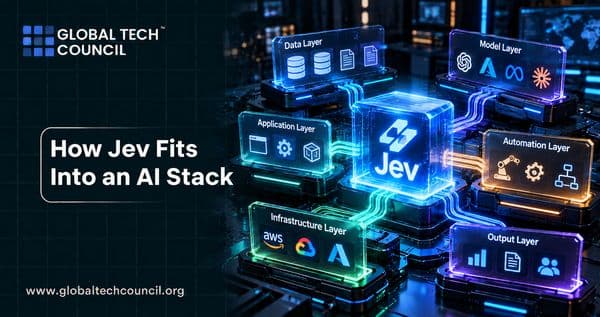
How Jev Fits Into an AI Stack
Learn how Jev fits into an AI stack as a machine-native decision layer that provides typed, probabilistic outputs for applications, agents, workflows, and automation systems.

How to Crack AI Roles in Companies Like OpenAI & Emergent
Learn how to prepare for AI roles at companies like OpenAI and Emergent by developing in-demand technical skills, building strong projects, gaining practical experience, and preparing for interviews.
NVIDIA’s New AI Models: Nemotron 3.5 Lightning, Cosmos 3 and the Future of Agentic AI
Explore NVIDIA Nemotron 3.5 Lightning and Cosmos 3, how they support agentic and Physical AI, and what these models reveal about NVIDIA’s evolving vision for autonomous intelligent systems.
How NVIDIA Cosmos 3 Enables Physical AI and Multi-Agent Workflows
Explore how NVIDIA Cosmos 3 enables Physical AI and agent-based workflows through multimodal reasoning, world simulation, action generation, synthetic data, and autonomous system development.
NVIDIA Nemotron 3.5 Lightning vs NVIDIA Cosmos 3: Key Differences and Use Cases
Compare NVIDIA Nemotron 3.5 Lightning and NVIDIA Cosmos 3, including their architectures, capabilities, performance goals, and use cases across agentic AI and Physical AI.
NVIDIA Cosmos 3 Explained: The Next Generation of Physical AI
Explore NVIDIA Cosmos 3, an open foundation model for Physical AI that combines vision reasoning, world generation, multimodal understanding, and action prediction for robotics and autonomous systems.
NVIDIA Nemotron 3.5 Lightning: What It Is and How It Advances AI Reasoning
Explore NVIDIA Nemotron 3.5 Lightning, a reasoning-capable 30B MoE model designed for efficient agentic AI, coding, tool use, long-context tasks, and low-latency inference.
Jev for Software Automation
Explore how Jev supports software automation with fast, typed, probabilistic decisions for routing, scoring, classification, verification, branching, and workflow control.