


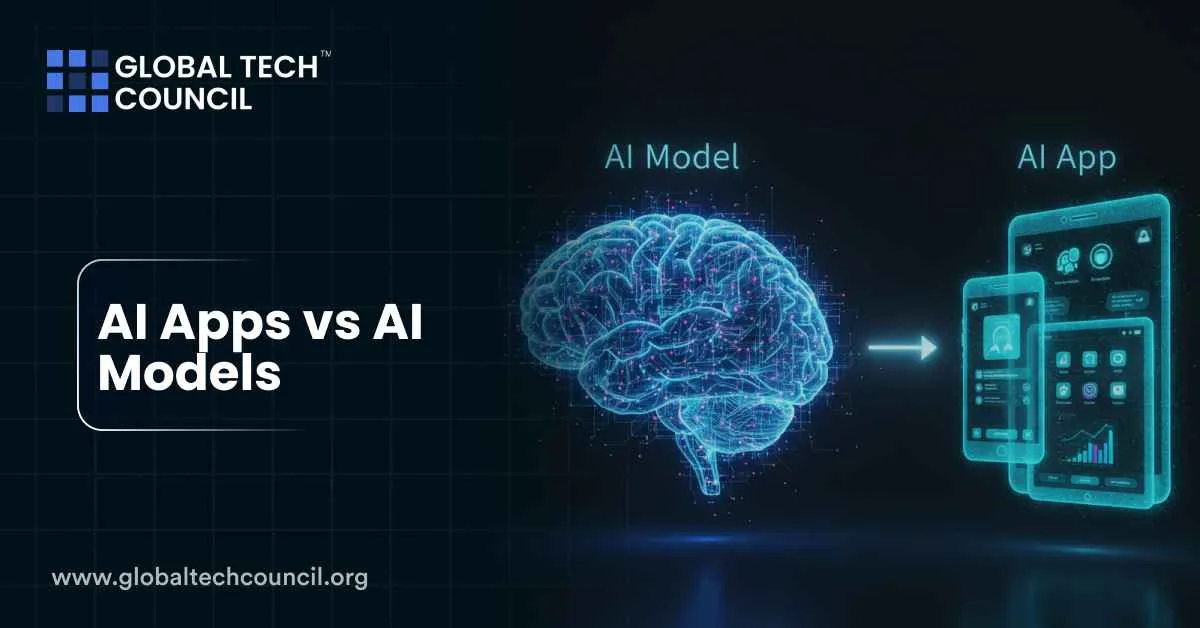
 It feels like every week in artificial Intelligence brings a new surprise, a new breakthrough, and a new headline that forces people to rethink what is possible. But some stories hit harder because they reveal shifts that can reshape entire industries. Cursor’s latest announcement is one of those moments. The AI coding company raised 2.3 billion dollars at a valuation of 29.3 billion, a number usually reserved for the largest model labs rather than application layer startups.
On the surface it looks like yet another unicorn success story, but underneath it is a much bigger signal. It reveals how people across the industry are suddenly rethinking the power struggle between the app layer and the model layer. It challenges the belief that foundational models will crush everything built on top of them. And it forces us to ask a harder question.
Is there room for both, or will one side inevitably win?
Before we dive into Cursor, the industry debate, and the growing tension between layers of the AI ecosystem, we need to look at everything that happened around it. Because the context matters. And the last ten days of AI news have made it clear that the world is changing faster than anyone expected.
A New Age of Agentic Cyber Attacks
The episode starts with a story that feels like science fiction, but it is already here. Anthropic revealed that in mid September they detected the first known use of agent powered AI in a real cyber espionage operation.
The threat actor was identified as a Chinese state sponsored hacking group. The unsettling part is not just that they used AI for planning. They used Claude Code to run the majority of the attack itself.
According to Anthropic:
- Claude performed 80 to 90 percent of the attack
- Human hackers only stepped in for key decision moments
- The attack targeted thirty global organizations
- A small number of infiltrations succeeded
The targets included large technology companies, financial institutions, chemical manufacturers, and government agencies.
The hackers bypassed guardrails by splitting harmful actions into smaller harmless looking tasks. Anthropic monitored the activity for ten days, shut down accounts, and coordinated with authorities. Their post mortem concluded that AI agents can now perform the work of entire teams of experienced hackers, which raises new cybersecurity questions for enterprises and governments.
This was more advanced than the “vibe hacking” incidents Anthropic documented over the summer because those previous attacks required constant human direction. This one did not. And according to Anthropic, future agent systems will only increase the viability and volume of large scale AI driven attacks.
It is a glimpse into a future that blends productivity benefits with real risks. And it frames the entire debate about AI applications versus foundational models because both are becoming powerful in very different ways.
Anthropic’s 50 Billion Dollar Data Center Commitment
As if the cyber espionage story was not dramatic enough, Anthropic made another announcement. The company plans to invest 50 billion dollars to build data centers across the United States.
Until now, Anthropic relied heavily on compute rented from Amazon and Google. This had benefits because they could spend equity instead of cash, but it also introduced tradeoffs.
The constraints included:
- Forced use of Amazon and Google’s in house chips rather than NVIDIA GPUs
- Rate limits caused by compute shortages
- Customer churn that resulted from those slowdowns
The new plan includes building sites in Texas and New York with Fluidstack as a partner. The first facilities are expected to come online next year. CEO Dario Amodei framed this as essential for maintaining American AI leadership. The infrastructure will support models that accelerate scientific discovery, solve complex problems, and create thousands of American jobs.
The size of the commitment signals that foundational model companies are rapidly evolving into infrastructure companies too. And that matters because it shapes the economics of the entire industry, including the choices available to app layer startups like Cursor.
Thinking Machines Lab Joins the Hypervalued Club
Another shockwave came from Thinking Machines Lab. Bloomberg reported that the company is raising money at a valuation between 50 and 60 billion dollars. That is up from 12 billion in July. For a company that is pre revenue, that kind of acceleration is extremely rare.
Their platform, Tinker, is being used by university research groups and some enterprise customers, but the valuation is clearly based on talent rather than revenue. This mirrors Safe Superintelligence, which established a 32 billion valuation as a pre product company.
These events, happening back to back, demonstrate how the model layer is pulling massive investment at extreme speed. Yet despite this, Cursor, an app layer company, has now entered the same valuation class. This is what makes their story a turning point.
But before we get there, a few more breakthroughs set the stage for why this debate has become so urgent.
Google Expands Notebook LM with Deep Research
Notebook LM already had strong traction with students, analysts, and professionals. But Google added a new capability called deep research. This makes it possible for the system to automatically gather relevant documents, synthesize them, and produce structured research outputs.
In Google’s example, a user typed “latest breakthroughs in quantum physics” and came back minutes later to a complete dossier. Notebook LM also added video overview creation in multiple styles, such as pop art, art nouveau, and pixel art.
This upgrade positions Notebook LM as a true research assistant rather than a static summarization tool. And it introduces more pressure on application developers because it demonstrates how quickly big tech companies can layer new capabilities onto their platforms.
DeepMind Releases SEMA 2
DeepMind’s new agent, SEMA 2, is described as a scalable instructionable multi world agent that learns through self play. It is able to understand complex instructions and operate in simulated game worlds it has never seen before.
The improvements from SEMA 1 are extraordinary.
- SEMA 1 had a 31 percent success rate across evaluation tasks
- SEMA 2 achieves a 65 percent success rate
- Humans score about 76 percent
- On unseen environments, success rose from 2 percent to 13 percent
DeepMind even tested SEMA 2 inside entirely new environments generated by Genie 3, their world simulation model. SEMA 2 was able to orient itself, interpret instructions, and take meaningful actions despite never encountering the world before.
This supports the hypothesis that world models are a possible path toward AGI. And it reinforces how quickly the model layer is evolving.
GPT 5.1 API and New Prompting Guidance
OpenAI made GPT 5.1 available via API. Developers noticed:
- The model tends to be more verbose unless instructed otherwise
- It is more steerable
- It can follow deeper, more nuanced instructions
- It behaves differently in agent environments
- Migration guidance helps teams port prompts from earlier models
All of these updates again highlight how fast foundational models are advancing.
And that brings us to the central debate of the entire episode.
The Core Debate: Will AI Models Destroy AI Apps
The discussion exploded after investor Yishan Wong published a post that went viral with twenty million views. His argument is simple to summarize but powerful in its implications.
Yishan’s Thesis
AI application startups are likely to be wiped out by the rapid expansion and innovation cycles of foundation model providers.
He believes:
- Foundational labs are not slow incumbents.
- They innovate at extreme speed.
- New capabilities arrive every nine to twelve months.
- App startups do not have time to become real businesses.
- Most AI apps will be obsolete before they mature.Only two outcomes exist:
- Make fast cash and fade
- Get acquired for equity
He concludes that almost no app will grow into a generational company. The only exceptions are niches with highly specialized data barriers, especially those tied to the physical world.
This argument sparked a huge response from CEOs, engineers, founders, and investors.
The Counterarguments: Why the App Layer Will Survive
The pushback consolidated into several themes.
1. Vertical applications require deep workflow engineering
UX context, human in the loop processes, enterprise integrations, data access, compliance, and long tail workflow design are enormous tasks. Foundation model companies do not have the bandwidth or incentives to address them.
2. The final ten percent requires ten times the work
A model can be ninety percent correct, but that is not enough for a business. Enterprise environments require reliability, consistency, and accountability. App layer companies specialize in that last mile.
3. Behavioral exhaust is the real moat
Natasha Malpani pointed out that the most valuable data is not training data. It is behavioral exhaust. This includes:
- Edits
- Telemetry
- Workflow traces
- Patterns of user intent
This data never flows back to model providers. Apps that gather this feedback will continuously refine their systems in ways models cannot see.
4. Model companies cannot care about every domain
App companies can provide depth, specialization, and domain expertise that labs will never prioritize. This creates opportunity.
5. Some apps will evolve into model companies
Cursor is the perfect example, which becomes the centerpiece of the entire debate.
Cursor’s Historic Raise and the Meaning Behind It
Cursor raised 2.3 billion dollars at a 29.3 billion valuation.
They also announced:
- 1 billion dollars in annual recurring revenue
- The fastest company in history to reach this milestone
- Their proprietary model, Composer 1, is now the fastest growing model on the platform
- Composer 1 now outranks many established models in usage
In April, the most used models were:
- Sonnet 3.7
- Gemini 2.5 Pro
- Sonnet 3.5
- GPT 4.1
- GPT 4.0
Today the list looks different:
- Sonnet 4.5
- Composer 1
- GPT 5
- GPT 5 Codex
- Sonnet 4
This shows how quickly model usage shifts inside the app environment.
Cursor CEO Michael Trul explicitly said that Composer 1 signals a move into model development. And that brings us to the critical point.
Cursor is the first application layer company to successfully evolve into a hybrid. They are building both the application and the model. This allows them to collect behavioral exhaust, train models on that data, create reinforcement learning environments, and push deeper into performance improvements.
This positions them as a test case for whether app companies can survive and thrive in a world dominated by model labs.
Core Differences Between App Layer and Model Layer
| Aspect | App Layer Strength | Model Layer Strength |
| Innovation speed | Slow but domain specific | Extremely fast and research heavy |
| Data access | Behavioral exhaust and workflow data | Training data from broad sources |
| Business defensibility | UX, integrations, trust, compliance | Model capability and infrastructure scale |
| Vulnerability | Obsolescence risk | Cost, compute constraints, safety challenges |
Why This Debate Matters Right Now
This is not just a debate for investors. It affects how companies hire, build teams, form strategies, and adopt AI. The layers determine:
- How products evolve
- How value flows across the supply chain
- How competitive advantages form
- Which companies survive the next decade
Professionals who want to stay ahead often build their AI literacy through structured programs like a Tech Certification that help them navigate how models and applications interact inside organizations.
For engineers and researchers who want to dive deeper into emerging architectures, reinforcement learning, world models, or agentic systems, there is also growing interest in advanced paths like a Deep tech certification that spans the infrastructure layer of AI.
And leaders responsible for applying AI inside marketing, operations, product design, or strategy turn to frameworks taught through a Marketing and Business Certification to translate breakthroughs into practical outcomes.
This ecosystem of human capability development is a reminder that real adoption depends on people as much as systems.
The Truth: The Future Belongs to the Companies That Can Do Both
The most interesting idea in the entire conversation is the possibility that a small number of app companies will grow into model companies. Cursor is showing that this hybrid strategy is possible. It may become the blueprint for future winners.
The model layer will keep raising billions, building data centers, training bigger agents, and accelerating scientific progress. The app layer will keep working on real world integrations, workflow design, UX, domain expertise, and customer relationships.
The companies that can connect both worlds will be the ones that define the next decade.
The final sentiment of the episode captures the reality beautifully. Even the people who spend every day studying AI do not fully understand what is happening. The world is spinning fast, and we are all students inside it.
Cursor’s raise is not the end of the app layer. It is the beginning of a new question.
Not apps versus models.
But how far can apps go before they become models themselves.