

AI in Blockchain Industry
 Tosh Marketing
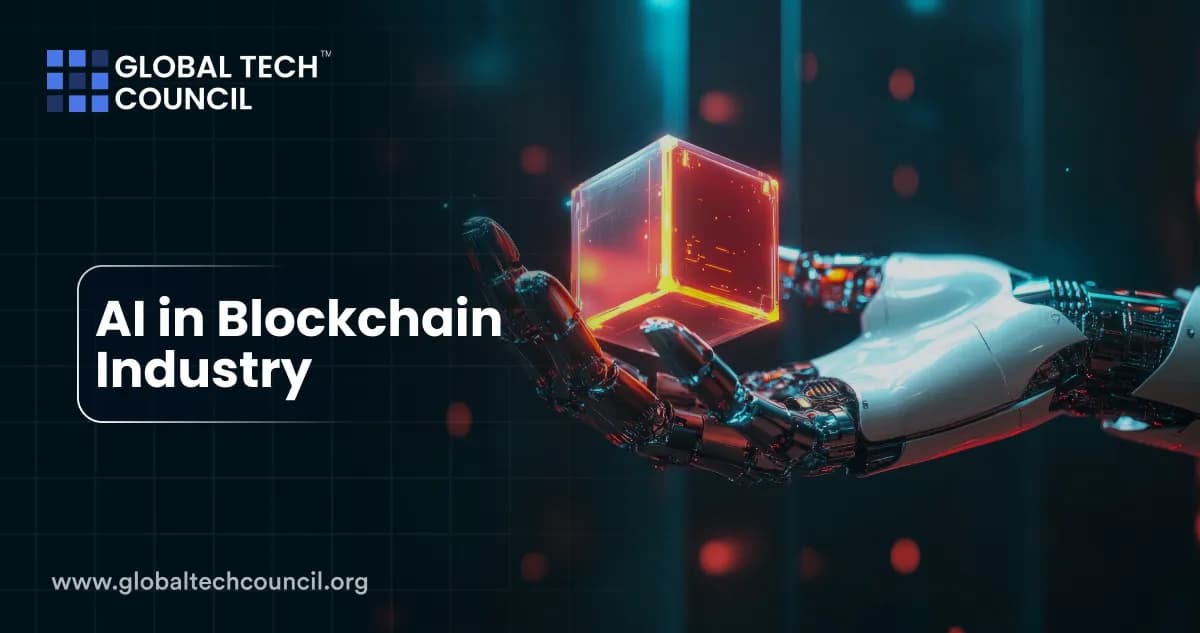 Artificial Intelligence and blockchain are reshaping the digital world by combining intelligence with decentralization. Blockchain ensures secure, transparent, and tamper resistant data storage, while AI introduces automation, analytics, and decision making capabilities. Together, these technologies are creating a new generation of intelligent decentralized systems.
As adoption increases across industries, professionals are upgrading their skills through programs like the AI Expert certification and the Agentic AI certification. These certifications help individuals gain expertise in building and managing advanced AI driven blockchain solutions.

This article explores the evolving role of AI in blockchain, highlighting real world applications, benefits, challenges, and future trends.
How AI and Blockchain Work Together
AI and blockchain complement each other by addressing each other’s limitations. Blockchain provides a secure and decentralized environment for storing data, while AI processes and analyzes that data to generate insights.
AI enhances blockchain systems by enabling automation, detecting anomalies, and improving decision making. On the other hand, blockchain improves AI by ensuring that the data used for training models is accurate and tamper proof.
This combination results in more reliable, efficient, and intelligent systems.
Key Drivers Behind AI Adoption in Blockchain
Several factors are accelerating the integration of AI into blockchain ecosystems:
- Growing need for secure and transparent data systems
- Increasing complexity of blockchain networks
- Demand for automated decision making
- Rapid growth of decentralized applications
- Rising importance of data driven insights
AI helps address these needs by improving efficiency, enabling predictive analysis, and automating complex processes.
Technologies Powering AI Driven Blockchain Solutions
Machine Learning for Data Analysis
Machine learning algorithms analyze blockchain transactions to identify patterns and detect irregularities. This is essential for fraud detection and risk management.
Natural Language Processing in Smart Contracts
Natural language processing simplifies the creation of smart contracts by converting human instructions into code. This improves accessibility for non technical users.
Predictive Intelligence
AI powered predictive models analyze historical data to forecast trends and optimize blockchain operations.
Intelligent Automation Systems
AI enables automated workflows in blockchain networks, reducing manual effort and improving operational efficiency.
Real World Use Cases of AI in Blockchain
Advanced Fraud Detection Systems
AI plays a critical role in identifying suspicious activities in blockchain networks. By analyzing transaction patterns, AI can detect anomalies in real time.
Example: Crypto Monitoring Tools
AI powered systems track blockchain transactions to prevent fraud and enhance security.
Smarter Smart Contracts
AI enhances smart contracts by making them adaptive and context aware. These contracts can execute automatically based on real time data.
Example: Insurance Automation
Smart contracts powered by AI can process claims instantly when conditions are met.
Supply Chain Optimization
AI and blockchain improve supply chain visibility and efficiency.
Example: Logistics Tracking
Blockchain records every transaction, while AI analyzes data to optimize delivery routes and predict demand.
Decentralized Finance Innovation
AI is transforming decentralized finance platforms by improving risk assessment and automating trading strategies.
Example: Algorithmic Trading
AI driven bots analyze market trends and execute trades for better returns.
Secure Healthcare Data Systems
AI and blockchain enable secure storage and analysis of healthcare data.
Example: Patient Record Management
Blockchain ensures data security, while AI provides insights for better diagnosis and treatment.
Identity Management Solutions
AI enhances identity verification processes within blockchain systems.
Example: Digital Identity Platforms
AI analyzes biometric data, and blockchain secures identity information.
Importance of Technical Expertise
The development of AI driven blockchain applications requires strong technical skills.
Certifications such as the AI Powered coding expert certification provide hands-on experience in building AI solutions.
Additionally, professionals can explore advanced technologies through deeptech certification.
Programming knowledge is also essential. Courses like the python certification and node.js certification help developers build scalable and efficient applications.
AI in Blockchain Marketing and Growth Strategies
AI is transforming how blockchain projects are promoted and adopted. It enables organizations to analyze user behavior, optimize campaigns, and improve engagement.
Businesses use AI to:
- Understand audience preferences
- Deliver personalized marketing campaigns
- Enhance community interaction
Professionals can develop expertise in this field through the AI powered digital marketing expert program.
Benefits of AI in Blockchain Ecosystems
Improved Security
AI strengthens blockchain networks by detecting threats and preventing fraud.
Enhanced Efficiency
Automation reduces manual tasks and speeds up processes.
Better Decision Making
AI provides actionable insights based on data analysis.
Increased Transparency
Blockchain ensures data integrity, while AI enhances interpretation.
Cost Optimization
Automation and improved efficiency reduce operational costs.
Challenges in AI Blockchain Integration
Despite its advantages, integrating AI with blockchain comes with challenges:
Data Privacy Issues
Ensuring the security of sensitive data is critical.
High Resource Requirements
Both AI and blockchain require significant computational power.
Technical Complexity
Integration of these technologies can be complex.
Skill Gap
There is a shortage of professionals skilled in both AI and blockchain.
Addressing these challenges is essential for successful implementation.
Emerging Trends in AI and Blockchain
The future of AI in blockchain is driven by innovation and technological advancements:
Autonomous Decentralized Systems
Agentic AI will enable systems to operate independently.
Intelligent Smart Contracts
Smart contracts will become more adaptive and data driven.
Secure Data Marketplaces
Blockchain will provide trusted data, while AI extracts value.
Integration with IoT
AI and blockchain will work with IoT devices for advanced applications.
Best Practices for Implementation
Organizations can maximize the benefits of AI and blockchain by following these best practices:
- Define clear goals and objectives
- Invest in scalable infrastructure
- Ensure data quality and security
- Build skilled teams
- Continuously monitor and improve systems
A strategic approach ensures long term success.
Conclusion
AI is transforming the blockchain industry by adding intelligence, automation, and predictive capabilities to decentralized systems. Its applications in fraud detection, smart contracts, supply chain management, and decentralized finance highlight its immense potential.
As these technologies continue to evolve, professionals with the right skills and certifications will play a key role in shaping the future of digital innovation. By embracing AI and blockchain together, organizations can create more secure, efficient, and intelligent systems.
Frequently Asked Questions
1. What is AI in blockchain?
AI in blockchain refers to the integration of intelligent technologies to enhance blockchain systems.
2. How does AI improve blockchain security?
AI detects anomalies and prevents fraudulent activities.
3. What are common applications of AI in blockchain?
Applications include fraud detection, smart contracts, and supply chain management.
4. Can AI replace blockchain?
No, AI complements blockchain rather than replacing it.
5. What skills are required for AI blockchain careers?
Skills include programming, machine learning, and blockchain development.
6. Why is AI important in blockchain?
AI enhances automation, data analysis, and decision making.
7. What challenges exist in AI blockchain integration?
Challenges include high costs, complexity, and skill shortages.
8. How does AI improve smart contracts?
AI makes smart contracts more adaptive and intelligent.
9. What is the future of AI in blockchain?
The future includes autonomous systems and advanced analytics.
10. Are certifications important for AI blockchain careers?
Yes, certifications validate expertise and improve career opportunities.
Related Articles
View All
AI & ML
Meet Google Playground: Create Games With AI
Meet Google Playground, Google's new experimental platform that lets you create, play, and share custom games with text prompts. Learn how it works, basic game design tips, a sample session, safety and sharing features, Unity Spark plans, and limits.
AI & ML
OpenAI Dots vs Grok Bot vs Muse
Compare OpenAI Dots, Grok Bot, and Meta Muse to understand how these persistent AI agents differ in cloud computer use, connected apps, automation, memory, and long-running workflows.
AI & ML
What Is OpenAI Dots?
Learn what OpenAI Dots are, how these always-on AI agents work, and how they use GPT-6 Astra, cloud computers, connected apps, and persistent context to manage ongoing tasks.
Trending Articles
The Role of Blockchain in Ethical AI Development
How blockchain technology is being used to promote transparency and accountability in artificial intelligence systems.
AWS Career Roadmap
A step-by-step guide to building a successful career in Amazon Web Services cloud computing.
Top 5 DeFi Platforms
Explore the leading decentralized finance platforms and what makes each one unique in the evolving DeFi landscape.