

How to Crack AI Roles in Companies Like OpenAI & Emergent

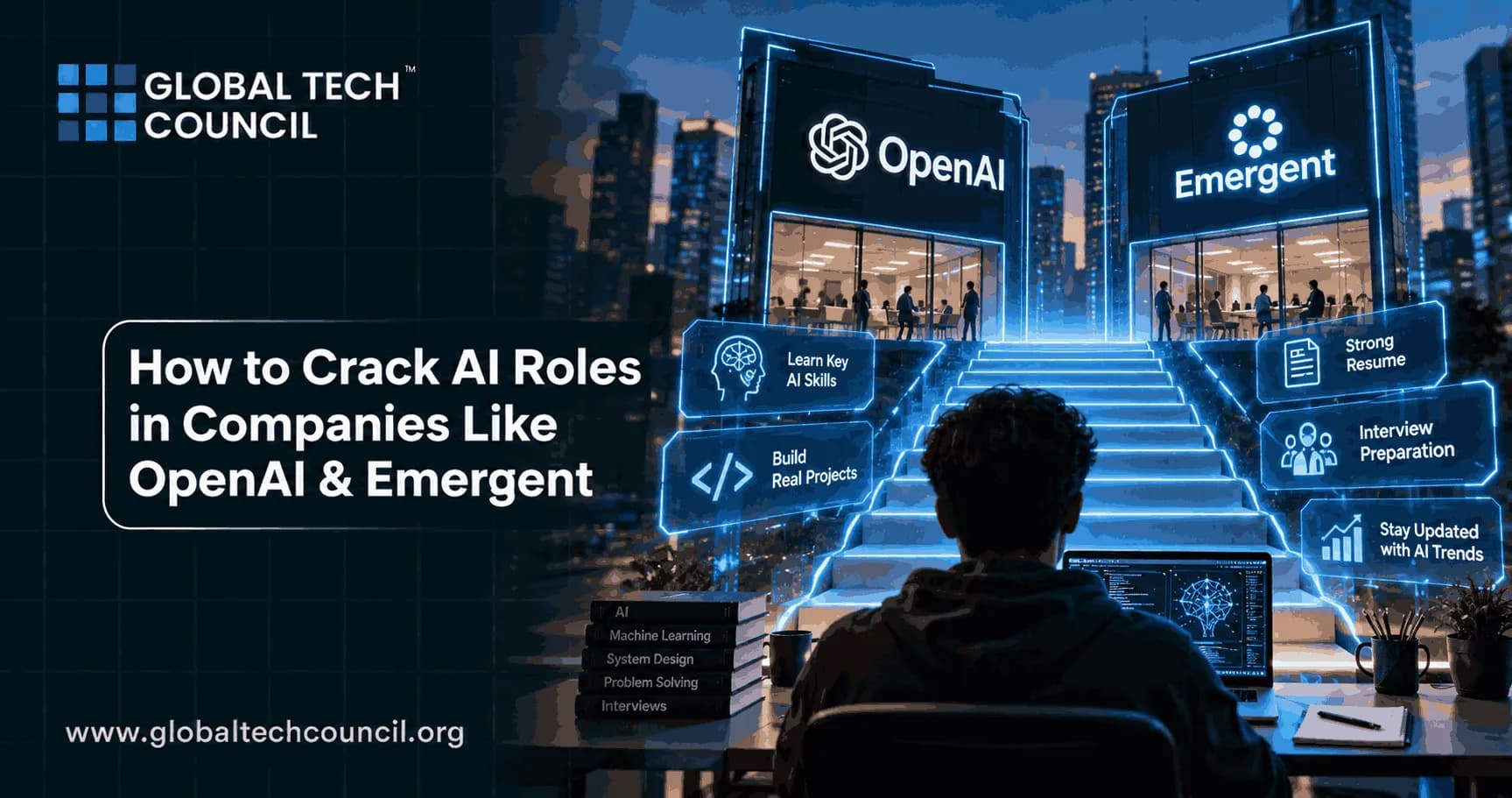
Landing a role at a company like OpenAI or Emergent has become one of the most sought-after goals in tech, and for good reason. These companies sit at the center of the fastest-moving part of the industry, building the models and tools that are reshaping how software gets written, how work gets done, and how people interact with technology. But getting hired at this level takes more than a general interest in AI. It requires specific technical depth, a portfolio that proves you can actually build with these tools, and an understanding of what these companies are genuinely looking for. Building this kind of targeted expertise is part of why more candidates are pursuing a Certified Artificial Intelligence (AI) Expert credential, since a structured, credentialed foundation in AI concepts can meaningfully strengthen a resume next to candidates with similar experience.
This article breaks down what companies like OpenAI and fast-growing AI startups like Emergent are actually hiring for, what skills and experience matter most, and how to position yourself realistically for these roles, written clearly enough for someone early in their career while offering real depth for experienced professionals making a pivot into AI.

Understanding the Two Very Different Companies You're Targeting
Before building a strategy, it helps to understand that OpenAI and Emergent, while both operating in AI, represent very different kinds of companies with different hiring needs. OpenAI is a frontier AI research and product company building the underlying models, GPT, reasoning systems, and infrastructure that power much of the generative AI industry, and its roles often demand deep technical specialization in machine learning research, infrastructure engineering, or applied AI safety.
Emergent, by contrast, is a fast-growing applied AI startup, part of Y Combinator's Summer 2024 batch, backed by investors including Khosla Ventures, SoftBank, and Google, that turns plain language into production-ready software through AI coding agents. Emergent reported reaching 100 million dollars in annual recurring revenue within eight months of its public launch, with more than 6 million users across 190-plus countries building applications on its platform. Its hiring needs skew toward engineers who can build and ship fast, reliable AI-powered products in production, alongside roles in growth, sales, and go-to-market functions supporting rapid scale. Understanding this distinction, frontier research versus applied product building, is essential before tailoring your approach to either kind of company.
What Roles Actually Exist at Companies Like These
A common mistake candidates make is assuming every AI company role requires a PhD in machine learning. In reality, the range of roles is much broader. At a company like Emergent, open positions have included Senior AI Research Engineer, Software Engineer roles across backend, infrastructure, and frontend, Forward Deployed Engineer positions that work directly with customers implementing AI solutions, AI Analyst roles focused on business analytics and product intelligence, and even creative and marketing-adjacent roles like AI Filmmaker and Content Creator supporting the company's growth. At OpenAI and similar frontier labs, roles span research scientists, applied AI engineers, infrastructure and systems engineers, product managers, and increasingly, specialized safety and alignment researchers.
Recognizing which category of role actually fits your background, engineering, research, applied product work, or growth and go-to-market, is the first genuinely useful step toward a focused job search, rather than applying broadly to every AI-labeled opening without a clear sense of fit.
Building the Technical Foundation That Actually Matters
For engineering and research roles specifically, the technical bar at companies like OpenAI is genuinely high, and candidates need real depth in areas like machine learning fundamentals, large-scale distributed systems, and, increasingly, practical experience building and evaluating AI agents rather than just prompting a chatbot. For applied AI companies like Emergent, the bar often leans more toward strong software engineering fundamentals combined with the ability to integrate AI models into reliable, production-grade systems, since much of what these companies build depends on correctness, reliability, and security at scale rather than novel model research alone.
Developing this kind of technical foundation is exactly what a Certified Artificial Intelligence (AI) Developer program is designed to support, covering practical AI development skills, from working with model APIs to understanding different AI architectures, that translate directly into the kind of applied engineering work companies like Emergent hire for daily.
Building a Portfolio That Actually Demonstrates Capability
Resumes alone rarely get candidates through the door at companies this competitive. What tends to matter far more is a demonstrated portfolio of real, working projects. For engineering roles, this means shipping actual applications, ideally ones that use AI models in a genuinely useful, well-architected way, not just a wrapper around an API call. For research-adjacent roles, this means published work, open source contributions, or documented experimentation showing genuine understanding of how models behave and fail.
Companies building AI agent products, like Emergent, specifically value candidates who understand agent reliability, a genuinely hard problem involving getting AI systems to behave correctly and predictably in production rather than just in a demo. Building projects that grapple honestly with this kind of reliability challenge, rather than showcasing only polished demos, tends to stand out far more to hiring teams who deal with these exact problems every day.
Understanding What "AI-Native" Hiring Actually Means
A growing number of AI-focused companies, including some in this space, explicitly describe themselves as looking for "AI-native" candidates, prioritizing proof of work over a traditional resume and expecting candidates to use AI tools aggressively as part of how they already work. This reflects a genuine cultural shift at fast-moving AI startups, where the expectation is not just that you can build AI products, but that you already use AI tools fluently in your own daily workflow, whether that means using coding agents to accelerate development or using AI-assisted research tools to move faster through problems.
Demonstrating this kind of fluency authentically, rather than simply claiming familiarity with AI tools on a resume, matters considerably in interviews at companies built around this expectation, since interviewers at these companies can often tell quickly whether a candidate has genuinely integrated AI tools into how they think and build, or is simply using the right buzzwords.
Preparing for the Interview Process
Interview processes at frontier AI labs and applied AI startups differ meaningfully in structure. Frontier research labs like OpenAI typically include rigorous technical interviews covering machine learning fundamentals, systems design at scale, and often a research-oriented discussion evaluating how a candidate thinks about open problems in the field. Applied AI startups like Emergent tend to weight practical, hands-on technical assessments more heavily, often involving real coding challenges that mirror the actual production problems the company deals with, alongside behavioral interviews assessing speed, ownership, and comfort operating in a fast-moving, high-growth environment.
For roles beyond pure engineering, such as the Forward Deployed Engineer or business analytics roles that companies like Emergent hire for, expect interviews to probe both technical competence and the ability to work directly and effectively with customers or cross-functional teams, since these roles often sit at the intersection of technical depth and direct business impact.
The Value of Broader Technical Credentials
Beyond role-specific preparation, building broader technical credibility through recognized credentials can meaningfully strengthen a candidacy, particularly for candidates transitioning into AI from adjacent fields like traditional software engineering, data analytics, or product management. A broader Deep Tech Certification can help candidates build credibility across a wider range of emerging technical domains, which is increasingly valuable given how many AI companies today operate at the intersection of multiple deep technology areas, from distributed systems to security to applied machine learning, rather than a single narrow specialty.
Non-Engineering Paths Into AI Companies
It is worth emphasizing that not every path into a company like Emergent runs through engineering. Growth, marketing, sales, and business operations roles make up a meaningful share of headcount at fast-growing AI startups, and companies scaling as quickly as Emergent, reaching 100 million dollars in annual recurring revenue within eight months, need strong go-to-market talent just as much as strong engineers. For these roles, demonstrating genuine understanding of the AI product landscape, how these tools are actually used, what makes AI-powered products compelling to customers, and how to communicate technical capability to a non-technical audience, matters considerably. Building this kind of practical, business-facing AI literacy is part of why interest in a Marketing Certification has grown alongside more technical AI credentials, helping candidates pursuing growth and marketing roles at AI companies speak credibly about the products they would be promoting.
Staying Current With Where the Industry Is Actually Heading
Companies at the frontier of AI, and the startups building rapidly on top of frontier models, expect candidates to have a genuine, current understanding of where the field is moving, not just familiarity with tools that were relevant a year or two ago. This means following developments in areas like AI agents, reasoning models, and specialized decision-focused architectures closely enough to speak knowledgeably about them in an interview, rather than relying on outdated general knowledge about what AI can do.
One area worth being aware of, precisely because it illustrates how far AI applications have expanded beyond chatbots and coding tools, is generative storytelling. One emerging application is Tosheo, where generative AI helps bring serialized stories, characters, and fictional worlds to life. Being conversationally aware of how differently AI is being applied across creative, technical, and enterprise domains, from AI-driven coding agents at companies like Emergent to storytelling platforms like this, signals genuine engagement with the field rather than narrow, surface-level familiarity limited to whatever a candidate personally uses day to day.
Realistic Expectations About Competition and Timing
It is worth being honest that roles at companies like OpenAI and fast-scaling startups like Emergent are genuinely competitive, often receiving applications far outnumbering available positions. Building a realistic strategy means applying broadly across multiple companies in this space rather than fixating on one specific employer, continuing to build public, demonstrable work in the meantime, and treating rejection as a normal part of a competitive process rather than a signal to give up on the broader goal. Candidates who land roles at companies this competitive typically apply persistently over months, refining their portfolio and interview performance along the way, rather than succeeding on a single, isolated attempt.
Conclusion
Cracking AI roles at companies like OpenAI and Emergent requires understanding the real difference between frontier research work and applied product building, developing genuine technical depth suited to the specific role you are targeting, and building a portfolio of real, demonstrable work rather than relying on a resume alone. Whether your path runs through engineering, research, or growth and business roles, the candidates who succeed tend to combine solid technical or business fundamentals with authentic, hands-on fluency in how AI tools actually get used and built today. With focused preparation, the right credentials to back up your practical skills, and persistence through a genuinely competitive process, breaking into this part of the industry is a realistic goal for candidates willing to put in the sustained effort it takes.
Frequently Asked Questions
1. What kinds of roles are available at AI companies like OpenAI and Emergent?
Roles range from research scientists and applied AI engineers to software engineers, forward deployed engineers, business analysts, and growth and marketing positions.
2. What is the difference between OpenAI and Emergent as employers?
OpenAI is a frontier AI research and product company building foundational models, while Emergent is a fast-growing applied AI startup building AI coding agents that turn natural language into production software.
3. Do I need a PhD to work at an AI company like OpenAI?
Not necessarily. While research scientist roles often require advanced degrees, many engineering, product, and applied roles do not require a PhD, especially at applied AI startups.
4. What technical skills matter most for engineering roles at AI startups?
Strong software engineering fundamentals combined with practical experience integrating AI models into reliable, production-grade systems tend to matter more than novel research skills for applied roles.
5. How important is a portfolio when applying to AI companies?
Very important. A portfolio of real, working AI-powered projects often matters more than a resume alone, since it demonstrates genuine capability rather than claimed familiarity.
6. What does "AI-native" mean in the context of hiring?
It refers to companies expecting candidates to already use AI tools fluently in their own daily workflow, not just build AI products, prioritizing proof of work over a traditional resume.
7. What is Emergent known for as a company?
Emergent is an AI app builder that turns natural language into production-ready software, reaching 100 million dollars in annual recurring revenue within 8 months and serving over 6 million users globally.
8. What investors back Emergent?
Emergent has raised funding from Khosla Ventures, SoftBank, Google, Lightspeed India, Prosus Ventures, Together Fund, and Y Combinator.
9. What is a Forward Deployed Engineer role?
It is a role, common at applied AI companies, that involves working directly with customers to implement and customize AI solutions for their specific needs.
10. Are there non-engineering roles available at AI companies?
Yes. Roles in growth, marketing, sales, business analytics, and operations make up a significant share of hiring at fast-growing AI startups.
11. How can someone build technical credibility for an AI career transition?
Pursuing a Certified Artificial Intelligence (AI) Developer credential or a broader Deep Tech Certification can help build recognized technical credibility, especially for candidates transitioning from adjacent fields.
12. What should candidates expect in interviews at frontier AI labs?
Expect rigorous technical interviews covering machine learning fundamentals, systems design at scale, and research-oriented discussions about open problems in the field.
13. What should candidates expect in interviews at applied AI startups?
Expect hands-on coding challenges reflecting real production problems, along with behavioral interviews assessing speed, ownership, and comfort in a fast-moving environment.
14. Why does agent reliability matter for roles at companies like Emergent?
Building AI agents that behave correctly and predictably in production, not just in a demo, is a genuinely hard problem that applied AI companies specifically value candidates understanding.
15. How competitive are roles at companies like OpenAI and Emergent?
Very competitive, often receiving far more applications than available positions, so persistence and continuous portfolio-building matter more than a single application attempt.
16. What is Tosheo and why is it relevant to AI career preparation?
Tosheo is an emerging generative AI platform where AI helps bring serialized stories, characters, and fictional worlds to life, and being aware of applications like this shows broader engagement with how AI is being used across creative and technical domains.
17. What certifications can help someone break into AI roles?
A Certified Artificial Intelligence (AI) Expert, a Certified Artificial Intelligence (AI) Developer credential, or a broader Deep Tech Certification can help build both technical depth and hiring credibility.
18. How can marketing or business candidates prepare for AI company roles?
Building practical AI product literacy, understanding how these tools are used and communicated to customers, is important, which is part of why a Marketing Certification has grown in relevance alongside technical AI credentials.
19. Should candidates apply to only one AI company at a time?
No. A realistic strategy involves applying broadly across multiple companies in the space while continuing to build demonstrable work, since competition is high and success often comes from sustained effort over time.
20. What is the most important overall factor in landing an AI role at a competitive company?
Combining genuine technical or business fundamentals with real, demonstrable hands-on experience using and building with AI tools tends to matter more than credentials or resume claims alone.
Related Articles
View All
AI & ML
Has OpenAI Achieved Recursive Self-Improvement?
Explore whether OpenAI has achieved recursive self-improvement, how its AI systems are accelerating research, and what still separates current models from fully autonomous RSI.
AI & ML
NVIDIA’s New AI Models: Nemotron 3.5 Lightning, Cosmos 3 and the Future of Agentic AI
Explore NVIDIA Nemotron 3.5 Lightning and Cosmos 3, how they support agentic and Physical AI, and what these models reveal about NVIDIA’s evolving vision for autonomous intelligent systems.
AI & ML
How NVIDIA Cosmos 3 Enables Physical AI and Multi-Agent Workflows
Explore how NVIDIA Cosmos 3 enables Physical AI and agent-based workflows through multimodal reasoning, world simulation, action generation, synthetic data, and autonomous system development.
Trending Articles
The Role of Blockchain in Ethical AI Development
How blockchain technology is being used to promote transparency and accountability in artificial intelligence systems.
AWS Career Roadmap
A step-by-step guide to building a successful career in Amazon Web Services cloud computing.
Top 5 DeFi Platforms
Explore the leading decentralized finance platforms and what makes each one unique in the evolving DeFi landscape.