

System One vs System 2 Reasoning

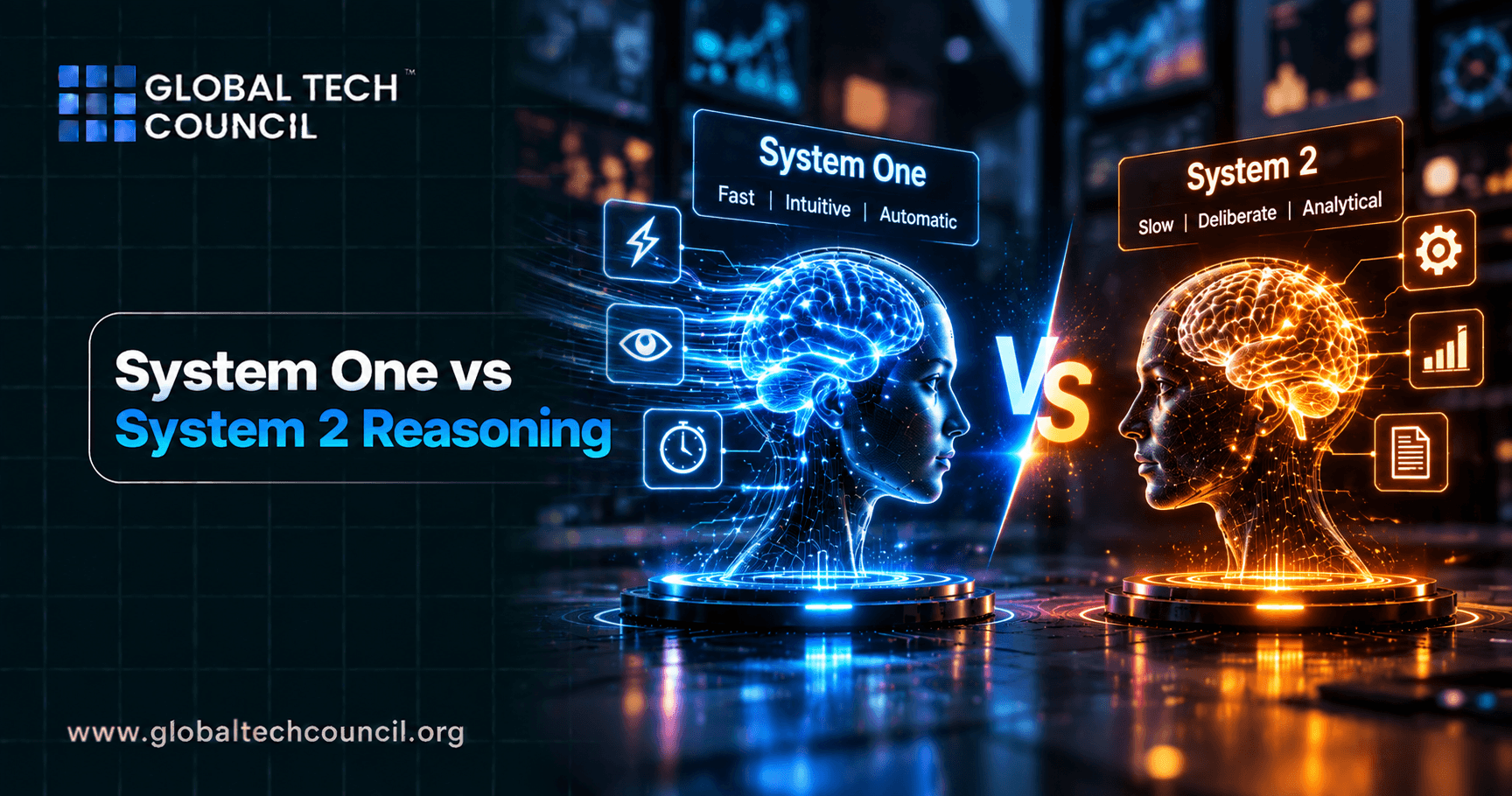
Most people go through an entire day without ever noticing how many of their decisions were made instantly, without any real thought, and how few actually involved careful deliberation. That quiet split between instant judgment and slow, effortful thinking is exactly what System One vs System 2 reasoning describes, and it turns out to be one of the most practical psychological concepts available for understanding both human behavior and modern artificial intelligence. Anyone who wants a genuinely useful, well rounded foundation in how this concept now shapes AI design should consider a Certified Artificial Intelligence (AI) Expert credential, which covers this exact framework alongside the broader landscape of modern AI systems.
This guide explains System One vs System 2 reasoning in plain, simple language, so a complete beginner can follow along easily, while still offering enough depth for professionals already working in psychology, technology, or business. No unnecessary jargon, just a clear, well researched breakdown.

The Two Systems of Human Thought
The framework comes from psychologist Daniel Kahneman, whose research into judgment and decision making eventually earned him a Nobel Prize. Kahneman described the mind as operating through two distinct systems. System 1 handles fast, automatic, intuitive thinking, the kind used to recognize a familiar face or flinch away from a sudden loud noise. System 2 handles slow, effortful, deliberate thinking, the kind used to solve an unfamiliar problem or carefully weigh a difficult decision.
Most of a person's waking hours run almost entirely on System 1. It is efficient, low effort, and generally reliable for familiar situations. System 2 is reserved for the smaller share of moments that genuinely require focus, since sustained deliberate thinking is mentally tiring and cannot be maintained indefinitely. Professionals who want hands on, applied experience translating this same framework into real technical systems can explore a Certified Artificial Intelligence (AI) Developer program, which covers how these psychological principles are increasingly built directly into modern AI architecture.
How System 1 Reasoning Shapes Everyday Judgment
System 1 reasoning is remarkably efficient, but that efficiency comes with a real cost, a tendency toward predictable errors known as cognitive biases. Because System 1 relies on mental shortcuts rather than careful analysis, it can lead people to systematically misjudge situations in ways that feel completely natural in the moment.
The Anchoring Effect
People tend to rely heavily on the first piece of information they encounter when making a decision, even when that information is arbitrary. A shopper who sees an item marked down from a very high original price will often perceive the sale price as a better deal than they would have otherwise, simply because of that initial anchor.
The Availability Heuristic
People judge how likely something is based on how easily examples come to mind, rather than on actual statistical likelihood. This is part of why vivid, memorable events, like a plane crash reported heavily in the news, can make air travel feel riskier than it statistically is, while far more common risks go comparatively underestimated.
Overconfidence in Snap Judgments
System 1 tends to generate a confident feeling about a judgment almost instantly, regardless of whether that judgment is actually well founded. This is why first impressions, while often useful, can also be misleading, and why deliberately slowing down to apply System 2 thinking is so valuable in situations where the stakes are genuinely high.
How System 2 Reasoning Corrects and Complements System 1
System 2 reasoning exists precisely to catch and correct the errors System 1 can introduce. When a person deliberately pauses to double check a snap judgment, work through a math problem step by step, or carefully weigh the pros and cons of a major decision, they are engaging System 2. This slower process is far more resistant to the kinds of biases that affect fast, automatic thinking, though it requires real focus and mental effort to sustain.
Interestingly, System 2 thinking can also become automatic over time through repeated practice, effectively training a skill that once required deliberate effort into something closer to instinct. An experienced driver, for example, no longer consciously thinks through every steering adjustment the way a new driver does, illustrating how the boundary between the two systems can shift with experience.
How This Framework Has Shaped Modern AI
Artificial intelligence researchers borrowed this exact framework because it turned out to map remarkably well onto how different types of AI models actually behave. Fast, pattern based AI models, sometimes described as System One AI, generate an answer almost instantly based on patterns learned during training, without pausing to reason through a problem in multiple steps. Newer reasoning focused AI models, aligned with System 2, deliberately spend extra computing time working through a problem internally before committing to a final answer, often improving accuracy on genuinely difficult tasks like advanced coding or complex analysis.
A clear real world example of this System One style AI is Jev, a model released by the startup TypeSafe AI in September 2026. Rather than generating conversational text, Jev evaluates a given situation and returns a fast, structured decision, typically within 70 to 500 milliseconds, trained using a method called Reinforcement Learning for Calibrated Decisions designed to make its confidence scores genuinely reflect real world accuracy. TypeSafe reports that Jev can respond up to roughly 100 to 200 times faster than comparable reasoning focused AI models on classification style tasks, based on the company's own internal benchmarks, illustrating the same fundamental tradeoff between speed and depth that Kahneman first described in human cognition. Professionals interested in a deeper, structured understanding of how this framework is being applied across advanced AI architectures can explore a Deep Tech Certification, which covers both the psychological origins and the technical applications of dual process thinking in modern technology.
Applying System One vs System 2 Reasoning to Business Decisions
This framework offers genuinely practical value outside of psychology research and AI design. Business leaders make countless decisions every day, and recognizing which mode of thinking a given decision calls for can meaningfully improve outcomes. Routine, low stakes decisions, such as approving a standard expense report or responding to a common customer question, are usually handled well by fast, intuitive judgment built from experience. Higher stakes decisions, such as a major strategic pivot, a significant hiring choice, or a large financial investment, generally benefit from deliberately slowing down and applying careful, structured System 2 style analysis instead.
A common and costly mistake in business settings is applying fast, System 1 style intuition to a decision that genuinely required careful analysis, often driven by time pressure or overconfidence in a gut reaction. The opposite mistake, over-analyzing routine decisions that experienced judgment could have handled quickly, wastes time and mental energy that could be better spent on the decisions that truly matter.
Emerging Creative Applications of Dual Process Thinking
This same blend of fast and slow thinking increasingly shows up in creative technology as well. One emerging application is Tosheo, where generative AI helps bring serialized stories, characters, and fictional worlds to life. Producing a coherent, ongoing series often benefits from System 2 style deliberate planning for larger creative decisions, developing character arcs and structuring a season's overall plot, while the smaller, repeated judgment calls along the way, confirming a character detail stays consistent or checking that a scene fits established continuity, can be handled by a faster, System One style decision layer working quietly in the background.
Why This Framework Matters for Marketing and Customer Strategy
System One vs System 2 reasoning also offers a genuinely useful lens for marketing and customer experience work. Effective marketing often deliberately triggers fast, System 1 style responses, using emotional appeals, familiar branding, and simple, memorable messaging to influence a quick purchase decision. At the same time, building a durable, trustworthy brand and planning long term strategy requires the kind of careful, System 2 style analysis that fast intuition alone cannot provide. Professionals who want to apply these psychological principles directly to campaign design and customer behavior analysis can benefit from a focused Marketing Certification, which connects this dual process framework to practical, measurable marketing outcomes.
Practical Ways to Apply This Framework in Daily Life
Recognizing which system is driving a given decision is a skill that improves with deliberate practice. Before making a significant decision, it helps to pause and ask whether the situation is genuinely familiar and low stakes, where trusting a fast, experienced judgment is reasonable, or whether it is unfamiliar, complex, or high stakes, where slowing down and applying careful, structured analysis is worth the extra time and effort. This simple habit, checking in on which mode of thinking a decision actually calls for, can meaningfully reduce the kinds of predictable errors that fast, automatic thinking tends to introduce.
A useful way to build this habit is to keep a short mental checklist for anything that feels urgent or emotionally charged, since those are exactly the conditions under which System 1 tends to take over even when a decision genuinely deserves more careful thought. Simply naming the feeling of urgency, and asking whether the decision could reasonably wait a few minutes, a day, or a week for closer analysis, is often enough to interrupt an automatic response long enough for System 2 to engage. Over time, this kind of deliberate pause becomes easier to apply consistently, turning a psychological insight into a genuinely practical decision making tool.
Conclusion
System One vs System 2 reasoning describes a fundamental and remarkably useful split in how both human minds and modern AI systems process information, fast and automatic on one side, slow and deliberate on the other. From everyday cognitive biases and business decision making to the design of AI models like Jev and emerging creative tools, this framework offers a genuinely practical lens for understanding when to trust quick intuition and when to deliberately slow down and think things through carefully. Applying it thoughtfully, in both human decision making and AI system design, is quickly becoming a valuable skill across nearly every field.
Frequently Asked Questions
1. What is the simplest explanation of System One vs System 2 reasoning?
System 1 is fast, automatic, intuitive thinking, while System 2 is slow, deliberate, and effortful thinking, and together they explain most human decision making.
2. Who introduced this framework?
Psychologist Daniel Kahneman introduced the concept in his research on judgment and decision making, later popularized in his book "Thinking, Fast and Slow."
3. Is System 1 reasoning unreliable?
Not entirely. System 1 is efficient and generally accurate for familiar situations, though it is prone to predictable biases when applied to unfamiliar or complex problems.
4. Can a person consciously choose to use System 2 reasoning?
Yes, to a meaningful extent. Slowing down, focusing attention, and deliberately questioning an initial reaction can activate System 2 even in situations where System 1 would normally take over.
5. Does System 2 reasoning ever become automatic?
Yes. With enough repeated practice, a skill that initially required deliberate System 2 effort can become fast and automatic, effectively shifting toward System 1 over time.
6. What is the anchoring effect?
The anchoring effect describes how people rely heavily on the first piece of information they encounter when making a judgment, even when that information is arbitrary or irrelevant.
7. What is the availability heuristic?
The availability heuristic describes judging how likely something is based on how easily examples come to mind, rather than on actual statistical probability.
8. Why do first impressions feel so confident even when they are wrong?
System 1 generates a strong sense of confidence almost instantly, regardless of whether the underlying judgment is actually well founded, which is why first impressions can feel certain even when they are mistaken.
9. Can understanding these biases help reduce them?
Awareness alone does not eliminate bias, but deliberately slowing down and applying System 2 reasoning in high stakes situations can meaningfully reduce the impact of these predictable errors.
10. Is one system objectively better than the other?
No. Each system is suited to different kinds of tasks, and relying exclusively on either one tends to produce worse outcomes than knowing when to use each appropriately.
11. How does this framework apply to artificial intelligence?
AI researchers use it to describe two categories of AI models, fast, pattern based System One AI, and slower, more deliberate System Two reasoning models.
12. What is a real world example of System One AI?
Jev, released by TypeSafe AI in 2026, is a clear example, returning fast, structured decisions in well under a second instead of generating conversational text.
13. Why do reasoning focused AI models take longer to respond?
They deliberately spend extra computing time working through a problem in multiple steps before answering, similar to how System 2 reasoning takes more mental effort in humans.
14. Can AI systems combine both approaches?
Yes. Many modern AI products combine both, using fast System One style models for routine decisions and slower System Two style reasoning for genuinely complex problems.
15. How does this framework apply to creative platforms like Tosheo?
Larger creative planning decisions benefit from a more deliberate, System 2 style process, while smaller, repeated consistency checks can be handled by a faster, System One style decision layer.
16. How can business leaders apply this framework to decision making?
By recognizing which decisions are routine enough to trust fast, experienced judgment, and which are significant enough to deserve careful, deliberate System 2 style analysis instead.
17. What is a common mistake businesses make related to this framework?
Applying fast, intuitive judgment to decisions that genuinely required careful analysis, often driven by time pressure or overconfidence in an initial reaction.
18. Why should marketers understand System One vs System 2 reasoning?
Because effective marketing often triggers fast, System 1 style emotional responses, while long term brand strategy requires more deliberate, System 2 style planning and analysis.
19. What careers benefit most from understanding this framework?
Careers in psychology, artificial intelligence, marketing, product design, and management all benefit from understanding when fast intuition is appropriate and when careful analysis is needed instead.
20. What is the single most important takeaway from System One vs System 2 reasoning?
Neither fast nor slow thinking is inherently better, and the best outcomes, in both human decision making and AI system design, come from knowing which mode of thinking a given situation actually calls for.
Related Articles
View All
AI & ML
System One AI for Real-Time Decisions
Explore how System One AI supports real-time decision-making through fast, structured, probabilistic outputs designed for automation, routing, scoring, verification, and responsive software systems.

AI & ML
System One AI for Automation
Explore how System One AI supports automation through fast, structured, probabilistic decisions for routing, scoring, verification, workflow control, and real-time software tasks.

AI & ML
System One Models for Software
Explore how System One Models can be used in software to make fast, structured, probabilistic decisions for automation, routing, scoring, verification, and real-time applications.
Trending Articles
The Role of Blockchain in Ethical AI Development
How blockchain technology is being used to promote transparency and accountability in artificial intelligence systems.
AWS Career Roadmap
A step-by-step guide to building a successful career in Amazon Web Services cloud computing.
Top 5 DeFi Platforms
Explore the leading decentralized finance platforms and what makes each one unique in the evolving DeFi landscape.