

AI Production Operating System: The Future of Content Production

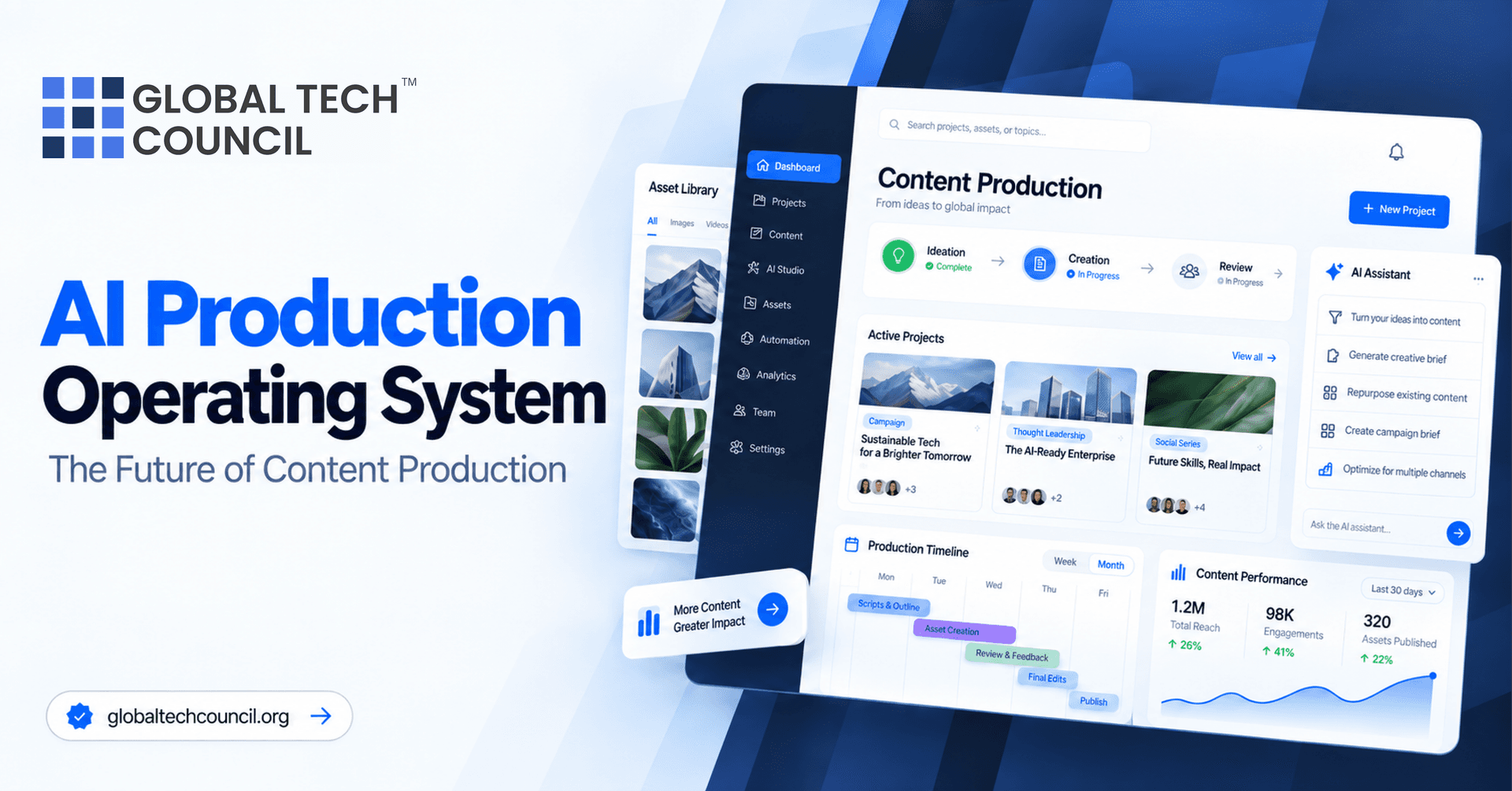
Artificial intelligence is changing how content is created.
Teams can now generate images, videos, scripts, voiceovers and other creative assets using AI. What previously required multiple tools and production stages can increasingly be supported by software.

But as AI-generated content becomes easier to produce, another problem is becoming more important.
How do teams manage AI production at scale?
Creating one AI-generated asset is relatively simple. Managing hundreds or thousands of assets across stories, campaigns, languages, creators, approvals and markets is much harder.
This is where the idea of an AI production operating system comes in.
An AI production operating system connects the different stages of modern content production into a structured workflow. Instead of treating AI as a collection of disconnected generation tools, it creates an environment where teams can manage creative development, AI generation, human approvals, rights, localization, performance and delivery.
For modern content teams, this can become an important layer between AI models and commercial production.
What Is an AI Production Operating System?
An AI production operating system is a software environment designed to coordinate AI-native content production from the initial idea or greenlight through to final delivery.
A typical workflow can include:
Greenlight → Creative development → Production → AI generation → Human approval → Rights → Localization → Performance → Delivery
The exact workflow varies by organization, but the principle remains the same.
Instead of managing AI-generated content through disconnected applications, teams can bring production activities into a more organized system.
An AI production operating system can help answer questions such as:
What content is being produced?
Which creative direction has been approved?
Which assets belong to a particular project?
Who approved the content?
Which rights apply to an asset?
Which language versions have been created?
Which version is ready for delivery?
How is the content performing?
This makes the concept different from an individual AI content generator.
The focus is the production system, not just the generation model.
Why Do Modern Content Teams Need AI Production Management?
Content production has become increasingly complex.
A modern team may work across video, social media, advertising, entertainment, product marketing and regional content simultaneously.
At the same time, AI makes it possible to create more variations than traditional workflows could reasonably support.
This creates a paradox.
AI makes content creation faster, but more content can make production management harder.
Without a structured system, teams may end up managing:
Multiple AI tools
Different versions of creative assets
Separate approval processes
Scattered reference files
Rights information
Language versions
Production instructions
Performance data
This is where AI production management becomes important.
The objective is not merely to create more content. It is to create content in a repeatable, controlled and measurable way.
AI Production Platform vs AI Generation Tool
The terms AI production platform and AI generation tool are sometimes used interchangeably, but they describe different layers of the workflow.
An AI generation tool primarily helps create an output.
For example, a user might provide a prompt and receive an image or video.
An AI production platform focuses on the broader workflow around that output.
It can potentially connect:
Creative → Generation → Collaboration → Approval → Rights → Localization → Delivery
This distinction becomes increasingly important for businesses and entertainment companies.
When content volumes are small, individual tools may be sufficient.
When content production becomes a continuous operation, teams need systems that can organize the entire process.
What Is AI-Native Production?
AI-native production means designing the production workflow around the capabilities of artificial intelligence from the beginning.
It is different from simply adding an AI tool to an existing workflow.
A traditional production process might be:
Concept → Script → Shoot → Edit → Review → Deliver
An AI-native workflow may involve:
Concept → Creative system → AI-assisted development → Generation → Human review → Localization → Performance → Delivery
AI can become part of multiple stages rather than being used only for one task.
This creates new possibilities for content teams.
They can explore creative ideas faster, generate variations, adapt content for different markets and build more iterative production processes.
However, this also creates a need for stronger governance.
The Five Layers of AI Production
A useful way to understand an AI production platform is to break the workflow into five major layers.
1. Creative Layer
This is where the story, campaign or creative idea begins.
It may include:
Scripts
Story concepts
Characters
Brand guidelines
Visual references
Creative direction
Story worlds
For serialized entertainment, this layer becomes particularly important because consistency needs to be maintained across multiple episodes.
2. Generation Layer
This is where AI models can assist with producing content.
Depending on the workflow, this could include:
Video
Images
Voice
Audio
Scripts
Visual concepts
Creative variations
The generation layer is where many existing AI tools operate.
But generation is only one part of production.
3. Governance Layer
Governance introduces control into AI-native production.
This can include:
Human approvals
Review workflows
Creative rules
Rights information
Brand requirements
Production permissions
Governance becomes increasingly important when AI-generated content is used commercially.
4. Localization Layer
Modern content often needs to reach multiple audiences.
AI-native production can support:
Translation
Regional languages
Voice adaptation
Subtitles
Market-specific versions
Cultural adaptation
For companies producing content across India and international markets, multilingual production can become a major part of the workflow.
5. Delivery and Performance Layer
Production does not end when a video is generated.
The content needs to reach its intended audience.
Teams may also need to understand how different versions perform.
This creates a connection between production and measurable performance.
Why Creative Canon Matters
One of the biggest challenges in AI-native content production is consistency.
Consider a serialized entertainment project with the same characters appearing across dozens of episodes.
The character's appearance, personality, relationships and visual environment need to remain consistent.
The same applies to brands.
A product should look like the same product across different advertisements.
A brand should maintain its visual identity across campaigns.
This is where a creative canon can become useful.
A creative canon can act as a source of truth for:
Characters
Stories
Visual identity
Locations
Brand elements
Tone
Relationships
Creative rules
For AI-native production, maintaining this source of truth can help teams manage creative consistency while still allowing AI to generate new content.
Human-in-the-Loop AI Production
AI can automate many production tasks, but professional content still requires human judgment.
A human-in-the-loop workflow allows people to remain involved at important decision points.
For example:
AI generates → Team reviews → Changes requested → AI refines → Human approves
This model can provide a balance between production speed and creative control.
It can also help businesses establish accountability around AI-generated content.
The objective is not necessarily to remove people from the production process.
It is to give people better tools to manage an increasingly AI-driven production environment.
AI Production and Rights Management
Rights become particularly important as AI-generated content is used commercially.
A production team may need to understand the origin, usage and permissions associated with creative assets.
This can become difficult when assets are generated, modified and reused across multiple projects.
A governed AI production workflow can make rights management part of the production process instead of treating it as a separate administrative activity.
This is particularly relevant for businesses, agencies, studios and entertainment companies managing large content libraries.
Multilingual AI Production
One of the most significant opportunities for AI-native production is multilingual content.
A single creative idea may need to be adapted for different languages and markets.
In a traditional workflow, this can create additional production cycles.
AI can support parts of the localization process.
For example:
Original story → Language adaptation → Voice localization → Subtitles → Regional version → Human approval
This can make it easier for teams to create content for different audiences while maintaining a connection to the original creative direction.
For Indian-language serialized entertainment, this model can be particularly relevant because content can be designed for multiple linguistic audiences from the beginning.
AI Production for Entertainment
Entertainment is one of the areas where AI-native production can have a significant impact.
Serialized content creates a continuous production requirement.
A production team needs to maintain characters, storylines, settings and creative continuity across episodes.
AI can support different parts of this process, from creative exploration to visual generation and localization.
But the production system needs to keep the underlying story and creative references organized.
This is why AI-native entertainment production requires more than an AI video generator.
It requires a connected production workflow.
AI Production for Brands
Brands also face a growing demand for content.
A single campaign may require:
Hero videos
Social media clips
Advertisements
Product videos
Regional versions
Short-form content
Promotional assets
An AI production platform can help teams organize these outputs around a central creative direction.
This can make production more scalable while allowing brand teams to retain control.
For brands, the objective is not simply to generate more assets.
It is to generate consistent, approved and usable assets at scale.
How Tosheo Fits Into AI-Native Production
Tosheo is built around the idea that AI-native production requires more than standalone generation tools.
Tosheo describes itself as the operating system for AI-native production, from greenlight to buyer-ready delivery.
Its workflow brings together:
Creative canon + human approvals + rights + multilingual production + measurable performance
This creates a broader production environment around AI-generated media.
Tosheo begins with Indian-language serialized entertainment and branded stories, with an expanding focus on AI-native media production.
The distinction is important.
An AI tool can generate an asset.
An AI production operating system is designed to manage the journey that surrounds that asset.
That journey can begin with a greenlit idea and continue through creative development, production, review, localization, rights management, performance and final delivery.
What Makes an AI Production Platform Useful?
The value of an AI production platform depends on how well it solves the operational problems created by AI at scale.
A useful platform should help teams answer:
What are we producing?
Why are we producing it?
Which creative direction is approved?
Who needs to review it?
What rights apply?
Which languages are required?
Which version is final?
Where is it being delivered?
How did it perform?
These questions connect creativity with operations.
That connection is becoming increasingly important as AI changes the economics and speed of content production.
AI Production Operating System vs Traditional Production Management
Traditional production management was built around physical production processes, human teams and relatively fixed workflows.
AI-native production introduces greater flexibility.
Creative assets can be generated, modified and reproduced rapidly.
This means production systems need to support more iterations and more versions.
Instead of managing only a production schedule, teams may need to manage a network of creative assets and AI-assisted workflows.
The production operating system becomes a central layer connecting people, creative information, AI capabilities and commercial delivery.
How Businesses Can Start With AI-Native Production
Businesses do not need to transform their entire production process overnight.
A practical approach is to start with a specific use case.
For example:
Identify a repetitive video production workflow.
Define the creative standards.
Establish human approval stages.
Identify rights and compliance requirements.
Test AI-assisted generation.
Create multilingual or market-specific versions.
Measure content performance.
Expand the workflow based on results.
This allows organizations to understand where AI provides the greatest production value.
Over time, individual AI workflows can become part of a broader production operating system.
Learning Paths for the AI Era
AI-native production is part of a much larger technology and business transformation.
Professionals looking to understand emerging technologies can explore Tech Certifications from Global Tech Council, while those interested in advanced technologies and deep-tech subjects can explore Deep Tech Certifications from Blockchain Council.
For professionals approaching AI from a business, leadership or commercial perspective, Business Certifications from Universal Business Council provide another learning path.
These learning ecosystems can help professionals build broader knowledge around the technologies and business models shaping the AI economy.
The Future of AI Production
The next phase of AI content creation will not be defined only by how realistic an AI-generated video looks.
The larger question will be how efficiently teams can turn ideas into commercially usable content.
That requires a connected workflow.
Creative canon.
AI generation.
Human approval.
Rights.
Multilingual production.
Performance measurement.
Buyer-ready delivery.
This is the foundation of AI-native production.
As content volumes increase, an AI production operating system can become an important part of the technology stack for studios, brands, agencies and modern content organizations.
Tosheo is building toward this model by connecting the production journey from greenlight to buyer-ready delivery in one governed workflow.
The future of content production may not be about choosing between humans and AI.
It may be about building production systems where human creativity, AI capabilities and operational governance work together.
Frequently Asked Questions
1. What is an AI production operating system?
An AI production operating system is a platform or workflow designed to manage AI-native content production from creative development and generation through approvals, rights, localization, performance and final delivery.
2. What is an AI production platform?
An AI production platform connects different stages of AI-assisted content production instead of focusing only on generating individual creative assets.
3. What is AI production management?
AI production management refers to organizing, coordinating and governing AI-assisted production workflows, including creative assets, approvals, rights, localization and delivery.
4. What does AI-native production mean?
AI-native production means designing content workflows around AI capabilities from the beginning rather than simply adding an AI tool to a traditional production process.
5. How is an AI production platform different from an AI generator?
An AI generator primarily creates an output such as a video, image or audio asset. An AI production platform manages the broader workflow surrounding creation, review, governance and delivery.
6. What is Tosheo?
Tosheo is an operating system for AI-native production designed to take content from greenlight to buyer-ready delivery through a governed workflow.
7. What does Tosheo include?
Tosheo brings together creative canon, human approvals, rights, multilingual production and measurable performance within an AI-native production workflow.
8. Is Tosheo an AI video generator?
Tosheo is positioned around the broader AI-native production workflow rather than treating AI video generation as an isolated capability.
9. Who can use an AI production operating system?
Studios, entertainment companies, brands, agencies, marketing teams and other organizations producing AI-assisted content can potentially benefit from an AI production operating system.
10. Why is creative canon important in AI production?
Creative canon provides a source of truth for characters, stories, visual identity, locations, brand elements and other creative requirements, helping teams maintain consistency.
11. What is human-in-the-loop AI production?
Human-in-the-loop AI production keeps people involved at important stages of the workflow, such as creative review, approval, refinement and final decision-making.
12. Can AI production support multilingual content?
Yes. AI-native production workflows can incorporate translation, localization, voice adaptation, subtitles and regional content versions.
13. How can AI production help entertainment companies?
AI production can help entertainment teams explore creative ideas, generate content, maintain production references, create variations and support multilingual or serialized content workflows.
14. How can AI production help brands?
Brands can use AI-native production workflows to create and manage marketing videos, advertisements, social content, product stories and regional variations while maintaining brand consistency.
15. Does AI-native production replace human creators?
AI-native production does not inherently require removing human creators. It can instead use AI to assist with production while humans retain creative direction, review and important decisions.
16. Why are rights important in AI production?
Commercial content can involve different assets, references and usage requirements. Rights management helps teams understand how content can be used and distributed.
17. Why is AI production management becoming important?
AI makes it possible to produce more content and more variations. As production volume increases, teams need structured systems to organize, review and manage those outputs.
18. What does buyer-ready delivery mean?
Buyer-ready delivery refers to taking approved content through the necessary production and governance stages so it is prepared for its intended commercial use or distribution.
19. Where does Tosheo's AI-native production approach begin?
Tosheo begins with Indian-language serialized entertainment and branded stories and is expanding across AI-native media production.
20. How can professionals learn more about AI and emerging technologies?
Professionals can explore Tech Certifications from Global Tech Council, Deep Tech Certifications from Blockchain Council, and Business Certifications from Universal Business Council based on their learning and career objectives.
Conclusion
AI is making content generation faster, but faster generation creates a new operational challenge.
Teams need a way to manage creative consistency, approvals, rights, languages, production versions and measurable performance.
That is the opportunity behind the AI production operating system.
Tosheo is building this layer for AI-native production, connecting the journey from greenlight to buyer-ready delivery through one governed workflow.
As AI becomes a larger part of how stories, campaigns and media are produced, the organizations that can combine AI capability with creative control and production governance will be better positioned to operate at the scale of AI-native content.
Related Articles
View All
AI & ML
Recursive Self-Improvement: Benefits, Challenges, Risks, and Future Possibilities
Explore recursive self-improvement in AI, including its potential benefits, technical challenges, safety risks, and future possibilities for more capable and autonomous systems.

AI & ML
Recursive Self-Improvement and the Future of Artificial Intelligence
Explore how recursive self-improvement could shape the future of artificial intelligence, from faster capability growth and automated research to major safety, governance, and alignment challenges.

AI & ML
Using Generative AI for Product Marketing Content That Converts
Learn how generative AI improves product marketing content through customer research, messaging, personalization, testing, and governance.
Trending Articles
The Role of Blockchain in Ethical AI Development
How blockchain technology is being used to promote transparency and accountability in artificial intelligence systems.
AWS Career Roadmap
A step-by-step guide to building a successful career in Amazon Web Services cloud computing.
Top 5 DeFi Platforms
Explore the leading decentralized finance platforms and what makes each one unique in the evolving DeFi landscape.