

Create AI Movies in Seconds: From Idea to Finished Video

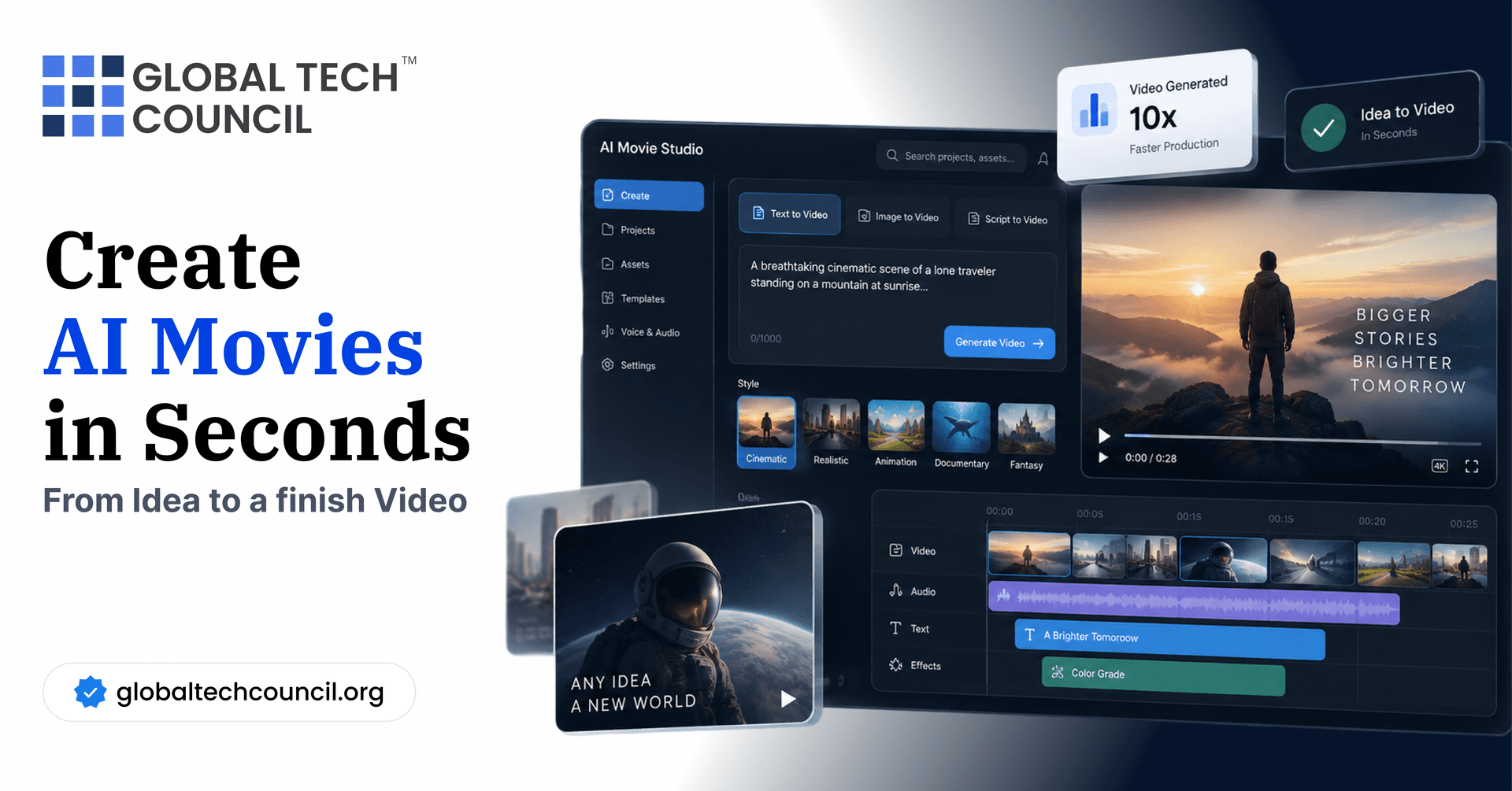
A movie can begin with something as simple as an idea.
A character.

A scene.
A conversation.
A story someone writes on a piece of paper.
Traditionally, turning that idea into a finished video requires writers, directors, actors, cameras, locations, editors, sound teams and post-production specialists.
Artificial intelligence is changing that process.
Today, creators can use AI to develop stories, create characters, generate visual scenes and turn creative concepts into video content faster than traditional production workflows.
This is creating a new possibility: create AI movies in seconds, at least at the concept and generation stages.
The technology is also opening the door to a new form of short-form entertainment: microdramas.
Microdramas can tell complete stories through short, episodic videos designed for digital audiences. AI can make it easier to experiment with characters, storylines, scenes and formats before scaling a production.
But creating an AI movie is not simply about pressing a generation button.
The bigger opportunity is connecting the entire journey from idea to finished video.
What Does It Mean to Create an AI Movie?
An AI movie is a film or video project created with the assistance of artificial intelligence across one or more stages of production.
AI can assist with:
Story development
Script creation
Character development
Storyboarding
Visual concepts
Scene generation
Voice and dialogue
Music and sound
Video generation
Editing
Localization
The amount of AI involvement depends on the production.
Some projects may use AI for concept development and pre-production, while others may use AI throughout much of the creative workflow.
The important change is that creators can now explore cinematic ideas without starting with a traditional production setup.
From Idea to a Finished Video
The traditional path from an idea to a finished video can involve many stages.
An AI-native workflow can connect those stages more closely.
A simplified process looks like:
Idea → Story → Script → Characters → Scenes → Video → Review → Localization → Final Delivery
The first step is still the idea.
AI can help develop that idea into a more structured story.
For example, a creator might begin with:
A young journalist discovers that an old family photograph contains a clue to a decades-old mystery.
From there, the production process can develop the characters, setting, story arc and individual scenes.
AI can assist at different points, while humans remain responsible for creative direction and approval.
Can You Really Create an AI Movie in Seconds?
The answer depends on what is meant by "create."
AI can generate individual visual sequences or short video clips very quickly compared with traditional filming.
However, a complete professional movie involves much more than generating a few scenes.
A finished production requires:
Story continuity
Character consistency
Creative direction
Scene relationships
Editing
Sound
Approvals
Rights
Localization
Final delivery
So the real transformation is not that an entire feature film magically appears in seconds.
It is that AI can dramatically reduce the time required to move from an idea to visual production.
This makes rapid creative experimentation possible.
Creators can test multiple story directions, scenes and visual styles before deciding which version should move forward.
What Is an AI Microdrama?
A microdrama is a short-form scripted story designed to be consumed in brief episodes.
Microdramas can use formats such as:
Short vertical episodes
Serialized stories
Romantic stories
Mystery stories
Thriller episodes
Family dramas
Comedy series
Fictional social stories
The format works particularly well for mobile-first audiences because episodes can be short and structured around strong hooks.
AI adds another layer to this model.
Creators can potentially develop characters, storylines and visual scenes faster, allowing them to experiment with more concepts.
Create Your Own Microdrama With AI
Creating a microdrama can begin with a simple story idea.
For example:
Concept: Two strangers receive the same mysterious message every night.
The concept can then become:
Episode 1: The first message arrives.
Episode 2: They discover that both received it.
Episode 3: The message predicts an event.
Episode 4: The prediction comes true.
Episode 5: They discover who is sending the messages.
AI can assist with developing the episode structure, dialogue, character references and visual scenes.
The creator still controls the story.
This is important because successful serialized storytelling depends on more than generating visually interesting clips.
It depends on continuity.
Why Character Consistency Matters
One of the biggest challenges in AI-generated storytelling is keeping characters consistent.
Imagine a character appearing in ten episodes.
The audience expects the same character to remain recognisable.
Their appearance, personality, relationships and story role need to remain connected.
This is where a creative canon becomes useful.
A creative canon can contain information about:
Character appearance
Personality
Background
Relationships
Story role
Locations
Visual style
Story rules
It gives the production team a shared reference point.
For AI-native entertainment, this can be especially valuable when stories are produced across multiple episodes.
AI Movies Need More Than Generation
AI video generation is only one component of an AI movie workflow.
A production team also needs to manage everything around generation.
For example:
Creative idea
↓
Story development
↓
Creative canon
↓
AI generation
↓
Human review
↓
Rights management
↓
Multilingual adaptation
↓
Performance measurement
↓
Buyer-ready delivery
This broader workflow is what separates AI-native production from simply using an AI video generator.
The Role of Tosheo in AI Movie Production
Tosheo is built around this broader production challenge.
Tosheo is the operating system for AI-native production, from greenlight to buyer-ready delivery.
Instead of treating AI generation as an isolated activity, Tosheo brings together the surrounding production workflow.
Its approach combines:
Creative canon
Human approvals
Rights
Multilingual production
Measurable performance
This can be particularly relevant for serialized entertainment and branded stories.
For example, a microdrama may start with a simple story idea.
The project can then move through creative development, production, review, localization and delivery while maintaining the underlying creative direction.
That is the larger opportunity behind AI-native media production.
AI Movie Production for Indian-Language Stories
India offers an especially interesting environment for AI-native entertainment.
The country has audiences across many languages and cultural markets.
A story that works in one language can potentially be adapted for another audience through a structured localization workflow.
AI can assist with:
Language adaptation
Dialogue
Voice
Subtitles
Regional versions
Story localization
But localization should not simply mean translating words.
Characters, cultural references, humour and storytelling conventions can also need adaptation.
A governed production workflow can help teams maintain the original creative direction while producing versions for different audiences.
AI Microdramas and Serialized Entertainment
Microdramas are naturally suited to serialized storytelling.
Instead of creating one long production, a story can be divided into short episodes.
Each episode can end with a question, reveal or unresolved event that encourages viewers to continue.
AI can support the production of these stories by helping teams move faster through creative development and visual production.
But scale creates a new requirement.
The production team needs to remember what happened before.
Character relationships need to remain consistent.
Locations need to remain recognisable.
The visual language needs to remain coherent.
This is why AI-native serialized entertainment requires a production system, not just a generation model.
AI Movies for Brands
The same approach can be used beyond entertainment.
Brands can create short narrative videos around products, campaigns and customer experiences.
For example, a brand could develop a five-episode microdrama where a product naturally becomes part of the story.
This can be different from a traditional product advertisement.
Instead of simply showing the product, the content creates a narrative around it.
AI can make it easier to experiment with different characters, storylines and creative treatments.
The brand team can then review and approve the strongest direction.
From AI-Generated Clips to Finished Video
Generating a clip is only the beginning.
A finished video needs structure.
Scenes must connect.
Audio needs to work with visuals.
Characters need continuity.
The story needs to make sense.
The final output needs to meet its intended format and audience requirements.
This is why an AI-native workflow should consider the complete production lifecycle.
A useful framework is:
Stage 1: Greenlight
Define the approved concept.
Stage 2: Story
Develop the narrative, characters and episodes.
Stage 3: Creative Canon
Establish the source of truth for characters, settings and creative direction.
Stage 4: Production
Generate and assemble the required visual and audio assets.
Stage 5: Human Approval
Review the content and refine it.
Stage 6: Localization
Create language and regional versions.
Stage 7: Performance
Measure how audiences respond.
Stage 8: Delivery
Prepare the final approved content for its intended buyer or distribution channel.
This creates a repeatable production model.
Why Human Creativity Still Matters
AI can generate content, but the original creative idea still matters.
A strong story requires decisions about:
Characters
Conflict
Emotion
Pacing
Dialogue
Meaning
Audience
Ending
AI can help creators explore these elements, but human direction remains important.
The future of AI movie production is therefore not necessarily about removing humans from the creative process.
It is about giving creators more ways to turn their ideas into production-ready content.
The Future of AI Movies
AI is likely to make visual storytelling more accessible.
A creator with a strong idea may be able to explore a cinematic concept without first assembling a traditional production team.
Brands may be able to create more narrative content.
Entertainment companies may experiment with more stories and formats.
Creators may develop microdramas designed specifically for digital audiences.
At the same time, production systems will become increasingly important.
As the volume of AI-generated content grows, teams will need ways to manage creative references, approvals, rights, languages and performance.
This is where AI-native production platforms can become an important part of the media technology stack.
Learning Paths for AI and Emerging Technology
AI movie production sits at the intersection of artificial intelligence, media, technology and business.
Professionals who want to build their technology knowledge can explore Tech Certifications from Global Tech Council.
Those interested in advanced technology and deep-tech subjects can explore Deep Tech Certifications from Blockchain Council.
For professionals interested in business, leadership and commercial applications of emerging technologies, Business Certifications from Universal Business Council provide another learning path.
These learning paths can help professionals understand the wider technologies and business models influencing the AI economy.
Frequently Asked Questions
1. Can I create an AI movie in seconds?
AI can generate individual scenes and short video sequences in a very short time. A complete finished movie still requires storytelling, editing, review, continuity and other production stages.
2. What is an AI movie?
An AI movie is a film or video project that uses artificial intelligence in one or more stages of its creative or production workflow.
3. How do I create an AI movie?
Start with an idea, develop the story and characters, establish a creative direction, generate scenes with AI, review the output and assemble the final production.
4. What is a microdrama?
A microdrama is a short-form scripted story, often released as a series of brief episodes designed for digital or mobile audiences.
5. Can I create my own microdrama with AI?
Yes. AI can assist with story development, characters, scripts, visual concepts, scenes, dialogue and other parts of microdrama production.
6. What can AI do in movie production?
AI can assist with story development, scripts, visual concepts, character development, video generation, voice, sound, editing and localization.
7. Is AI video generation the same as making an AI movie?
No. Video generation creates individual video assets or sequences. Making an AI movie involves connecting storytelling, generation, editing, continuity, approvals and final delivery.
8. Why is character consistency important in AI movies?
Character consistency helps audiences recognise the same characters across different scenes and episodes and helps maintain the continuity of the story.
9. What is a creative canon?
A creative canon is a structured source of truth containing important information about characters, stories, visual identity, settings and creative rules.
10. How does Tosheo support AI movie production?
Tosheo provides an AI-native production workflow that connects creative canon, human approvals, rights, multilingual production and measurable performance from greenlight to buyer-ready delivery.
11. Is Tosheo an AI movie generator?
Tosheo focuses on the broader AI-native production system surrounding content creation rather than positioning itself only as a standalone generation tool.
12. Can Tosheo be used for microdramas?
Tosheo's AI-native production approach is relevant to serialized entertainment and branded stories, where creative continuity, approvals, rights and multilingual production can be important.
13. Can AI movies be created in Indian languages?
AI can support multilingual and regional-language production. Human review and appropriate localization are important for quality, context and cultural relevance.
14. Can AI be used to create branded stories?
Yes. Brands can use AI-assisted production to explore characters, narratives, scenes and short-form stories around products or campaigns.
15. Can AI create an entire movie automatically?
AI can assist with many stages of movie production, but a complete professional production generally requires creative direction, review, editing, continuity management and other human-controlled processes.
16. What is AI-native production?
AI-native production is a production approach designed around AI capabilities from the beginning, connecting creative development, generation, governance, localization and delivery.
17. Why are human approvals important in AI movie production?
Human approvals help ensure that generated content meets creative, brand, quality and production requirements before it moves forward.
18. Can AI movies be created for multiple languages?
Yes. AI can support multilingual production through language adaptation, voice, subtitles and other localization processes.
19. Who can benefit from AI-native movie production?
Creators, entertainment companies, studios, brands, agencies and content teams can use AI-native workflows to explore and produce visual stories at greater speed and scale.
20. Where can professionals learn about AI and emerging technologies?
Professionals can explore Tech Certifications from Global Tech Council, Deep Tech Certifications from Blockchain Council, and Business Certifications from Universal Business Council to build knowledge across technology and business applications.
Conclusion
The ability to create AI movies in seconds represents a major shift in how visual stories can be developed.
But the real opportunity is bigger than fast video generation.
AI can help move a creator from an idea to a story, from a story to scenes and from scenes to a finished video. It can also support multilingual production and make new formats such as microdramas more accessible.
The next challenge is managing that production at scale.
Tosheo addresses this broader challenge through an AI-native production operating system that connects creative canon, human approvals, rights, multilingual production and measurable performance.
From an initial idea to a finished, buyer-ready production, the future of AI storytelling is not just about generating more content.
It is about building a better system for turning ideas into stories.
Related Articles
View All
AI & ML
Can an AI Model Create a Better AI Model Than Itself?
Explore whether an AI model can help create a more capable AI system than itself, how automated model design and optimization work, and what limits still remain.

AI & ML
AI Prompts That Can Restore Old Photos in Seconds
Photographs capture moments that people never want to lose. Family portraits, wedding pictures, graduation photos, childhood memories, and historical images often become priceless over time. Unfortunately, many old photographs deteriorate because of fading, scratches, stains, tears, blur, or poor…
AI & ML
AI Production Operating System: The Future of Content Production
Explore how an AI production operating system can streamline content creation, automate workflows, coordinate tools, and improve speed, consistency, and scalability across modern content teams.
Trending Articles
The Role of Blockchain in Ethical AI Development
How blockchain technology is being used to promote transparency and accountability in artificial intelligence systems.
AWS Career Roadmap
A step-by-step guide to building a successful career in Amazon Web Services cloud computing.
Top 5 DeFi Platforms
Explore the leading decentralized finance platforms and what makes each one unique in the evolving DeFi landscape.