

Lovart
 Tosh Marketing
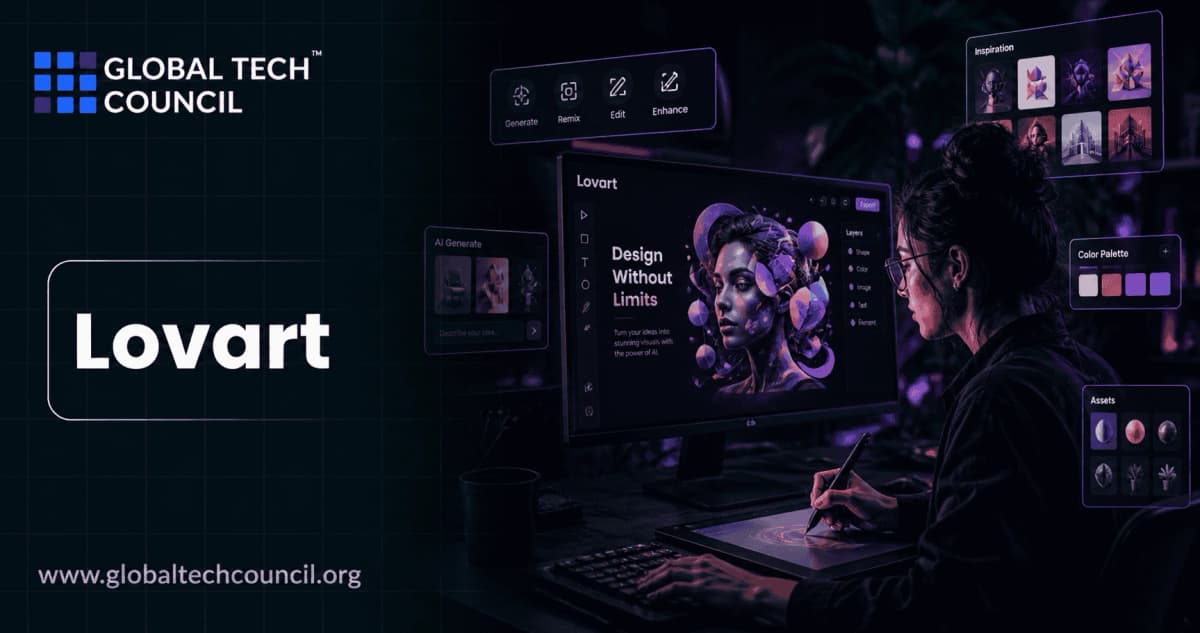 Artificial intelligence is no longer confined to automation, analytics, or backend processes. It has moved into one of the most human domains: creativity. Lovart, an emerging concept in the digital ecosystem, represents the fusion of AI technologies with artistic expression. It highlights how machines and humans can collaborate to produce innovative content, designs, and experiences that were once difficult to imagine.
As this transformation accelerates, professionals are actively enhancing their knowledge through structured programs such as the AI expert certification, which provides a solid foundation in artificial intelligence concepts. Advanced expertise in tools is often gained through programs like the Claude AI expert Certification and ChatGPT Expert certification, enabling individuals to effectively leverage AI in creative workflows.

This article explores Lovart in depth, covering its meaning, applications, benefits, challenges, and future potential in the evolving digital landscape.
What is Lovart?
Lovart can be described as a modern approach to creativity that integrates artificial intelligence with artistic processes. The term itself reflects a blend of “love” and “art,” symbolizing passion-driven creativity enhanced by intelligent systems.
Unlike traditional creative methods, Lovart emphasizes collaboration. AI tools assist in generating ideas, analyzing patterns, and producing outputs, while humans guide direction, emotion, and meaning. This synergy enables faster, more diverse, and scalable creative production.
The Evolution of AI in Creative Fields
The role of AI in creative industries has grown significantly over the past decade. Initially used for automation and data processing, AI now plays a direct role in generating content, visuals, music, and even storytelling.
For example, content creators use AI to draft articles, designers use it to create visual concepts, and developers integrate AI into creative applications. Many professionals strengthen their technical skills through the AI Powered coding expert Course, which helps them build and integrate AI-powered systems.
Lovart represents the next phase of this evolution, where creativity becomes more collaborative and technology-driven.
Key Features of Lovart
AI-Assisted Creativity
AI tools enable creators to generate ideas and outputs quickly. They analyze large datasets to produce content that aligns with user needs and trends.
Personalization
Lovart allows for highly personalized content. AI systems can tailor outputs based on preferences, behavior, and audience insights.
Scalability
Unlike traditional creative processes, Lovart enables large-scale content production without compromising efficiency.
Human-AI Collaboration
The defining feature of Lovart is the partnership between human creativity and machine intelligence, ensuring both efficiency and originality.
Applications of Lovart
Digital Art and Design
Artists use AI tools to create illustrations, digital paintings, and experimental designs. These tools allow for rapid experimentation and innovation.
Content Creation
Writers and marketers use AI to generate blogs, scripts, and campaigns. This improves productivity and reduces time spent on repetitive tasks.
Marketing and Branding
Businesses use AI-generated content for branding and audience engagement. Many professionals enhance their skills in this area through an AI powered digital marketing expert course, which focuses on applying AI in marketing strategies.
Entertainment Industry
AI is used in music composition, film production, and game development. Lovart contributes to creating immersive and interactive experiences.
Real-World Examples of Lovart
One prominent example is AI-generated art used in advertising campaigns. Brands leverage AI to create unique visuals that capture audience attention and differentiate them from competitors.
Another example is AI-assisted music composition, where artists use algorithms to generate melodies and experiment with new sounds.
In gaming, AI helps create dynamic environments and responsive characters, enhancing user engagement and overall experience.
Benefits of Lovart
Enhanced Creativity
AI introduces new perspectives, enabling creators to explore ideas beyond traditional boundaries.
Time Efficiency
Tasks that once took hours can now be completed in minutes, allowing creators to focus on strategy and innovation.
Cost Reduction
Automation reduces the need for extensive resources, making creative processes more cost-effective.
Accessibility
Lovart democratizes creativity, allowing individuals without formal training to produce high-quality content.
Challenges and Limitations
Lack of True Originality
AI-generated content is based on existing data, which may limit uniqueness.
Ethical and Legal Issues
Concerns related to copyright, ownership, and authenticity remain unresolved.
Over-Reliance on AI
Excessive dependence on AI tools may reduce human creativity and critical thinking.
Need for Human Oversight
AI outputs often require refinement to ensure quality and relevance.
Latest Developments in Lovart
In 2026, Lovart has advanced significantly due to improvements in AI technologies:
- Enhanced image and video generation tools
- Improved natural language processing capabilities
- Integration with virtual and augmented reality
- Real-time collaboration between users and AI systems
These developments are making Lovart more powerful and accessible across industries.
The Role of AI Education and Certifications
As AI continues to evolve, structured learning becomes essential. Certifications such as AI expert certification and Claude AI expert Certification provide foundational and advanced knowledge.
These programs help professionals understand AI systems, improve prompt design, and apply AI tools effectively in real-world scenarios. Continuous learning ensures individuals remain competitive in the rapidly changing digital environment.
Future of Lovart
The future of Lovart is promising and closely tied to technological advancements:
- Automated creative workflows
- Hyper-personalized content experiences
- Integration with immersive technologies
- Increased collaboration between humans and AI
As adoption grows, Lovart is expected to become a core component of digital transformation strategies.
Conclusion
Lovart represents a new era of creativity where artificial intelligence and human imagination work together. It is transforming how art, content, and digital experiences are created and consumed.
While it offers significant advantages, it also presents challenges that require careful consideration. The key to success lies in balancing AI capabilities with human creativity and critical thinking.
Professionals who invest in learning and adapting to these technologies will be better positioned to succeed in this evolving landscape.
Frequently Asked Questions
1. What is Lovart?
Lovart is the integration of artificial intelligence with creative processes. It allows users to generate art, content, and designs using AI tools. This concept emphasizes collaboration between humans and machines. It improves efficiency and expands creative possibilities. It is becoming increasingly relevant across industries.
2. How does Lovart work?
Lovart works by using AI algorithms to analyze data and generate creative outputs. Users provide inputs or prompts, and the AI produces content accordingly. This process is fast and scalable. It also allows for customization based on preferences. The result is a blend of automation and creativity.
3. Is Lovart replacing human creativity?
Lovart does not replace human creativity but enhances it. AI tools assist in generating ideas and speeding up processes. However, human input is still essential for direction and emotional depth. Creativity remains a human-driven aspect. AI acts as a supportive tool.
4. What industries use Lovart?
Lovart is used in marketing, entertainment, design, and education. Businesses use it for branding and content creation. The entertainment industry uses it for music and visual effects. It is also used in gaming and digital experiences. Its applications continue to grow.
5. Can beginners use Lovart tools?
Yes, beginners can use Lovart tools easily. Many platforms are designed to be user-friendly. Simple prompts can generate useful results. Over time, users can refine their skills. This makes Lovart accessible to a wide audience.
6. What are the benefits of Lovart?
Lovart improves creativity, efficiency, and accessibility. It allows users to create content quickly. It reduces costs and resources. It also enables non-experts to explore creativity. These benefits make it highly valuable.
7. Are there risks in using Lovart?
Yes, Lovart has risks such as ethical concerns and lack of originality. AI-generated content may raise copyright issues. Over-reliance can reduce creativity. Quality control is also important. Users must use it responsibly.
8. How can I learn Lovart?
You can learn Lovart by exploring AI tools and taking relevant courses. Certifications provide structured learning. Practice helps improve understanding. Experimentation is also important. Continuous learning is key.
9. Is Lovart expensive?
Lovart can be cost-effective compared to traditional methods. Many tools are affordable or free. Businesses can reduce production costs. However, advanced tools may require investment. Overall, it offers good value.
10. Can Lovart improve productivity?
Yes, Lovart significantly improves productivity. It automates repetitive tasks and speeds up content creation. This allows creators to focus on strategy. Efficiency increases overall output. It is widely used for this reason.
11. What tools are used in Lovart?
Various AI tools such as image generators and language models are used. These tools assist in creating visuals and text. They are designed for different tasks. Users can choose based on needs. The ecosystem continues to expand.
12. Is Lovart suitable for businesses?
Yes, Lovart is highly beneficial for businesses. It improves marketing and branding efforts. Companies can create personalized content efficiently. It also reduces operational costs. Businesses gain a competitive advantage.
13. Can Lovart be used in education?
Lovart is useful in education for creating learning materials. It simplifies complex topics. Students can use it for projects. Teachers can enhance teaching methods. It supports interactive learning.
14. What is the future of Lovart?
The future includes more automation and personalization. AI tools will become more advanced. Integration with technologies like VR will increase. Adoption will continue to grow. Lovart will play a major role in digital transformation.
15. Can Lovart generate original content?
Lovart can generate content that appears original but is based on existing data. Human input is needed for uniqueness. Refinement improves originality. It works best as a collaborative tool. Creativity improves with human guidance.
16. How accurate is Lovart?
Lovart outputs are generally accurate but may require verification. AI systems can produce errors. Reviewing content is important. Accuracy improves with better prompts. Users should validate results.
17. Is Lovart easy to learn?
Lovart is relatively easy to learn. Beginners can start with simple tools. Practice improves skills over time. Learning resources are widely available. Consistency leads to improvement.
18. Can Lovart help in marketing?
Yes, Lovart is highly effective in marketing. It helps create engaging content. Businesses can optimize campaigns. This improves audience engagement. Marketing becomes more efficient.
19. What skills are needed for Lovart?
Skills such as creativity and basic technical knowledge are useful. Understanding AI tools is important. Analytical thinking helps refine outputs. Continuous learning improves performance. These skills enhance effectiveness.
20. How can I start using Lovart?
You can start by exploring AI tools and experimenting with simple projects. Learning through courses is helpful. Practice regularly to improve results. Gradually take on advanced tasks. This builds confidence and expertise.
Related Articles
View AllArtificial Intelligence
Project Manager Interview Questions and Answers for 2026
Prepare for 2026 project manager interviews with practical questions, sample answers, AI project scenarios, remote leadership tips, and value-focused guidance.
Artificial Intelligence
How Project Managers Use Data Analytics to Improve Project Outcomes
Learn how project managers use data analytics to improve planning, risk control, budgets, resources, quality, and stakeholder decisions.
Artificial Intelligence
Essential Technical Skills for Project Managers in AI, IT, and Digital Transformation
Technical skills for project managers now include data literacy, AI basics, cloud, cybersecurity, DevOps, and business translation for digital delivery.
Trending Articles
The Role of Blockchain in Ethical AI Development
How blockchain technology is being used to promote transparency and accountability in artificial intelligence systems.
AWS Career Roadmap
A step-by-step guide to building a successful career in Amazon Web Services cloud computing.
Top 5 DeFi Platforms
Explore the leading decentralized finance platforms and what makes each one unique in the evolving DeFi landscape.