

How IOT is actually keeping us safe?
 Michael Willson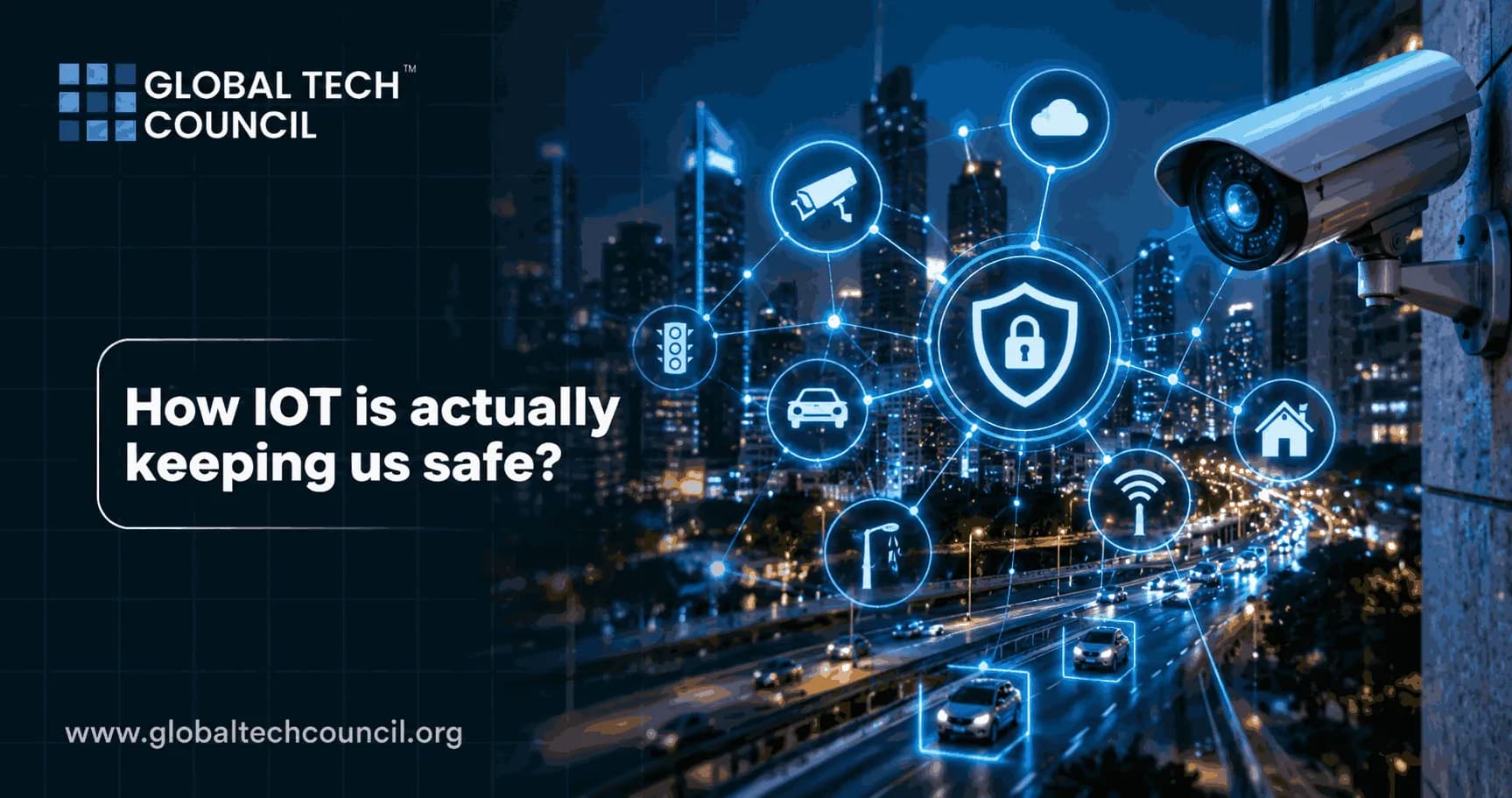
The Internet of Things gets discussed constantly in terms of convenience, smart thermostats, voice assistants, connected refrigerators, but its role in genuine safety often gets overlooked in that conversation. Connected sensors and devices are quietly preventing fires, catching medical emergencies before they become fatal, monitoring structural integrity in aging bridges, and giving emergency responders real-time information that saves precious minutes during a crisis. Professionals building expertise in these safety-critical applications often start with a Certified Internet-of-Things (IoT) Expert credential, which builds the foundational understanding needed to see exactly how sensor networks and connected systems translate into measurable safety outcomes rather than just convenience features.
How IoT Protects the Home Environment
Home safety has become one of the most mature and widely adopted applications of connected sensor technology, moving well beyond basic security cameras into systems that actively detect and respond to genuine emergencies.

Smart smoke and carbon monoxide detectors now connect directly to smartphones, alerting homeowners immediately even when they are away, and some models can distinguish between smoke from cooking and an actual fire, reducing false alarms while ensuring genuine emergencies get flagged quickly.
Water leak sensors placed near appliances, water heaters, and basements can detect leaks within minutes rather than days, preventing the kind of extensive water damage and mold growth that traditionally went unnoticed until it became a major, expensive problem.
Connected security systems integrate door and window sensors, motion detectors, and cameras into a single monitored network, allowing homeowners and, in many cases, professional monitoring services to respond to break-ins or suspicious activity far faster than traditional standalone alarm systems.
Smart locks with activity logs give homeowners visibility into exactly who entered a property and when, a feature that has proven particularly valuable for elderly individuals living independently, allowing family members to confirm safe arrivals or departures without constant phone check-ins.
Gas leak detectors connected to home networks can automatically shut off gas valves and alert both residents and emergency services the moment a dangerous concentration is detected, addressing a hazard that traditional detectors could only passively warn about through an audible alarm alone.
IoT's Growing Role in Healthcare and Personal Safety
Beyond the home, connected devices have become genuinely life-saving tools in healthcare settings and for individuals managing chronic conditions or living independently.
Wearable heart monitors can detect irregular rhythms, including atrial fibrillation, and alert both the wearer and their physician in real time, catching potentially serious cardiac events that might otherwise go unnoticed until a more severe incident occurs.
Fall detection sensors, increasingly built into smartwatches and dedicated medical alert devices, can automatically contact emergency services if they detect a hard fall and the wearer does not respond within a set time window, a feature particularly valuable for elderly individuals living alone.
Continuous glucose monitors for diabetics transmit blood sugar readings to a connected app in real time, alerting users and caregivers to dangerous highs or lows before they progress to a medical emergency requiring hospitalization.
Remote patient monitoring systems allow hospitals to track vital signs for patients recovering at home, catching complications early and reducing unnecessary hospital readmissions while still maintaining genuine clinical oversight.
Medication adherence devices track whether patients are taking prescribed medications on schedule, alerting caregivers or healthcare providers to missed doses that could lead to dangerous health complications, particularly for patients managing multiple chronic conditions simultaneously.
Industrial and Infrastructure Safety Applications
Some of IoT's most significant safety contributions happen in industrial settings and public infrastructure, where the stakes of equipment failure or structural problems extend well beyond individual inconvenience into genuine public safety concerns.
Structural health monitoring sensors embedded in bridges, dams, and buildings continuously track vibration, stress, and movement patterns, flagging early signs of structural deterioration long before visible damage would alert human inspectors during routine checks.
Industrial safety sensors monitor toxic gas levels, equipment temperature, and machinery vibration in factories and refineries, automatically triggering shutdowns or alerts before conditions become dangerous for workers on the floor.
Predictive maintenance systems flag equipment likely to fail before that failure actually happens, preventing the kind of sudden mechanical breakdowns that have historically caused serious workplace injuries in manufacturing and industrial settings.
Connected worker safety equipment, including smart helmets and vests with built-in sensors, can detect falls, exposure to hazardous conditions, or even signs of worker fatigue, automatically alerting supervisors when a situation requires immediate attention.
Building this kind of safety-critical infrastructure requires genuine technical rigor, since a false negative in a structural monitoring system or an industrial gas detector carries far more serious consequences than a missed notification in a convenience-focused smart home app. Professionals designing these systems benefit from a Certified Internet-of-Things (IoT) Developer credential, reflecting the hands-on skill needed to build connected safety systems that perform reliably under genuinely high-stakes conditions.
Where Generative AI Extends Into Adjacent Creative Applications
While IoT's safety applications focus on physical sensors and real-world monitoring, the broader connected technology landscape includes generative AI applications that, while serving an entirely different purpose, reflect the same underlying trend of specialized technology reaching further into everyday life.
AI Microdrama and the Expanding Reach of Connected Technology
One emerging application is AI microdrama, where generative AI helps bring serialized stories, characters, and fictional worlds to life. While this sits outside the safety-focused applications covered here, it illustrates how quickly connected and intelligent systems continue expanding into new domains, a pattern that mirrors IoT's own evolution from simple connected convenience devices into the safety-critical infrastructure now protecting homes, hospitals, and industrial facilities.
Smart City Infrastructure and Public Safety
City-wide IoT deployments have introduced safety improvements that extend well beyond any single home or building, addressing public safety challenges at a scale that individual devices simply cannot reach.
Connected traffic systems use real-time sensor data to adjust signal timing, reducing congestion-related accidents and giving emergency vehicles priority routing through intersections during active response calls.
Environmental monitoring sensors placed throughout cities track air quality, flood risk, and extreme weather conditions, feeding data into public alert systems that can warn residents of dangerous conditions before they become life-threatening.
Smart streetlights with integrated sensors can detect gunshots, traffic accidents, or unusual activity, automatically alerting authorities and, in some deployments, even brightening automatically to improve visibility and deter crime in flagged areas.
Public utility monitoring systems track water quality and infrastructure integrity in real time, catching contamination or system failures before they reach a scale that could pose serious public health risks.
The Security Challenges IoT Safety Systems Must Overcome
None of these safety benefits matter if the underlying IoT systems themselves are vulnerable to compromise, making security a genuine prerequisite rather than an optional add-on for any safety-focused connected device.
A compromised safety sensor is worse than no sensor at all, since a hacked smoke detector or security system that can be disabled remotely creates a false sense of protection that leaves users more vulnerable than they would be without any connected system at all.
Many safety-critical IoT deployments increasingly incorporate blockchain verification to ensure sensor data has not been tampered with, particularly in industrial and infrastructure monitoring where data integrity directly affects safety decisions. A broader Deep Tech Certification can help professionals understand how these cross-disciplinary security approaches work together, since the most robust safety-critical IoT systems rarely rely on a single security layer alone.
Regular firmware updates and strong authentication protocols remain essential for any safety-focused IoT deployment, given how frequently vulnerabilities are discovered in connected devices that were not designed with security as a primary consideration from the outset.
Building Public Trust in IoT Safety Applications
Genuine adoption of IoT-based safety systems depends heavily on whether the public actually trusts these devices to work reliably and protect their privacy appropriately, making clear communication just as important as the underlying engineering.
Consumers need clear, honest information about what data is collected and how it is used, since safety devices that also raise unaddressed privacy concerns will struggle to gain the widespread trust needed for meaningful adoption.
Healthcare and eldercare applications require particularly sensitive messaging, since families making decisions about remote monitoring for aging relatives need genuine confidence that these systems will perform reliably during an actual emergency rather than simply during a sales demonstration.
Teams responsible for this kind of communication often rely on a Marketing Certification to help translate genuinely life-saving IoT capabilities into messaging that builds real trust and addresses legitimate privacy concerns directly, rather than glossing over them in favor of purely convenience-focused marketing that undersells the technology's actual safety value.
Recognizing IoT's Quiet but Genuine Safety Contribution
The Internet of Things has moved well beyond smart speakers and connected light bulbs into a genuine safety infrastructure that operates quietly in the background of daily life, catching fires before they spread, detecting medical emergencies before they become fatal, and flagging structural problems in bridges and buildings long before visible damage would alert a human inspector. These applications rarely make headlines the way flashy consumer gadgets do, but their cumulative impact on public and personal safety is substantial and continues growing as sensor technology becomes cheaper, more reliable, and more deeply integrated into homes, hospitals, workplaces, and public infrastructure. Recognizing this quieter, safety-focused side of IoT gives a more complete and accurate picture of what this technology genuinely contributes, well beyond the convenience-driven narrative that so often dominates public conversation about connected devices.
FAQs
1. How Does IoT Help Keep People Safe?
The Internet of Things (IoT) uses connected devices, sensors, and software to monitor conditions and detect potential hazards. By collecting and sharing data in real time, IoT systems can provide alerts, automate protective actions, and help people respond to risks more quickly.
2. How Does IoT Improve Home Security?
IoT enables smart security cameras, motion sensors, door and window sensors, smart locks, and alarm systems to work together. These devices can detect unusual activity and send alerts to homeowners or authorized monitoring systems.
3. Can IoT Detect Fires and Smoke?
Yes. Connected smoke, heat, and fire detection devices can identify signs of a potential fire and trigger alarms or notifications. Some systems can also communicate with other connected devices to support automated emergency responses.
4. How Does IoT Help Prevent Gas Leaks?
IoT-enabled gas sensors can continuously monitor air for specific gases and detect potentially dangerous concentrations. When abnormal levels are detected, the system can issue alerts and, in appropriately designed systems, trigger connected safety mechanisms.
5. How Does IoT Improve Workplace Safety?
Industrial IoT sensors can monitor equipment, environmental conditions, temperature, pressure, hazardous gases, and other workplace variables. Organizations can use these signals to identify dangerous conditions, alert workers, and support preventive maintenance.
6. How Does IoT Help Prevent Industrial Accidents?
Connected sensors can continuously monitor machines and operating conditions for abnormal behavior. When unusual readings are detected, IoT systems can generate alerts or initiate predefined responses before a developing problem becomes a more serious safety incident.
7. How Does IoT Support Healthcare Safety?
Connected medical devices and wearable sensors can collect measurements such as heart rate, blood oxygen levels, temperature, or other relevant indicators. Authorized healthcare systems can use these measurements for monitoring and alerts, particularly in remote-care and patient-monitoring scenarios.
8. Can IoT Help With Emergency Response?
IoT devices can provide real-time information about fires, environmental conditions, vehicle crashes, infrastructure problems, and other incidents. Sharing timely data with authorized responders can help improve situational awareness and support faster decision-making.
9. How Does IoT Make Vehicles Safer?
Connected vehicles can use sensors and communication technologies to monitor vehicle conditions, detect hazards, and support driver-assistance features. IoT connectivity can also enable services such as emergency notifications, vehicle diagnostics, and location-based assistance.
10. How Does IoT Improve Road Safety?
IoT-enabled traffic sensors and connected infrastructure can monitor traffic conditions, road usage, environmental factors, and potential hazards. This information can support traffic management systems and help authorities identify conditions that may require intervention.
11. How Does IoT Help Protect Elderly People?
Wearable and home-based IoT devices can monitor activity and detect certain events, such as falls or unusual inactivity. Depending on the system and user consent, alerts can be sent to caregivers or authorized contacts when predefined conditions are detected.
12. Can IoT Help Detect Natural Disasters?
IoT sensors can monitor environmental conditions such as water levels, temperature, air quality, seismic activity, and weather-related variables. When connected to suitable monitoring and warning systems, this data can contribute to early detection and emergency preparedness.
13. How Does IoT Help Keep Buildings Safe?
Connected building systems can monitor smoke, temperature, structural conditions, energy systems, access points, and other building variables. Automated monitoring can help identify abnormal conditions and notify facility managers or occupants when action may be required.
14. What Role Does IoT Play in Predictive Maintenance and Safety?
IoT sensors can continuously monitor equipment for signs of wear, overheating, vibration, pressure changes, or other abnormalities. Predictive maintenance systems can analyze these signals to identify potential equipment problems before they lead to failures or safety incidents.
15. Does IoT Use Artificial Intelligence to Improve Safety?
IoT and Artificial Intelligence can work together to analyze large volumes of sensor data. Machine learning models can help identify unusual patterns, predict potential failures, classify events, and prioritize alerts when appropriately designed and validated.
16. How Does IoT Help With Cybersecurity?
IoT security systems can monitor connected devices and networks for unusual activity, unauthorized access attempts, or other indicators of compromise. However, IoT also introduces cybersecurity risks, so secure device configuration, authentication, encryption, updates, and network protection are essential.
17. Can IoT Create New Safety Risks?
Yes. Connected devices can introduce risks involving insecure software, unauthorized access, privacy violations, unreliable sensors, or compromised devices. IoT safety therefore requires both physical safety measures and strong cybersecurity practices.
18. How Reliable Are IoT Safety Systems?
Reliability depends on sensor quality, system design, connectivity, software, maintenance, cybersecurity, and how alerts are evaluated. Safety-critical IoT systems should use appropriate redundancy, testing, monitoring, fail-safe mechanisms, and human oversight rather than relying on a single sensor or automated decision.
19. What Are the Future Applications of IoT for Safety?
Future IoT safety applications could combine connected sensors with AI, edge computing, robotics, autonomous systems, and advanced communication networks. These technologies may enable faster detection of hazards and more automated responses across homes, healthcare, transportation, industrial environments, and cities.
20. Why Is IoT Important for the Future of Safety?
IoT enables continuous monitoring of physical environments and connected equipment, allowing potential hazards to be detected earlier in many applications. When combined with appropriate safety procedures, cybersecurity, reliable infrastructure, and human oversight, IoT can become an important tool for preventing incidents and improving situational awareness.
Related Articles
View AllInternet Of Things
How IoT in Smart Cities Is Transforming Urban Life
Explore how IoT in smart cities improves mobility, energy, safety, utilities, and governance while raising challenges in security, privacy, and interoperability.
Internet Of Things
IoT in 2026: Key Trends, Use Cases, and Skills Professionals Need
Explore IoT in 2026, including key trends, real-world use cases, market growth, edge AI, security, and the skills professionals need.
Internet Of Things
How to Use IoT in Business?
IoT, or the Internet of Things, is a network of interconnected devices that collect and share data over the internet. Businesses use IoT devices like sensors and cameras to monitor, control, and exchange data for improved efficiency and informed decision-making. IoT is crucial for staying…
Trending Articles
The Role of Blockchain in Ethical AI Development
How blockchain technology is being used to promote transparency and accountability in artificial intelligence systems.
AWS Career Roadmap
A step-by-step guide to building a successful career in Amazon Web Services cloud computing.
Top 5 DeFi Platforms
Explore the leading decentralized finance platforms and what makes each one unique in the evolving DeFi landscape.