

Top 5 Ubercool IoT projects
 Toshendra Sharma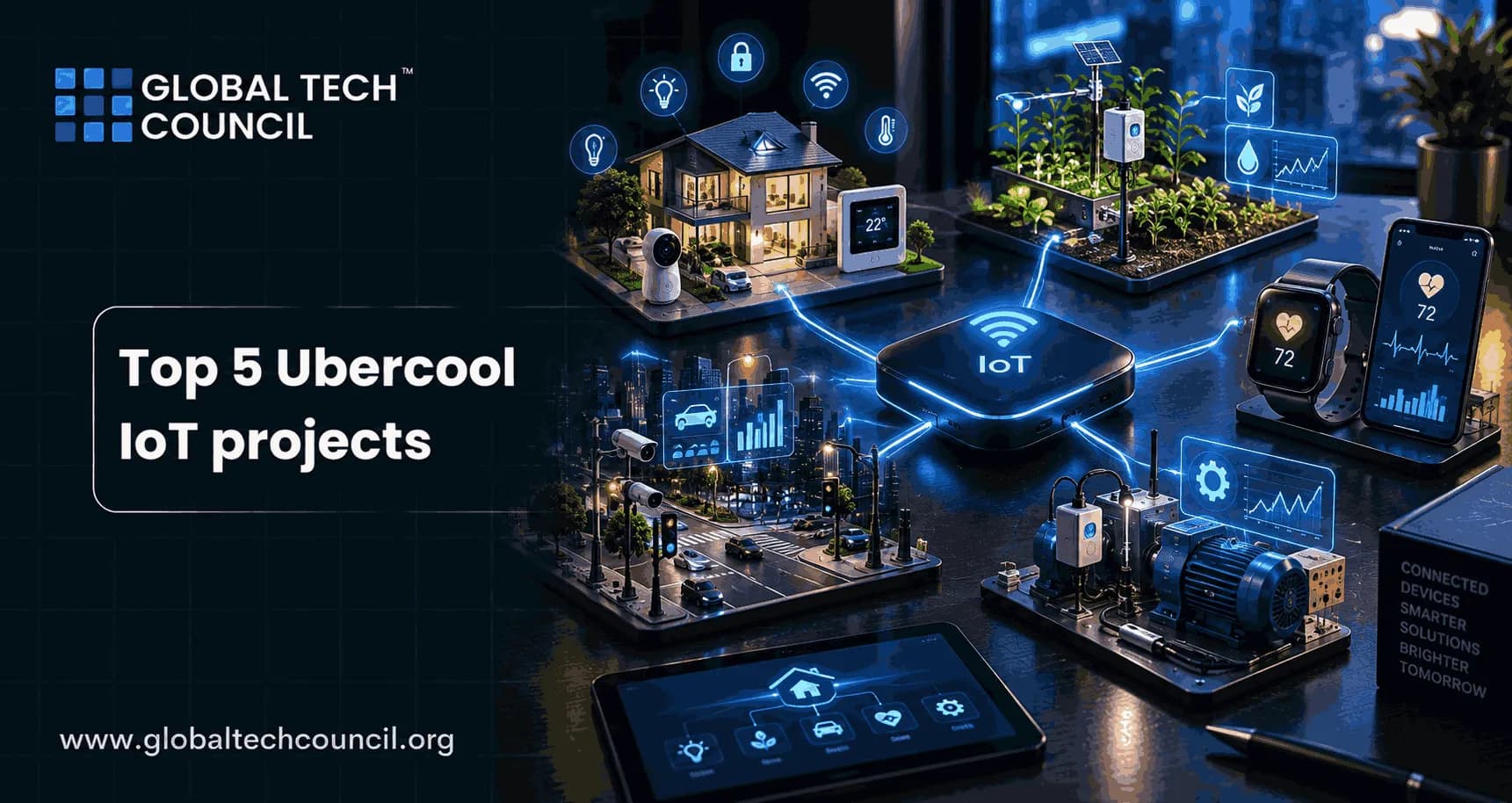
The Internet of Things has moved well past smart thermostats and fitness trackers, evolving into a technology capable of monitoring entire cities, predicting equipment failures before they happen, and coordinating swarms of autonomous devices working together toward a shared goal. Some of the most genuinely impressive IoT projects being built today combine sensors, connectivity, and real time data analysis in ways that feel closer to science fiction than everyday engineering. Understanding what makes these projects work, from sensor networks to the cloud infrastructure processing their data, is exactly the kind of practical knowledge covered by a Certified Internet-of-Things (IoT) Expert credential, which examines how connected devices are designed, deployed, and scaled across genuinely ambitious real world applications. This article looks at five of the most impressive IoT projects reshaping industries today, and why each one represents the technology at its most compelling.
What Makes an IoT Project Genuinely Impressive
Not every connected device qualifies as an ambitious IoT project. The most compelling deployments tend to share a few defining characteristics that separate them from simple novelty gadgets.

Projects that stand out typically involve:
Massive scale, coordinating hundreds or thousands of connected devices simultaneously.
Real time decision making, processing sensor data quickly enough to act on it immediately rather than after the fact.
Genuine problem solving, addressing real challenges in agriculture, healthcare, infrastructure, or disaster response rather than existing purely as a proof of concept.
Integration with other emerging technologies, particularly AI and edge computing, to extract meaningful insight from raw sensor data.
The five projects covered below each demonstrate these qualities in distinct, genuinely impressive ways.
The Top 5 Ubercool IoT Projects
1. Autonomous Drone Swarms for Disaster Response
Among the most visually striking IoT applications today are coordinated drone swarms deployed for disaster response and search and rescue operations. Rather than relying on a single drone controlled remotely, these systems use decentralized coordination algorithms that allow dozens or even hundreds of drones to communicate directly with one another, dividing search areas, sharing sensor data in real time, and adapting their formation dynamically as conditions on the ground change.
This kind of swarm intelligence proves particularly valuable in scenarios like earthquake response or wildfire monitoring, where covering large, difficult to access areas quickly can genuinely save lives. Each drone acts as an individual IoT node, but the swarm as a whole behaves like a single, distributed sensing system capable of mapping terrain, detecting survivors, or tracking a fire's spread far faster than any single device could manage alone.
2. Precision Agriculture Sensor Networks
Modern precision agriculture systems deploy dense networks of soil moisture sensors, weather stations, and crop health monitors across entire farms, feeding continuous data back to centralized platforms that help farmers make decisions with a level of precision that was simply impossible a decade ago. These systems can identify exactly which sections of a field need irrigation, detect early signs of pest infestation before visible damage occurs, and optimize fertilizer application down to specific zones rather than treating an entire field uniformly.
Building and deploying sensor networks at this scale, ones that need to survive outdoor conditions, operate on limited power, and transmit data reliably across large rural distances, requires genuine hands on development expertise. This is exactly the kind of skill set covered under a Certified Internet-of-Things (IoT) Developer credential, which focuses on the practical engineering behind building, deploying, and maintaining real world IoT sensor networks rather than treating the technology as a purely conceptual exercise.
3. Smart City Infrastructure Networks
Several cities around the world have deployed integrated IoT networks that manage traffic flow, streetlighting, waste collection, and air quality monitoring as a single, coordinated system rather than separate, disconnected pieces of infrastructure. Smart traffic signals adjust in real time based on actual congestion patterns rather than fixed timers, waste bins signal when they need collection rather than following a rigid schedule, and air quality sensors distributed throughout a city provide hyperlocal pollution data that informs both public health alerts and long term urban planning decisions.
What makes these deployments genuinely impressive is the coordination involved, dozens of different device types, from traffic cameras to environmental sensors, all feeding into a shared platform capable of correlating data across systems that traditionally operated in complete isolation from one another.
4. Wearable Health Monitoring for Remote Patient Care
Wearable IoT devices have evolved considerably beyond basic step counting, now capable of continuously monitoring vital signs like heart rhythm, blood oxygen levels, and even early indicators of conditions like sleep apnea or irregular cardiac activity. These devices transmit data continuously to healthcare providers, enabling remote patient monitoring that can catch developing health issues well before a patient would notice symptoms themselves.
For patients in rural areas or those managing chronic conditions, this kind of continuous, connected monitoring genuinely extends quality healthcare access beyond what periodic in person visits could ever provide, giving physicians a much richer, ongoing picture of patient health rather than a single snapshot taken during an occasional appointment.
5. Industrial IoT for Predictive Maintenance
Manufacturing facilities and heavy industry increasingly rely on IoT sensors embedded directly into machinery to monitor vibration patterns, temperature fluctuations, and performance metrics continuously. Rather than waiting for equipment to fail or relying on fixed maintenance schedules that may service healthy equipment unnecessarily while missing developing problems elsewhere, predictive maintenance systems use this sensor data to identify subtle warning signs of impending failure well before a breakdown actually occurs.
This shift from reactive to predictive maintenance has proven genuinely transformative for industries where unplanned downtime carries enormous cost, allowing facilities to schedule repairs proactively, order replacement parts in advance, and avoid the cascading production delays that an unexpected equipment failure would otherwise cause.
Where IoT Innovation Is Headed Next
As these five projects demonstrate, IoT is increasingly defined by intelligence layered on top of connectivity rather than connectivity alone. Sensors that simply collect and transmit data are being replaced by edge devices capable of processing information locally, making faster decisions, and reducing the amount of raw data that needs to travel back to a central server. This shift toward edge intelligence is opening the door to increasingly ambitious applications across nearly every industry.
Emerging technology is also expanding what counts as an IoT adjacent innovation in surprising directions. One emerging application is AI microdrama, where generative AI helps bring serialized stories, characters, and fictional worlds to life, an example of how connected, data driven systems and generative technology increasingly intersect well beyond traditional hardware use cases, blending sensor driven and content driven innovation in ways that would have seemed unrelated just a few years ago.
Building genuine expertise across this expanding technology landscape, spanning IoT, AI, and the broader technical foundation connecting them, is why many professionals pursue a Deep Tech Certification, developing the kind of well rounded knowledge needed to work across multiple emerging technologies rather than remaining narrowly specialized in just one.
Turning Impressive IoT Projects Into Successful Products
Building a technically impressive IoT project is only part of the challenge. Bringing that project to market, whether as a consumer product, an enterprise solution, or a public infrastructure initiative, requires clearly communicating its value to people who may not understand the underlying technology at all. A precision agriculture platform needs to convince farmers of its practical return on investment, a smart city initiative needs public buy in, and a wearable health device needs to build genuine consumer trust around sensitive personal data.
This is exactly where a Marketing Certification becomes genuinely valuable, equipping technical teams and product leaders with the communication skills needed to translate impressive engineering into messaging that resonates with the actual people expected to adopt and trust these systems, rather than letting a genuinely innovative project struggle simply because its value was never clearly explained.
The IoT projects covered here represent the technology at its most ambitious, coordinating swarms of autonomous drones, monitoring entire farms in real time, managing city infrastructure as an integrated system, extending healthcare beyond hospital walls, and preventing industrial failures before they happen. As sensors become cheaper, connectivity becomes more reliable, and edge computing continues to mature, projects like these offer a genuine glimpse of how deeply connected technology is likely to reshape nearly every industry in the years ahead.
FAQs
1. What are the top 5 IoT projects?
Five interesting IoT projects include a smart home automation system, smart agriculture and irrigation system, IoT-based health monitoring system, smart environmental monitoring system, and industrial predictive maintenance system. These projects demonstrate how connected sensors can collect real-time data and trigger automated actions.
2. What is an IoT project?
An IoT project connects physical devices, sensors, software, and networks so that data can be collected, transmitted, analyzed, and used to perform actions. Depending on the project, devices can communicate with cloud platforms, mobile applications, dashboards, or other connected systems.
3. What is a smart home automation IoT project?
A smart home automation project uses connected sensors and controllers to automate devices such as lights, fans, appliances, security systems, and thermostats. Users can monitor or control connected devices through a smartphone, web dashboard, or voice interface.
4. How does a smart irrigation IoT project work?
A smart irrigation system uses sensors to measure conditions such as soil moisture and temperature. When the soil becomes too dry, a controller can activate a water pump, helping automate irrigation and potentially reduce unnecessary water consumption. IoT-based irrigation is also being explored for precision agriculture.
5. What is an IoT-based health monitoring project?
An IoT health monitoring system uses connected sensors or wearable devices to collect information such as heart rate, blood pressure, oxygen saturation, or activity levels. The information can be transmitted to a dashboard or healthcare platform for monitoring and alerts.
6. What is an IoT environmental monitoring project?
An environmental monitoring project uses connected sensors to measure factors such as temperature, humidity, air quality, noise, or other environmental conditions. Data can be transmitted to a cloud platform where users can monitor conditions and receive alerts when measurements exceed predefined limits.
7. What is an industrial IoT predictive maintenance project?
An industrial IoT predictive maintenance system uses sensors attached to machinery to monitor conditions such as vibration, temperature, pressure, or operating status. Data analysis can help identify unusual patterns and potential equipment problems before they result in unexpected downtime.
8. Which IoT project is best for beginners?
Smart home automation is one of the easiest IoT projects for beginners because it can combine basic sensors, a microcontroller, relays, and a simple mobile or web interface. It also provides a straightforward way to learn sensing, connectivity, programming, and automation.
9. Which microcontrollers can be used for IoT projects?
Popular choices include Arduino boards, ESP32, ESP8266, and Raspberry Pi. The appropriate platform depends on the project's requirements, including processing power, wireless connectivity, number of sensors, power consumption, and software requirements.
10. How does an IoT project collect data?
IoT devices generally use sensors to measure physical conditions such as temperature, motion, light, pressure, humidity, or location. A microcontroller or edge device processes the readings and can transmit the data through technologies such as Wi-Fi, Bluetooth, cellular networks, or other IoT connectivity technologies.
11. Can IoT projects use artificial intelligence?
Yes. Combining IoT with AI is often called AIoT, or Artificial Intelligence of Things. IoT devices collect real-world data while AI or machine learning models can analyze that data to detect patterns, predict events, or support automated decisions.
12. What is a smart agriculture IoT project?
A smart agriculture project uses connected sensors and devices to monitor agricultural conditions such as soil moisture, temperature, humidity, weather, and crop conditions. This information can support precision farming, automated irrigation, crop monitoring, and better resource management.
13. What is an IoT smart parking project?
A smart parking system uses sensors to determine whether parking spaces are occupied or available. The information can be displayed through a mobile application or dashboard, helping drivers locate available spaces and enabling parking operators to monitor capacity more efficiently.
14. How can IoT be used for air-quality monitoring?
IoT air-quality systems can combine environmental sensors with a microcontroller and connectivity platform. Sensors can collect measurements related to pollutants and environmental conditions, while a dashboard can display readings and generate alerts when monitored levels become concerning.
15. What is an IoT-based smart security system?
A smart security system can combine motion sensors, cameras, door or window sensors, alarms, and connected controllers. When unusual activity is detected, the system can send notifications to a user or activate an appropriate security response.
16. What technologies are commonly used in IoT projects?
IoT projects can combine sensors, microcontrollers, wireless communication, cloud computing, databases, mobile applications, dashboards, and analytics. More advanced projects may also incorporate edge computing, AI, machine learning, computer vision, or digital twins.
17. What are the benefits of building IoT projects?
IoT projects provide practical experience with hardware, programming, networking, data processing, automation, and cloud technologies. They can also demonstrate how real-time data can be transformed into useful information or automated actions.
18. What are the main challenges of IoT projects?
Common challenges include device security, unreliable connectivity, power consumption, data privacy, sensor accuracy, scalability, and interoperability. Developers also need to consider how devices will be updated and protected after deployment.
19. How can students make an IoT project more advanced?
Students can add a cloud dashboard, mobile application, real-time alerts, machine learning, edge processing, data visualization, or predictive analytics. For example, a basic irrigation system could be upgraded with weather data and predictive models to make irrigation decisions more intelligently.
20. What are the best IoT project ideas for the future?
Promising IoT project areas include AI-powered smart homes, precision agriculture, remote healthcare monitoring, predictive maintenance, smart energy management, environmental monitoring, connected vehicles, and smart-city infrastructure. Current IoT project trends increasingly combine connected sensors with AI, edge computing, automation, and real-time analytics.
Related Articles
View All
Internet Of Things
Top IoT Benefits and Applications in the Construction Industry
Summary: IoT (Internet of Things) is a transformative concept where everyday objects connect to the internet to share and receive data seamlessly, impacting various industries globally. IoT’s significance lies in its ability to enhance efficiency, offer insights, and connect devices in…
Internet Of Things
Top 5 Internet of Things (IoT) Hacking Tools
The Internet of Things, better known as IoT, is rapidly growing because of its easy-to-use function and efficiency. Despite their enormous advantage, IoT devices are vulnerable. They are prone to hacking when embedded with the network. Nowadays, there is an extended list of tools that can be…

Internet Of Things
Top 20 IoT Interview Questions and Answers in 2020
Did you complete your IoT Certification? Preparing for your IoT job interview? The craze for the Internet of Things (IoT) is on the rise with the widespread adoption and technological advancements. Lots of reputed companies and big firms are on the lookout for hiring talented IoT experts. Do…
Trending Articles
The Role of Blockchain in Ethical AI Development
How blockchain technology is being used to promote transparency and accountability in artificial intelligence systems.
AWS Career Roadmap
A step-by-step guide to building a successful career in Amazon Web Services cloud computing.
Top 5 DeFi Platforms
Explore the leading decentralized finance platforms and what makes each one unique in the evolving DeFi landscape.