

Claude Inside Photoshop

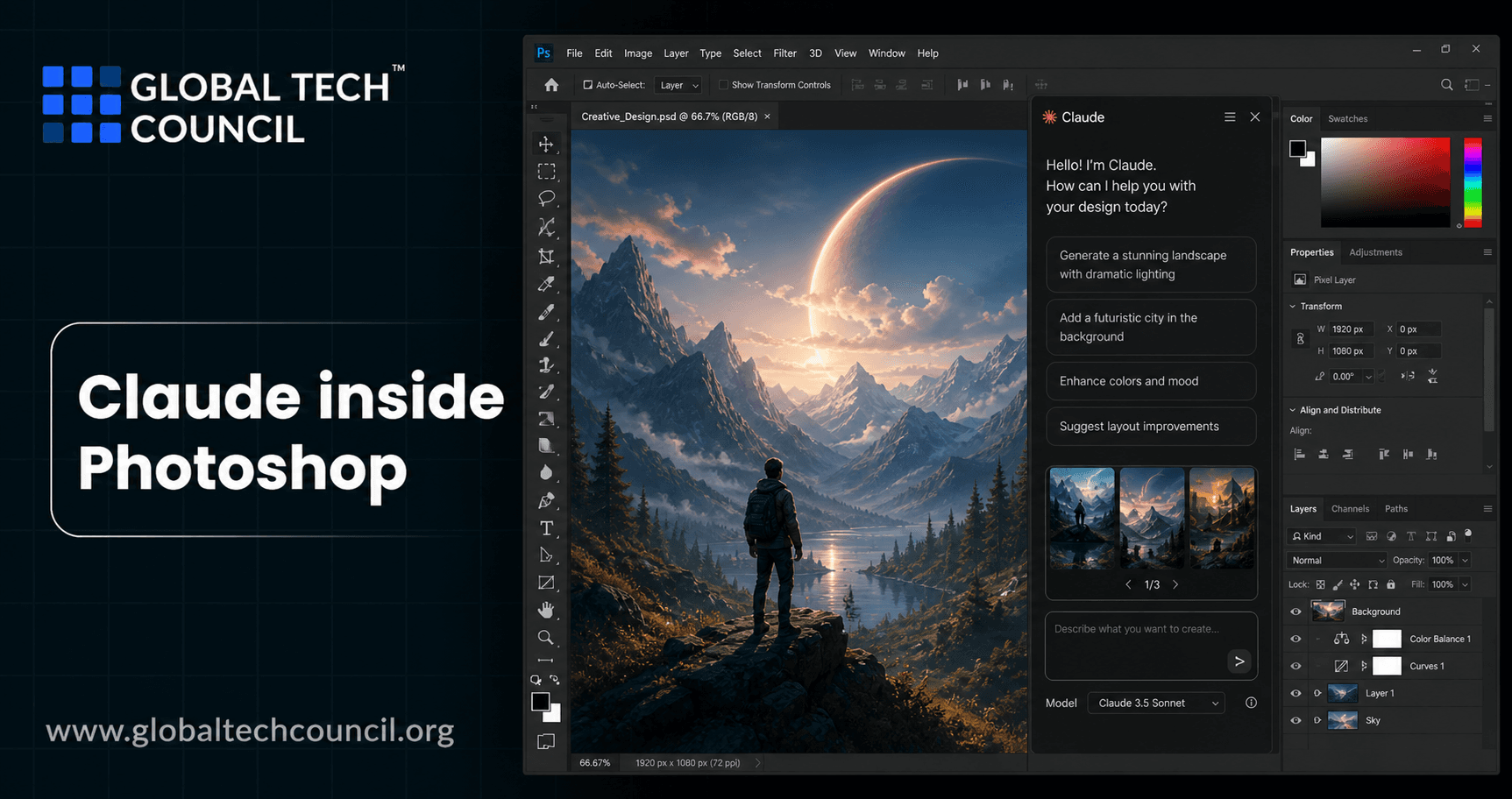
Artificial intelligence is steadily redefining how creative professionals approach design. Tools like Photoshop, once entirely manual, now rely heavily on AI-driven features to simplify complex tasks. The concept of “Claude inside Photoshop” represents the next step in this evolution, where intelligent reasoning meets visual creativity.
Rather than acting as just another editing feature, Claude introduces a more conversational and context-aware approach to design. It allows users to interact with Photoshop in a smarter, faster, and more intuitive way, transforming how projects are created and refined.

Professionals aiming to build a strong AI foundation can explore structured programs like the AI expert certification, which provides essential knowledge for working with modern AI tools.
What Is Claude and Why It Matters for Designers
Claude is an advanced AI model developed to understand context, generate meaningful responses, and assist with complex tasks. Unlike traditional automation tools, Claude focuses on reasoning and explanation rather than just execution.
For designers, this means having an assistant that not only performs actions but also explains them. It bridges the gap between technical complexity and creative intent, making Photoshop workflows more efficient and accessible.
To deepen expertise in this area, professionals often pursue the Claude Ai Certification, which focuses specifically on applying Claude in real-world scenarios.
How Claude Transforms Photoshop Workflows
Natural Language Editing
One of the most noticeable changes Claude brings is the ability to use natural language commands. Instead of navigating menus and tools manually, users can describe what they want to achieve.
For example:
“Increase contrast and add a cinematic effect”
“Make this image brighter with soft shadows”
Claude interprets these instructions and provides actionable steps or automation scripts. This simplifies the entire editing process.
Smarter Workflow Automation
Claude significantly reduces the time spent on repetitive tasks. Designers can automate processes such as:
Batch image editing
Background removal
Color adjustments
Layer organization
This is particularly useful for businesses handling large volumes of visual content.
Context-Aware Suggestions
Unlike traditional tools, Claude understands the broader context of a project. It can suggest improvements based on:
Brand identity
Design goals
Audience preferences
This makes it a valuable partner in the creative process rather than just a tool.
Practical Applications Across Industries
Marketing and Advertising
Marketing teams need fast and consistent visual content. Claude can generate variations of designs, optimize visuals, and suggest improvements based on campaign objectives.
Combining design skills with programs like the AI powered digital marketing course allows professionals to fully leverage AI in marketing strategies.
E-Commerce and Product Design
E-commerce businesses rely heavily on product images. Claude can streamline workflows by automating editing tasks and ensuring consistency across product catalogs.
This improves efficiency and reduces manual workload significantly.
Content Creation and Social Media
Content creators benefit from faster production cycles. Claude helps generate ideas, refine designs, and automate repetitive edits, allowing creators to focus more on storytelling.
UI/UX Design
Claude can assist in designing user interfaces by suggesting layouts, improving visual hierarchy, and maintaining consistency. It also helps analyze user feedback and refine designs accordingly.
Integration Possibilities
Currently, Claude is not fully integrated into Photoshop, but it can still be used effectively through:
API connections
Custom plugins
External automation tools
Developers interested in building such integrations can enhance their skills through the AI Powered coding expert Course, which focuses on AI-driven development.
Benefits of Using Claude Inside Photoshop
Faster Project Completion
Claude reduces the time required for complex and repetitive tasks. Designers can complete projects more efficiently.
Enhanced Creativity
By providing suggestions and variations, Claude helps overcome creative blocks and encourages experimentation.
Accessibility for Beginners
Beginners can interact with Photoshop using simple instructions, reducing the need for advanced technical knowledge.
Improved Collaboration
Teams can use Claude to standardize workflows and improve communication between designers and stakeholders.
Challenges and Limitations
Lack of Native Integration
Since Claude is not yet built directly into Photoshop, users may need additional tools or workflows.
Over-Reliance on AI
Relying too heavily on AI can limit creative independence. Designers should maintain a balance between automation and manual work.
Data Security Concerns
Using AI tools involves sharing data, which raises privacy and security considerations.
To better understand these challenges, professionals can explore advanced learning paths like the Agentic AI expert certification, which focuses on intelligent and autonomous AI systems.
Skills Needed to Use Claude Effectively
To maximize the benefits of Claude in Photoshop, users should develop:
Basic design skills
Understanding of AI tools
Strong prompt writing abilities
Workflow optimization techniques
These skills help users interact more effectively with AI and achieve better results.
The Future of Claude in Photoshop
The future of AI in design tools is moving toward deeper integration and smarter automation. Claude-like systems are expected to become native features within creative software.
Future developments may include:
Fully automated design workflows
Real-time AI collaboration
Personalized design recommendations
Intelligent asset management
This shift will redefine how designers work and interact with technology.
Conclusion
Claude inside Photoshop represents a significant shift in the design landscape. It transforms traditional workflows into intelligent, AI-assisted processes that are faster, more efficient, and more creative.
While it does not replace human creativity, it enhances it by handling repetitive tasks and offering new perspectives. Designers who embrace this technology will be better equipped to adapt to the evolving digital environment.
Those who ignore it will likely spend more time doing things the hard way, which is a bold strategy in a world that’s clearly moving on.
FAQs
1. What is Claude inside Photoshop?
Claude inside Photoshop refers to using the Claude AI model alongside Photoshop workflows to assist with design tasks. It helps automate processes, provide suggestions, and interpret user instructions. This makes design faster and more efficient. It acts as a smart assistant for creative work.
2. Is Claude officially available in Photoshop?
No, Claude is not yet natively integrated into Photoshop. However, it can be used through APIs, plugins, or external workflows. Many developers are working on integration solutions. Future updates may include direct support.
3. How does Claude improve design efficiency?
Claude reduces manual work by automating repetitive tasks and providing intelligent suggestions. It speeds up workflows and improves productivity. Designers can focus more on creativity. This leads to better results in less time.
4. Can beginners use Claude with Photoshop?
Yes, beginners can use Claude effectively because it supports natural language commands. It simplifies complex tasks into easy steps. This reduces the learning curve. Basic design knowledge is still helpful.
5. What tasks can Claude automate?
Claude can automate tasks such as image editing, resizing, retouching, and batch processing. It can also generate scripts for workflows. This improves efficiency and consistency. Automation saves time.
6. Does Claude replace designers?
Claude does not replace designers but supports them. It handles repetitive tasks and provides suggestions. Human creativity is still essential. It works as a collaborative tool.
7. How is Claude different from other AI tools?
Claude focuses on reasoning and context rather than just execution. It provides explanations and multi-step guidance. This makes it more versatile. It acts as an intelligent assistant.
8. Can Claude generate design ideas?
Yes, Claude can suggest creative ideas and variations. It helps users explore different design options. This is useful for overcoming creative blocks. It enhances creativity.
9. Is Claude useful for marketing design?
Yes, Claude helps create and optimize marketing visuals. It suggests improvements based on goals. This improves campaign effectiveness. It saves time.
10. Can Claude help with UI/UX design?
Claude can suggest layouts and improve design consistency. It analyzes user feedback. This improves usability. It supports better design decisions.
11. What are Claude’s limitations?
Claude cannot directly execute commands in Photoshop without integration. It depends on user input. Complex tasks may need manual work. It is not a complete replacement.
12. Is Claude suitable for professionals?
Yes, professionals benefit from improved efficiency and workflow optimization. It supports advanced tasks. This makes it valuable. It enhances productivity.
13. Can Claude assist with photo editing?
Claude suggests improvements in lighting and color. It helps automate retouching. This speeds up editing. It improves consistency.
14. How secure is Claude?
Security depends on usage and data handling. Users should follow best practices. AI tools require caution. Proper implementation is important.
15. Can Claude integrate with other tools?
Yes, Claude can integrate with various platforms through APIs. It supports multiple workflows. This improves efficiency. It increases flexibility.
16. What skills are needed to use Claude?
Users need design knowledge and AI understanding. Prompt writing is important. These improve results. Practice enhances skills.
17. Is Claude useful for freelancers?
Freelancers benefit from faster workflows and increased productivity. It reduces workload. This improves efficiency. It enhances service quality.
18. Can Claude help with automation?
Yes, Claude generates scripts and workflows. It simplifies processes. This reduces manual effort. Automation improves efficiency.
19. What is the future of AI in design?
AI will become more integrated and advanced. It will handle complex workflows. This improves creativity and efficiency. Designers will still play a role.
20. Should designers learn Claude?
Yes, learning Claude improves productivity and competitiveness. It is becoming essential. Designers who adapt will succeed. Those who ignore it risk falling behind.
Related Articles
View All
AI & ML
Claude Design 2.0
Claude Design 2.0 introduces enhanced AI-powered design capabilities, making it easier to generate layouts, prototypes, visual concepts, and creative content with natural language prompts. With improved reasoning, contextual understanding, and collaboration features, Claude Design 2.0 helps designers, developers, marketers, and businesses streamline their creative workflows. This guide explores its key features, applications, benefits, and how it compares with previous AI design tools.

AI & ML
Introducing Claude Sonnet 5
Claude Sonnet 5 represents the next evolution of Anthropic's AI models, delivering faster performance, stronger reasoning, enhanced coding capabilities, and improved multimodal understanding. Designed for developers, businesses, and everyday users, it offers more accurate responses, better instruction following, and advanced AI assistance for a wide range of tasks. This guide explores Claude Sonnet 5's features, improvements, real-world applications, and how it compares with previous Claude models.

AI & ML
What Is Claude Looping? A Complete Beginner's Guide
Claude Looping enables AI systems to perform iterative reasoning, execute multi-step tasks, and refine outputs autonomously. This beginner-friendly guide explains the concept, use cases, benefits, and practical applications of Claude Looping.
Trending Articles
The Role of Blockchain in Ethical AI Development
How blockchain technology is being used to promote transparency and accountability in artificial intelligence systems.
AWS Career Roadmap
A step-by-step guide to building a successful career in Amazon Web Services cloud computing.
Top 5 DeFi Platforms
Explore the leading decentralized finance platforms and what makes each one unique in the evolving DeFi landscape.