

What Is Quantum Machine Learning?
 Tosh Marketing
 Quantum Machine Learning (QML) is the use of quantum computers to run or improve machine learning algorithms. It combines the principles of quantum physics with data science methods to handle problems that are too complex or slow for traditional systems. In simple terms, QML could make some machine learning tasks faster, more accurate, and more powerful.
In 2025, QML is still developing, but its potential is massive — especially in fields that need high-speed computing like drug research, finance, and optimization.

How Does Quantum Machine Learning Work?
Traditional computers use bits — 0s and 1s — to process information. Quantum computers use quantum bits, or qubits, which can be in multiple states at once. This allows them to process many possible outcomes at the same time.
QML uses this ability to speed up tasks like:
- Training large machine learning models
- Exploring all paths in a decision tree
- Solving optimization problems with thousands of variables
There are two types of approaches:
- Quantum-native models, which run fully on quantum systems
- Hybrid models, which combine classical and quantum computing
Today, hybrid models are more practical because quantum computers are still limited.
What Are the Benefits of Quantum Machine Learning?
Quantum Machine Learning can offer several advantages over classical ML:
- Faster computation for certain problems
- Ability to handle more variables at once
- Better performance on optimization and simulation tasks
- Improved potential for discovering patterns in large, complex datasets
But it’s important to remember that these benefits apply to specific cases. QML won’t replace traditional ML — it will enhance it.
Challenges With Quantum Machine Learning
Quantum computing is still new, so QML has limitations:
- Quantum computers are expensive and not widely available
- Most QML models are still experimental or in research labs
- Developers need knowledge of both quantum physics and machine learning
- Programming quantum systems requires special tools and training
QML is a promising field, but it’s not fully ready for day-to-day business use yet.
Where Is Quantum Machine Learning Used?
Even though QML is still growing, it’s already being tested in areas that need high performance and precision.
Real-World Applications of QML in 2025
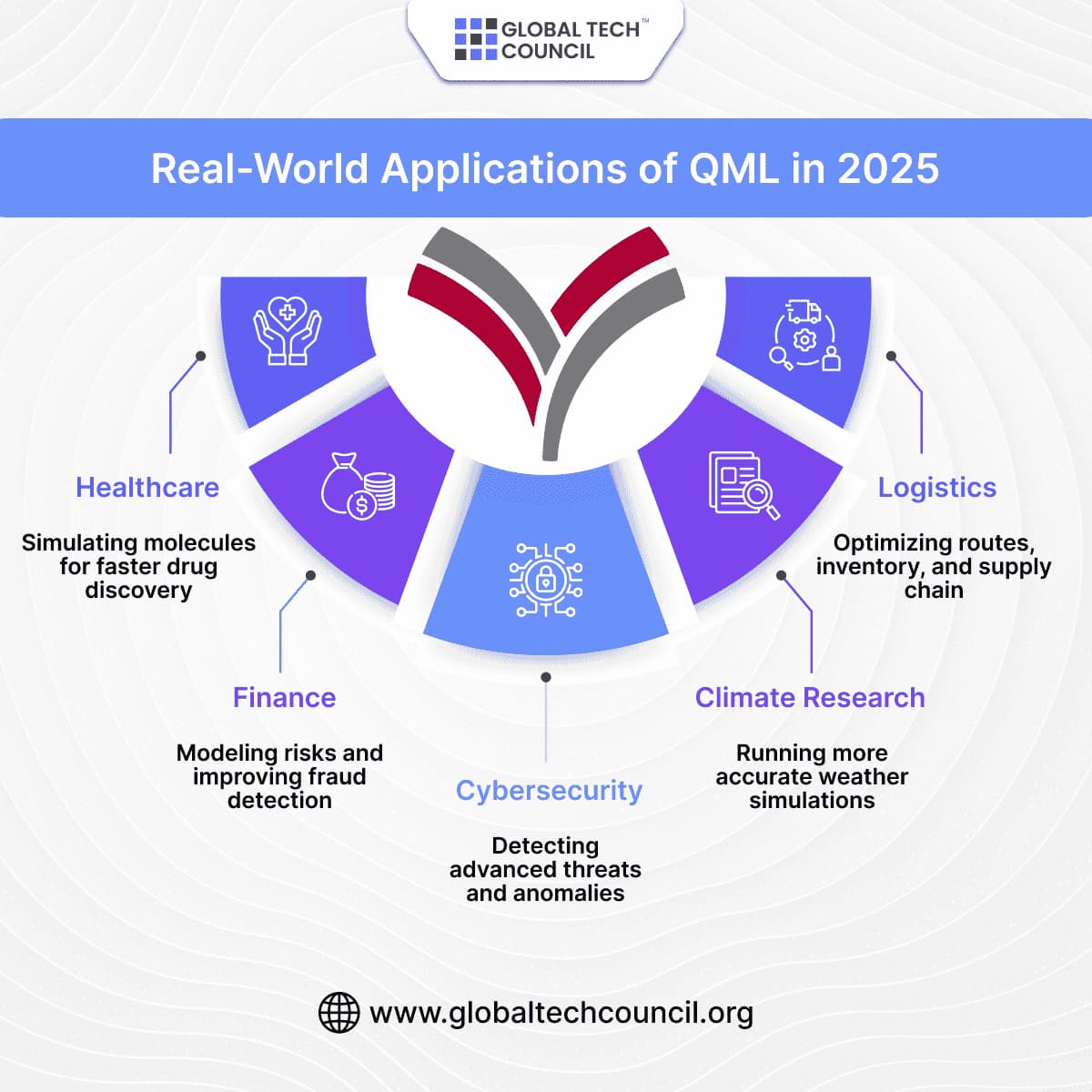
These are still early-stage use cases, but large companies and research groups are investing heavily in them.
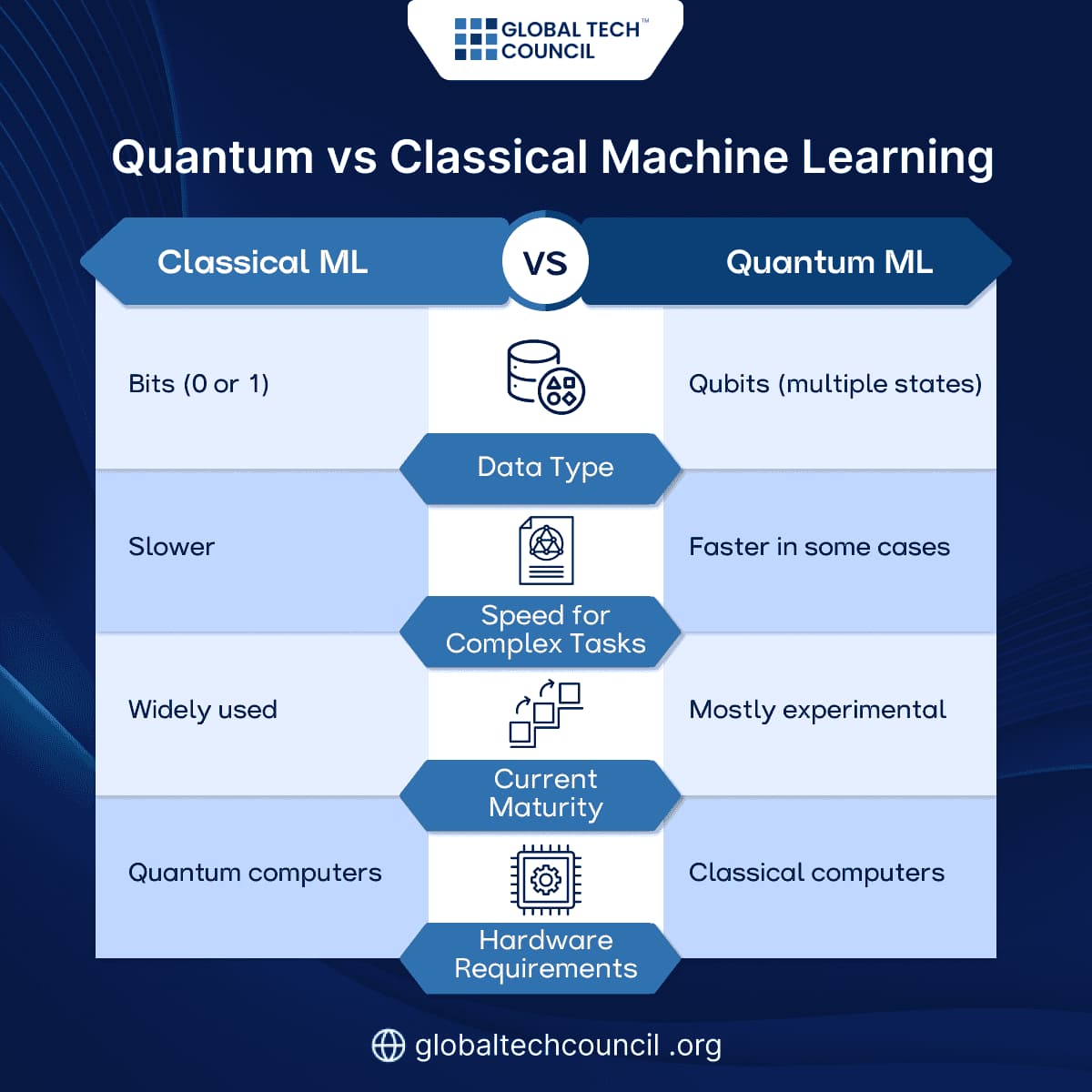
Quantum Machine Learning vs Classical Machine Learning
Should You Learn Quantum Machine Learning?
If you are just starting out in data science, you don’t need to jump into QML right away. Instead, focus on building a strong base in data science and machine learning. Python, statistics, and classical ML models are still the most important tools.
Once you’re confident with the basics, you can start learning QML through online tools like Qiskit, PennyLane, and TensorFlow Quantum.
To start your journey, consider a Data Science Certification that covers all the key skills you’ll need. If you want to explore more tech fields, including AI and blockchain, visit the Blockchain Council for a range of expert-led programs.
Conclusion
Quantum Machine Learning is a growing field that brings new possibilities to machine learning. It’s not a replacement for traditional methods, but it could become a powerful partner — especially as quantum hardware improves.
While it’s not yet mainstream, staying informed and learning the basics could give you an edge in the future of AI and advanced analytics.
Related Articles
View All
AI & ML
Generative AI vs. Traditional Machine Learning: Key Differences, Use Cases, and Career Paths
Learn the key differences between generative AI and traditional machine learning, including model goals, data needs, enterprise use cases, and career paths.

AI & ML
Machine Learning Security
Machine learning has quietly become the engine behind modern technology. It powers recommendation systems, fraud detection, medical diagnostics, and even the tools used to write code itself. Convenient, efficient, and occasionally a bit too trusting of whatever data you feed it. That trust is…
AI & ML
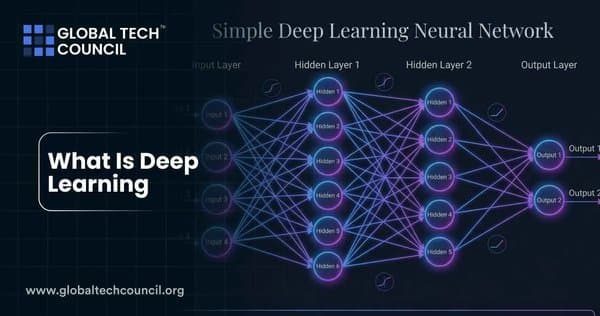
What is Deep Learning
Deep learning has become one of the most influential technologies in artificial intelligence. It supports virtual assistants, recommendation engines, medical image analysis, fraud detection, language models, content generation, and advanced automation systems. Although the term sounds highly…
Trending Articles
The Role of Blockchain in Ethical AI Development
How blockchain technology is being used to promote transparency and accountability in artificial intelligence systems.
AWS Career Roadmap
A step-by-step guide to building a successful career in Amazon Web Services cloud computing.
Top 5 DeFi Platforms
Explore the leading decentralized finance platforms and what makes each one unique in the evolving DeFi landscape.