

Identity and Access Management (IAM) Deep Dive: MFA, Passwordless Authentication, and PAM
 Suyash Raizada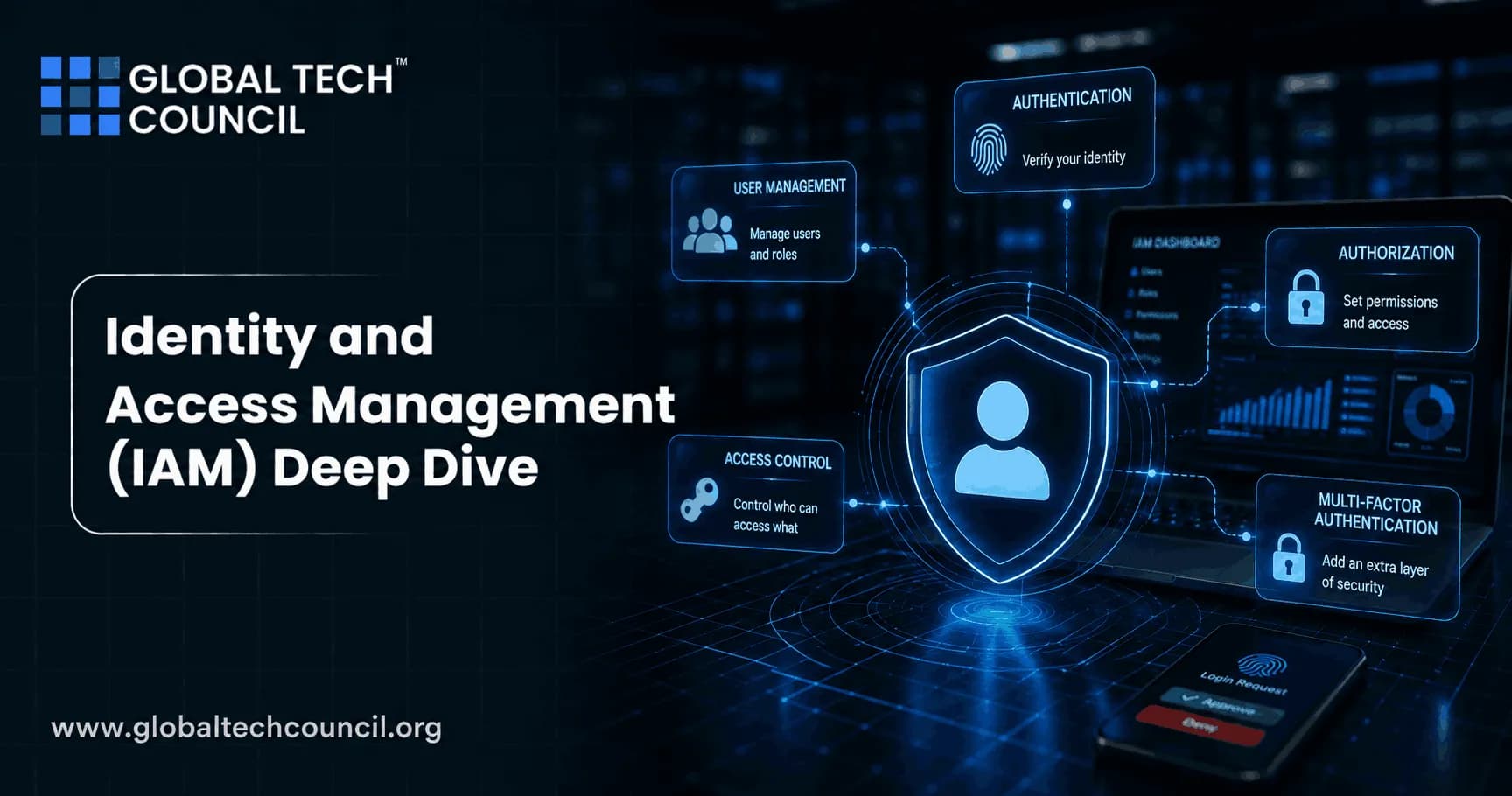
Identity and Access Management (IAM) has evolved from a directory and login workflow into a primary security control for hybrid work, cloud adoption, and Zero Trust programs. Modern IAM decisions now hinge on three converging priorities: phishing-resistant MFA, passwordless authentication, and stricter Privileged Access Management (PAM) for both human and machine identities.
This deep dive explains how these components fit together, what effective deployment looks like in practice, and how to structure an implementation that reduces credential risk without slowing down the business.

What Identity and Access Management (IAM) Covers Today
At its core, IAM answers two questions: who is requesting access, and what are they allowed to do. Historically, that meant usernames, passwords, and group memberships. In modern environments, IAM platforms consolidate several capabilities that were once managed as separate projects.
Modern IAM commonly includes:
SSO (Single Sign-On) to reduce password fatigue while centralizing access control
MFA embedded as a baseline sign-in assurance control
Conditional access and risk-based policies based on device posture, location, and user behavior
RBAC or ABAC to enforce least privilege through roles or attributes
Audit logging to support investigations, compliance, and monitoring
Passwordless authentication options, including passkey-based sign-in
Current industry guidance treats MFA as a core component of the IAM control plane, alongside authorization and policy enforcement, rather than a standalone add-on product. Build expertise in modern identity security, authentication technologies, and AI-driven cybersecurity solutions with an AI Expert Certification, expand your knowledge of intelligent automation through a Generative AI Expert Course, and stay ahead of emerging technology trends with a Tech Certification.
MFA in IAM: From Optional Control to Baseline Requirement
Multi-Factor Authentication (MFA) reduces the likelihood that a stolen or guessed password leads to account takeover. A widely accepted operational standard holds that MFA is necessary for access to any resource that could materially compromise the organization if accessed without authorization.
In a modern IAM program, MFA is not simply enabled or disabled. It is deployed as a policy decision that depends on context.
Common MFA Patterns in Real Environments
Always-on MFA for high-risk systems such as finance portals, cloud consoles, remote access gateways, and source code repositories
Step-up MFA triggered when risk is elevated - for example, a new device, unusual location, impossible travel detection, or a sensitive action
Conditional access that reduces friction on managed, healthy devices while tightening requirements elsewhere
For many organizations, the next step is prioritizing phishing-resistant MFA for the most sensitive users and actions. This means selecting authentication methods designed to prevent credential replay and social engineering attacks, and aligning MFA choices with actual threat models rather than convenience alone.
Passwordless Authentication: Reducing the Password Attack Surface
Passwordless authentication represents the most significant recent shift in workforce authentication strategy. Passwordless is becoming a standard IAM authentication method, driven by a clear security reality: passwords are vulnerable to reuse, phishing, and credential stuffing attacks.
Passwordless approaches reduce reliance on shared secrets and shift trust to device-bound credentials combined with user verification factors such as biometrics or secure device unlock. The goal is to improve both security and usability by eliminating the weakest link in many environments - the password itself.
Where Passwordless Delivers the Most Value
Hybrid workforces that authenticate frequently from variable networks and locations
High-phishing exposure roles such as finance, HR, and executive staff
Developer and operations teams accessing cloud consoles and CI/CD systems
Contractors who need time-bound access without long-lived credentials
Passwordless Rollout: Practical Considerations
Passwordless authentication is most successful when paired with device management and clear fallback processes. Organizations should plan for:
Device lifecycle events such as lost phones, replaced laptops, and employee offboarding
Recovery and help desk workflows that do not reintroduce weak authentication as a backdoor
Coverage gaps where legacy applications still require passwords and need compensating controls
Most teams adopt a phased approach: start with managed devices and core SaaS applications, then expand to broader user populations and additional systems once support and recovery playbooks are proven.
Privileged Access Management (PAM): Governing High-Risk Identities and Actions
Privileged Access Management (PAM) focuses on elevated accounts and sensitive actions. IAM and PAM address different parts of the access problem: IAM governs broad workforce access, while PAM applies stricter controls to critical systems and administrator-level activity.
Modern PAM has matured well beyond storing admin passwords in a vault. Current practice emphasizes:
Just-in-time access so privileges are time-bound rather than standing
Least privilege to limit what administrators and automation can do by default
Session monitoring and oversight for all privileged activity
Stronger governance for elevated roles across cloud, SaaS, and DevOps tooling
A Typical PAM Workflow for Human Administrators
An administrator authenticates through IAM using SSO and MFA.
They request privileged elevation for a specific task and defined time window.
PAM grants just-in-time access and enforces controls such as session logging.
After the task, privileges are automatically revoked, reducing the exposure window.
This model directly addresses a common breach pathway: long-lived privileged credentials that, once compromised, provide broad and persistent access to critical systems.
How IAM, MFA, Passwordless Authentication, and PAM Work Together
Treating IAM, MFA, passwordless authentication, and PAM as separate initiatives often creates policy gaps, inconsistent user experience, and fragmented audit trails. A mature, integrated identity architecture brings these controls together coherently.
IAM centralizes identity lifecycle management, SSO, authorization, and baseline access policies.
MFA provides sign-in assurance and is enforced through IAM policy.
Passwordless authentication reduces password dependence and lowers phishing exposure.
PAM governs privileged accounts, privileged sessions, and sensitive administrative actions.
Example: Workforce Access with Step-Up Controls
An employee signs in once via SSO to access email, CRM, HR, and development tools. Conditional access policies require MFA when the device is unmanaged or the location is unusual. If the same user attempts a sensitive action - such as changing payroll data or modifying production settings - step-up authentication is triggered before the action proceeds.
Example: Cloud Administration with PAM Oversight
Administrators do not rely on standing admin passwords. Instead, they authenticate through IAM and request time-bound elevation via PAM. Security teams review privileged audit logs and session activity for all high-impact changes.
Implementation Blueprint: Building a Modern IAM Program
The following sequence reflects how many organizations modernize Identity and Access Management without creating operational disruption.
1) Centralize Identity and Lifecycle Management
Define authoritative identity sources for employees and contractors.
Automate joiner, mover, and leaver processes so access is provisioned and revoked reliably.
Standardize RBAC or ABAC to reduce permission sprawl.
2) Make MFA the Default, Then Harden High-Risk Paths
Require MFA for systems where unauthorized access would cause material harm.
Use conditional access to apply additional friction where risk is highest.
Prioritize phishing-resistant MFA for privileged users and critical systems.
3) Introduce Passwordless Authentication Strategically
Start with managed devices and a defined subset of applications.
Document recovery workflows and verify they are resistant to social engineering.
Track outcomes such as reduced password reset tickets and fewer password-related incidents.
4) Deploy PAM for Privileged Humans and Machines
Enforce just-in-time elevation and remove standing privileges where possible.
Monitor and log privileged sessions and sensitive actions.
Extend privileged controls to cloud admin roles, service accounts, and CI/CD pipelines where applicable.
For professionals building skills in this area, Global Tech Council offers cybersecurity certifications, Zero Trust security training, and cloud security certification programs that cover identity-centric security controls and access governance in depth.
Future Outlook: Identity Assurance Over Password Checks
The near-term direction for IAM is a clear shift away from password-centric authentication toward continuous, risk-sensitive identity assurance. Organizations are moving toward unified identity platforms that bring together IAM policy, MFA, passwordless options, and privileged controls under a single governance layer.
Expected developments include broader passwordless adoption, expanded risk-based access policies, deeper PAM integration with SaaS and cloud administration tooling, and tighter convergence between IAM, PAM, and access governance to support audit and compliance requirements. Advance your understanding of secure digital infrastructures by mastering automation and development skills through an AI Powered Coding Expert Course, exploring next-generation innovation with a Deeptech Certification, and learning strategic technology adoption through a Marketing Certification.
Conclusion
Identity and Access Management (IAM) is no longer a back-office system. It is a primary security control that shapes how users, administrators, and services interact with business-critical resources. A modern approach treats MFA as a baseline within IAM, adopts passwordless authentication to reduce password-driven risk, and applies strong PAM practices to high-impact identities and actions.
The most effective programs align these elements into one coherent policy model: authenticate with strong assurance, authorize with least privilege, elevate only when necessary, and log everything that matters. That is the practical foundation for resilient access in cloud, hybrid, and Zero Trust environments.
FAQs
1. What is Identity and Access Management (IAM)?
Identity and Access Management (IAM) is a cybersecurity framework that manages digital identities and controls access to organizational resources. It ensures that the right users can access the right systems, applications, and data at the appropriate time.
2. Why is IAM important for organizations?
IAM helps organizations protect sensitive information, reduce security risks, and maintain regulatory compliance. It provides centralized control over user authentication, authorization, and access monitoring across digital environments.
3. What are the main components of IAM?
The key components of IAM include authentication, authorization, user provisioning, access governance, identity lifecycle management, and auditing. Together, these elements help secure organizational resources and manage user access effectively.
4. What is authentication in IAM?
Authentication is the process of verifying a user's identity before granting access to systems or applications. Common authentication methods include passwords, biometrics, security tokens, and multi-factor authentication.
5. What is authorization in IAM?
Authorization determines what resources and actions a user can access after authentication. It ensures that users receive permissions based on their roles, responsibilities, and business requirements.
6. What is Multi-Factor Authentication (MFA)?
Multi-Factor Authentication (MFA) is a security method that requires users to provide two or more verification factors. This additional layer of security significantly reduces the risk of unauthorized access.
7. Why is MFA considered a cybersecurity best practice?
MFA protects accounts even if passwords are compromised through phishing, credential theft, or brute-force attacks. By requiring multiple verification methods, organizations can strengthen their overall security posture.
8. What are common MFA factors?
Common MFA factors include something you know (passwords), something you have (security tokens or mobile devices), and something you are (fingerprints or facial recognition). Combining these factors enhances authentication security.
9. What is passwordless authentication?
Passwordless authentication allows users to access systems without traditional passwords. Instead, it relies on methods such as biometrics, security keys, authentication apps, or device-based credentials.
10. What are the benefits of passwordless authentication?
Passwordless authentication improves security by eliminating password-related vulnerabilities and enhances user experience by reducing login friction. It also lowers the costs associated with password resets and account recovery.
11. How does passwordless authentication improve security?
By removing passwords from the authentication process, organizations reduce exposure to phishing, credential stuffing, and password reuse attacks. This creates a more secure and streamlined access experience.
12. What is Privileged Access Management (PAM)?
Privileged Access Management (PAM) is a security strategy that controls and monitors access to critical systems and sensitive accounts. It focuses on protecting high-level privileges that could cause significant damage if compromised.
13. Why is PAM important in cybersecurity?
PAM reduces the risk of insider threats, unauthorized access, and privilege misuse. It ensures that administrative accounts and sensitive credentials are managed securely and used only when necessary.
14. How does PAM work?
PAM solutions secure privileged credentials, enforce access controls, monitor user activities, and provide audit trails. These capabilities help organizations detect suspicious behavior and maintain accountability.
15. What is the principle of least privilege?
The principle of least privilege grants users only the minimum level of access needed to perform their job functions. This approach limits potential damage from compromised accounts or insider threats.
16. What is Single Sign-On (SSO) in IAM?
Single Sign-On (SSO) enables users to access multiple applications with a single set of credentials. It simplifies authentication while improving user productivity and reducing password management challenges.
17. How does IAM support regulatory compliance?
IAM helps organizations meet compliance requirements by enforcing access controls, maintaining audit logs, and ensuring proper identity governance. These capabilities support regulations related to data privacy and security.
18. What are common IAM challenges?
Organizations often face challenges such as managing remote users, securing privileged accounts, integrating legacy systems, and maintaining consistent access policies across complex environments.
19. How is AI transforming IAM solutions?
AI enhances IAM by enabling risk-based authentication, anomaly detection, automated access reviews, and intelligent threat monitoring. These capabilities help organizations respond more effectively to evolving cyber threats.
20. What is the future of IAM?
The future of IAM includes broader adoption of passwordless authentication, zero-trust security models, AI-driven identity protection, and advanced access governance frameworks. These innovations will help organizations strengthen security while improving user experiences.
Related Articles
View All
Cyber Security
Phishing-Resistant Security: Email Authentication (SPF/DKIM/DMARC) and User Training That Works
Learn how SPF, DKIM, and DMARC reduce spoofing, where they fall short, and which simulation-driven training methods measurably lower phishing risk.
Cyber Security
4 Remote Access Risks and How to Solve Them
Business leaders worldwide are asking the same question with enterprise-level data breaches at an all-time high: Is remote access safe? As an MSP, you realize that it depends on a few items to mitigate security risks associated with remote access, including enforcing security procedures and…

Cyber Security
Cybersecurity Facts for 2026: Threats, Trends, and Real-World Lessons
Cybersecurity in 2026 features faster exploitation, growing ransomware profits, rising supply chain attacks, and AI-driven threats. Learn the key facts and priorities.
Trending Articles
The Role of Blockchain in Ethical AI Development
How blockchain technology is being used to promote transparency and accountability in artificial intelligence systems.
AWS Career Roadmap
A step-by-step guide to building a successful career in Amazon Web Services cloud computing.
Top 5 DeFi Platforms
Explore the leading decentralized finance platforms and what makes each one unique in the evolving DeFi landscape.