

AI-Powered Threat Detection: How Machine Learning Improves SOC Triage and Reduces Alert Fatigue
 Suyash Raizada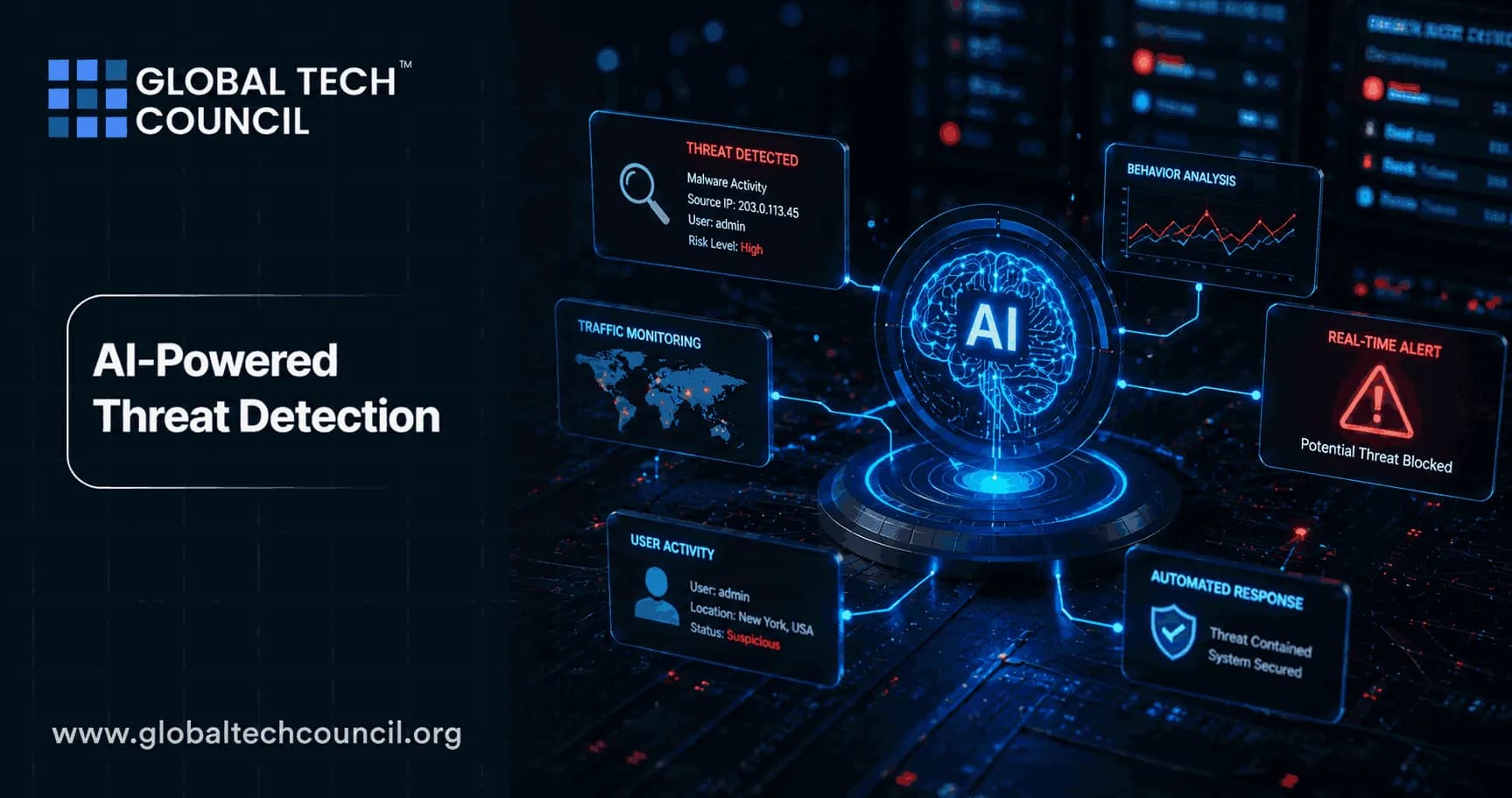
AI-powered threat detection is changing how Security Operations Centers (SOCs) manage overwhelming alert volumes. Instead of forcing analysts to manually review thousands of low-fidelity notifications from SIEM, EDR, IDS, and cloud tools, machine learning (ML) can prioritize, enrich, and auto-disposition alerts so teams investigate fewer, higher-quality signals. The result is faster SOC triage, fewer false positives, and a meaningful reduction in alert fatigue. Build the skills to understand intelligent security systems, machine learning-driven detection, and modern cyber defense strategies with an AI Expert Certification, deepen your knowledge of advanced AI models through a Generative AI Expert Course, and explore next-generation digital innovation through a Deeptech Certification.
This article explains how machine learning improves SOC triage, what outcomes organizations are reporting, and how to adopt AI responsibly with the right governance and human oversight.

Why Alert Fatigue Happens in Traditional SOC Triage
Most SOCs still rely heavily on static rules, signatures, and correlation logic. These techniques are essential, but they are also noisy when applied to modern environments with:
Hybrid infrastructure (on-prem, cloud, SaaS)
High-volume telemetry covering endpoint events, DNS, proxy, and identity logs
Attackers using living-off-the-land techniques and evasive behaviors
In practice, this creates a queue full of low-context alerts that require repetitive steps: initial review, enrichment, correlation, and basic classification. When these tasks dominate Tier 1 workflows, analysts become overextended, response slows, and important signals get missed.
What AI-Powered Threat Detection Means in a SOC
AI-powered threat detection refers to the use of machine learning and behavior analytics to identify suspicious activity, then operationalize the outcome through triage and response workflows. In modern SOC stacks, AI is typically embedded across SIEM, XDR, SOAR, and MDR offerings rather than delivered as a standalone tool.
Key Capabilities SOC Teams Are Adopting
Machine learning risk scoring and classification to predict whether an alert is benign, suspicious, or high priority.
Behavior analytics that model normal user, host, and entity behavior to detect deviations tied to compromise or insider risk.
AI copilots and agentic workflows that summarize incidents, recommend next steps, and autonomously close low-risk alerts.
AI functions as a force multiplier in this context. It automates repetitive, data-heavy triage work and helps analysts focus on higher-order tasks like threat hunting, detection engineering, and complex investigations.
How Machine Learning Improves SOC Triage in Practice
Machine learning improves SOC triage by shifting the workflow from manual review of every alert to automated decision support and high-confidence auto-disposition. The biggest gains come from three areas: classification, enrichment, and prioritization.
1) Automated Classification and Auto-Closure
In ML-driven triage, supervised models learn from historical triage decisions to predict outcomes such as:
True positive vs. false positive likelihood
Severity and business risk
Recommended next action (close, investigate, escalate, or contain)
Mature systems often use layered or ensemble approaches that combine multiple model types with rule logic, which improves resilience and reduces single-model failure modes. When confidence is high, the platform can auto-close benign alerts before they reach an analyst - one of the most direct ways to reduce alert fatigue.
2) Anomaly Detection and Behavior Analytics for Unknown Threats
Rule-based detection is effective for known bad patterns, but it can struggle with novel attacks, subtle lateral movement, and low-and-slow behavior. ML-based anomaly detection and user and entity behavior analytics (UEBA) address this gap by flagging deviations from baseline activity, such as:
Unusual login locations or impossible travel patterns
Abnormal access to sensitive data stores
New process execution chains on endpoints
Unexpected service-to-service behavior in cloud workloads
This capability is central to AI-powered threat detection because it surfaces high-fidelity investigations that signatures alone would likely miss.
3) Enrichment and Investigation Acceleration
Even when an alert is legitimate, analysts lose time gathering context. AI systems can enrich alerts by automatically correlating telemetry across endpoints, network, identity, and cloud systems, then presenting:
Context-rich timelines of activity before and after the alert
Related entities including users, hosts, IPs, processes, and cloud resources
Threat intelligence context and similar historical cases
Natural language summaries that reduce time-to-understanding for responders
This enrichment reduces triage time per case and improves consistency across analysts and shifts.
Evidence of Impact: Reduced Tier 1 Workload and Measurable Hours Saved
While broad industry benchmarks are still developing, vendor-reported operational results illustrate the direction clearly. High-confidence auto-triage can significantly reduce Tier 1 workloads and return substantial analyst time each week.
Operational Results Reported by AI SOC Platforms
Rapid7 reports AI-driven auto-triage accuracy of 99.93 percent for identifying benign alerts and saving upwards of 200 analyst hours per week in its global SOC. The company has also described environments where AI automatically handled thousands of benign alerts that would otherwise have required manual processing.
CrowdStrike reports that Charlotte AI Detection Triage reached more than 98 percent agreement with human Falcon Complete MDR triage decisions and saves customers more than 40 hours of manual work per week on average for endpoint alert triage.
These outcomes matter because alert fatigue is not only a workforce wellbeing issue - it is an operational risk. When analysts spend most of their shift closing noise, the SOC becomes slower at finding real threats and slower at containing them.
Where AI-Powered Threat Detection Fits in the Modern SOC Stack
AI-driven triage and detection is increasingly implemented as a capability within existing security operations tooling. Common deployment patterns include:
SIEM with ML analytics for cross-domain correlation and risk scoring
XDR for endpoint and identity-centric detection with automated triage
SOAR for playbook execution when AI indicates high confidence
MDR where provider expertise and models combine to drive faster triage and response
Teams see the best results when AI is paired with strong automation. Detection without action still leaves humans doing repetitive work. Triage improvements have the most impact when they connect to case management, containment playbooks, and auditable response steps.
Governance and Trust: What to Require Before Auto-Disposition
As SOC teams delegate more decisions to ML models, governance becomes a core engineering requirement rather than a policy afterthought. Leaders should insist on transparency, control, and auditability, particularly when AI can close alerts or trigger containment actions.
Practical Governance Requirements
Explainability: Clear evidence trails, features, and rationale for why an alert was closed or escalated.
Confidence scoring: Human-review thresholds for uncertain outcomes.
Override and tuning: The ability to adjust policies, suppressions, and decision logic.
Feedback loops: Mechanisms for analysts to correct outcomes so models improve and drift is managed.
Audit logs: Full records of AI-driven decisions for compliance and incident review.
Strengthen your ability to work with AI-driven security tools, automation workflows, and data-powered defense systems by developing practical skills through an AI Powered Coding Expert Course, expanding your technical foundation with a Tech Certification, and learning how digital trust influences brand growth through a Marketing Certification.
Implementation Checklist: Reducing Alert Fatigue with ML-Driven Triage
To reduce alert fatigue without increasing risk, focus on measurable triage performance and safe automation design.
Start with high-volume, low-risk alert classes: Target noisy detections where false positives are common and the impact of a missed closure is low.
Measure signal-to-noise improvements: Track reduction in alert volume reaching humans, false positive rates, and analyst time per investigation.
Deploy risk-based prioritization: Ensure the model considers context such as asset criticality, identity risk, and previous related activity.
Require context enrichment: AI should pull relevant telemetry and produce consistent incident narratives.
Integrate with response playbooks: Connect high-confidence detections to SOAR actions with guardrails and approvals.
Operationalize feedback: Make analyst corrections part of routine operations to support continual learning and reduce model drift.
What Comes Next: From Point Models to Agentic AI in Security Operations
The trend is moving from individual ML models toward more agentic AI SOC platforms. These systems aim to manage end-to-end workflows covering triage, investigation, case updates, and response coordination across tools. The most durable improvements are expected in cross-domain correlation and deeper behavioral analytics that connect endpoint, network, identity, SaaS, and cloud telemetry into a single investigation story.
As these capabilities mature, SOC roles are likely to shift further toward detection engineering, threat hunting, and validation of automated decisions, with Tier 1 work reduced or substantially transformed by automation.
Conclusion
AI-powered threat detection improves SOC triage by using machine learning to classify alerts, enrich context, and auto-close benign noise. When implemented with transparency, controls, and strong automation, ML-driven triage can reduce alert fatigue while increasing speed and consistency across investigations. Operational results reported by leading SOC platforms suggest that high-confidence auto-triage can reclaim dozens to hundreds of analyst hours per week, enabling teams to focus on the threats that matter most.
For SOC leaders, the priority is not choosing AI over humans - it is building a governed, explainable human-AI workflow where machines handle repetitive triage at scale and analysts drive higher-value security outcomes.
FAQs
1. What is AI-powered threat detection?
AI-powered threat detection uses machine learning and automation to identify suspicious activity across networks, endpoints, cloud systems, and applications. It helps security teams detect threats faster by analyzing large volumes of data that humans would rather not drown in.
2. How does machine learning improve cybersecurity threat detection?
Machine learning improves threat detection by identifying unusual patterns, anomalies, and behaviors that may indicate cyberattacks. It can learn from historical data and continuously adapt as threats evolve.
3. What is SOC triage?
SOC triage is the process of reviewing, prioritizing, and investigating security alerts in a Security Operations Center. It helps analysts decide which alerts require immediate action and which are low-risk noise.
4. Why do SOC teams experience alert fatigue?
Alert fatigue happens when analysts receive too many security alerts, many of which are false positives or low-priority events. Over time, this overload can cause missed threats, slower responses, and very tired humans staring at dashboards.
5. How does AI reduce alert fatigue?
AI reduces alert fatigue by filtering low-value alerts, grouping related events, and prioritizing high-risk incidents. This allows analysts to focus on serious threats instead of manually sorting endless notifications.
6. What types of threats can AI detect?
AI can detect malware, phishing attempts, insider threats, credential abuse, ransomware behavior, suspicious logins, and network anomalies. Its effectiveness depends on data quality, model training, and security context.
7. What role does anomaly detection play in threat detection?
Anomaly detection identifies behavior that deviates from normal activity patterns. It is useful for spotting unknown threats, compromised accounts, and suspicious actions that rule-based systems may miss.
8. How does AI help prioritize security alerts?
AI evaluates alerts based on risk signals such as user behavior, asset value, threat intelligence, and historical attack patterns. This helps SOC teams address the most dangerous incidents first.
9. What is the difference between rule-based detection and AI-based detection?
Rule-based detection relies on predefined conditions, while AI-based detection learns patterns from data. AI can identify more complex and evolving threats, though it still needs human oversight to avoid becoming confidently wrong.
10. Can AI replace SOC analysts?
No, AI supports SOC analysts but does not fully replace them. Human experts are still needed for investigation, decision-making, incident response, and understanding business context.
11. What is behavioral analytics in cybersecurity?
Behavioral analytics studies normal user, device, and system behavior to identify suspicious deviations. It helps detect compromised accounts, insider threats, and abnormal access patterns.
12. How does AI improve incident response?
AI improves incident response by correlating events, suggesting investigation steps, automating repetitive actions, and accelerating threat containment. This helps teams respond faster and reduce damage.
13. What data does AI use for threat detection?
AI models use data from logs, endpoints, firewalls, identity systems, cloud platforms, network traffic, and threat intelligence feeds. More complete data usually leads to stronger detection performance.
14. What are false positives in SOC operations?
False positives are alerts that appear suspicious but do not represent real threats. Reducing false positives is important because they waste analyst time and make real threats easier to overlook.
15. How does machine learning detect unknown threats?
Machine learning can detect unknown threats by recognizing abnormal behavior rather than relying only on known attack signatures. This makes it useful against new malware, zero-day attacks, and evolving tactics.
16. What are the risks of using AI in threat detection?
Risks include biased models, poor data quality, false negatives, adversarial attacks, and overreliance on automation. AI security tools need regular monitoring, tuning, and validation.
17. How can organizations measure AI threat detection performance?
Organizations can measure performance using detection accuracy, false positive rate, mean time to detect, mean time to respond, and analyst workload reduction. These metrics show whether AI is actually helping or just decorating the SOC.
18. How does AI support threat intelligence?
AI can process threat intelligence feeds, identify emerging attack patterns, and connect indicators of compromise across systems. This helps teams understand threats faster and improve detection rules.
19. What skills are needed to work with AI-powered SOC tools?
Professionals need knowledge of cybersecurity fundamentals, machine learning concepts, log analysis, incident response, and security platforms. Communication and judgment also matter because tools still need sane operators.
20. What is the future of AI-powered threat detection?
The future will include more autonomous triage, predictive threat analytics, adaptive defense systems, and stronger integration with security orchestration tools. AI will become a core part of modern SOC operations.
Related Articles
View All
Cyber Security
Ransomware Defense Playbook: Prevention, Detection, and Incident Response for Modern Enterprises
A practitioner-focused ransomware defense playbook for enterprises, covering prevention controls, detection engineering, and incident response steps to reduce impact and recover faster.
Cyber Security
Threat Intelligence Platforms
Learn what threat intelligence platforms are, how they collect and analyze threat data, and how security teams use them to detect risks, prioritize incidents, and improve cyber defense.
Cyber Security
What Is Threat Intelligence Feeds?
Threat intelligence feeds are real-time data streams that provide up-to-date information about potential cyber threats. These feeds help security teams identify, block, and respond to malicious activity before it causes damage. They include indicators like IP addresses, domain names, file hashes,…
Trending Articles
The Role of Blockchain in Ethical AI Development
How blockchain technology is being used to promote transparency and accountability in artificial intelligence systems.
AWS Career Roadmap
A step-by-step guide to building a successful career in Amazon Web Services cloud computing.
Top 5 DeFi Platforms
Explore the leading decentralized finance platforms and what makes each one unique in the evolving DeFi landscape.