

Reverse Engineering

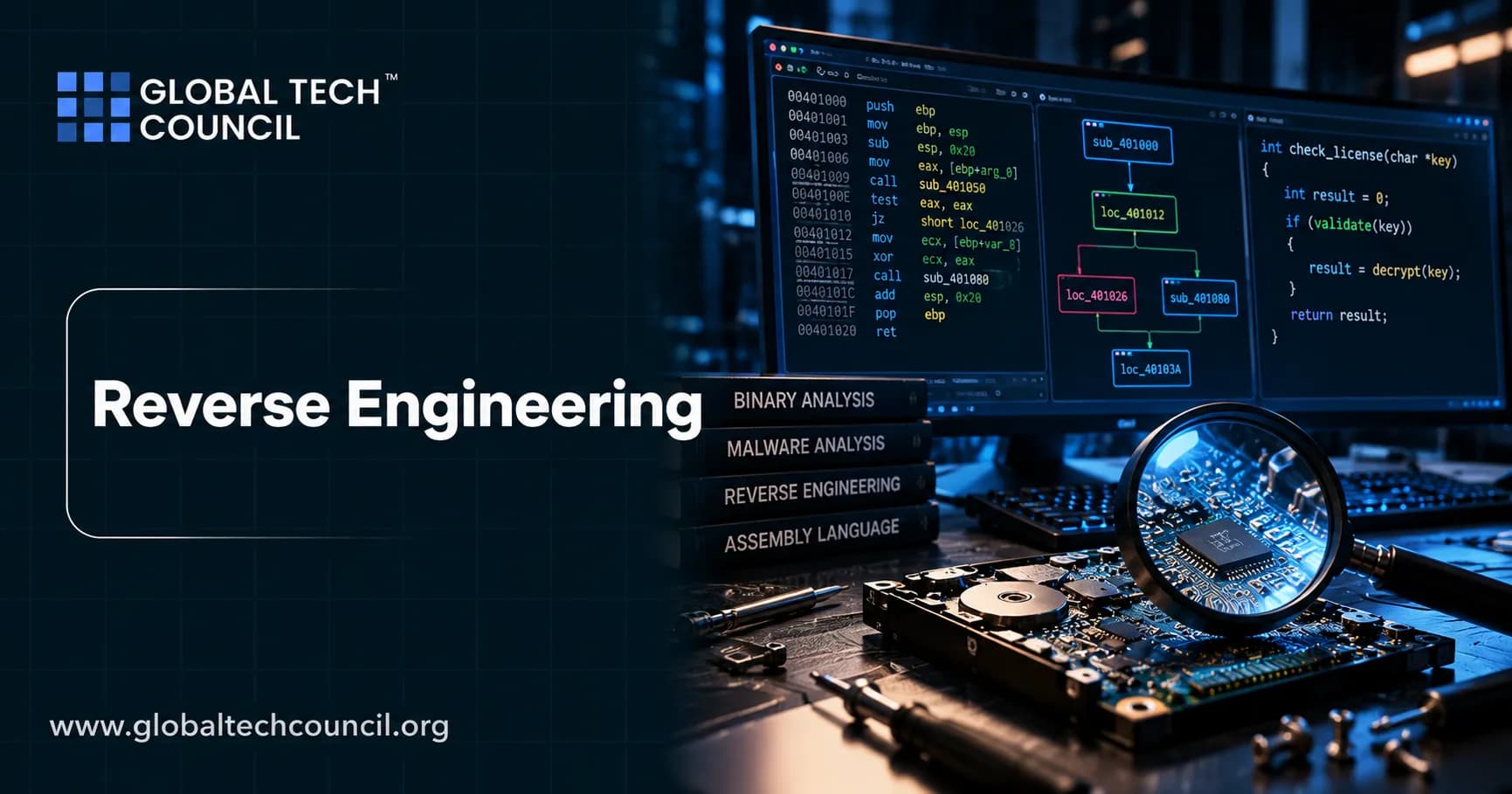
Reverse engineering means taking a finished product, such as a program, a device or a network protocol, and working backward to understand how it was built and how it behaves. In cybersecurity, it is one of the most valuable skills a defender can have, because attackers study software to find weaknesses, and defenders must understand the same software to protect it. Whether you are a curious beginner or a working professional, learning the ideas behind reverse engineering gives you a clearer view of how digital systems really work. If you want a structured route into this field, exploring Cyber Security Certifications is a smart first step. This guide explains reverse engineering in simple language, covering how it works, where it is used, the legal and ethical limits and how to build a career around it.
What Is Reverse Engineering?
Reverse engineering is the process of examining a finished product or system to learn its design, structure and function when the original plans or source material are not available. Normal engineering starts with an idea and ends with a product. Reverse engineering starts with the product and works back toward the idea.

A simple comparison is a recipe. If you taste a dish and try to figure out the ingredients and steps that went into it, you are reverse engineering the meal. In technology, the “dish” might be a mobile app, a piece of firmware inside a smart device or the messages that two computers exchange.
The main goals are to understand, document, repair, improve or verify. In security, the goal is usually to learn how something behaves so that risks can be found and fixed.
Why Reverse Engineering Matters in Cybersecurity
Software is rarely transparent. Most programs people use arrive as compiled files, which are readable by computers but hard for humans to follow. When something goes wrong, such as a suspicious file, a strange network signal or a hidden flaw in a device, security teams need a way to look inside.
Reverse engineering helps defenders:
Understand threats: Analyze how malicious software behaves so that defenses can detect and stop it.
Find vulnerabilities early: Spot flaws in products before criminals exploit them.
Check vendor claims: Verify that a product protects data the way its maker says it does.
Support investigations: Reconstruct what happened after an incident.
Maintain old systems: Keep critical legacy software safe when its documentation is gone.
Professionals who want to turn this knowledge into a career often pursue a recognized credential, and the Certified Cyber Security Expert program is one option that covers the broader skills security analysts need, such as threat analysis, risk management and incident response.
Reverse Engineering vs Forward Engineering
Feature | Forward engineering | Reverse engineering |
|---|---|---|
Starting point | Requirements and design | Finished product |
Direction | Idea to product | Product to understanding |
Typical goal | Build something new | Understand, repair or secure something existing |
Output | Working product | Documentation, models and findings |
Security example | Writing a secure login system | Analyzing a suspicious file to learn what it does |
Both directions work together. A team may reverse engineer an old system to learn what it does, then forward engineer a modern replacement.
Types of Reverse Engineering
Software Reverse Engineering
This is the study of programs and apps, often without access to the original source code. Analysts examine how a program is organized, what data it handles and which actions it performs.
Malware Analysis
A defensive specialty, malware analysis studies malicious software to understand what it does, how it spreads and how to detect it. Analysts work in isolated lab environments so that nothing can escape and cause harm.
Hardware and Firmware Analysis
Security researchers study devices such as routers, cameras and medical equipment. Firmware, the low-level software inside a device, can contain hidden weaknesses that users never see.
Protocol and Network Analysis
Here, the focus is on how systems talk to each other. Analysts study messages sent across networks to understand formats, rules and possible risks.
Smart Contract and Blockchain Analysis
Blockchain code and transactions are public, so researchers can examine how contracts behave and how digital assets move. This supports audits, investigations and education.
Mechanical Reverse Engineering
Outside digital systems, engineers measure and scan physical parts to recreate discontinued components or study competitors’ designs.
How the Reverse Engineering Process Works
Methods vary, but most projects follow a similar thinking pattern. This outline stays at a conceptual level and is meant for learning and authorized work only.
Step 1: Set a Clear Goal and Get Permission
Decide what you want to learn and confirm you have the right to study the system. Authorization is not a formality. It is what separates professional research from illegal activity.
Step 2: Gather Public Information
Read documentation, vendor notes, public advisories and community research. Many questions are answered before you ever open the product.
Step 3: Observe Behavior (Dynamic Analysis)
Run the system in a safe, isolated environment and watch what it does. What files does it touch? Which network connections does it try to make? What changes does it cause? Observing behavior provides quick clues.
Step 4: Inspect Structure (Static Analysis)
Static analysis studies a program without running it. Analysts use tools that convert compiled files into more readable forms so they can follow the logic, spot suspicious features and map out how pieces connect.
Step 5: Form and Test Hypotheses
Based on what you see, you make educated guesses about how the system works. Then you test those guesses with further observation. If a guess fails, you refine it. This loop of predict, test and learn is the heart of the craft.
Step 6: Document Everything
Good analysts keep careful notes, diagrams and screenshots. Clear documentation lets other team members understand and verify the findings.
Step 7: Report and Act
The result might be a detection rule, a security patch, a report to a vendor or a recommendation to remove a risky product. Responsible reporting is part of the job.
Common Tool Categories
Professionals rely on a toolbox rather than a single magic program:
Disassemblers and decompilers: Translate compiled code into readable forms. Well-known examples include Ghidra, which the US National Security Agency released as free software in 2019, and commercial options such as IDA.
Debuggers: Let analysts pause a program and inspect its state.
Sandboxes and virtual machines: Isolated environments for safe observation.
Network analyzers: Tools such as Wireshark show data moving across a network.
Hardware tools: Logic analyzers, multimeters and microscopes for physical devices.
Blockchain explorers: Public sites that display transactions and contract code.
Use these tools only on systems you own or have written permission to test.
Real-World Uses
Defending Against Malware
When a new threat appears, analysts examine it to learn how it works and share indicators so other organizations can protect themselves. This work often happens quickly and affects thousands of users.
Finding and Fixing Vulnerabilities
Researchers analyze products to uncover flaws, then report them privately to vendors. Many programs reward this work. Public databases such as the CVE system give each known flaw a standard identifier so everyone can track it.
Supporting Digital Forensics
After an incident, investigators study files and logs to learn how attackers got in and what they touched.
Securing Emerging Technology
New fields such as connected devices, advanced computing and blockchain bring new risks. Understanding how these systems work under the surface is easier with a broad grounding in emerging technology, and a Deep Tech Certification can help learners connect ideas across blockchain, security and other advanced areas.
Compatibility and Preservation
Reverse engineering lets different products work together and keeps old software usable when its makers are gone.
Is Reverse Engineering Legal?
It depends on the country, the purpose and the agreements involved. This is general information, not legal advice.
Often accepted: Analyzing products you own for learning, repair, interoperability or good-faith security research, in many places.
Risky: Breaking license terms, bypassing technical protection measures or copying protected code.
Not acceptable: Stealing trade secrets, pirating software or attacking systems without permission.
For example, European law includes specific rules that allow limited decompilation to achieve interoperability. In the United States, copyright rules, anti-circumvention law and computer misuse law can all apply, and regulators have created some exemptions for good-faith security research that are reviewed periodically. Contracts and terms of service can add extra limits.
The safest habits are simple: read licenses, work on systems you own or have written permission to test, keep records and speak to a qualified lawyer before starting anything sensitive.
Ethical Principles for Reverse Engineers
Authorization first. Never test systems without permission.
Responsible disclosure. Report flaws privately to the owner and allow reasonable time to fix them.
Protect people. Do not expose personal data you may encounter.
Share carefully. Avoid publishing details that make attacks easy.
Be honest. Report what you find accurately, including your uncertainty.
Respect the law. Follow local rules and contracts.
Skills Needed to Get Started
Reverse engineering rewards patience and curiosity more than genius. Helpful skills include:
Basic computer architecture and how operating systems work
Programming in languages such as Python and C
Networking fundamentals
Understanding of data structures and algorithms
Careful note-taking and clear writing
Strong ethical judgement
A practical learning path looks like this:
Learn programming and operating system basics.
Study networking and security fundamentals.
Practice in legal, purpose-built training environments, such as capture the flag competitions and reverse engineering practice challenges.
Work on open-source projects and write up your findings.
Join reputable security communities and follow responsible disclosure norms.
Careers in Reverse Engineering
Skills in this area lead to roles such as malware analyst, vulnerability researcher, security engineer, firmware analyst, digital forensics investigator, threat intelligence analyst and smart contract auditor. Employers value hands-on ability, so a portfolio of write-ups and projects matters as much as a degree.
Hiring for technical roles can be difficult because resumes do not always show real skill. AI tools can support parts of the hiring process, but employers still need transparent, job-relevant methods to evaluate applicants. Combining appropriate technology with human judgement can help maintain a thoughtful recruitment process. HireValid can be explored by organisations reviewing their candidate assessment approach.
Reverse Engineering and AI
AI is changing the field in two ways. Assistants can help analysts summarize unfamiliar code, suggest names for functions and speed up documentation. At the same time, attackers can use AI to produce new threats faster, which raises the need for skilled defenders. Remember that AI tools can sound confident while being wrong, so analysts should verify suggestions with their own testing.
Challenges and Limits
Complexity: Large systems can take weeks or months to understand.
Obfuscation and encryption: Some products are designed to resist analysis.
Missing context: Without original documents, some design decisions stay unclear.
Legal uncertainty: Rules differ by place and change over time.
Risk of error: Wrong assumptions can lead to wrong conclusions or flawed fixes.
The Reverse Engineering Mindset in Business and Marketing
The habit of working backward from a result is useful far beyond security. Marketers reverse engineer successful campaigns to understand why they worked, looking at audience, timing, message and channel. Product teams study competitors’ offerings to find gaps. Writers study top-performing content to understand what readers need. The goal is always to learn patterns, not to copy. To turn that analytical habit into a professional skill, a Marketing Certification can help you connect research, strategy and creativity.
Final Thoughts
Reverse engineering is the art of understanding something by taking it apart in thought, and often in practice. In cybersecurity, it helps defenders understand threats, find weaknesses and keep systems safe. It demands patience, strong fundamentals and above all a firm sense of ethics. Begin with the basics, practice only in legal environments, document what you learn and build your skills step by step. Over time, you will find that nearly any complex system becomes easier to understand once you know how to look beneath the surface.
FAQs
1. What Is Reverse Engineering?
Reverse engineering is the process of examining an existing product, system, or piece of software to understand how it works. It involves studying its components, structure, and behavior to uncover the design principles behind it. Engineers use this knowledge for troubleshooting, security analysis, maintenance, and product improvement.
2. How Does Reverse Engineering Work?
Reverse engineering begins by identifying the system to analyze and gathering available information. The analyst examines its internal structure, observes its behavior, and uses appropriate tools to develop an understanding of how it operates. The findings are then documented and tested against the original system.
3. What Are the Main Types of Reverse Engineering?
The main types include software, hardware, mechanical, and protocol reverse engineering. Software reverse engineering examines programs and executable files, while hardware reverse engineering investigates electronic circuits and physical components. Mechanical reverse engineering focuses on product dimensions, materials, and construction.
4. What Is Software Reverse Engineering?
Software reverse engineering is the process of analyzing an application to understand its functionality, architecture, and internal logic. It may involve inspecting source code, examining compiled binaries, using a debugger, or observing program behavior. Common applications include malware analysis, legacy software maintenance, and compatibility research.
5. What Is the Difference Between Reverse Engineering and Forward Engineering?
Forward engineering starts with requirements and design specifications to build a new system. Reverse engineering starts with an existing system and works backward to understand its design and functionality. Engineers may use both approaches when maintaining older applications or developing compatible replacements.
6. Why Is Reverse Engineering Important?
Reverse engineering helps organizations understand products when documentation is missing or incomplete. It can reveal software defects, support security investigations, improve compatibility, and extend the useful life of legacy systems. It also helps engineers learn how existing technologies are designed.
7. What Tools Are Used for Reverse Engineering?
Popular tools include Ghidra, IDA, Binary Ninja, GDB, WinDbg, and x64dbg. Ghidra and IDA support disassembly and code analysis, while debuggers help examine a program during execution. Wireshark is useful when the analysis involves network communications and protocols.
8. What Is the Difference Between Disassembly and Decompilation?
Disassembly translates machine code into assembly-language instructions. Decompilation attempts to reconstruct a higher-level representation of the program, often resembling a language such as C. Neither process necessarily restores the original source code, comments, variable names, or design documentation.
9. What Is Static Analysis in Reverse Engineering?
Static analysis examines a program without executing it. Analysts may inspect executable headers, strings, imported functions, assembly instructions, and control flow to understand what the program might do. This approach is commonly used to investigate suspicious files and identify potentially unsafe functionality.
10. What Is Dynamic Analysis in Reverse Engineering?
Dynamic analysis involves running a program in a controlled environment and observing its behavior. Analysts can monitor file operations, memory usage, network connections, and interactions with the operating system. It can reveal behaviors that are difficult to identify through static analysis alone.
11. How Is Reverse Engineering Used in Cybersecurity?
Cybersecurity professionals use reverse engineering to investigate malware, analyze suspicious software, research vulnerabilities, and understand how attacks work. Their findings can help develop detection methods, improve defenses, and support incident response. Testing should be authorized and conducted in an appropriately isolated environment.
12. How Is Reverse Engineering Used in Product Design?
Engineers can examine existing products to understand their dimensions, materials, components, and functionality. They may use 3D scanners, measurement equipment, and computer-aided design software to create digital models. These models can support repair, redesign, prototyping, and manufacturing.
13. What Is Hardware Reverse Engineering?
Hardware reverse engineering involves studying a physical device to understand its circuitry, components, and operating principles. Techniques include visual inspection, electrical measurements, circuit tracing, and specialized imaging. It is useful in electronics repair, compatibility research, and hardware security assessments.
14. Can Reverse Engineering Help Maintain Legacy Software?
Yes. Reverse engineering can help developers understand older applications when original source code or documentation is unavailable. By analyzing program behavior and dependencies, teams can document existing functionality, diagnose defects, and plan migrations to modern systems. This can reduce the risk of replacing a critical application without understanding its requirements.
15. What Are the Benefits of Reverse Engineering?
The main benefits include improved troubleshooting, better documentation, security research, interoperability, and product improvement. It can also help organizations reuse existing knowledge rather than rebuilding everything from scratch. Results depend on the complexity of the system and the quality of the analysis.
16. What Are the Challenges of Reverse Engineering?
Reverse engineering can be difficult when software is obfuscated, compiled without debugging symbols, or protected by anti-analysis mechanisms. Hardware analysis may require specialized equipment, and incomplete documentation can make it harder to interpret findings. The process often demands patience, technical knowledge, and careful validation.
17. Is Reverse Engineering Legal?
Reverse engineering laws vary by country and depend on the software or product, the methods used, contractual terms, and the purpose of the work. Some activities, such as certain interoperability or security research, may be permitted under specific conditions. Researchers should obtain appropriate authorization and consider applicable copyright, patent, trade-secret, and computer-access laws.
18. What Skills Are Needed to Learn Reverse Engineering?
Beginners benefit from knowledge of programming, computer architecture, operating systems, debugging, and data structures. Software-focused learners should gradually study assembly language, executable formats, and memory management. Basic networking and cybersecurity knowledge is also valuable for protocol analysis and malware research.
19. How Can Beginners Start Learning Reverse Engineering?
Start with small programs whose behavior and source code are available for comparison. Learn basic debugging and assembly concepts, then practice with intentionally designed training binaries and beginner-friendly challenges. Ghidra and other established tools can provide practical experience without requiring expensive software.
20. What Is the Future of Reverse Engineering?
Reverse engineering will continue to play an important role in software security, embedded systems, connected devices, and product development. AI-assisted tools may help automate code analysis, identify patterns, and summarize complex program behavior. Human expertise will remain important for validating findings, understanding context, and ensuring responsible use.
Related Articles
View All
Cyber Security
Brain-hacking: Why Social Engineering is so effective
Each day you are influenced by social engineering techniques.All right, let me clarify. From the perspective of information security, Wikipedia says that social engineering is the psychological coercion of individuals to carry out acts or reveal sensitive information. That is real, but social…

Cyber Security
Social Engineering in Cybersecurity: The Evolution of a Concept
To target the networks, attackers are now using more advanced techniques. Individuals, small-scale corporations, and major organizations are all affected. Therefore, all these businesses, be it IT or non-IT industries, have understood the significance of cyber defense and have focused on taking all…

Cyber Security
Cybersecurity Facts for 2026: Threats, Trends, and Real-World Lessons
Cybersecurity in 2026 features faster exploitation, growing ransomware profits, rising supply chain attacks, and AI-driven threats. Learn the key facts and priorities.
Trending Articles
The Role of Blockchain in Ethical AI Development
How blockchain technology is being used to promote transparency and accountability in artificial intelligence systems.
AWS Career Roadmap
A step-by-step guide to building a successful career in Amazon Web Services cloud computing.
Top 5 DeFi Platforms
Explore the leading decentralized finance platforms and what makes each one unique in the evolving DeFi landscape.