

Threat Intelligence Platforms
 Michael Willson
What is Threat Intelligence Platforms
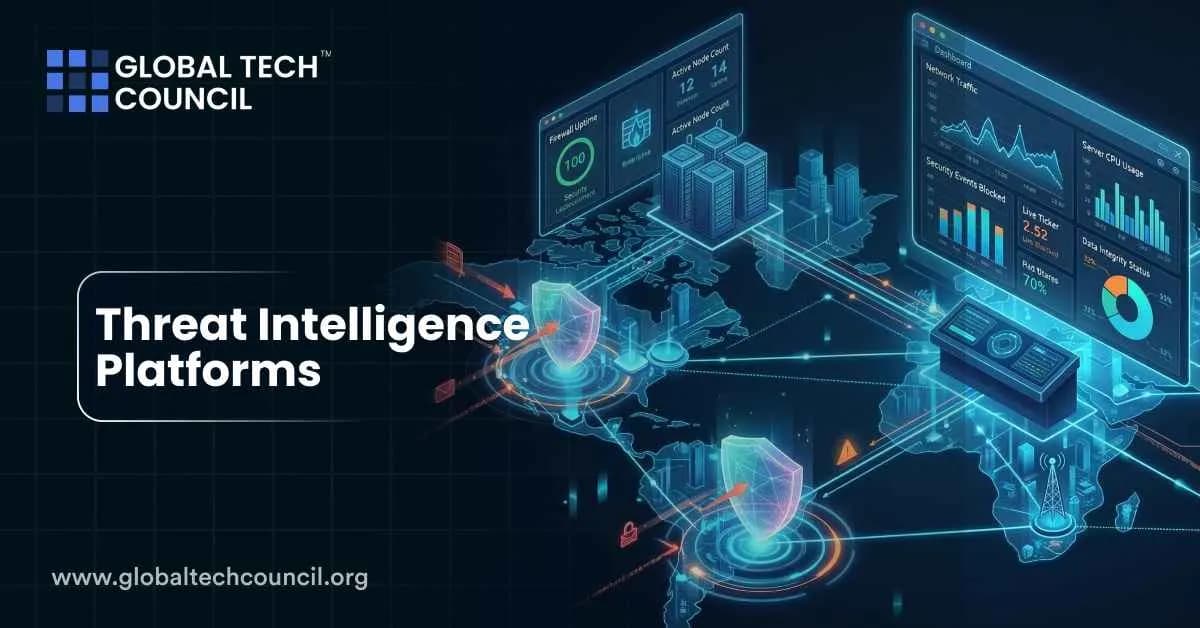
Threat Intelligence Platforms (TIPs) are systems that collect, organize, analyze, and share cyber threat data so security teams can act faster and more accurately. Instead of keeping indicators, malware notes, attack patterns, and vulnerability alerts scattered across email threads, SIEM tools, spreadsheets, and vendor portals, a TIP brings them into one operational workflow.
In practical terms, a TIP helps security teams answer urgent questions such as: Which indicators are relevant to us right now? Is this alert linked to a known campaign? Which assets are exposed? What should we block, monitor, or escalate first? Since attackers do not wait for clean dashboards, TIPs exist to reduce noise and improve response speed.

The category has become more important as organizations face higher alert volumes, more external feeds, and faster-moving threats. CISA continues to support machine-readable sharing through Automated Indicator Sharing (AIS), which reflects the ongoing need for real-time, structured intelligence exchange.
What a TIP Does
Centralizes Threat Data
A TIP aggregates intelligence from internal telemetry and external sources such as open-source feeds, commercial vendors, ISACs, government advisories, and incident response reports. This includes indicators of compromise (IOCs), TTPs (tactics, techniques, and procedures), threat actor profiles, malware families, and vulnerability intelligence.
Without a TIP, analysts often waste time copying data between tools and manually checking whether an indicator is already known. A TIP reduces that friction by normalizing and storing data in one place.
Adds Context and Prioritization
Raw indicators alone are not enough. A good TIP enriches data with context such as malware associations, campaign links, ATT&CK mappings, confidence scores, timestamps, and affected sectors. That context helps analysts decide whether an alert is urgent or just another irrelevant hash from somewhere on the internet.
MITRE ATT&CK remains a major reference framework for this type of enrichment and threat mapping, and MITRE’s October 2025 ATT&CK v18 update continued changes across techniques, groups, campaigns, and software in Enterprise, Mobile, and ICS.
Supports Sharing and Collaboration
TIPs also help organizations share intelligence internally and with trusted external partners using structured formats and APIs. This is critical for coordinated defense, especially in sectors where multiple organizations face similar attacker behavior.
CISA’s AIS service is one example of real-time exchange built around machine-readable indicators, which shows how platform-based sharing remains central to public-private cyber defense.
Core Features of Threat Intelligence Platforms
Data Ingestion and Normalization
A TIP should ingest data from multiple sources and standardize it so teams can search and correlate effectively. Different feeds often use different naming conventions, timestamps, and confidence ratings. Normalization makes that data usable.
Strong ingestion pipelines also help prevent duplicate intelligence and reduce analyst fatigue, which is still somehow a common business model in security tooling.
Correlation and Enrichment
Correlation links separate signals into a meaningful picture. For example, a suspicious domain, a malware hash, and a phishing email pattern may all connect to the same campaign. Enrichment then adds value by mapping those artifacts to known actors, ATT&CK techniques, or past incidents.
Modern TIPs increasingly focus on correlation quality because security teams already have plenty of data. What they need is relevance.
Workflow and Automation
TIPs are most useful when they connect to detection and response workflows. This may include sending indicators to SIEM, SOAR, EDR, firewalls, ticketing systems, or case management tools. Automation can handle repetitive actions such as feed parsing, indicator scoring, and blocklist updates, while analysts focus on validation and investigation.
The key is controlled automation. Blindly pushing every indicator into blocking systems is a great way to break normal business traffic and annoy everyone.
Sharing and Access Controls
Threat intelligence is valuable, but it can also be sensitive. TIPs need role-based access, trust-group controls, and sharing policies so organizations can collaborate without overexposing internal details. This is especially important in regulated industries and cross-organization sharing communities.
Real-World Examples
Enterprise Security Operations
A large enterprise SOC may use a TIP to combine vendor feeds, internal detections, phishing submissions, and incident response notes. When a new phishing campaign appears, the TIP can link domains, IPs, attachment hashes, and ATT&CK techniques, then send high-confidence indicators to detection tools.
This improves triage speed and reduces duplicated effort across analysts.
Sector-Wide Intelligence Sharing
Critical infrastructure organizations often face similar attack methods. A TIP can support information-sharing communities by standardizing indicators and distributing validated intelligence quickly. This is where structured exchange matters most, because speed and consistency can reduce exposure across multiple organizations at once.
Open-Source and Community-Driven Operations
MISP is one of the best-known open-source threat intelligence platforms and is widely used for collecting, storing, and sharing cybersecurity indicators and incident-related intelligence. The MISP project describes it as an open-source solution for collecting, storing, distributing, and sharing cybersecurity indicators and threats.
Recent MISP releases show active development. The project announced MISP v2.5.32 in January 2026 with workflow capabilities, attachment handling improvements, security fixes, and dependency updates. This matters because TIP effectiveness depends heavily on operational reliability, integrations, and ongoing maintenance.
Recent Developments in Threat Intelligence Platforms
Better Correlation and Workflow Engines
One noticeable trend is stronger emphasis on workflow orchestration and correlation performance within TIP ecosystems. Recent MISP release notes through late 2025 and early 2026 highlight improvements related to workflows, correlation tools, scheduling, and platform stability.
That is a practical shift. Security teams are asking TIPs to do more than store intelligence. They want platforms that help route decisions, reduce noise, and support repeatable analyst workflows.
ATT&CK-Driven Detection Engineering
TIPs are increasingly used alongside ATT&CK-based detection and reporting. As ATT&CK continues to evolve with periodic updates, security teams use TIPs to map observed indicators and incidents to current techniques and campaigns for better prioritization and reporting.
This is useful for both technical operations and executive communication because ATT&CK mappings provide a common language across teams.
Public-Private Sharing and Modernization Pressure
Government and industry continue to push for better threat information sharing. CISA’s AIS remains a key mechanism for machine-readable indicator exchange, while CISA’s broader strategic planning emphasizes collaboration and visibility improvements across the cybersecurity ecosystem.
In plain language, organizations want faster sharing, fewer format mismatches, and intelligence that is actionable instead of decorative.
How to Evaluate a TIP
Start With Use Cases
Before selecting a platform, define your primary use cases. Are you focused on SOC triage, fraud operations, vulnerability prioritization, sharing with partners, malware analysis support, or executive reporting? A TIP that is excellent for sharing communities may not be ideal for internal automation-heavy workflows, and vice versa.
Check Integration Quality
A TIP is only as useful as its integrations. Evaluate support for your SIEM, EDR, SOAR, ticketing, and firewall stack. Also review API quality, documentation, and connector maintenance. Fancy dashboards do not matter much if analysts still need manual copy-paste steps.
Review Data Governance and Access Controls
Assess role-based permissions, audit logs, data retention rules, and sharing controls. Threat intelligence often contains sensitive internal observations, so governance features are not optional.
Measure Analyst Efficiency
A strong TIP should reduce time spent on enrichment and duplication. Pilot the platform with real workflows and track improvements in triage speed, false-positive handling, and investigation consistency.
Skills and Certifications for Professionals
Working with threat intelligence platforms requires technical understanding, operational discipline, and communication skills. A Tech certification can help professionals build broader IT and cybersecurity foundations relevant to platform integration, analytics, and security operations. A Cybersecurity certification can be useful as cybersecurity becomes increasingly important in threat analysis, prioritization, and detection workflows. A marketing certification and Deep Tech Certification can also support professionals who need to communicate threat trends, security awareness campaigns, and risk messaging to non-technical stakeholders.
Conclusion
Threat Intelligence Platforms are becoming central to modern cyber defense because they turn scattered threat data into coordinated action. The most effective TIPs do more than collect indicators. They enrich context, support collaboration, automate workflows, and help analysts focus on what actually matters.
Recent developments in ATT&CK updates, MISP platform releases, and continued public-private sharing efforts show that the field is still evolving quickly. Organizations that choose and operate TIPs well will be better positioned to detect threats earlier, respond faster, and avoid drowning in their own alert streams. A low bar, maybe, but still an important one.
FAQs
1. What is a threat intelligence platform?
A threat intelligence platform, or TIP, is a cybersecurity solution that collects, organizes, analyzes, and distributes information about cyber threats. It can help security teams turn raw threat data into actionable intelligence for detection, investigation, and response.
2. What does a threat intelligence platform do?
A TIP can aggregate threat feeds, indicators of compromise, threat-actor information, vulnerabilities, and other security data. It can then correlate and enrich this information to help analysts understand potential threats and prioritize security actions.
3. Why are threat intelligence platforms important?
Threat intelligence platforms help security teams move beyond isolated security alerts by adding context about potential threats. This can help analysts prioritize incidents, improve detection, identify relevant threat actors, and respond more efficiently.
4. What are the main features of a threat intelligence platform?
Common features include threat-feed aggregation, indicator management, data enrichment, threat-actor tracking, automated analysis, dashboards, alerting, reporting, and integrations with other security tools. Many platforms also support automation and intelligence-sharing standards.
5. What are indicators of compromise in threat intelligence?
Indicators of compromise, or IoCs, are technical clues that may indicate malicious activity. Examples include suspicious IP addresses, domains, URLs, file hashes, and email-related indicators.
6. What are threat intelligence feeds?
Threat intelligence feeds are streams of information about current or emerging cyber threats. They can contain indicators, malware information, vulnerabilities, threat-actor activity, or other security data, depending on the provider and feed.
7. How does a threat intelligence platform use threat feeds?
A TIP can collect feeds from multiple sources and normalize or correlate their data in a centralized environment. This can reduce the need for analysts to manually review separate feeds and can make relevant intelligence easier to integrate into security workflows.
8. What are the different types of threat intelligence?
Threat intelligence is commonly divided into tactical, operational, and strategic intelligence. Tactical intelligence focuses on indicators and attack detection, operational intelligence examines threat-actor behavior and tactics, while strategic intelligence provides higher-level information for business and security decision-making.
9. What is tactical threat intelligence?
Tactical threat intelligence provides technical information that security teams can use to detect and investigate attacks. It commonly includes indicators such as malicious IP addresses, domains, file hashes, and other observable characteristics of threats.
10. What is operational threat intelligence?
Operational threat intelligence focuses on how threat actors operate. It can provide information about tactics, techniques, procedures, attack vectors, targeted assets, and vulnerabilities associated with particular threats or threat actors.
11. What is strategic threat intelligence?
Strategic threat intelligence provides high-level information about the threat landscape and its potential impact on an organization. It can help executives and security leaders understand broader trends, geopolitical developments, industry threats, and cybersecurity risks.
12. How does a threat intelligence platform integrate with SIEM?
A TIP can send enriched threat intelligence to a security information and event management system, or SIEM. This can add context to security events and help analysts correlate alerts with known indicators, threat actors, or attack patterns.
13. What is the difference between a TIP and a SIEM?
A TIP primarily focuses on collecting, analyzing, enriching, and operationalizing threat intelligence. A SIEM focuses on collecting and correlating security events and logs across an organization's environment. The two systems can complement each other through integration.
14. How does a TIP work with SOAR platforms?
Threat intelligence can be passed from a TIP to a security orchestration, automation, and response platform. SOAR can then use that intelligence in automated workflows or playbooks, such as enriching alerts, blocking malicious indicators, or initiating response actions.
15. What are STIX and TAXII in threat intelligence?
STIX, or Structured Threat Information Expression, is a standardized language for representing cyber threat information. TAXII, or Trusted Automated Exchange of Intelligence Information, provides a standardized way to exchange threat intelligence between systems. CISA uses STIX and TAXII for automated indicator sharing.
16. Can threat intelligence platforms use artificial intelligence?
Yes. Some modern threat intelligence platforms use artificial intelligence and machine learning to correlate information, identify patterns, reduce noise, and assist with analysis. Generative AI can also be used to help interpret threat information and produce recommended actions.
17. What are the benefits of using a threat intelligence platform?
A TIP can centralize intelligence from multiple sources, improve threat context, reduce manual analysis, support threat hunting, and help security teams prioritize relevant risks. Integration with other security technologies can also help turn intelligence into operational security actions.
18. What should organizations consider when choosing a threat intelligence platform?
Organizations should consider the quality and relevance of threat feeds, integrations, automation capabilities, supported intelligence standards, scalability, data enrichment, analyst workflows, reporting, and total cost. The platform should also fit the organization's security objectives and existing technology environment.
19. Can threat intelligence platforms help with threat hunting?
Yes. Threat intelligence can provide threat hunters with information about known indicators, attacker behavior, and tactics that can guide searches for suspicious activity. Threat intelligence and threat hunting therefore work together, with intelligence helping guide proactive searches for potential threats.
20. What is the future of threat intelligence platforms?
Threat intelligence platforms are likely to become increasingly integrated with AI, automation, SIEM, SOAR, XDR, vulnerability management, and other security technologies. Greater use of standardized intelligence sharing and automated analysis may help security teams turn large volumes of threat data into more relevant and actionable intelligence.
Related Articles
View All
Cyber Security
What Is Threat Intelligence Feeds?
Threat intelligence feeds are real-time data streams that provide up-to-date information about potential cyber threats. These feeds help security teams identify, block, and respond to malicious activity before it causes damage. They include indicators like IP addresses, domain names, file hashes,…

Cyber Security
AI-Powered Threat Detection: How Machine Learning Improves SOC Triage and Reduces Alert Fatigue
AI-powered threat detection uses machine learning to triage, enrich, and auto-close alerts, reducing false positives and alert fatigue while improving SOC speed and accuracy.
Cyber Security
Cybersecurity Best Practices for OTT Platforms
The streaming industry has entered one of its most intense and high risk phases. Millions of viewers rely on OTT platforms every day for entertainment, sports, education, and live events. This expansion has also attracted a new generation of attackers who target streaming services for user…
Trending Articles
The Role of Blockchain in Ethical AI Development
How blockchain technology is being used to promote transparency and accountability in artificial intelligence systems.
AWS Career Roadmap
A step-by-step guide to building a successful career in Amazon Web Services cloud computing.
Top 5 DeFi Platforms
Explore the leading decentralized finance platforms and what makes each one unique in the evolving DeFi landscape.