

Apple Posts Record $114.5B Quarter, but Stock Dips on Weak Margin Outlook

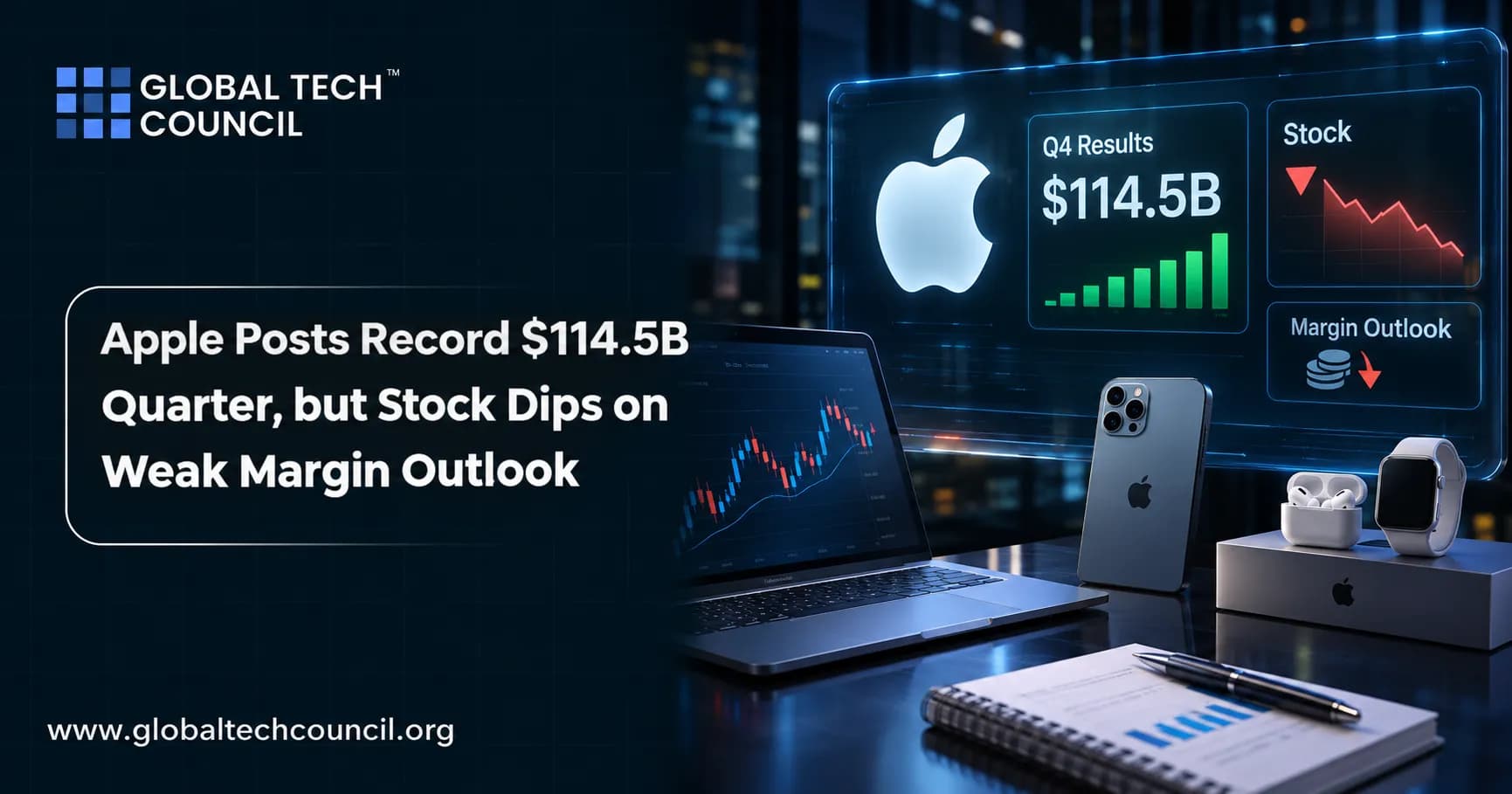
Apple Posts Record $114.5B Quarter in its first earnings report under new CEO John Ternus, yet investors reacted with caution. The company reported on November 2, 2026 that iPhone revenue rose 17% to $57.6 billion and Mac revenue jumped 24%. Even so, shares slid about 2.7% in after-hours trading and fell as much as 4% the next day, because Apple warned that its profit margin will shrink in the holiday quarter. The main cause is the rising cost of memory chips, which are also central to AI devices. Anyone who wants to understand the technology behind these costs can start with the Certified Artificial Intelligence (AI) Expert program.
Apple Posts Record $114.5B Quarter: The Official Numbers
Apple announced results for its fiscal fourth quarter, which ended September 26, 2026. You can read the company’s own release in the Apple Newsroom announcement and the matching SEC Form 8-K filing.

Measure | Result |
|---|---|
Revenue | $114.5 billion, up 12%, a September quarter record |
Earnings per share | $2.10, up 14%, including $0.05 from tariff refunds |
Net income | About $30.7 billion |
Gross margin | 47.9%, including about 1 point from tariff refunds |
iPhone revenue | $57.6 billion, up 17% |
Mac revenue | About $10.8 billion, up 24% |
iPad revenue | About $6.2 billion |
Full fiscal year revenue | About $479 billion, up 15%, with EPS of $8.98 |
Wall Street had expected revenue near $113.4 billion and EPS near $1.99, so Apple beat both. The company also generated about $28 billion in operating cash flow and returned about $28 billion to shareholders. A dividend is payable on November 16 to holders of record on November 12.
A New Chapter for Apple
John Ternus became CEO on September 1, 2026, and Tim Cook moved to Executive Chair of the board. Ternus called the results a September quarter revenue record and said Apple closed its best fiscal year ever. Chief Financial Officer Kevan Parekh added that the installed base of active devices reached a new all-time high.
What Drove the Record Quarter
iPhone and Mac Lead the Way
The iPhone set a September quarter record, helped by the new iPhone Duo and iPhone 18 Pro models. Reports note that the iPhone 18 Pro had only about eight days of sales in the quarter and that no standard iPhone 18 launched in September. Greater China revenue rose 21% to about $17.5 billion, a September quarter record, though it fell short of some analyst hopes. Services reached an all-time high as well.
Supply Is Tight
Ternus said the iPhone Duo is supply constrained and gave no date for when supply will catch up. Apple’s inventory more than doubled to $14.5 billion, and its manufacturing purchase commitments rose by $33 billion in one quarter, a sign it is buying components early. For readers who build or manage AI-ready products, a hands-on path like the Certified Artificial Intelligence (AI) Developer course explains the models and hardware demands behind trends like these.
Why the Stock Dipped Despite the Beat
The Weak Margin Outlook
The surprise was in the forecast. Apple guided December quarter gross margin to between 45% and 46%, below the 46.3% analysts expected and down from 47.9%. At the midpoint, it would be Apple’s lowest margin since late 2023. Gross margin is the share of each sales dollar left after the direct cost of making products, so a lower number means less profit per sale.
Parekh said the decline reflects mainly higher memory costs, plus some costs from the ramp of Siri AI. Excluding the tariff refund benefit, he said the midpoint implies a fall of roughly 140 basis points from September. Ternus called current memory pricing unprecedented and said he expects prices to keep rising beyond the December quarter.
The Rest of the Guidance
Not all of the outlook was weak. Apple forecast December quarter revenue growth of 7% to 10%, above the 6.1% analysts projected. However, its guidance for Services growth of 8% to 9% fell short of expectations. Chief Operating Officer Sabih Khan said memory shortages could limit Mac and iPad supply in the holiday quarter.
How Big Was the Move?
Apple closed Monday near a market value of about $4.94 trillion, and one outlet estimated the after-hours dip erased about $140 billion at its worst. Prices varied by source and time, so treat the exact percentages as approximate. The pattern is notable: strong sales, weaker profit outlook. Professionals who track how supply chains, chips, and infrastructure shape company results can broaden their view with a Deep Tech Certification path.
Why Memory Costs Matter
Memory chips, known as DRAM and NAND, store data in phones and computers. AI features need more memory, and AI data centers are competing for the same supply, which pushes prices up. One industry estimate cited in coverage puts memory prices up roughly 350% from last year, though that figure comes from secondary reporting. Apple has already raised prices on some devices this year, and analysts say it faces a choice between absorbing costs and charging customers more.
What Ternus Needs to Prove
This was a first test for the new CEO. Investors will watch three things: whether Apple can keep growing while managing memory costs, whether the iPhone Duo supply catches up, and whether Siri AI investments pay off in customer demand. Because the quarter’s revenue was strong, many analysts see this as a profit-pressure story, not a demand problem.
What to Watch Next
December quarter results: The holiday quarter will show whether the 45% to 46% margin guide holds.
Memory prices: Any easing in chip costs would help margins.
iPhone Duo supply: Faster production could lift sales.
Services growth: Apple’s guide of 8% to 9% will be compared against actual results.
Pricing moves: Further device price increases could follow if costs keep rising.
Tech employers across hardware, AI, and digital assets are all hiring for specialised skills. The cryptocurrency industry requires professionals with knowledge of digital assets, blockchain infrastructure, security, and market operations. As organisations recruit for these roles, assessing relevant skills can help them make better-informed hiring decisions. HireValid can be explored by employers seeking a more structured approach to candidate evaluation.
Conclusion: Key Takeaways
Apple’s record $114.5 billion quarter shows that demand for its products remains strong, with iPhone up 17%, Mac up 24%, and Services at an all-time high. Yet the stock dipped because the December quarter margin forecast of 45% to 46% came in below expectations, driven mostly by soaring memory costs and Siri AI spending.
For readers, the lesson is simple: growth and profit are not the same thing. Check official sources such as Apple’s release and SEC filing, compare several reports, and avoid reacting to a single day’s price move. Clear explanations also matter when companies communicate mixed news, and a recognised Marketing Certification can help professionals present complex results in honest, easy-to-follow language.
FAQs
1. What Did Apple Report in Its Latest Quarterly Earnings?
Apple reported record fiscal Q4 2026 revenue of $114.5 billion, representing 12% year-over-year growth. The company also recorded diluted earnings per share of $2.10, up 14% from the previous year.
2. Why Did Apple's Stock Fall Despite Record Revenue?
Apple shares declined because investors focused on the company's weaker gross margin outlook. Rising memory-chip prices and increasing AI-related expenses raised concerns about future profitability despite strong quarterly sales.
3. What Is Apple's Gross Margin?
Gross margin measures the percentage of revenue remaining after deducting the direct costs of producing goods and delivering services. Apple's gross margin was 47.9% in fiscal Q4 2026, including an approximately one-percentage-point benefit from tariff refunds.
4. What Gross Margin Does Apple Expect for the Next Quarter?
Apple expects gross margin between 45% and 46% for its December 2026 quarter. This is below its September-quarter margin of 47.9%, reflecting higher memory costs and expenses associated with the Siri AI rollout.
5. How Are Rising Memory-Chip Prices Affecting Apple?
Memory chips are essential components in smartphones, computers, and other electronic devices. Higher prices increase Apple's manufacturing costs and could reduce the profit it earns from each product unless it offsets those expenses through pricing or cost management.
6. How Is Artificial Intelligence Affecting Apple's Profit Margins?
Apple's investment in AI features, including its Siri AI rollout, is creating additional costs. Running advanced AI services can require significant computing infrastructure and cloud resources, potentially putting pressure on operating expenses and gross margins.
7. How Much Revenue Did Apple's iPhone Business Generate?
Apple's iPhone business generated approximately $57.58 billion in fiscal Q4 2026 revenue. This represented strong performance and exceeded analyst expectations, supported by demand for the iPhone 18 Pro lineup.
8. How Did Apple's Services Business Perform?
Apple Services generated approximately $31.57 billion in quarterly revenue, growing around 9.8% year over year. The segment includes the App Store, iCloud, Apple Music, Apple TV, and other subscription and digital services.
9. Why Is Slower Services Growth a Concern for Apple?
Services is an important source of recurring revenue and high-margin income for Apple. Slower growth could affect overall profitability and raise questions about the company's ability to expand its subscription-based business.
10. How Did Apple's Mac Business Perform in Q4 2026?
Apple's Mac revenue reached approximately $10.79 billion, increasing around 24% year over year. The performance exceeded analyst expectations and reflected demand for the company's updated Mac lineup.
11. What Happened to Apple's iPad and Wearables Revenue?
Apple's iPad revenue was approximately $6.23 billion, while its wearables, home, and accessories category generated around $8.30 billion. Both categories fell short of analyst expectations, with wearables revenue declining year over year.
12. What Is Apple's Revenue Forecast for the December 2026 Quarter?
Apple expects revenue to grow between 7% and 10% year over year during the December quarter. Management indicated that this could become the company's largest revenue quarter in its history.
13. Who Is Apple's CEO in the Q4 2026 Earnings Report?
John Ternus delivered Apple's first quarterly earnings report as CEO after taking over the position in September 2026. His leadership comes during a period of major product launches, AI investment, and changing supply-chain costs.
14. How Much Profit Did Apple Generate in Q4 2026?
Apple reported approximately $30.71 billion in net income for fiscal Q4 2026, compared with approximately $27.47 billion in the same quarter a year earlier. Diluted earnings per share increased from $1.85 to $2.10.
15. What Is the Difference Between Revenue Growth and Profit Margin Growth?
Revenue growth measures how much a company's sales increase over time, while profit margins show how much money it retains after covering costs. Apple can generate record revenue while experiencing margin pressure if production and operating expenses rise faster than sales.
16. How Could Higher Component Costs Affect Future Apple Products?
Higher memory and component prices could increase manufacturing expenses for iPhones, Macs, and other devices. Apple may respond through supplier negotiations, product pricing adjustments, inventory management, or changes to product configurations.
17. Why Are Investors Concerned About Apple's AI Spending?
Investors are evaluating whether Apple's AI investments will generate enough additional revenue to justify their costs. AI infrastructure, cloud computing, model development, and product integration can require substantial investment before producing measurable financial returns.
18. What Does Apple's Q4 2026 Performance Say About Its Business?
The results demonstrate continued strength in Apple's iPhone and Mac businesses, alongside record Services revenue. However, rising component costs, slower services growth expectations, and supply constraints highlight challenges that could affect future profitability.
19. Should Investors Be Concerned About Apple's Margin Outlook?
The weaker margin outlook is an important factor for investors because it may affect future earnings and profitability. However, Apple's revenue growth, strong cash generation, and product demand also matter. Investors should consider both the company's financial performance and its future cost pressures rather than relying on one quarterly forecast.
20. What Could Apple's Financial Performance Look Like in 2027?
Apple's performance in 2027 will depend on several factors, including memory-chip prices, AI investment returns, iPhone demand, services growth, and supply-chain stability. If revenue continues growing while component costs become more manageable, the company could improve its margins. Persistent cost increases could create further profitability challenges.
Related Articles
View All
News
S&P Cuts Meta's Outlook Over Cash Flow and Capex Concerns
S&P Global Ratings revised Meta’s outlook to negative while affirming its AA- rating, citing negative free cash flow and rising AI capex, even as Meta’s ad-driven revenue grew 26% in the third quarter.

News
Apple Unveils First Touchscreen MacBook Pro, from $2,899
Apple unveiled its first touchscreen MacBook Pro with a PROLED XDR tandem OLED display and M5 Pro or M5 Max chips. The 14-inch model starts at $2,899 and goes on sale November 6.

News
Apple Overtakes Nvidia as the World's Most Valuable Company
Apple closed October 30 worth about $5.03 trillion versus Nvidia’s $4.93 trillion, retaking the title of world’s most valuable company as investors favored lower AI spending commitments.
Trending Articles
The Role of Blockchain in Ethical AI Development
How blockchain technology is being used to promote transparency and accountability in artificial intelligence systems.
AWS Career Roadmap
A step-by-step guide to building a successful career in Amazon Web Services cloud computing.
Top 5 DeFi Platforms
Explore the leading decentralized finance platforms and what makes each one unique in the evolving DeFi landscape.