

Introducing Claude Opus 4.7
 Tosh Marketing
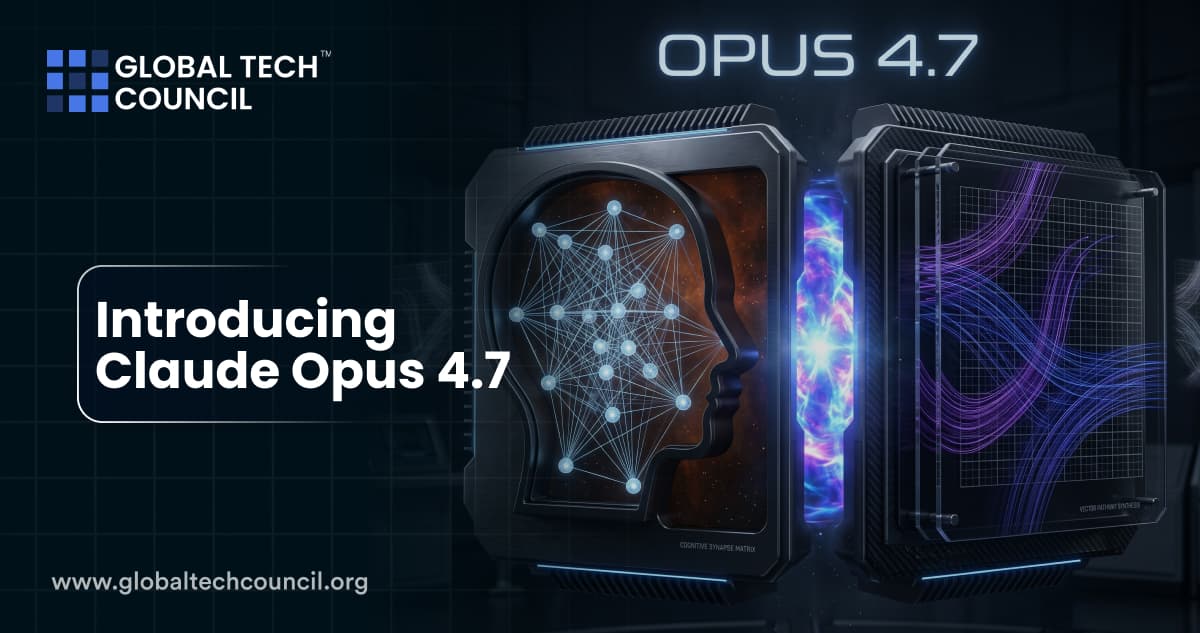 Artificial intelligence continues to evolve at a remarkable pace, reshaping industries and redefining how humans interact with technology. Among the latest advancements, Claude Opus 4.7 stands out as a powerful and sophisticated AI model designed to enhance productivity, creativity, and decision-making across various domains.
Developed as part of Anthropic’s Claude series, Claude Opus 4.7 represents a significant leap forward in AI capabilities, offering improved reasoning, deeper contextual understanding, and enhanced performance in complex tasks. It is particularly valuable for developers, businesses, marketers, and researchers seeking advanced AI-driven solutions.

Professionals looking to build expertise in AI-driven development can explore the AI Powered Coding Expert certification, which provides practical insights into using AI tools for coding and automation.
What is Claude Opus 4.7
Claude Opus 4.7 is an advanced large language model designed to handle complex reasoning, long-form content generation, and multi-step problem-solving. It builds upon previous versions by improving accuracy, reliability, and adaptability.
Key characteristics include:
- Enhanced contextual understanding
- Improved logical reasoning
- Better long-form content generation
- Increased reliability in outputs
- Advanced coding and technical capabilities
Unlike earlier models, Claude Opus 4.7 is designed to function as a collaborative assistant rather than just a response generator.
Key Features of Claude Opus 4.7
Advanced Reasoning Capabilities
Claude Opus 4.7 excels at handling complex reasoning tasks. It can break down problems, analyze multiple variables, and provide structured solutions.
Example
A developer can use Claude to debug code while explaining the reasoning behind each step.
Improved Context Retention
The model can process and retain larger amounts of context, making it ideal for:
- Long documents
- Research papers
- Detailed conversations
High-Quality Content Generation
Claude Opus 4.7 produces structured and coherent content across multiple formats:
- Blogs
- Reports
- Marketing copy
- Technical documentation
Enhanced Coding Capabilities
Claude is increasingly used for software development tasks, enabling faster coding, debugging, and optimization.
Safe and Reliable Outputs
Claude Opus 4.7 is designed to:
- Reduce harmful outputs
- Provide balanced responses
- Maintain consistency
Real-World Use Cases of Claude Opus 4.7
1. Software Development
Claude assists developers in:
- Writing code
- Debugging errors
- Explaining algorithms
2. Content Creation
Content creators use Claude for:
- Blog writing
- Script creation
- SEO optimization
3. Business Automation
Claude automates tasks such as:
- Email drafting
- Report generation
- Data summarization
4. Marketing Strategy
Marketers use Claude to:
- Generate campaign ideas
- Write ad copy
- Analyze audience behavior
Professionals can enhance their expertise through an AI powered marketing course.
5. Research and Analysis
Claude is widely used for:
- Summarizing research papers
- Generating insights
- Structuring information
The Role of Prompt Engineering
The effectiveness of Claude Opus 4.7 depends heavily on how prompts are designed. Prompt engineering ensures accurate and useful outputs.
Professionals can deepen their expertise through the Prompt Engineering Certification.
Agentic AI and the Future
Claude Opus 4.7 is moving toward more autonomous and agent-based capabilities.
To understand this evolution, professionals can explore the Agentic AI Expert certification, which focuses on autonomous AI systems and workflows.
Benefits of Claude Opus 4.7
Increased Productivity
Automates repetitive tasks and accelerates workflows.
Improved Decision Making
Provides structured insights.
Cost Efficiency
Reduces operational costs.
Scalability
Supports large-scale operations.
Challenges and Limitations
Dependence on Input Quality
Poor prompts lead to weaker results.
Need for Human Oversight
Outputs must be reviewed.
Ethical Considerations
Responsible AI usage is essential.
Best Practices for Using Claude Opus 4.7
Use Clear Prompts
Provide detailed instructions.
Validate Outputs
Always verify information.
Combine AI with Human Expertise
Use AI as a support tool.
Stay Updated
Keep learning about AI advancements.
Recent Developments in Claude Opus 4.7
Improved Multi-Step Reasoning
Handles complex workflows more effectively.
Enhanced Personalization
Adapts responses to user needs.
Integration with Tools
Works with multiple platforms.
Movement Toward Agentic Systems
Supports more autonomous operations.
Future of AI with Claude Opus 4.7
Autonomous Workflows
AI will handle tasks independently.
Personalized Assistants
Tailored AI solutions.
Real-Time Insights
Faster decision-making.
Human AI Collaboration
AI will enhance human capabilities.
Conclusion
Claude Opus 4.7 represents a major advancement in artificial intelligence, offering improved reasoning, content generation, and automation capabilities. It is a powerful tool for developers, businesses, and content creators.
However, it is not a replacement for human expertise. The best results come from combining AI capabilities with human judgment and creativity.
Those who adopt Claude Opus 4.7 effectively will gain a strong competitive advantage in the evolving digital landscape.
FAQs
1. What is Claude Opus 4.7
It is an advanced AI model developed by Anthropic.
2. What makes it different
Improved reasoning and context handling.
3. Can it generate content
Yes, high-quality content.
4. Is it useful for coding
Yes, it supports coding tasks.
5. Can businesses use it
Yes, for automation and analysis.
6. Is it suitable for beginners
Yes, with proper guidance.
7. Does it require technical skills
Not necessarily.
8. Can it improve productivity
Yes, significantly.
9. What are its limitations
Dependence on prompts.
10. Can it handle complex tasks
Yes, effectively.
11. Is human input necessary
Yes, always review outputs.
12. Can it be integrated into systems
Yes, with proper setup.
13. What industries use it
Technology, marketing, and more.
14. Can it analyze data
Yes, it provides insights.
15. What is the future of AI models
More automation and personalization.
16. Can Claude generate reports
Yes, detailed reports.
17. Should users rely fully on AI
No, human oversight is essential.
18. Can it scale operations
Yes, efficiently.
19. Is it reliable
Yes, with proper use.
20. How can I start using it
Learn prompt techniques and practice usage.
Related Articles
View All
AI & ML
Introducing Claude Sonnet 5
Claude Sonnet 5 represents the next evolution of Anthropic's AI models, delivering faster performance, stronger reasoning, enhanced coding capabilities, and improved multimodal understanding. Designed for developers, businesses, and everyday users, it offers more accurate responses, better instruction following, and advanced AI assistance for a wide range of tasks. This guide explores Claude Sonnet 5's features, improvements, real-world applications, and how it compares with previous Claude models.
AI & ML
GPT 5.5 vs Claude Opus 4.7
Artificial Intelligence has evolved far beyond simple chatbots into highly capable systems that assist with reasoning, automation, and decision-making. Among the most advanced models today are GPT 5.5 and Claude Opus 4.7. Both represent the cutting edge of conversational AI, yet they are built with…
AI & ML
Claude Design 2.0
Claude Design 2.0 introduces enhanced AI-powered design capabilities, making it easier to generate layouts, prototypes, visual concepts, and creative content with natural language prompts. With improved reasoning, contextual understanding, and collaboration features, Claude Design 2.0 helps designers, developers, marketers, and businesses streamline their creative workflows. This guide explores its key features, applications, benefits, and how it compares with previous AI design tools.
Trending Articles
The Role of Blockchain in Ethical AI Development
How blockchain technology is being used to promote transparency and accountability in artificial intelligence systems.
AWS Career Roadmap
A step-by-step guide to building a successful career in Amazon Web Services cloud computing.
Top 5 DeFi Platforms
Explore the leading decentralized finance platforms and what makes each one unique in the evolving DeFi landscape.