

How AI Agents Are Changing the Customer Journey: What Marketers Need to Measure in 2026
 Suyash Raizada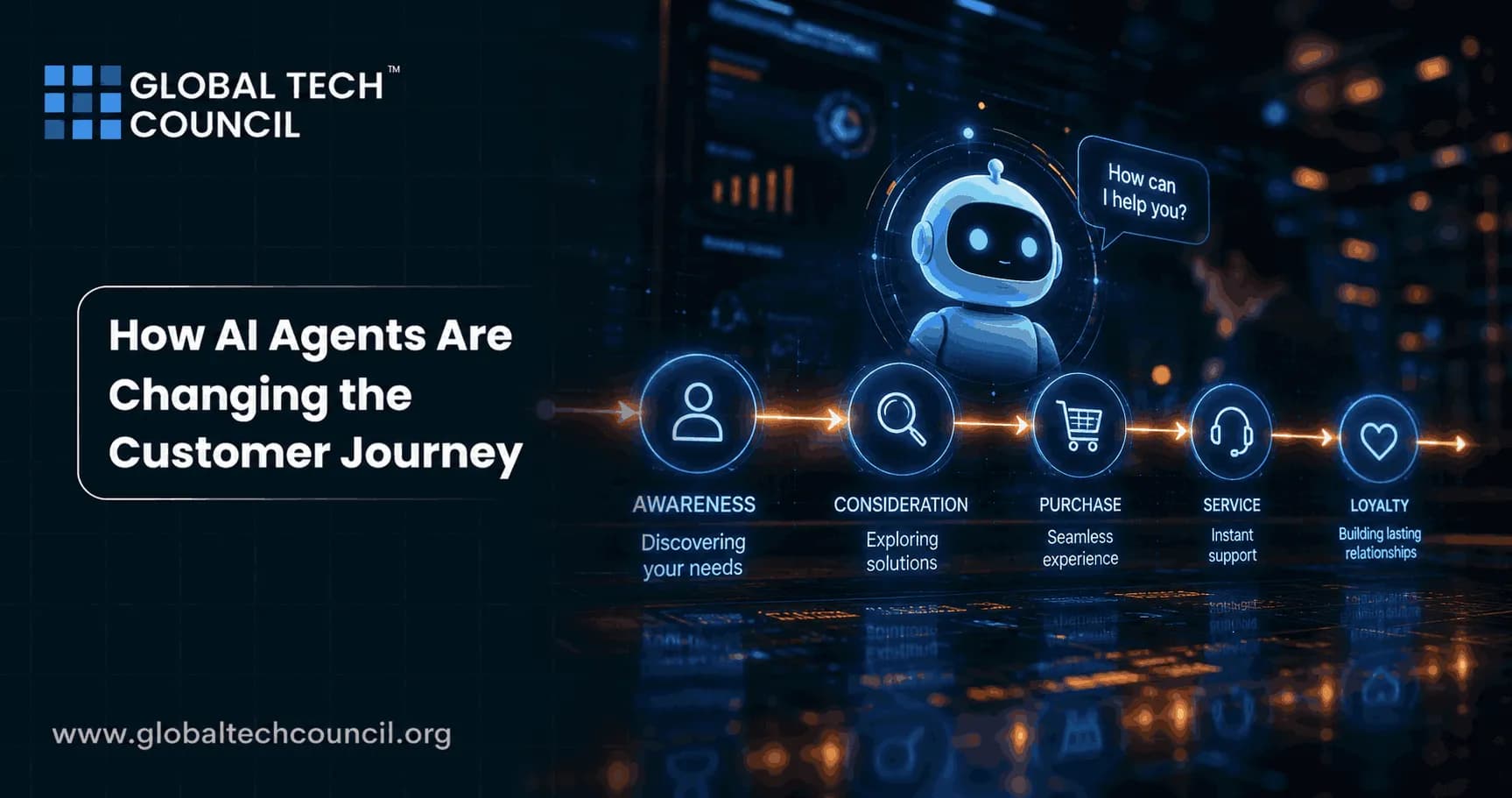
A year ago, most marketers were still talking about AI in pretty narrow terms. Content generation. Chatbots. Maybe predictive targeting if the team had the budget. That conversation feels oddly outdated now.
The bigger shift happening in 2026 is less about AI creating content and more about AI making decisions before people ever reach a website. And honestly, that changes the customer journey in ways a lot of analytics dashboards still don’t fully capture.

People aren’t just searching anymore. They’re asking AI systems to compare products, summarize reviews, narrow options, recommend purchases, explain pricing, and even decide which brands deserve attention in the first place. Sometimes they never click through at all. Sometimes they only click once, right at the end.
For marketers raised on attribution models built around search clicks and conversion funnels, it’s getting messy.
And maybe a little uncomfortable too.
The “Research Phase” Is Disappearing into AI Systems
Traditional customer journeys used to leave visible fingerprints everywhere. Someone searched a keyword, clicked three articles, opened five tabs, watched a comparison video, maybe abandoned a cart, then came back later through a retargeting ad.
Now? A surprising amount of that discovery process happens inside AI-generated responses.
Users ask ChatGPT, Gemini, Claude, Perplexity, Copilot, or embedded shopping agents to condense hours of research into a two-minute conversation. The customer journey still exists - it’s just partially hidden.
That creates a weird reporting gap. Brands are seeing lower traffic from informational searches while purchase intent remains stable or even increases. The audience didn’t disappear. The browsing behavior did.
You can already see hints of this in organic search volatility and zero-click behavior trends covered by publications like Search Engine Journal and others.
And people are adapting faster than many companies expected. Especially younger users. They trust synthesis more than exploration now. Whether that’s good in the long term is another conversation entirely.
AI Agents Are Filtering Brand Consideration Earlier Than Google Ever Did
Google search still mattered because users evaluated results themselves. They scanned titles, compared sources, and opened multiple pages. Even if rankings shifted, brands still had a chance to compete visually.
AI agents compress that stage.
If an AI assistant recommends three tools instead of showing thirty links, everybody outside that shortlist effectively disappears from the conversation. That’s the part many businesses are underestimating.
It’s not only about rankings anymore. It’s about recommendation inclusion.
And this reaches beyond software or SaaS. Travel brands, insurance companies, local services, and e-commerce stores - pretty much everyone with a digital presence is being filtered through AI summaries now.
That’s also why privacy-conscious browsing behavior is quietly becoming more mainstream again. Users experimenting with AI-heavy search experiences are simultaneously becoming more aware of tracking, profiling, and behavioral targeting. You even see parallel interest in tools that reduce digital visibility or limit profiling habits, especially among younger audiences browsing AI-generated recommendations. Some users eventually end up checking alternative privacy ecosystems or researching browser security habits just to understand how much data these systems rely on. Others simply want more info on PIA’s US locations on their official site before becoming more dependent on AI-driven platforms.
That behavior used to sit on the edge of tech culture. It doesn’t anymore.
Click-Through Rates Are Starting to Tell Incomplete Stories
Many marketing reports still focus on traffic volume because it used to represent attention reasonably well.
But AI-assisted journeys distort that logic.
Someone might discover a brand through an AI recommendation, skip the website entirely for days, then search the brand directly later and convert immediately. In analytics, that often looks like branded search success. In reality, the influential touchpoint occurred elsewhere entirely.
This is where older attribution models begin falling apart.
Last-click attribution especially feels increasingly detached from how decisions actually happen now. Even multi-touch attribution struggles because many AI interactions remain invisible to traditional tracking systems.
So marketers are starting to look at softer signals again:
branded search lift
direct traffic increases
AI mention frequency
assisted conversions
community discussion growth
review platform visibility
Not glamorous metrics. But arguably more realistic.
The funny thing is, marketing spent years obsessing over precision tracking, and now AI is pushing parts of the customer journey back into partial ambiguity.
Visibility Matters Differently When AI Summarizes Instead of Ranks
A brand can technically rank well and still lose visibility if AI systems consistently summarize competitors more effectively.
That sounds unfair at first, but it’s really about content structure and authority perception.
AI agents favor sources that explain things clearly, cite reliable information, maintain topical consistency, and answer layered questions naturally. Thin SEO pages stuffed with transactional keywords don’t perform particularly well in AI-generated synthesis. Neither do vague landing pages try too hard to sound optimized.
Some companies are discovering that old blog posts with strong expertise suddenly outperform newer “SEO-first” content in AI citation environments.
Which is kind of ironic.
This is also where marketers are spending more time reassessing their content ecosystems rather than just individual pages. Resource hubs, FAQ architecture, schema, author credibility, and cross-platform mentions all contribute to how AI systems interpret brand trust.
Many teams exploring this shift are also rethinking how they collect, interpret, and act on customer data. Traditional analytics platforms were built around clicks, sessions, and conversions, but AI-assisted discovery introduces influence that often happens before a user ever reaches a website. As organizations invest more heavily in AI-powered marketing capabilities, they’re looking beyond standard reporting dashboards and toward systems that can connect behavioral signals, predictive insights, and customer intent across multiple touchpoints.
The reporting layer itself is evolving almost as quickly as the search behavior.
The Brands Winning Right Now Usually Sound More Human
One unexpected side effect of AI-heavy discovery is that overly polished corporate messaging feels easier to ignore.
Users increasingly trust content that sounds observational, specific, slightly opinionated, and occasionally imperfect. Probably because AI-generated text made generic marketing language painfully easy to recognize.
There’s been a quiet shift toward experience-based authority again.
Case studies matter more. Original insights matter more. Subject-matter depth matters more. Even smaller brands sometimes outperform massive companies in AI-generated recommendations simply because their content answers questions more directly.
And honestly, some enterprise marketing departments still haven’t adapted to that.
They’re producing content optimized for approval chains instead of actual readability.
AI agents notice that too, in a strange way. Generic phrasing tends to create generic summarization. Distinctive insights create stronger extraction patterns.
Customer Journeys Are Becoming Less Linear - Again
Marketing funnels were always a simplification, but AI agents are making the path even more fragmented.
Some users now:
discover products through AI summaries
validate them on Reddit or YouTube
compare pricing through shopping assistants
ask another AI for alternatives
search the brand directly later
convert through email days afterward
Trying to map this neatly into a single dashboard is becoming increasingly unrealistic.
And maybe marketers need to stop pretending otherwise.
The smarter approach in 2026 probably isn’t perfect attribution. It’s a probabilistic understanding. Recognizing influence patterns instead of demanding total visibility into every step.
That feels less satisfying analytically, sure. But closer to reality.
The Future Metric Nobody Fully Agrees on Yet
There’s growing interest in measuring “AI visibility share,” which basically tracks how often brands appear in AI-generated answers across commercial topics.
Different startups are already building tools around it. Agencies are experimenting with scoring systems. Nobody seems fully aligned on methodology yet.
Still, it points toward where things are heading.
Search rankings alone won’t define discoverability anymore. Recommendation presence will.
And the presence of recommendations depends on something broader than technical SEO. It blends authority, clarity, trust, consistency, reputation, structured data, public sentiment, and content usefulness into one messy package.
Which, weirdly enough, makes marketing feel more human again despite all the automation surrounding it.
Because underneath the AI systems, the brands that consistently help people still tend to surface more often.
Not perfectly. Not always fairly. But often enough to matter.
The customer journey hasn’t disappeared in 2026. It just stopped being fully visible. And marketers who are chasing only clicks are probably looking at only the smallest part of the picture now.
Related Articles
View All
Info
How Digital Transformation Is Changing Self-Employed Financing in 2025
The financial services environment for independent professionals has experienced a dramatic overhaul. As conventional work arrangements yield to freelance economies, financial technology advances are revolutionizing how contractors, business owners, and gig workers obtain funding. This…

Info
How AI and Data Science are Changing the Scope of Radiologists
Introduction Increasingly, radiologists are using machine learning to gather quicker and higher-quality pictures and monitor the heart’s function. For many, artificial intelligence (AI) certification will spell the boost of their careers. For example, with artificial intelligence training,…

Info
What way AR/VR Will Revolutionize the Customer Shopping Experience?
Shopping developments have embraced the most innovative technology in recent times. Transforming the traditional business paradigm. Virtual Reality certification or VR and Augmented Reality certification or AR have entirely changed the way individuals buy items. VR certification is undoubtedly a…
Trending Articles
The Role of Blockchain in Ethical AI Development
How blockchain technology is being used to promote transparency and accountability in artificial intelligence systems.
AWS Career Roadmap
A step-by-step guide to building a successful career in Amazon Web Services cloud computing.
Top 5 DeFi Platforms
Explore the leading decentralized finance platforms and what makes each one unique in the evolving DeFi landscape.