

Future of Scrum Master Experts in AI-Driven Agile
 Suyash Raizada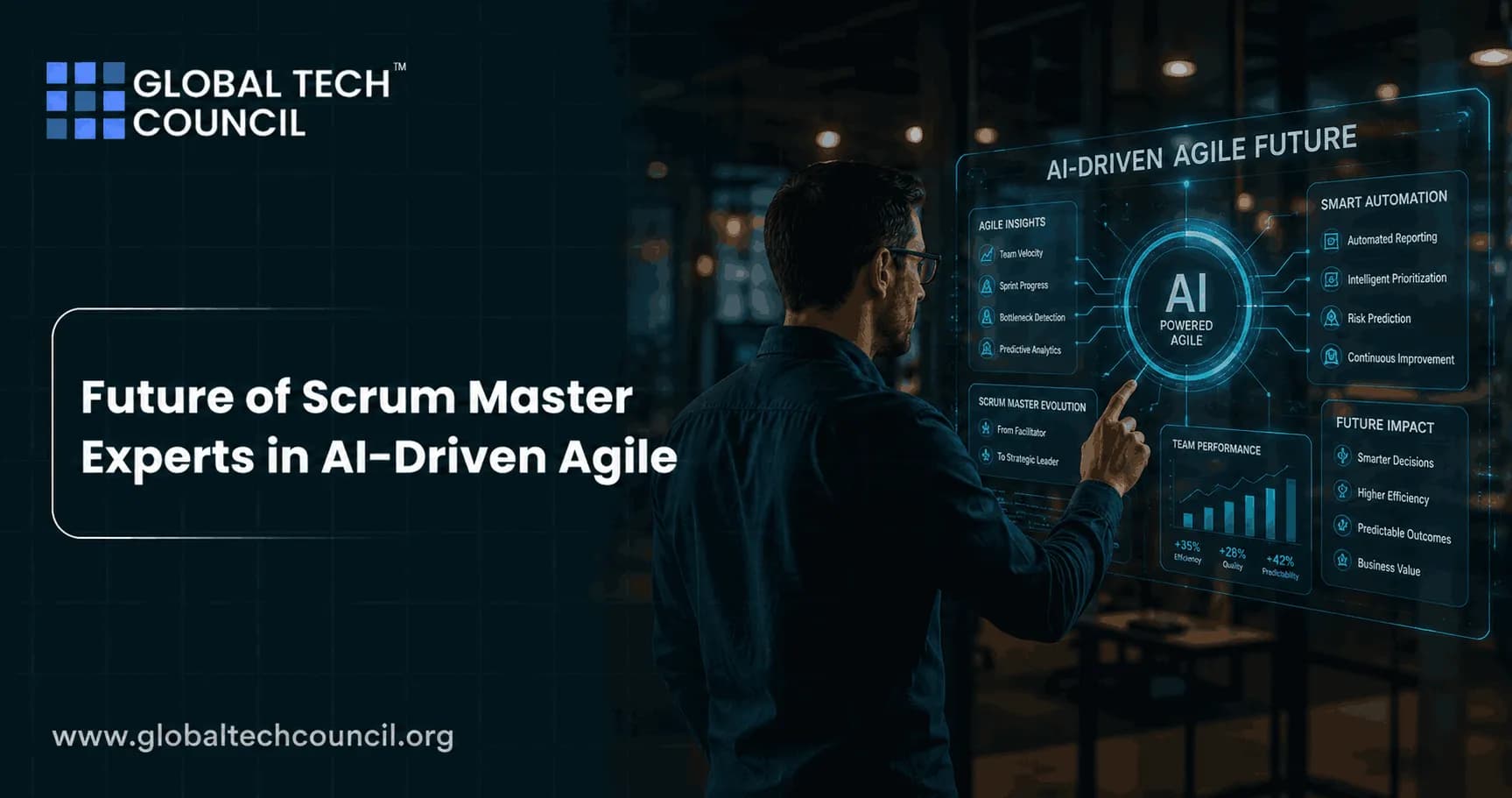
The future of Scrum Master experts is not a story about AI replacing facilitation, coaching, or judgment. In AI-driven Agile project management, the routine parts of the role are being automated first. Status summaries. Board updates. Meeting notes, risk flags, forecast charts. The valuable work is shifting upward. You will need to help teams use AI safely, question its outputs, and keep Scrum focused on people, learning, and product value.
That change is already visible. Recent surveys report that 88 percent of organizations use AI in at least one business function, while about 32 percent have integrated AI into project management workflows. PMI has also stated that up to 80 percent of project management tasks could be influenced by AI by 2030, especially tasks tied to data collection, tracking, and reporting. For Scrum Master experts, the signal is clear: administrative Scrum is shrinking. Expert Scrum leadership is not.

Why AI-Driven Agile Project Management Changes the Scrum Master Role
Scrum Masters have always removed impediments, coached teams, supported events, and helped organizations understand empiricism. AI does not remove those accountabilities. It changes the work surface.
AI tools now sit inside Jira, Azure DevOps, Slack, Microsoft Teams, Confluence, Miro, and product analytics stacks. They summarize discussions, detect stale work items, group customer feedback, predict likely delivery slippage, and draft retrospective prompts. Some Agile consultancies already describe the AI Scrum Master as a co-pilot that monitors sprint data and suggests options. The human Scrum Master still decides what is useful, what is misleading, and what might damage team trust.
To be blunt, if your main contribution is copying notes from a daily Scrum into a status email, AI will do that faster. If your contribution is helping a team confront hidden dependencies, rebuild psychological safety after a failed release, and negotiate scope with a senior stakeholder, AI is just a supporting tool.
Current AI Use Cases for Scrum Master Experts
Meeting summaries and action tracking
AI meeting assistants can capture Sprint Planning, refinement, reviews, and retrospectives. They extract decisions, action items, blockers, and owners. This is useful. It is also risky if the team stops listening because the transcript exists.
A good Scrum Master sets working agreements first. Tell the team what is recorded, where the transcript is stored, who can access it, and when it is deleted. If employee conversations are processed by an external AI service, involve security and legal teams before adoption.
Backlog analysis and refinement support
AI can cluster support tickets, product feedback, sales notes, and usage logs into themes. That helps Product Owners and Scrum Masters spot patterns that would take hours to read manually. It can also identify vague backlog items, missing acceptance criteria, and dependencies.
One practical trap: tool data is messy. In Jira Cloud, story points and sprint fields are often stored as instance-specific custom fields, such as customfield_10016 or customfield_10020, but those IDs vary by site. I have seen teams build an AI dashboard that looked accurate until they realized it was reading the wrong custom field after a project migration. The forecast was polished. The data was wrong. Validate the source fields before you trust the chart.
Forecasting and delivery risk detection
Machine learning models can analyze cycle time, throughput, blocked time, defect trends, and historical sprint completion to forecast delivery risk. This helps Scrum Masters move risk conversations earlier, before a release date becomes a political fight.
Forecasts are probabilities, not promises. A model can tell you that similar work usually takes 18 to 26 days. It cannot know that your only payments engineer is on leave next week unless that capacity data is included and accurate. Your job is to explain uncertainty without hiding behind the tool.
Team health and sentiment signals
Some platforms analyze chat patterns, survey text, or meeting participation to flag frustration, overload, or disengagement. Used carefully, this can help you notice burnout before it becomes attrition. Used badly, it becomes workplace surveillance.
My view is firm: do not run sentiment analysis on private team conversations without explicit consent and governance. Use it for team-level learning, not individual scoring. Scrum depends on trust. Once people believe the tooling is watching them, honest inspection disappears.
Technical debt and quality visibility
AI-assisted code review, static analysis, dependency scanning, and vulnerability detection can feed technical debt items into the backlog. This pattern matters because it makes quality issues visible during Sprint Planning and Retrospectives, rather than leaving them buried in engineering tools.
This helps Scrum Masters who work with software teams but do not write production code daily. You do not need to replace the tech lead. You do need to ask better questions. Which defects are recurring? Which components slow every sprint? Which security findings are being deferred without business visibility?
The Skills Future Scrum Master Experts Need
The strongest Scrum Master experts in AI-driven Agile project management will combine Agile depth with practical AI literacy. Not theory alone. Working skill.
AI literacy: Understand what machine learning, natural language processing, and automation can and cannot do in delivery workflows.
Data literacy: Read cycle time scatterplots, throughput trends, confidence ranges, and outliers. Do not treat averages as commitments.
Prompting and workflow design: Write clear prompts, define constraints, and fit AI into Scrum events without taking ownership away from the team.
Ethics and privacy: Know when AI use touches employee data, customer data, intellectual property, or regulated information.
Advanced facilitation: Handle conflict, silence, power dynamics, unclear accountability, and cross-team dependencies.
Systems thinking: Look beyond a single team. Map value streams, handoffs, queues, approval delays, and organizational incentives.
If you are building your learning path, connect Scrum Master training with related Global Tech Council certification pages in artificial intelligence, data science, machine learning, cybersecurity, and project delivery. The best future Scrum Masters will not be narrow ceremony coordinators. They will understand delivery systems.
What AI Should Not Do in Scrum
AI can assist Scrum. It should not silently run Scrum.
A tool may suggest a Sprint Goal based on capacity and backlog priority. Fine. The team still needs to discuss trade-offs and commit to a goal it understands. A dashboard may flag a developer as a bottleneck. Dangerous. The real issue might be code ownership, review policy, unclear architecture, or too much work in progress.
A Scrum Master expert protects the empirical loop: transparency, inspection, and adaptation. AI can improve transparency by surfacing signals. It can damage inspection if teams accept outputs without questioning assumptions. It can weaken adaptation if leaders use AI forecasts as command-and-control targets.
How the AI Scrum Master Concept Will Mature by 2030
By 2030, many teams will expect AI agents to perform basic coordination. The trend already points there: AI agents handling much of the administrative load around note-taking, backlog population, and routine reporting. That prediction is reasonable.
The more interesting shift is the rise of hybrid roles:
AI-enabled Scrum Master: A Scrum Master who uses AI tools for insights, reporting, facilitation preparation, and impediment tracking.
AI Agile Coach: A coach who designs human-AI workflows across teams and helps leaders change governance, metrics, and decision patterns.
Agile data analyst: A specialist who curates delivery, product, quality, and customer data so teams can make better decisions.
AI product operations partner: A role focused on model performance, drift, bias, and responsible use of AI-enabled delivery tools.
Scrum Master experts who understand these roles will be better prepared for enterprise Agile environments where AI is not a side experiment. It becomes part of the operating model.
Governance, Regulation, and Trust
The EU AI Act entered into force in 2024, with obligations phased in over time. Other jurisdictions are moving in the same direction. Even if your Scrum team is not building AI products, you may still use AI tools that process project, employee, or customer data.
So ask direct questions before introducing AI into Agile workflows:
What data does the tool process?
Is customer or employee information included?
Can the vendor use prompts or transcripts for model training?
Where is the data stored?
Can users opt out?
How are AI recommendations audited?
Who is accountable when the AI output is wrong?
These questions are not bureaucracy. They are part of professional Scrum Master practice in AI-driven Agile project management.
Practical Steps to Stay Relevant as a Scrum Master Expert
If you want to stay ahead, do three things this quarter.
Automate one low-risk admin task: Start with meeting summaries, duplicate ticket detection, or release note drafts. Keep humans in the review loop.
Audit your data quality: Check whether cycle time, story points, blocked status, defect labels, and sprint fields are used consistently. Bad data makes bad AI.
Run an AI working agreement workshop: Define what tools are allowed, what data can be entered, what must be reviewed, and what decisions remain human-owned.
Then build your formal knowledge. Pair Scrum Master learning with AI literacy, data analytics, and cybersecurity fundamentals through Global Tech Council certification pathways. If you already work as a Scrum Master, your next competitive step is not to become a chatbot operator. It is to become the person who helps teams use AI without losing judgment, courage, focus, openness, or respect.
FAQs
1. What Is the Future of Scrum Master Experts in AI-Driven Agile?
The future of Scrum Master Experts in AI-driven Agile is focused on combining human leadership with AI-powered automation, analytics, and decision-making. While AI can automate repetitive project management tasks, Scrum Master Experts will continue to play a vital role in coaching teams, fostering collaboration, and driving Agile transformation.
2. How Is AI Changing the Role of Scrum Master Experts?
AI is transforming the Scrum Master role by automating sprint reporting, backlog analysis, risk prediction, meeting summaries, and workflow optimization. Scrum Master Experts can use these insights to focus more on leadership, coaching, and enabling high-performing Agile teams.
3. Will AI Replace Scrum Master Experts?
No. Although AI can automate administrative and analytical tasks, it cannot replace the human skills required for servant leadership, conflict resolution, team coaching, emotional intelligence, and stakeholder management. Scrum Master Experts will increasingly work alongside AI rather than be replaced by it.
4. Why Are Scrum Master Experts Still Important in AI-Driven Agile Teams?
Scrum Master Experts provide strategic guidance, build team trust, facilitate collaboration, resolve interpersonal challenges, and support organizational change. These responsibilities require human judgment and leadership that AI cannot fully replicate.
5. What AI Skills Should Scrum Master Experts Learn?
Scrum Master Experts should develop familiarity with AI-powered project management tools, workflow automation, predictive analytics, generative AI, AI-assisted documentation, and data-driven decision-making to remain competitive in modern Agile environments.
6. How Can AI Improve Sprint Planning?
AI can analyze historical sprint data, estimate team capacity, identify potential risks, prioritize backlog items, and recommend sprint plans based on previous performance. Scrum Master Experts use these insights to make more informed planning decisions.
7. How Does AI Support Scrum Retrospectives?
AI tools can summarize retrospective discussions, identify recurring challenges, analyze sprint performance trends, and recommend actionable improvements. Scrum Master Experts can then facilitate meaningful conversations based on these AI-generated insights.
8. Which AI Tools Are Useful for Scrum Master Experts?
AI-powered capabilities available in platforms such as Jira, Azure DevOps, ClickUp, Monday.com, Microsoft Copilot, ChatGPT, and other Agile collaboration tools can help automate reporting, documentation, backlog management, and project analysis.
9. How Will AI Improve Agile Team Performance?
AI can reduce manual work, improve sprint forecasting, detect workflow bottlenecks, automate repetitive tasks, and provide real-time project insights. Scrum Master Experts use these capabilities to help Agile teams deliver projects more efficiently.
10. What New Responsibilities Will Scrum Master Experts Have in the AI Era?
Future Scrum Master Experts will increasingly focus on AI governance, Agile coaching, organizational transformation, ethical AI adoption, change management, and helping teams effectively integrate AI into their daily workflows.
11. How Can Scrum Master Experts Use AI for Risk Management?
AI can analyze historical project data, identify delivery risks, predict schedule delays, and detect resource constraints before they become major issues. Scrum Master Experts can use these predictions to proactively reduce project risks.
12. Will AI Change Agile Ceremonies?
AI is expected to streamline Agile ceremonies by automating meeting notes, generating action items, tracking commitments, and providing sprint analytics. However, Scrum Master Experts will continue to facilitate discussions, encourage collaboration, and ensure meaningful team engagement.
13. Which Industries Will Demand AI-Enabled Scrum Master Experts?
Industries including software development, banking, healthcare, manufacturing, telecommunications, retail, consulting, government, education, and financial services are expected to seek Scrum Master Experts who understand both Agile methodologies and AI technologies.
14. How Can Scrum Master Experts Prepare for AI-Driven Agile?
Professionals should learn AI fundamentals, explore AI-powered Agile tools, strengthen data analysis skills, stay updated with emerging technologies, earn relevant certifications, and continuously adapt their Agile leadership practices to evolving workplace needs.
15. What Soft Skills Will Become More Important for Scrum Master Experts?
As AI automates routine tasks, human skills such as emotional intelligence, servant leadership, coaching, communication, conflict resolution, adaptability, creativity, negotiation, and stakeholder management will become even more valuable.
16. How Does AI Support Agile Decision-Making?
AI provides real-time insights, predictive analytics, performance trends, and data-driven recommendations that help Scrum Master Experts make faster and more informed decisions regarding sprint planning, resource allocation, and project priorities.
17. What Career Opportunities Will AI Create for Scrum Master Experts?
AI-driven Agile environments may create opportunities in roles such as AI Agile Coach, Enterprise Agile Consultant, Agile Transformation Manager, Digital Delivery Manager, AI Program Manager, and Agile Innovation Leader, alongside traditional Scrum Master positions.
18. What Challenges Will Scrum Master Experts Face in AI-Driven Agile?
Challenges include managing AI adoption, maintaining team engagement, addressing ethical concerns, balancing automation with human collaboration, ensuring data quality, and helping teams adapt to rapidly changing technologies while preserving Agile values.
19. How Can Scrum Master Experts Stay Relevant in the Future?
Professionals should combine Agile expertise with AI literacy, continuously learn emerging technologies, master enterprise Agile frameworks, develop leadership capabilities, and embrace continuous improvement to remain valuable in AI-driven organizations.
20. What Is the Future Outlook for Scrum Master Experts in AI-Driven Agile?
The future for Scrum Master Experts remains highly promising as AI becomes an integral part of Agile project management. Rather than replacing Scrum Masters, AI will enhance their ability to lead teams, improve decision-making, automate routine work, and deliver greater business value. Scrum Master Experts who embrace AI while strengthening their leadership and coaching skills will be well-positioned for long-term career success.
Related Articles
View All
Scrum Master
Scrum Master Metrics: How Experts Improve Agile Team Performance
Learn how Scrum Master experts use focused metrics for flow, quality, predictability, value delivery, and team health without turning data into surveillance.

Scrum Master
Scrum Master Expert vs Agile Coach: Key Differences, Skills, Salary, and Career Opportunities
Compare Scrum Master Expert vs Agile Coach roles, skills, salary ranges, market demand, and career paths for agile professionals.

Scrum Master
Why Scrum Master Expertise Is Essential for High-Performing Agile Teams
Scrum Master expertise helps agile teams improve flow, protect focus, remove blockers, and deliver valuable outcomes with better predictability.
Trending Articles
The Role of Blockchain in Ethical AI Development
How blockchain technology is being used to promote transparency and accountability in artificial intelligence systems.
AWS Career Roadmap
A step-by-step guide to building a successful career in Amazon Web Services cloud computing.
Top 5 DeFi Platforms
Explore the leading decentralized finance platforms and what makes each one unique in the evolving DeFi landscape.