
Suyash Raizada
How the Jev Architecture Works
Learn how the Jev architecture works, including its System One design, parallel sampling, RLCD training, typed outputs, calibrated probabilities, and fast software decision-making.


Browse the latest ai articles, tutorials, and research from Global Tech Council.(643 articles)
Learn how the Jev architecture works, including its System One design, parallel sampling, RLCD training, typed outputs, calibrated probabilities, and fast software decision-making.

Explore Jev’s architecture, including TypeSafe AI’s System One design, parallel sampling, RLCD training, typed outputs, calibrated probabilities, and machine-native decision-making.

Explore how System One AI supports real-time decision-making through fast, structured, probabilistic outputs designed for automation, routing, scoring, verification, and responsive software systems.

Explore how System One AI supports automation through fast, structured, probabilistic decisions for routing, scoring, verification, workflow control, and real-time software tasks.

Explore how System One Models can be used in software to make fast, structured, probabilistic decisions for automation, routing, scoring, verification, and real-time applications.

Explore how System One Models can support AI agents with fast, structured decisions, calibrated confidence, routing, verification, scoring, and reliable workflow automation.
Explore the future of System One Models, including how fast, structured, probabilistic AI could reshape automation, real-time software, decision systems, and machine-native intelligence.

Explore the rise of decision-centric AI, including how models built for prediction, scoring, optimization, and structured decision-making are reshaping automation and intelligent software.
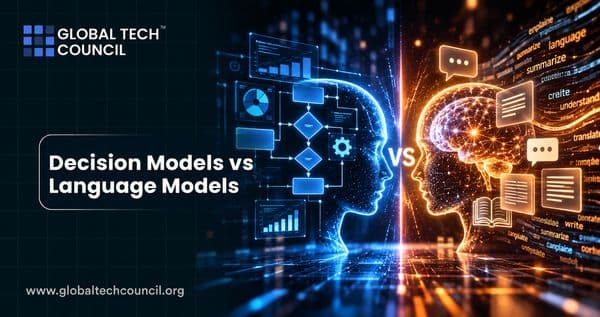
Compare decision models and language models, including how they differ in purpose, outputs, reasoning, prediction, automation, and the types of tasks each model handles.

Compare Decision AI and Generative AI, including how they differ in goals, outputs, reasoning, automation, data use, and real-world business applications.

Compare decision intelligence and generative AI, including how they differ in purpose, outputs, data use, reasoning, automation, and real-world business applications.

Explore how AI models support automated decisions through prediction, classification, scoring, optimization, and probabilistic reasoning across software and business systems.