Suyash Raizada
Why Was Jev Created?
Learn why TypeSafe AI created Jev, the limitations of traditional LLMs it aims to address, and how its System One approach is designed for fast, reliable software automation.


Browse the latest ai articles, tutorials, and research from Global Tech Council.(623 articles)
Learn why TypeSafe AI created Jev, the limitations of traditional LLMs it aims to address, and how its System One approach is designed for fast, reliable software automation.

Jev AI was launched by TypeSafe AI on September 15, 2026, as the company’s first public System One Model designed for fast, structured software decisions.

Jev AI was created by TypeSafe AI and introduced publicly by founder and CEO Diogo Almeida as the company’s first System One Model for fast, structured software decisions.

TypeSafe AI is an artificial intelligence company developing System One Models for fast, structured, machine-native decisions, with Jev as its first public model for software automation.
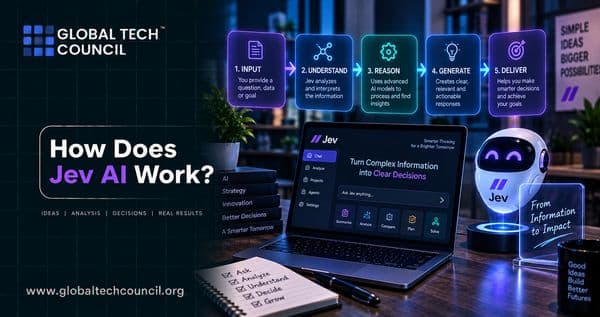
Learn how Jev AI works, from structured program state and questions to parallel sampling, typed decisions, calibrated probabilities, and software automation.
Explore Jev AI in this complete guide, covering TypeSafe AI’s System One architecture, RLCD training, parallel sampling, typed decisions, confidence scores, speed, and automation use cases.
Jev AI is TypeSafe AI’s first System One Model, designed to make fast, structured decisions that software can use directly for automation and real-time workflows.

Learn what the Jev AI model is, how TypeSafe AI’s System One approach works, and how Jev produces fast, structured, probabilistic decisions for software automation.
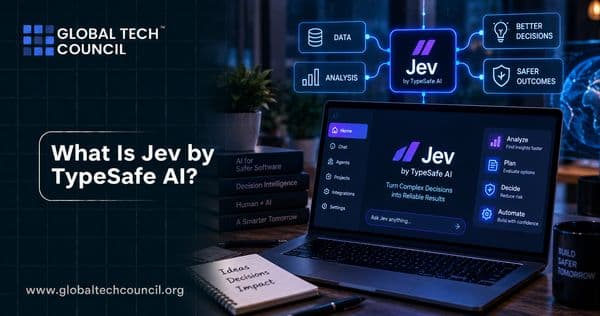
Jev is TypeSafe AI’s first System One Model, built for fast, structured decisions inside software using typed outputs, calibrated probabilities, and confidence scores.

Jev AI is TypeSafe AI’s first System One Model, designed to deliver fast, structured, probabilistic decisions that software can use directly for automation and real-time workflows.

Learn how AI movie tools can turn an idea into a finished video using automated scripting, visuals, voiceovers, editing, and generation workflows.

Explore how an AI production operating system can streamline content creation, automate workflows, coordinate tools, and improve speed, consistency, and scalability across modern content teams.