Suyash Raizada
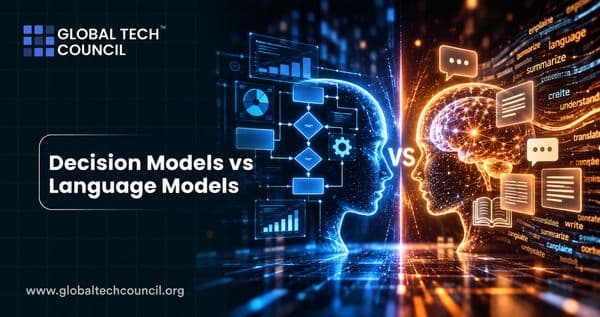
Decision Models vs Language Models
Compare decision models and language models, including how they differ in purpose, outputs, reasoning, prediction, automation, and the types of tasks each model handles.


Browse the latest ai articles, tutorials, and research from Global Tech Council.(623 articles)
Compare decision models and language models, including how they differ in purpose, outputs, reasoning, prediction, automation, and the types of tasks each model handles.

Compare Decision AI and Generative AI, including how they differ in goals, outputs, reasoning, automation, data use, and real-world business applications.

Compare decision intelligence and generative AI, including how they differ in purpose, outputs, data use, reasoning, automation, and real-world business applications.

Explore how AI models support automated decisions through prediction, classification, scoring, optimization, and probabilistic reasoning across software and business systems.

Explore how AI models support machine decision making through classification, prediction, scoring, optimization, and probabilistic reasoning across automated systems.

Learn what structured decision models are, how they use defined inputs, outputs, rules, constraints, and probabilities to support consistent and automated decision-making.

Learn what decision models in AI are, how they evaluate data and possible outcomes, and how they support predictions, recommendations, classifications, and automated decisions.

Explore why AI may need System One Models for fast, structured, machine-native decisions, and how they address limitations of LLMs in software automation and real-time workflows.

Explore how System One AI enables fast decision-making through structured outputs, calibrated probabilities, parallel processing, and machine-native intelligence for software automation.
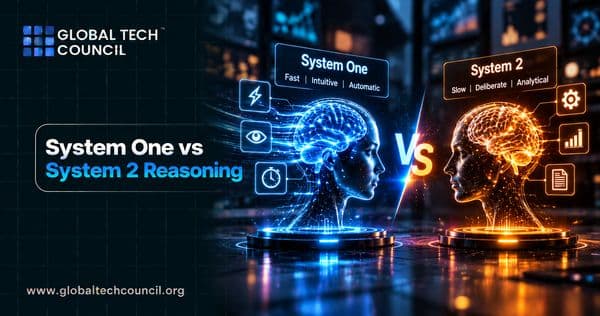
Compare System 1 and System 2 reasoning, including how fast, intuitive thinking differs from slower, deliberate analysis and how both concepts relate to human and AI decision-making.
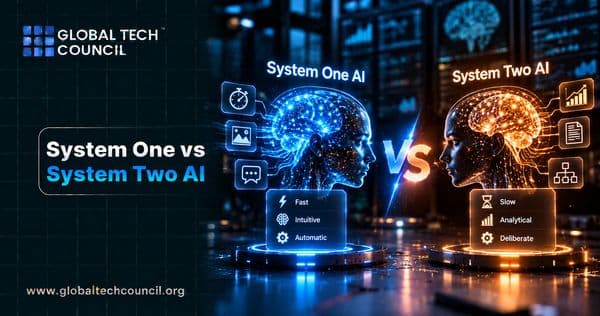
Compare System One and System Two AI, including how fast, intuitive decision-making differs from slower, deliberate reasoning and where each approach fits in modern AI systems.

Compare System One Models and LLMs, including differences in outputs, architecture, speed, confidence, automation, and how each approach fits into modern software workflows.