
Agentic AI
 Tosh Marketing
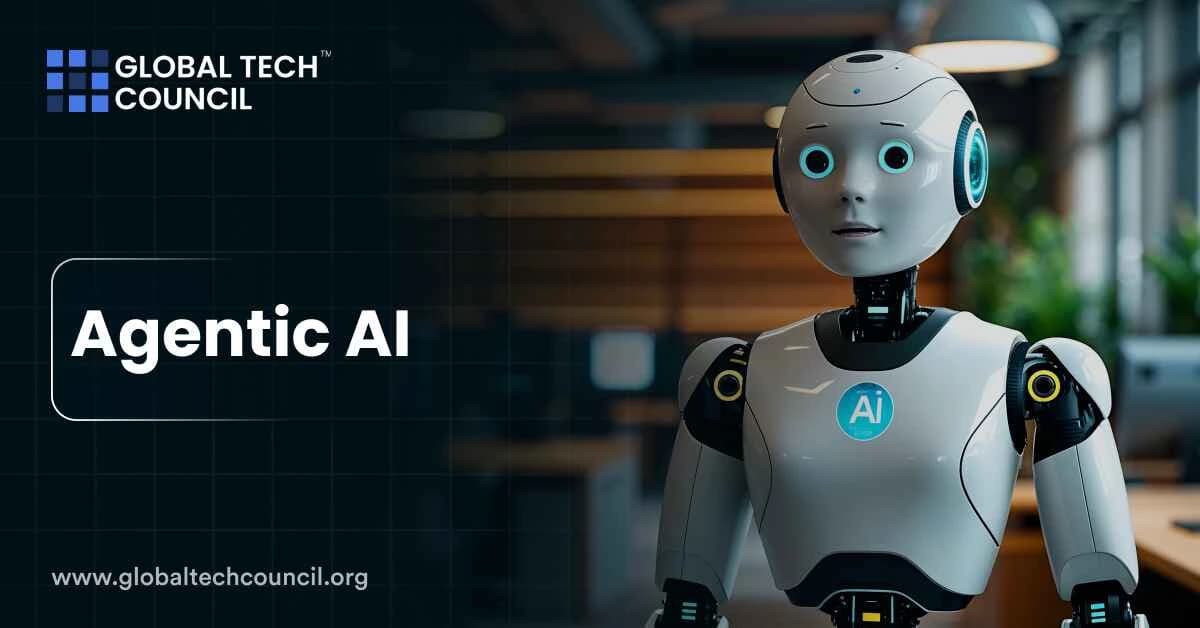
AI has changed a lot in the past few years. One big change is agentic AI. This type of AI can understand tasks, make a plan, and complete things with limited human intervention. It doesn’t wait for someone to guide every step. Instead, it can get started, make decisions, and adjust its approach along the way.
Older AI models mostly respond when you give them input. Agentic AI works differently. It can take action, make choices, interact with external tools, and even adjust when things change. This makes it useful for handling complex tasks that require multiple steps.

How Agentic AI Works Without Constant Input
Agentic AI is built to operate with limited human help. Once it has a goal, it can plan and execute a sequence of actions. These systems can do three big things:
Sees And Understands The Situation
AI agents collect information from different places. They look at what’s going on and use that data to understand the situation. They can also connect with databases, APIs, and other digital tools to gather relevant information.
Makes A Plan And Decides What To Do
After gathering enough data, the AI figures out the next steps. It sets a strategy, breaks larger tasks into smaller activities, and works toward the target. If the initial approach does not work, it can reconsider its decisions and try another method.
Takes Action On Its Own
The agent carries out tasks without someone watching over every step. It can interact with applications, use external tools, and monitor results. If something changes, it updates the plan and keeps moving, while following the permissions and restrictions set by its developers.
This ability to act and adjust is what makes it stand out from regular AI tools. Becoming a Certified Agentic AI Developer™ can help you stand out in this fast-moving field.
Is Agentic AI The Same As Generative AI?
No, not at all. They might sound similar, but they work differently.
Generative AI Creates Content
It’s used to write text, make art, generate images, or even build music. Tools like GPT-4 use patterns learned from training data to create new content based on user instructions.
Agentic AI Takes Action
It’s not limited to creating content. Instead, it uses AI models, tools, and decision-making processes to complete tasks and solve problems. It might book meetings, track deliveries, analyze information, or help fix technical issues with limited human involvement.
To keep it simple: generative AI creates content, while agentic AI uses intelligence to complete tasks. In many modern applications, generative AI models act as the reasoning and content-generation engines behind agentic systems.
Where Agentic AI Is Already Making A Difference
This tech isn’t just an idea. It is increasingly being used across several industries.
Helping Customers Without Human Agents
Companies use agentic AI to interact with customers, answer questions, and resolve common issues. These systems can access customer information, check order statuses, and connect with business applications to provide relevant assistance. They can remain available 24/7, while complex or sensitive requests can be transferred to human representatives.
Spotting Security Threats Instantly
Cybersecurity is another big area. AI agents monitor networks, identify unusual activity, flag potential threats, and help security teams respond faster. They can investigate alerts, collect evidence, and recommend or initiate approved security actions. Human oversight remains important when dealing with critical security decisions.
Improving Logistics And Supply Chains
In logistics, agentic AI analyzes demand, predicts inventory requirements, and helps coordinate supply chain activities. It can monitor shipments, identify possible delays, and recommend alternative routes or suppliers. This helps businesses manage inventory more efficiently, reduce operational costs, and improve delivery planning.
Making Coding Easier And Faster
Software teams are using AI coding agents to write code, check for errors, understand existing projects, and assist with software testing. Modern coding agents can also work with code repositories, run tests, and suggest improvements. This speeds up development and helps programmers focus on more complex tasks.
Managing Financial Risks With Smarter Tools
In finance, AI systems scan large amounts of data to identify trends, detect suspicious transactions, and assess potential risks. They can help financial teams monitor market changes, prepare reports, and identify unusual activities. However, important financial decisions still require appropriate human review and regulatory compliance.
What Are Companies Doing With Agentic AI?
Several major companies are developing tools and systems using this technology.
PwC Built A Whole Agent Platform
PwC introduced its agent OS platform to help AI agents work together, communicate, and complete complex business tasks. Such platforms allow businesses to connect different AI tools and coordinate workflows across departments.
Microsoft Uses It For Better Security
Microsoft has incorporated AI agents into its security ecosystem. These tools help security professionals investigate alerts, analyze threats, and automate parts of incident response. This reduces repetitive work and allows human security teams to focus on more complicated issues.
Amazon Is Testing AI With Web Features
Amazon's research group introduced Nova Act, an AI agent designed to interact with websites and perform browser-based tasks. It demonstrates how AI systems can move beyond answering questions to carrying out actions within digital environments.
2026 Update: The Latest Developments In Agentic AI
In 2026, agentic AI is evolving from individual AI assistants into more advanced systems capable of coordinating multiple agents. These multi-agent systems allow different AI agents to handle specialized responsibilities within a larger workflow. For example, one agent can collect information, another can analyze it, and a third can prepare a report or complete the next task.
Another important development is the growing adoption of tools and protocols that allow AI agents to communicate with external applications. The Model Context Protocol (MCP) is one example. It provides a standardized way for AI applications to connect with external tools and data sources, making it easier to build agents that can work across different software environments.
AI agents are also becoming more capable in software development and enterprise automation. They can assist with researching information, managing documents, analyzing business data, writing code, and coordinating repetitive workflows. Instead of simply responding to individual prompts, these systems can work through several connected steps to achieve a defined objective.
Businesses are also paying greater attention to agent security and governance. Giving an AI agent access to company databases, customer information, or financial applications creates new risks. Organizations need clear permissions, activity monitoring, identity controls, and approval mechanisms to prevent unauthorized actions. As adoption increases, reliability and accountability will become just as important as automation capabilities.
The growth of agentic AI has made it harder to assume that every visitor is a person, so AI agent traffic analytics deserves a place in technology education.
These developments indicate that agentic AI is moving toward more connected and practical applications. However, successful implementation still requires reliable models, quality data, appropriate infrastructure, and human supervision.
What Might Hold Agentic AI Back
The benefits are clear, but there are still things to think about.
Trust And Data Rules Matter
AI agents need clear rules. They must follow privacy laws and be safe to use. Without proper safeguards, businesses may not feel comfortable allowing them to access sensitive information or perform important tasks independently.
Tech Setup Needs To Be Right
For agentic AI to work well, the technology infrastructure has to support it. That means strong data systems, updated software, secure APIs, reliable computing resources, and flexible tools that can grow as AI capabilities improve.
Businesses Must Be Ready For Change
Rolling out agentic AI isn’t just flipping a switch. It’s a shift in how companies operate. Leaders need to understand what AI can do, identify suitable workflows, train employees, and establish clear responsibilities for human and AI collaboration.
Security And Human Oversight
As AI agents become more autonomous, controlling their actions becomes increasingly important. Poorly configured agents may make incorrect decisions, expose sensitive information, or perform unintended actions. Businesses need testing procedures, access restrictions, audit trails, and human approval for high-impact activities.
Conclusion
Agentic AI is already shaping how work gets done. From handling support tickets to identifying cybersecurity threats, these systems are helping businesses automate tasks and improve productivity. As more advanced tools become available, we will see them used in new ways across different industries.
In 2026, the focus is shifting toward multi-agent collaboration, enterprise integration, and responsible automation. But to use this technology effectively, companies must plan ahead. It takes the right infrastructure, strong security measures, clear rules, and a team that is ready to work alongside intelligent systems.
If you’re planning a career in Agentic AI, becoming a Certified Agentic AI Developer™ could be a key step toward expanding your expertise and understanding how to build and implement intelligent AI agents.
FAQs
1. What Is Agentic AI?
Agentic AI refers to artificial intelligence systems that can independently plan, make decisions, and execute tasks to achieve specific goals. Unlike traditional AI tools that primarily respond to prompts, agentic AI can take multiple actions, use external tools, and adapt its approach based on results.
2. How Does Agentic AI Work?
Agentic AI works by combining large language models, reasoning capabilities, memory, planning, and tool integration. It typically follows a cycle of understanding a goal, creating a plan, taking action, evaluating results, and adjusting its next steps.
3. What Are the Main Components of Agentic AI?
The main components include:
AI models: Understand instructions and generate decisions.
Planning systems: Break complex goals into smaller tasks.
Memory: Retain relevant information and context.
Tools: Interact with applications, databases, and APIs.
Feedback mechanisms: Evaluate outcomes and improve subsequent actions.
4. What Is the Difference Between Agentic AI and Generative AI?
Generative AI primarily creates content such as text, images, audio, and code based on user prompts. Agentic AI goes further by using AI-generated reasoning to plan and execute multi-step tasks. Generative AI can be a component of an agentic AI system.
5. What Is the Difference Between Agentic AI and AI Agents?
An AI agent is an individual system designed to perform tasks and make decisions within a defined environment. Agentic AI describes the broader approach in which AI systems demonstrate goal-directed behaviour, autonomy, planning, and action. Multiple AI agents can work together within an agentic AI architecture.
6. What Are the Key Features of Agentic AI?
Important features include:
Autonomous task execution
Goal-oriented decision-making
Multi-step planning
Contextual memory
Tool and API integration
Continuous feedback and adaptation
Ability to coordinate with other agents
These capabilities allow agentic systems to handle more complex workflows than conventional chatbots.
7. What Are Some Real-World Applications of Agentic AI?
Agentic AI can be used in several industries, including:
Healthcare: Supporting administrative workflows and research.
Finance: Analysing financial information and assisting with risk monitoring.
Marketing: Managing campaign workflows and analysing performance.
Customer service: Resolving customer requests across multiple systems.
Software development: Writing, testing, and debugging code.
Education: Supporting personalised learning activities.
8. How Is Agentic AI Used in Business Automation?
Businesses can use agentic AI to automate repetitive and multi-step processes. For example, an AI agent could collect customer information, update a CRM system, prepare a report, and notify the relevant team. Human approval can be included before sensitive actions are completed.
9. Can Agentic AI Make Decisions Without Human Intervention?
Yes. Agentic AI can make certain decisions and execute predefined tasks independently within its authorised boundaries. However, human supervision remains important for high-impact decisions, financial transactions, sensitive information, and actions with significant consequences.
10. What Is Multi-Agent AI?
Multi-agent AI is an architecture in which multiple specialised AI agents collaborate to complete a shared objective. Each agent may handle a different responsibility, such as research, planning, data analysis, or execution. Their combined capabilities can support complex workflows.
11. What Is the Role of Large Language Models in Agentic AI?
Large language models provide the reasoning and language-processing capabilities that help agents understand instructions, generate plans, interpret information, and communicate with users. They can also decide when to use tools or request additional information.
12. What Tools and Technologies Are Used to Build Agentic AI Systems?
Developers use several technologies to create agentic AI systems, including:
Large language models such as GPT and Claude
Agent frameworks such as LangGraph and CrewAI
APIs and external software integrations
Vector databases and memory systems
Workflow orchestration platforms
Monitoring and evaluation tools
These technologies help agents interact with digital environments and complete tasks.
13. How Is Agentic AI Different From Traditional Automation?
Traditional automation follows predefined rules and workflows, while agentic AI can interpret goals, evaluate situations, and adapt its actions. Traditional automation is generally more predictable, whereas agentic AI offers greater flexibility when handling changing or complex tasks.
14. What Are the Benefits of Agentic AI?
Major benefits include:
Reduced manual workload
Faster execution of complex tasks
Improved operational efficiency
Better coordination across workflows
Personalised user experiences
Greater scalability for business operations
The actual benefits depend on the quality of the system, its integration, and the tasks it is designed to perform.
15. What Are the Risks and Limitations of Agentic AI?
Agentic AI can produce incorrect decisions, misuse tools, expose sensitive information, or execute unintended actions. Other challenges include hallucinations, security vulnerabilities, limited reasoning reliability, unpredictable behaviour, and high computing costs.
16. How Can Businesses Keep Agentic AI Systems Secure?
Businesses can improve security by implementing:
Role-based access controls
Human approval for sensitive actions
Data encryption and privacy safeguards
Activity monitoring and audit logs
Restricted tool permissions
Testing and evaluation procedures
Clear rules for autonomous execution
These safeguards help reduce the risks associated with independent AI actions.
17. Can Agentic AI Replace Human Employees?
Agentic AI is more likely to automate specific tasks and reshape job responsibilities than completely replace every employee. Human expertise remains essential for strategic decisions, creativity, relationship management, accountability, and complex problem-solving.
18. What Is the Role of Memory in Agentic AI?
Memory allows an AI agent to retain relevant information from previous interactions and tasks. Short-term memory helps maintain context during an ongoing workflow, while long-term memory can store useful information for future interactions. Proper memory controls are important for privacy and accuracy.
19. What Is the Future of Agentic AI?
The future of agentic AI may involve more capable autonomous systems, specialised AI agents, multi-agent collaboration, and deeper integration with business applications. Improvements in reasoning, security, and reliability could make agentic AI an important part of enterprise operations.
20. How Can Someone Start Learning Agentic AI?
Beginners can start by understanding Python programming, large language models, prompt engineering, APIs, and basic machine learning concepts. They can then explore agent frameworks, build simple AI workflows, experiment with tool integration, and learn how to evaluate and secure autonomous systems.
Related Articles
View All
AI & ML
NVIDIA’s New AI Models: Nemotron 3.5 Lightning, Cosmos 3 and the Future of Agentic AI
Explore NVIDIA Nemotron 3.5 Lightning and Cosmos 3, how they support agentic and Physical AI, and what these models reveal about NVIDIA’s evolving vision for autonomous intelligent systems.
AI & ML
Meet Gemini 4 Neon: Google's New AI Model
Meet Gemini 4 Neon, Google’s new mid-tier Gemini 4 model, launched November 18, 2026. Learn how it compares with Carbon and Hydrogen, what its benchmarks and $3/$15 pricing mean, and how to access it.

AI & ML
Meet Gemini 4 Hydrogen: Google's New AI Model
Google introduces Gemini 4 Hydrogen, its latest fast and cost-efficient AI model designed for everyday coding, research, and agentic workflows. Discover its key features, performance benchmarks, pricing, thinking levels, real-world applications, safety improvements, and how it compares with Gemini 4 Carbon and Argon.