

An AI Stuck in 1930

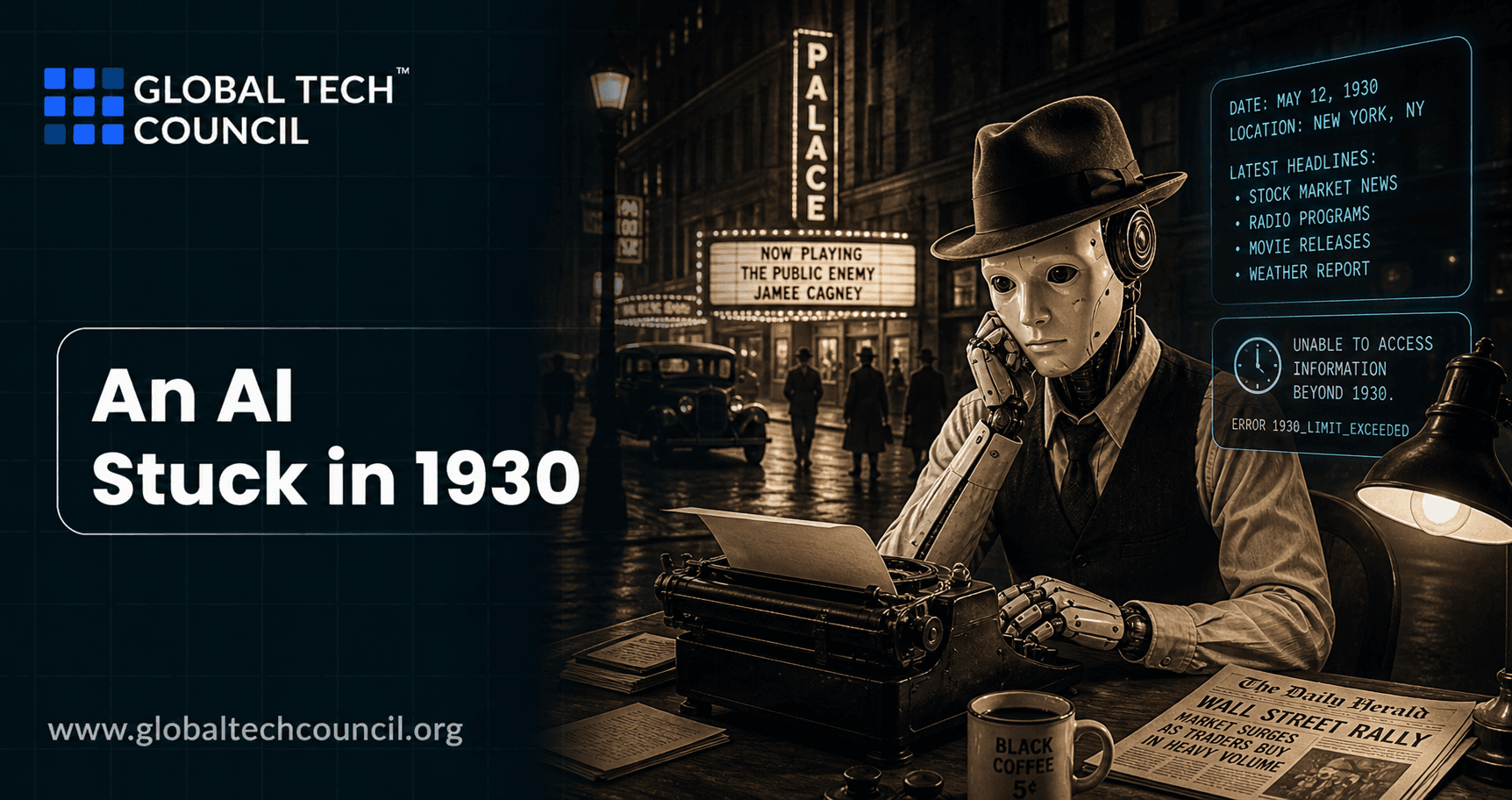
Artificial intelligence is often described as forward-looking, adaptive, and constantly evolving. But what if an AI system behaved as if it were trapped in the past? The idea of “an AI stuck in 1930” may sound hypothetical, but it reflects a very real challenge in modern AI development.
This concept highlights how AI systems depend heavily on their training data. If the data is outdated or limited, the AI’s understanding of the world can become frozen in time. The result is a system that may function technically but lacks relevance in a rapidly changing environment.

Professionals aiming to understand how AI systems evolve and avoid such limitations often begin with structured learning like the AI expert certification, which explains how data and algorithms shape AI behavior.
What Does It Mean for an AI to Be “Stuck in 1930”?
An AI “stuck in 1930” is not literally living in the past. Instead, it operates using outdated information, assumptions, and patterns derived from older datasets.
Such a system might:
Lack awareness of modern technologies
Reflect outdated cultural or social norms
Provide inaccurate or irrelevant responses
This idea serves as a powerful metaphor for what happens when AI systems are not updated or properly maintained.
Why AI Can Become Outdated
Dependence on Historical Data
AI models learn from the data they are trained on. If that data is limited to older sources, the model’s understanding will also be limited.
For instance, an AI trained primarily on early 20th-century information would struggle to recognize modern innovations such as artificial intelligence itself, cloud computing, or digital communication platforms.
Static Model Architectures
Some AI systems are not designed to update themselves after deployment. These static models can quickly become outdated as new information emerges.
This is similar to a person who stops learning after a certain point. Over time, their knowledge becomes less relevant.
Embedded Biases
Historical data often contains biases that reflect the societal norms of its time. An AI trained on such data may unintentionally reproduce outdated or unfair perspectives.
This makes ethical considerations a critical part of AI development.
Real-World Examples of “Time-Locked” AI
Legacy Business Systems
Many organizations still rely on outdated software systems that struggle to adapt to modern requirements. These systems behave similarly to an AI stuck in the past.
Early Chatbots
Older chatbot systems often fail to understand modern language patterns or user expectations. Without updates, they quickly become ineffective.
Recommendation Engines
Some recommendation systems rely too heavily on past behavior, failing to adapt to changing user preferences. This leads to irrelevant suggestions.
Risks of Operating with Outdated AI
Inaccurate Decision-Making
AI systems that rely on outdated data can produce incorrect results. This can have serious consequences in sectors like healthcare, finance, and logistics.
Loss of User Trust
Users expect AI to provide accurate and relevant information. When systems fail to meet these expectations, trust declines.
Ethical Challenges
Outdated data can lead to biased outputs. This raises concerns about fairness, accountability, and responsible AI usage.
The Role of Agentic AI in Modern Systems
Agentic AI represents a new generation of intelligent systems that can act independently and adapt to changing environments. These systems are designed to learn continuously and respond dynamically.
Unlike static models, agentic AI can:
Update its knowledge base
Adjust behavior based on context
Interact with other systems intelligently
Professionals interested in these advanced capabilities can explore the Agentic AI expert certification, which focuses on building adaptive AI systems.
How Modern AI Avoids Being “Stuck”
Continuous Learning
Modern AI systems incorporate mechanisms for ongoing learning. This ensures they remain relevant over time.
Real-Time Data Integration
By using real-time data, AI systems can adapt to current trends and conditions. This improves accuracy and usefulness.
Feedback Mechanisms
User feedback helps refine AI behavior. This allows systems to improve continuously.
Business Implications of Outdated AI
Marketing and Customer Engagement
In marketing, outdated AI can lead to ineffective campaigns. Understanding current trends is essential for success.
Professionals can enhance their skills through programs like the AI powered digital marketing course, which focuses on modern AI-driven strategies.
Software Development
Developers must design systems that can evolve over time. Static systems are more likely to become obsolete.
The AI Powered coding expert Course provides insights into building adaptive and scalable AI solutions.
The Future of Adaptive AI Systems
The concept of an AI stuck in 1930 highlights the importance of adaptability. Future AI systems will focus on:
Continuous data updates
Context-aware decision-making
Autonomous learning capabilities
These advancements will ensure that AI remains relevant and effective in a rapidly changing world.
Conclusion
The idea of an AI stuck in 1930 serves as a powerful reminder of the importance of keeping AI systems updated and adaptable. Without continuous learning and data updates, even the most advanced systems can become outdated.
As AI continues to evolve, the focus must remain on building systems that can learn, adapt, and respond to new information. This ensures that AI remains a valuable tool rather than a relic of the past.
Understanding these principles is essential for professionals and organizations aiming to succeed in an AI-driven future.
FAQs
1. What does it mean for an AI to be stuck in 1930?
It refers to an AI system operating with outdated knowledge and perspectives. Such a system lacks awareness of modern developments. It may produce irrelevant or incorrect outputs. This concept highlights the importance of updating AI systems.
2. Can AI actually become outdated?
Yes, AI can become outdated if it is not updated with new data. This happens when systems rely on old datasets. Outdated AI may provide inaccurate results. Regular updates are necessary.
3. Why is training data important in AI?
Training data shapes how AI understands the world. If the data is outdated or biased, the AI will reflect those issues. Accurate data improves performance. It ensures better results.
4. What are the risks of outdated AI systems?
Outdated AI can lead to incorrect decisions and reduced efficiency. It may also produce biased outputs. This can affect user trust. Proper updates are essential.
5. How can AI systems stay relevant?
AI systems can stay relevant through continuous learning and data updates. Real-time data integration also helps. Feedback mechanisms improve performance. These methods ensure accuracy.
6. What is agentic AI?
Agentic AI refers to systems that can act independently and adapt to new information. These systems can learn continuously. They are more flexible than traditional models. They represent the future of AI.
7. How does outdated AI impact businesses?
Outdated AI can lead to poor decision-making and ineffective strategies. It reduces efficiency and competitiveness. Businesses may lose customer trust. Updating systems is critical.
8. Can outdated AI be improved?
Yes, outdated AI can be retrained with new data. Updating algorithms also helps. Continuous monitoring ensures relevance. Improvements restore effectiveness.
9. What industries are affected by outdated AI?
Industries such as healthcare, finance, and marketing are highly affected. These sectors rely on accurate data. Outdated systems can cause major issues. Regular updates are necessary.
10. How does AI learn over time?
AI learns by analyzing data and adjusting its behavior. Machine learning models improve with more data. Feedback refines performance. Learning is ongoing.
11. What role does ethics play in AI?
Ethics ensures AI systems are fair and unbiased. It prevents harmful outcomes. Developers must consider social impact. Responsible design is important.
12. Can AI adapt to modern trends?
Yes, modern AI systems can adapt through continuous learning. They analyze updated data. This keeps them relevant. Adaptability is essential.
13. What is the difference between static and adaptive AI?
Static AI does not update after training. Adaptive AI evolves over time. Adaptive systems are more effective. They handle changes better.
14. How can developers prevent outdated AI?
Developers can use updated datasets and implement feedback loops. Regular testing is also important. These steps improve accuracy. They ensure reliability.
15. Why is continuous learning important in AI?
Continuous learning keeps AI accurate and relevant. It allows systems to adapt to changes. This improves performance. It ensures long-term usefulness.
16. What are feedback loops in AI?
Feedback loops use user input to improve AI systems. They help identify errors. This leads to better results. They are essential for refinement.
17. Can AI replace human decision-making?
AI can assist but not fully replace humans. Human judgment is still important. AI enhances efficiency. It supports decision-making.
18. How does outdated AI affect users?
Users may receive incorrect or irrelevant information. This reduces trust. It impacts user experience. Updated systems improve satisfaction.
19. What is the future of AI systems?
The future involves adaptive and intelligent systems. AI will become more autonomous. It will integrate across industries. Continuous learning will be key.
20. Should professionals learn about AI?
Yes, understanding AI is important for modern careers. It improves job opportunities. Professionals can stay competitive. Learning AI is valuable.
Related Articles
View All
AI & ML
Recursive Self-Improvement: Benefits, Challenges, Risks, and Future Possibilities
Explore recursive self-improvement in AI, including its potential benefits, technical challenges, safety risks, and future possibilities for more capable and autonomous systems.
AI & ML
How Recursive Self-Improvement Could Accelerate AI Development
Explore how recursive self-improvement could accelerate AI development by enabling faster model optimization, automated research, capability gains, and more efficient experimentation.
AI & ML
What Is an RSI Loop in Artificial Intelligence?
Learn what an RSI loop is in artificial intelligence, how recursive self-improvement could operate through repeated cycles, and why the concept matters for AGI and AI safety.
Trending Articles
The Role of Blockchain in Ethical AI Development
How blockchain technology is being used to promote transparency and accountability in artificial intelligence systems.
AWS Career Roadmap
A step-by-step guide to building a successful career in Amazon Web Services cloud computing.
Top 5 DeFi Platforms
Explore the leading decentralized finance platforms and what makes each one unique in the evolving DeFi landscape.