

Research & Knowledge Hub
2,244+ research articles, technical guides, and in-depth analyses authored by council members and industry experts.
Articles - Page 98
2,244 articles
How to Use IoT in Business?
IoT, or the Internet of Things, is a network of interconnected devices that collect and share data over the internet. Businesses use IoT devices like sensors and cameras to monitor, control, and exchange data for improved efficiency and informed decision-making. IoT is crucial for staying…
What is Data Science? Explained
Summary Data science is a multidisciplinary field that uses statistics, computer science, and domain expertise to find patterns in data. It helps businesses by extracting valuable insights from vast data, enabling informed decisions. Data science relies on domain expertise, programming skills…
IoT in Agriculture: All You Need to Know
IoT in agriculture uses connected sensors, devices, drones, and automated systems to collect real-time data about crops, soil, weather, livestock, and equipment. These technologies support precision farming by improving irrigation, crop monitoring, pest detection, resource management, and data-driven decision-making, though connectivity, cost, security, and technical skills remain challenges.
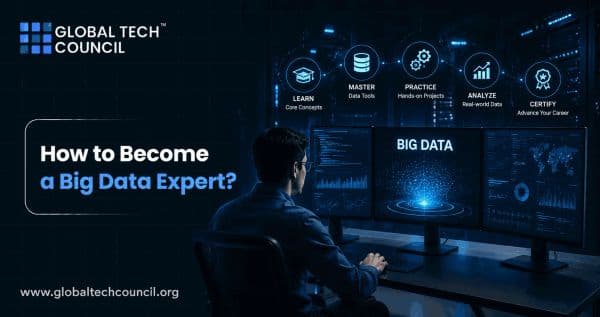
How to Become a Big Data Expert?
Becoming a big data expert requires skills in programming, databases, data engineering, distributed systems, cloud platforms, analytics, and modern data architectures. Learn how to build practical expertise with technologies such as Python, SQL, Spark, data pipelines, and cloud services while developing a portfolio that demonstrates real-world data skills.
How Data Science is Being Used to Protect the Environment
Data science is helping protect the environment by turning satellite imagery, sensor readings, climate records, and biodiversity data into actionable insights. Scientists and policymakers use data analytics and machine learning to monitor deforestation, pollution, wildlife and ecosystems, forecast environmental risks, track climate change, and improve conservation decisions. UNEP specifically identifies better environmental data as important for addressing climate change, pollution, and biodiversity loss.
How Can Blockchains Transform Artificial Intelligence?
Blockchain can complement artificial intelligence by providing tamper-resistant records, decentralized identity, data provenance, and programmable smart contracts. Together, the technologies can support auditable AI workflows, secure data sharing, decentralized AI marketplaces, and clearer tracking of models and digital assets. The combination has potential, although scalability, privacy, governance, and integration remain significant challenges.
How to Become a Data Scientist?
To become a data scientist, build strong foundations in statistics, mathematics, Python or R, SQL, data visualization, and machine learning. Practical projects, a portfolio, and experience solving real-world data problems can strengthen your job prospects. Data science remains a fast-growing career, with U.S. employment projected to grow 35% from 2025 to 2035.
Generative AI in Food Supply Management
Generative AI can improve food supply management by supporting demand forecasting, inventory planning, supplier coordination, logistics, quality control, and disruption response. Explore how GenAI can help food producers, distributors, retailers, and supply chain teams turn complex data into faster decisions while reducing waste and improving resilience.

Top IoT Benefits and Applications in the Construction Industry
Summary: IoT (Internet of Things) is a transformative concept where everyday objects connect to the internet to share and receive data seamlessly, impacting various industries globally. IoT’s significance lies in its ability to enhance efficiency, offer insights, and connect devices in…
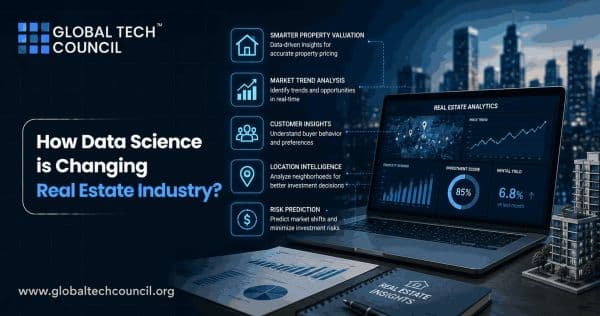
How Data Science is Changing Real Estate Industry?
Data science is changing the real estate industry by helping companies analyze property values, forecast market trends, identify investment opportunities, understand buyer behavior, and improve property management. Explore how predictive analytics, machine learning, and large datasets are making real estate decisions faster and more evidence-driven.
What happens when AI meets Biology?
When AI meets biology, researchers can analyze complex biological data faster, predict protein structures, discover potential drugs, model cells, interpret genomic information, and design new biological molecules. AI is increasingly becoming a research tool across biotechnology, medicine, genetics, and synthetic biology, although experimental validation remains essential.

How Artificial Intelligence Can Shape the Future of Transportation?
Artificial intelligence can shape the future of transportation through autonomous vehicles, smarter traffic management, predictive maintenance, route optimization, and safer mobility systems. AI can also help public transit agencies analyze real-time data, improve scheduling, reduce congestion, and make transportation networks more efficient and responsive.