

Securing AI Agents: Threat Models, Prompt Injection Defenses, and Least-Privilege Tooling
 Suyash Raizada
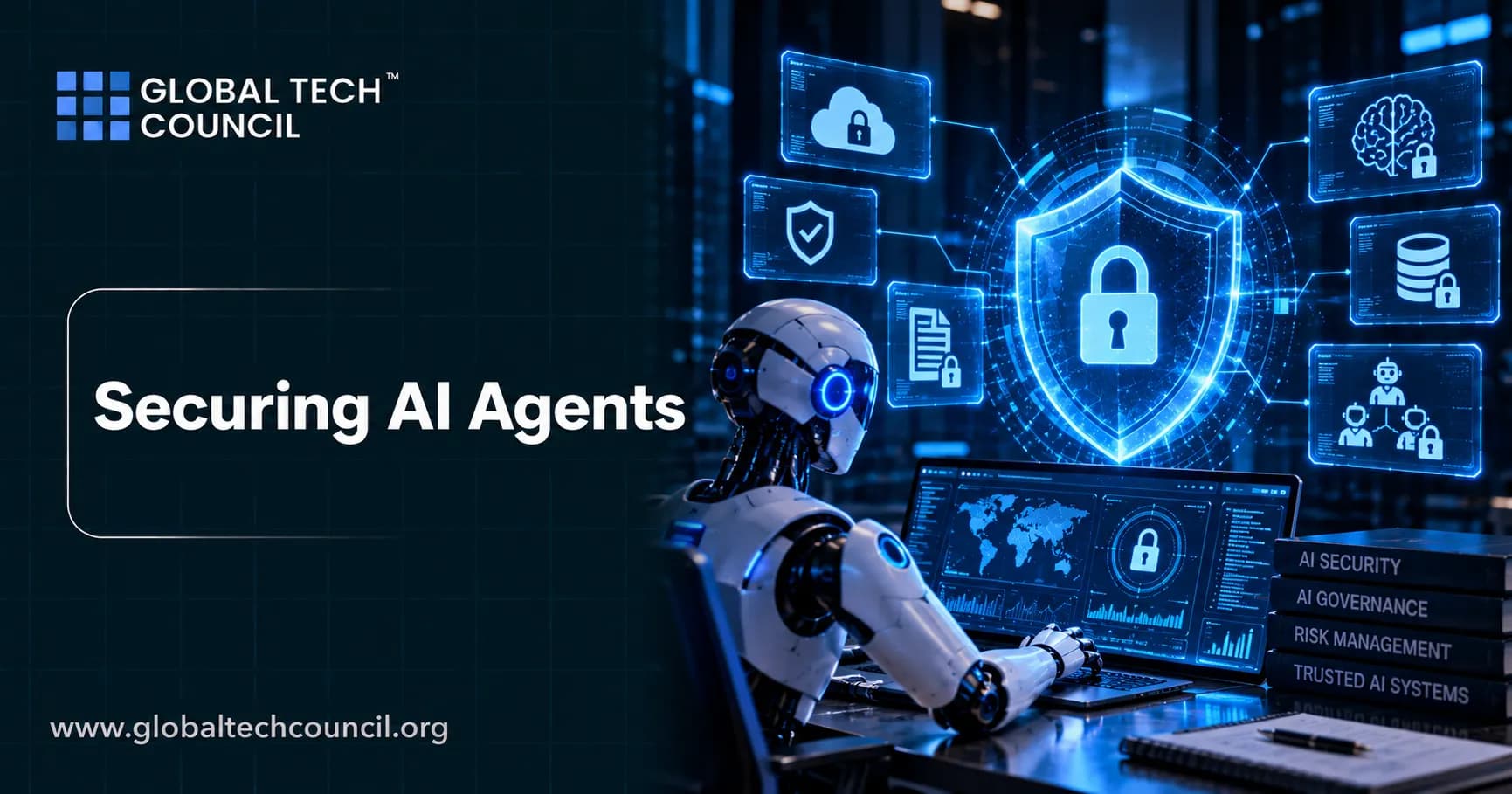
Securing AI agents requires a different mindset than securing a typical chatbot. An agent is an autonomous, tool-using system that can read emails and documents, call APIs, write to databases, run code, and trigger workflows. That broader reach creates a larger attack surface and new failure modes, which is why current guidance converges on three priorities: rigorous threat modeling, layered prompt injection defenses, and least-privilege access to tools and execution environments. Professionals looking to develop their knowledge of agentic AI security can explore the Certified Agentic AI Expert certification.
Industry and community work in 2025 reflects fast maturation in this space. Microsoft frames AI threat modeling as an ongoing engineering practice that maps assets, real behaviors, trust boundaries, and tool permissions. OWASP has expanded its GenAI security work to include agentic systems, signaling growing standardization. Vendors meanwhile emphasize zero-trust principles, strong access control, and runtime visibility into what agents can actually reach in production.

Why Securing AI Agents Differs from Securing Chatbots
A chatbot that only generates text is mostly limited to confidentiality and safety issues in its responses. An AI agent can take actions. It may search internal knowledge bases, pull from external sources, open tickets, approve refunds, push code, or execute scripts. That means attackers can aim for real-world side effects, not just harmful text.
The agentic attack surface is everything the agent can reach: data stores, APIs, internal services, SaaS applications, networks, and the execution environment itself. Security controls must therefore address both what the model sees (inputs, retrieval, memory) and what it can do (tools, credentials, network access, code execution).
Threat Modeling for Agentic AI: The New Baseline
Securing AI agents starts with threat modeling because it forces teams to document assets, intended behaviors, and misuse cases before deployment. Microsoft's Secure Future Initiative describes AI threat modeling as an ongoing discipline that identifies assets, maps real system behavior, models misuse, and documents tool permissions and trust boundaries. Agent-specific risk taxonomies published in 2025 reflect how quickly the field is formalizing around common risk categories. Developers who want to strengthen their practical understanding of building and securing agentic systems can also explore the Certified Agentic AI Developer certification.
What to Include in an AI Agent Threat Model
For agentic systems, threat modeling should explicitly cover the full lifecycle of an agent action, not just the final response:
Prompt construction and how system instructions, developer instructions, and user inputs are combined
External data ingestion such as web pages, emails, documents, and repositories
Retrieval and memory access including vector stores and persistent memory features
Tool invocation including tool scopes, allowable actions, and resource boundaries
Human approval points for high-risk steps such as external communications, deletions, payments, or production changes
Trust boundaries across users, agent identities, service accounts, and third-party integrations
Threat modeling is also where many organizations expand their definition of assets beyond data to include user trust, response correctness, and the integrity of agent actions. That broader view matters because an agent can be technically functioning while still taking unsafe actions due to compromised instructions or poisoned memory.
Core Threats in Securing AI Agents
Most guidance converges on several agent-specific risks that must be mitigated in architecture, not added as a last-layer filter.
Prompt Injection
Prompt injection is malicious instruction content embedded in emails, documents, web pages, code comments, tickets, or other retrieved content the agent consumes. The goal is to override intended instructions, exfiltrate data, or force tool use that benefits the attacker. Because agents ingest diverse content, hidden instructions can arrive through ordinary business workflows, not just direct user prompts.
Tool Misuse
Tool misuse occurs when an agent uses legitimate access in unintended ways. Even without compromised credentials, an agent can be manipulated into calling the correct tool for the wrong purpose, such as searching a broader dataset than intended or sending information to an external channel.
Identity Spoofing
Identity spoofing includes impersonating agents, stealing agent credentials, or abusing weak separation between human and agent identities. If an attacker can convincingly act as the agent, trust boundaries collapse and audit trails become unreliable.
Memory Poisoning
Memory poisoning targets persistent memory or retrieval stores by inserting malicious content that influences future agent decisions. This is particularly dangerous because compromise can persist across sessions and silently distort behavior over time.
Remote Code Execution
Remote code execution is a high-impact risk for agents that can run scripts, evaluate code, execute CLI commands, or interact with CI/CD pipelines. If attacker-controlled instructions reach the execution layer, the agent environment and adjacent systems can be compromised.
Cascading Failures in Automated Workflows
Agents can trigger loops, overload downstream systems, or cause chained failures across integrated tools. In multi-agent systems, poisoned communication can propagate malicious instructions across the pipeline, amplifying the overall impact.
Prompt Injection Defenses: Layered Controls, Not a Single Filter
Securing AI agents against prompt injection requires layered defenses because no single filter can reliably detect every malicious instruction pattern. Industry guidance emphasizes controlling inputs, outputs, retrieval, tool authorization, and escalation paths.
1) Validate and Sanitize Inputs Before the Model Sees Them
Input validation, also called prompt sanitization, aims to reduce injection attempts before content reaches the model. This can include:
Content-type verification and parsing controls for documents and emails
Allowlists for trusted retrieval sources and domains
Detection for instruction-like patterns in retrieved content, with quarantining for review
Stripping or isolating untrusted sections, such as HTML, scripts, macros, or hidden text
Validation should be applied to both direct user input and any retrieved or forwarded content the agent may treat as context.
2) Separate Instructions from Data
Microsoft explicitly recommends clear separation between instructions and data. In practice, this means designing the agent so that retrieved content is treated as untrusted data, not as a source of new rules. Techniques include:
Structured prompting that labels retrieved text as data and disallows it from changing policies
Tooling that enforces data-only channels, keeping system instructions isolated
Policies that forbid the agent from following instructions found inside documents, tickets, or web pages
3) Validate Outputs Before Taking Actions
Output validation matters because an agent can be partially compromised and still produce plausible action plans. Before executing tool calls, validate that outputs align with policy and context:
Check tool arguments against allowlists and expected schemas
Block attempts to access out-of-scope resources
Apply data loss prevention checks when outputs contain sensitive data
Require confirmations for irreversible actions
4) Add Human Approval Gates for High-Risk Steps
Human-in-the-loop controls are most effective when placed at the point of external side effects, such as sending emails, changing permissions, deploying code, deleting data, or initiating financial actions. Threat modeling should explicitly define where approvals are mandatory.
Least-Privilege Tooling: The Most Practical Containment Strategy
Least privilege is a core design principle in securing AI agents. The reasoning is straightforward: even if prompt injection or tool misuse occurs, the blast radius remains small because the agent cannot reach sensitive systems or perform destructive actions without additional checks.
What Least Privilege Looks Like for AI Agents
Grant only the tools the agent truly needs, not a general toolbox assembled for convenience
Narrow each tool's scope to specific actions and bounded resources, such as read-only access, limited folders, or specific project IDs
Use short-lived credentials and rotate secrets to minimize token reuse and replay risk
Segregate agent identities from human identities using dedicated service accounts
Enforce RBAC and ABAC so access decisions incorporate role, resource, and context
Log every tool call including inputs, outputs, permission decisions, and downstream effects
Permissions in production frequently differ from deployment assumptions. Continuous visibility into the agent's real network reach and effective permissions is essential for tightening scopes over time. Professionals expanding their knowledge of advanced technology and security concepts can also consider Deep Tech Certification as part of their technical development.
Real-World Scenarios: Where Agent Security Breaks First
AI Coding Agents and CI/CD
Coding agents can read repositories, modify code, run tests, and interact with secrets or CI/CD systems. Distinct attack vectors include prompt injection via code comments or issue descriptions, secret leakage through logs, and remote code execution through build steps. Strong isolation, minimal repository permissions, and guarded access to secret stores are critical controls.
Enterprise Workflow Agents Processing Everyday Content
Agents that triage emails, tickets, and documents are highly exposed to prompt injection because normal business content is an ingress channel. Controls should emphasize input validation, strict retrieval allowlists, and action gating for any outbound communication or system changes.
Multi-Agent Systems
When multiple agents coordinate, malicious instructions can propagate between agents. Use explicit message schemas, authentication for agent-to-agent communication, and per-agent least privilege so one compromised agent cannot take over the entire workflow.
Operational Priorities Checklist for Securing AI Agents
Inventory every agent and enumerate the systems, APIs, data stores, and networks it can reach.
Map trust boundaries across retrieval sources, memory stores, tool calls, and approval points.
Apply least privilege to tools, data access, and runtime permissions from day one.
Validate inputs and outputs with policy checks, schemas, allowlists, and data loss prevention where appropriate.
Monitor runtime behavior continuously and alert on anomalous tool use, unexpected network calls, or automation loops.
Control shadow AI by restricting unauthorized AI tools and domains until governance is in place.
Prepare incident response playbooks tailored to agent compromise, including credential revocation, memory store cleanup, and rollback of tool actions.
Building Skills and Governance for Agentic Security
Agent security blends application security, identity and access management, and AI-specific controls. Teams benefit from structured upskilling across all three areas. Relevant training paths on Global Tech Council include AI and Machine Learning certifications, Cybersecurity certifications, and Cloud Security or DevSecOps programs that build competency in threat modeling, access control design, and secure deployment practices for agentic AI.
Assessing Candidates for Emerging AI Security Roles
Agentic AI systems can plan tasks, use tools, and execute multi-step workflows with varying degrees of autonomy. As organisations explore these capabilities, they also need professionals who can design, monitor, and evaluate such systems. HireValid can be explored by employers looking for structured ways to assess candidates for emerging technology roles.
Conclusion
Securing AI agents is fundamentally about controlling autonomy. Threat modeling clarifies what the agent can access and how it can be misused. Prompt injection defenses reduce the likelihood that untrusted content becomes unsafe instructions. Least-privilege tooling and strong identity boundaries limit blast radius when something goes wrong. As standards mature through community work such as OWASP guidance and agent-specific risk taxonomies, the most resilient programs will be those that treat agent security as an architectural discipline supported by continuous monitoring and iterative hardening, not as a single filter added at deployment. Organizations connecting technology expertise with wider business and professional development goals can also explore Marketing Certification.
FAQs
1. What does securing AI agents mean?
Securing AI agents means protecting AI systems, their data, tools, permissions, and workflows from unauthorized access, manipulation, and misuse. It involves identifying potential threats, restricting access, validating actions, and continuously monitoring agent behavior.
2. Why is AI agent security important for businesses?
AI agents can access sensitive information, interact with business applications, and execute multistep tasks. Without appropriate safeguards, vulnerabilities could lead to data exposure, unauthorized transactions, incorrect actions, or compromised business operations.
3. What is a threat model for AI agents?
A threat model identifies the assets an AI agent can access, potential attackers, possible attack methods, and the consequences of security failures. It helps organizations prioritize protections based on the agent's capabilities, permissions, data access, and business impact.
4. What are the most common security threats facing AI agents?
Common threats include prompt injection, sensitive data leakage, excessive permissions, insecure tool integrations, compromised dependencies, unauthorized actions, and manipulated outputs. Multi-step agent workflows can also introduce risks when one compromised component influences subsequent decisions.
5. What is prompt injection in AI agents?
Prompt injection is an attack in which malicious instructions are embedded in user input, documents, webpages, emails, or other content an AI system processes. These instructions attempt to override intended behavior, disclose protected information, or cause the agent to perform unauthorized actions.
6. How does indirect prompt injection affect AI agents?
Indirect prompt injection occurs when malicious instructions enter through external content rather than a direct user message. For example, an AI agent summarizing a webpage might encounter hidden instructions designed to influence its behavior or misuse connected tools.
7. How can businesses defend AI agents against prompt injection?
Businesses should treat external content as untrusted, separate instructions from retrieved data, restrict tool permissions, validate proposed actions, and require approval for sensitive operations. Testing against realistic attacks and monitoring tool calls can further reduce risk. No single defense completely eliminates prompt injection.
8. Why is least-privilege access important for AI agents?
Least-privilege access gives an AI agent only the permissions required to complete its assigned tasks. This limits the potential damage if the agent is manipulated, makes an incorrect decision, or interacts with compromised content.
9. How can organizations implement least-privilege tooling?
Organizations can create narrowly scoped tool permissions, restrict accessible data, separate read and write capabilities, and limit access to specific applications or records. Permissions should be reviewed regularly and granted only when a legitimate workflow requires them.
10. What is the difference between read-only and write-enabled AI tools?
Read-only tools retrieve or inspect information without modifying the underlying system. Write-enabled tools can change records, send messages, update configurations, or trigger transactions. Read-only access is generally safer for initial deployments, while write-enabled access requires stronger validation and authorization controls.
11. How can businesses prevent AI agents from taking unauthorized actions?
Businesses should enforce authorization outside the AI model, validate tool arguments, restrict available actions, and check whether each requested operation is permitted. Sensitive actions can require explicit human approval, while transaction limits and policy checks provide additional safeguards.
12. What role do APIs and tool integrations play in AI agent security?
APIs and tool integrations determine how agents interact with external systems. Secure implementations should use strong authentication, scoped credentials, input validation, rate limits, encrypted connections, and server-side authorization checks to prevent unauthorized operations.
13. How should AI agents handle sensitive data?
AI agents should access only the information necessary for their tasks. Organizations should apply data minimization, access controls, encryption, appropriate retention policies, and output filtering to reduce the risk of exposing personal, financial, or confidential business information.
14. What is a confused-deputy attack in AI agent systems?
A confused-deputy attack occurs when an agent or connected service uses its legitimate permissions on behalf of a request that should not be authorized. For example, an agent might access a restricted file because it has broad service-account permissions. Explicit authorization checks and user-context-aware access controls help prevent this problem.
15. How can organizations secure multi-agent systems?
Organizations should assign distinct roles and permissions to individual agents, authenticate communication between components, validate information passed between agents, and restrict shared credentials. Critical actions should be independently authorized rather than trusted simply because another agent recommended them.
16. How can businesses monitor AI agents for suspicious behavior?
Businesses can log tool calls, permission checks, data access, approval decisions, and significant workflow events. Alerts can identify unusual access patterns, repeated authorization failures, unexpected data transfers, or attempts to perform actions outside an agent's normal responsibilities.
17. Why is human approval necessary for high-risk AI agent actions?
Human approval adds an additional control for actions that could have significant financial, legal, operational, or privacy consequences. Organizations should define clear approval thresholds and provide reviewers with enough context to evaluate the action before authorizing it.
18. How should businesses test AI agent security before deployment?
Security testing should include direct and indirect prompt injection, attempts to access restricted data, unauthorized tool calls, malicious documents, compromised dependencies, and unexpected workflow failures. Teams should also verify that permissions, approval requirements, and monitoring controls work as intended.
19. What security frameworks and practices can guide AI agent protection?
Organizations can draw on established practices such as the NIST AI Risk Management Framework, NIST Cybersecurity Framework, OWASP guidance for large language model applications, and secure software development principles. These resources can help teams structure risk assessments, testing, access controls, and ongoing governance.
20. What is the best strategy for building secure AI agents?
The best strategy is to make security part of the entire agent lifecycle, from design and development to deployment and monitoring. Organizations should combine threat modeling, least-privilege permissions, prompt injection defenses, secure integrations, human approval for high-risk actions, and continuous security testing.
Related Articles
View All
Agentic AI
Securing Agentic AI: Threat Models, Prompt Injection Risks, and Defensive Architectures
Learn how securing agentic AI requires new threat models, prompt injection defenses, and layered architectures that constrain tools, memory, and autonomous actions.
Agentic AI
From Chatbots to AI Agents: A Step-by-Step Roadmap to Deploying Agentic Automation in Business
A step-by-step roadmap for agentic automation, showing how businesses evolve from chatbots to AI agents, workflow orchestration, multi-agent systems, and governed scaling.
Agentic AI
Human-in-the-Loop AI Agents: Guardrails, Approvals, and Audit Trails for Compliance
Learn how to design human-in-the-loop AI agents with enforceable guardrails, approval gates, and immutable audit trails to meet compliance and audit requirements.
Trending Articles
The Role of Blockchain in Ethical AI Development
How blockchain technology is being used to promote transparency and accountability in artificial intelligence systems.
AWS Career Roadmap
A step-by-step guide to building a successful career in Amazon Web Services cloud computing.
Top 5 DeFi Platforms
Explore the leading decentralized finance platforms and what makes each one unique in the evolving DeFi landscape.