

AI in E-commerce
 Tosh Marketing
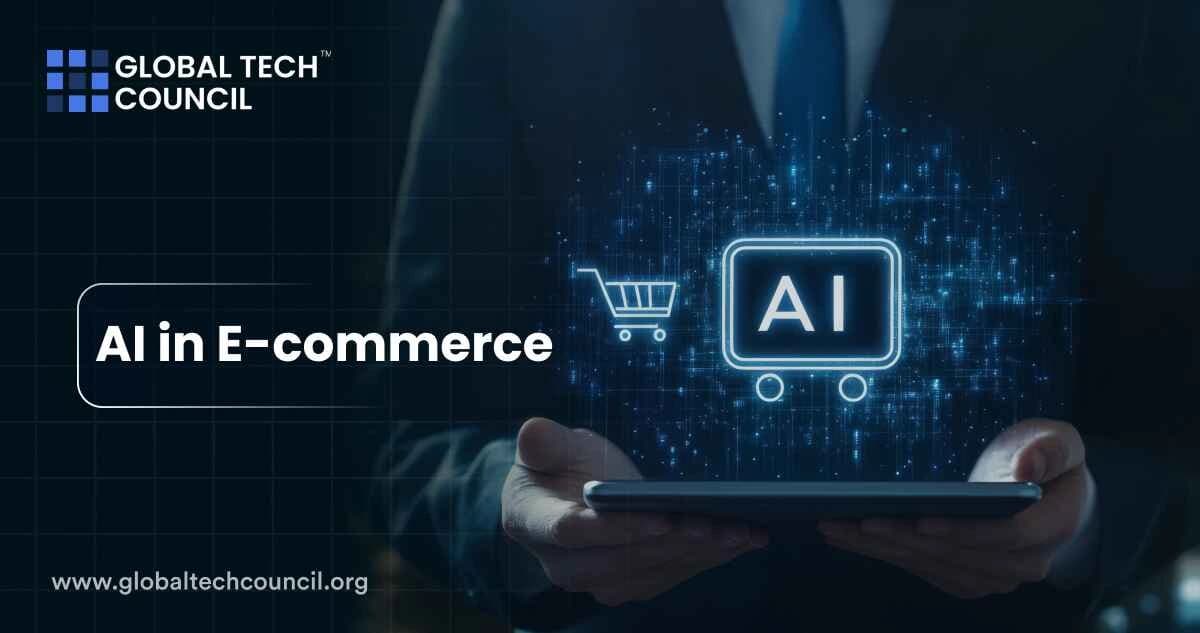 Artificial Intelligence is transforming the e-commerce industry by enabling smarter operations, personalized customer experiences, and data-driven decision-making. As online retail continues to expand, businesses are adopting AI technologies to remain competitive and meet evolving consumer expectations.
From recommendation engines to automated support systems, AI is reshaping how e-commerce platforms interact with customers. This transformation is not only improving efficiency but also driving revenue growth and innovation across the industry.

Understanding the Role of AI in E-commerce
Artificial Intelligence involves the use of advanced algorithms that analyze data, identify patterns, and make intelligent decisions. In e-commerce, AI helps businesses understand customer behavior, predict trends, and optimize operations.
Technologies such as machine learning, natural language processing, and predictive analytics allow companies to deliver personalized experiences and improve overall performance. AI enables a shift from reactive to proactive strategies, enhancing customer engagement and operational efficiency.
Why AI is Essential for Modern E-commerce
Enhanced Customer Experience
AI delivers personalized product recommendations and tailored shopping journeys.
Improved Operational Efficiency
Automation reduces manual processes like inventory management and order tracking.
Data-Driven Insights
AI analyzes customer data to uncover trends and preferences.
Increased Revenue
Targeted marketing and personalization lead to higher conversion rates.
Key Applications of AI in E-commerce
Personalized Product Recommendations
AI algorithms suggest products based on user behavior, increasing engagement and sales.
AI-Powered Chatbots
Chatbots provide instant support and assist customers throughout the buying process.
Inventory and Supply Chain Management
AI predicts demand and optimizes inventory levels, reducing shortages and overstocking.
Visual Search and Image Recognition
Customers can search for products using images, improving product discovery.
Dynamic Pricing
AI adjusts prices in real time based on demand, competition, and market trends.
The Role of Certifications in AI E-commerce Careers
As AI adoption grows, professionals need to build specialized skills to stay competitive.
A strong starting point is the AI expert certification, which provides a comprehensive understanding of AI fundamentals and applications.
To gain expertise in advanced systems, professionals can pursue the Agentic AI Certification, focusing on autonomous AI technologies.
Developers can enhance their skills with the AI Powered coding expert certification, which improves coding efficiency using AI tools.
Programming knowledge is essential. A python certification helps build AI models, while a node.js certification supports scalable backend development.
Marketing professionals can benefit from AI Powered digital marketing certification, enabling them to create data-driven campaigns.
Real-World Examples of AI in E-commerce
Amazon
Amazon uses AI for personalized recommendations, logistics optimization, and voice commerce.
Alibaba
Alibaba leverages AI for automated warehouses and customer personalization.
Shopify
Shopify integrates AI tools to help businesses optimize their online stores.
Personalization Models
Streaming platforms like Netflix demonstrate how AI-driven personalization increases engagement, a strategy widely adopted in e-commerce.
Benefits of AI in E-commerce
Improved Customer Satisfaction
AI delivers personalized experiences that match customer preferences.
Increased Efficiency
Automation streamlines operations and reduces human error.
Better Decision-Making
AI provides insights based on real-time data.
Higher Conversion Rates
Personalized recommendations boost sales and retention.
Challenges of Implementing AI in E-commerce
Data Privacy Concerns
Handling customer data requires strong security measures.
High Implementation Costs
AI systems can be expensive to develop and deploy.
Integration Complexity
Integrating AI with existing systems can be challenging.
Skill Gap
There is a shortage of professionals with AI expertise.
Emerging Trends in AI for E-commerce
Agentic AI Systems
Autonomous AI systems are becoming more capable of independent decision-making.
Voice Commerce
AI-powered voice assistants are changing how customers shop.
Augmented Reality Shopping
AI combined with AR enhances product visualization.
Predictive Analytics
AI improves forecasting and customer behavior analysis.
How to Build a Career in AI for E-commerce
Learn the Basics
Start with programming and AI fundamentals.
Choose a Specialization
Focus on machine learning, analytics, or AI marketing.
Gain Practical Experience
Work on real-world projects like chatbots and recommendation systems.
Earn Certifications
Certifications such as AI expert certification and AI Powered coding expert certification enhance credibility.
Build a Portfolio
Showcase projects to demonstrate your skills.
The Future of AI in E-commerce
AI will continue to play a crucial role in shaping the future of e-commerce. Businesses will increasingly rely on AI to deliver personalized experiences, optimize operations, and improve customer satisfaction.
Technologies such as blockchain and IoT, when combined with AI, will further enhance efficiency and transparency. Companies that adopt AI early will gain a competitive advantage in the market.
Strategies to Leverage AI in E-commerce
Invest in AI Tools
Adopt AI solutions to improve efficiency and performance.
Focus on Personalization
Use AI to create tailored customer experiences.
Leverage Data
Utilize data analytics for better decision-making.
Train Teams
Equip employees with AI skills through certifications and training.
Conclusion
Artificial Intelligence is transforming the e-commerce industry by enabling smarter operations, personalized experiences, and data-driven strategies. From product recommendations to automated customer support, AI continues to drive innovation.
By developing the right skills and earning certifications such as AI expert certification and Agentic AI Certification, professionals can build successful careers in this evolving field.
The future of e-commerce is powered by AI, making it essential to stay updated and adaptable.
Frequently Asked Questions
1. How is AI used in e-commerce
AI is used for personalization, customer support, and inventory management.
2. What are the benefits of AI in online retail
AI improves efficiency, customer experience, and sales.
3. Can small businesses use AI in e-commerce
Yes, many affordable AI tools are available.
4. What skills are required for AI in e-commerce
Programming, data analysis, and marketing skills are essential.
5. Is AI expensive to implement
Initial costs can be high, but long-term benefits outweigh them.
6. What is Agentic AI
It refers to AI systems that operate independently.
7. How can I start a career in AI e-commerce
Learn AI basics, gain experience, and earn certifications.
8. Which programming language is best for AI
Python is widely used.
9. What is voice commerce
Shopping using AI-powered voice assistants.
10. What is the future of AI in e-commerce
The future is highly promising with continuous innovation.
Related Articles
View All
AI & ML
Meet Google Playground: Create Games With AI
Meet Google Playground, Google's new experimental platform that lets you create, play, and share custom games with text prompts. Learn how it works, basic game design tips, a sample session, safety and sharing features, Unity Spark plans, and limits.
AI & ML
OpenAI Dots vs Grok Bot vs Muse
Compare OpenAI Dots, Grok Bot, and Meta Muse to understand how these persistent AI agents differ in cloud computer use, connected apps, automation, memory, and long-running workflows.
AI & ML
What Is OpenAI Dots?
Learn what OpenAI Dots are, how these always-on AI agents work, and how they use GPT-6 Astra, cloud computers, connected apps, and persistent context to manage ongoing tasks.
Trending Articles
The Role of Blockchain in Ethical AI Development
How blockchain technology is being used to promote transparency and accountability in artificial intelligence systems.
AWS Career Roadmap
A step-by-step guide to building a successful career in Amazon Web Services cloud computing.
Top 5 DeFi Platforms
Explore the leading decentralized finance platforms and what makes each one unique in the evolving DeFi landscape.