

Claude Opus 4.7
 Suyash Raizada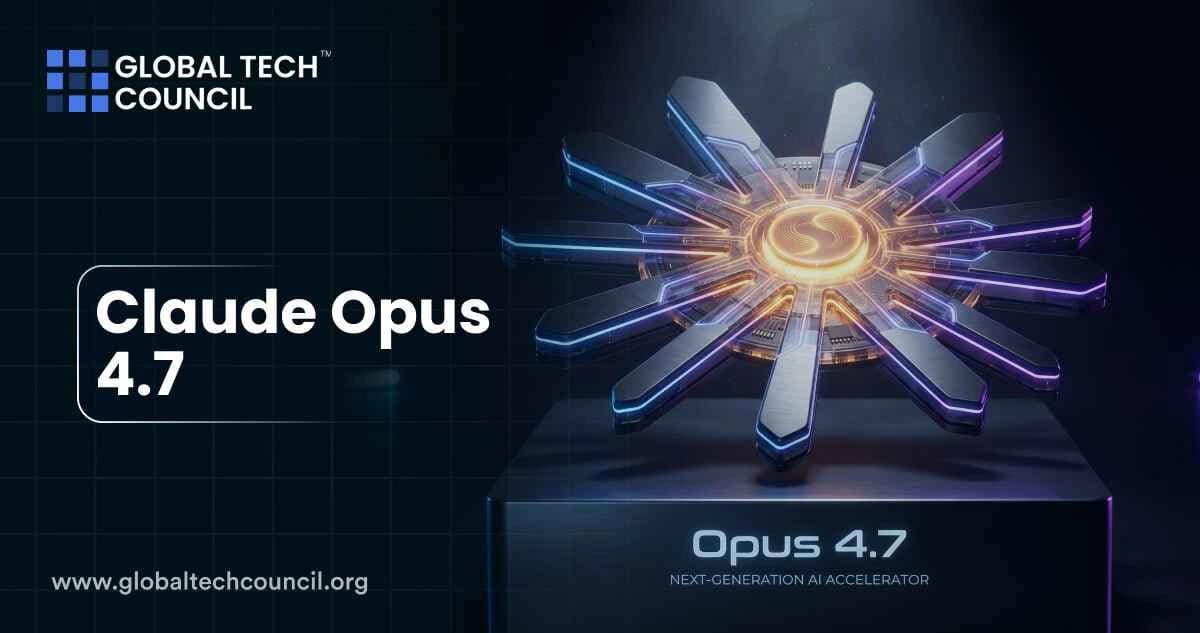
Artificial intelligence is evolving at an extraordinary pace, transforming industries, redefining workflows, and reshaping how individuals interact with technology. Among the latest innovations in this space is Claude Opus 4.7, a powerful and advanced large language model developed by Anthropic. Designed to handle complex reasoning, long-context understanding, and real-world problem-solving, Claude Opus 4.7 represents a significant leap forward in AI capabilities.
Claude Opus 4.7 is not just an incremental upgrade. It introduces enhanced intelligence, improved safety mechanisms, and greater adaptability across multiple domains. From software development and business automation to marketing and research, it is rapidly becoming a critical tool for professionals.

Professionals aiming to advance their technical expertise often explore programs such as the AI Powered Coding Expert certification. This certification helps individuals understand how AI can be applied in coding, automation, and real-world development scenarios.
What is Claude Opus 4.7
Claude Opus 4.7 is an advanced AI model designed to process natural language, generate meaningful responses, and solve complex problems. It builds upon previous versions by improving reasoning accuracy, contextual awareness, and output reliability.
Key capabilities include:
Advanced reasoning and logical analysis
Long-context processing for large datasets
Enhanced coding and technical support
Improved alignment with human intent
Reduced hallucinations and errors
Unlike earlier AI models focused primarily on text generation, Claude Opus 4.7 is engineered for deeper understanding and multi-step task execution.
Key Features of Claude Opus 4.7
Advanced Reasoning Capabilities
Claude Opus 4.7 excels in analytical thinking and structured problem-solving. It can break down complex issues into manageable steps and provide clear solutions.
Example
A software engineer used Claude to troubleshoot a complex backend system issue involving multiple dependencies.
Result
The issue was resolved faster, with optimized code suggestions improving system performance.
Long Context Understanding
One of the most significant advancements in Claude Opus 4.7 is its ability to process and retain long context inputs. This makes it highly effective for handling large documents, research papers, and multi-step workflows.
Example
A legal team used Claude to analyze lengthy contracts and extract key insights.
Result
Reduced manual effort and improved accuracy in contract analysis.
Enhanced Coding Support
Claude Opus 4.7 offers strong capabilities in software development, including:
Code generation
Debugging
Algorithm explanation
Documentation creation
Improved Safety and Alignment
Anthropic has emphasized safety in Claude Opus 4.7. The model is designed to produce responsible and reliable outputs while minimizing harmful or misleading content.
This makes it suitable for enterprise-level applications where accuracy and trust are critical.
Versatility Across Industries
Claude Opus 4.7 can be applied in various fields, including:
Business strategy
Marketing and content creation
Software development
Education and research
Customer support
Its adaptability allows organizations to integrate it into diverse workflows.
Real-World Use Cases
Business Automation
Organizations are leveraging Claude Opus 4.7 to automate repetitive tasks and improve efficiency.
Example
A financial services company used Claude to generate reports and analyze market data.
Result
Faster decision-making and improved operational efficiency.
Content Creation and Marketing
Claude Opus 4.7 enables marketers to generate high-quality content for blogs, campaigns, and social media.
Professionals can enhance their skills through an AI powered marketing course.
Example
A digital marketing agency used Claude to create consistent campaign messaging.
Result
Improved engagement and brand consistency.
Software Development
Developers use Claude for coding assistance, debugging, and documentation.
Result
Faster development cycles and improved code quality.
Education and Research
Students and researchers benefit from Claude’s ability to summarize complex information and explain concepts clearly.
Result
Improved learning efficiency and productivity.
Customer Support
Businesses use Claude to automate customer interactions and support services.
Result
Reduced response time and enhanced customer satisfaction.
Claude Opus 4.7 vs Previous Versions
Claude Opus 4.7 introduces several improvements over earlier models.
Higher Accuracy
Provides more reliable and precise outputs.
Better Context Handling
Processes longer and more complex inputs effectively.
Enhanced Performance
Delivers faster and more efficient responses.
Reduced Errors
Minimizes hallucinations and inconsistencies.
The Role of Prompt Engineering
Prompt engineering plays a critical role in maximizing the performance of Claude Opus 4.7. It involves designing inputs that guide the AI to produce accurate and relevant outputs.
Professionals can deepen their expertise through the Prompt Engineering Certification.
Example
A well-crafted prompt can significantly improve the clarity and usefulness of AI-generated responses.
Agentic AI and the Future
Claude Opus 4.7 aligns with the concept of autonomous systems capable of executing tasks independently. Professionals interested in this domain often explore the Agentic AI Expert certification.
This represents a shift toward intelligent systems capable of planning, executing, and adapting without constant human input.
Best Practices for Using Claude Opus 4.7
Provide Clear Instructions
Detailed prompts improve output quality.
Break Down Tasks
Divide complex problems into smaller steps.
Verify Outputs
Always review AI-generated results.
Combine with Human Expertise
AI should support, not replace, human decision-making.
Challenges and Limitations
Dependence on Prompt Quality
Poor prompts can lead to weak results.
Need for Human Oversight
AI outputs must be validated.
Ethical Considerations
Responsible use is essential.
Data Sensitivity
Users must ensure secure handling of information.
Recent Developments in Claude AI
Claude Opus 4.7 reflects ongoing advancements in AI technology.
Improved Context Awareness
Handles complex inputs more effectively.
Enhanced Output Quality
Produces more structured and accurate responses.
Better Integration
Increasingly used in enterprise platforms.
Greater Autonomy
Supports multi-step workflows with minimal input.
Future Outlook
The future of Claude Opus 4.7 and similar AI models includes:
Intelligent Automation
AI will handle more complex workflows.
Personalized Experiences
Systems will adapt to individual users.
Real-Time Decision Making
AI will provide instant insights.
Human AI Collaboration
Humans and AI will work together more effectively.
Conclusion
Claude Opus 4.7 represents a significant advancement in artificial intelligence, offering enhanced reasoning, improved context understanding, and greater versatility. It is transforming how businesses, developers, and individuals approach complex tasks.
However, its effectiveness depends on responsible use, strong prompt design, and human oversight. By combining AI capabilities with human expertise, users can unlock its full potential.
As AI continues to evolve, Claude Opus 4.7 stands as a powerful example of how intelligent systems are shaping the future of technology and innovation.
FAQs
1. What is Claude Opus 4.7
Claude Opus 4.7 is an advanced AI language model developed by Anthropic.
2. What are its main features
It offers reasoning, coding, and long-context understanding.
3. Can Claude Opus 4.7 write code
Yes, it supports coding and debugging.
4. Is it suitable for businesses
Yes, it supports automation and decision-making.
5. Can it generate content
Yes, including blogs and marketing content.
6. Does it handle long documents
Yes, effectively.
7. Is it safe to use
It includes improved safety features.
8. What industries use Claude AI
Technology, marketing, education, and more.
9. Can beginners use it
Yes, with practice.
10. What is prompt engineering
Designing prompts to guide AI outputs.
11. Does it replace human work
No, it supports human tasks.
12. Can it automate workflows
Yes, with integration.
13. Is it accurate
Generally, but requires verification.
14. Can it help in learning
Yes, it supports education.
15. What are its limitations
Dependence on prompts and oversight.
16. Can it handle multiple tasks
Yes, efficiently.
17. What is agentic AI
AI systems that act autonomously.
18. Can Claude integrate with tools
Yes, with proper setup.
19. Should users rely fully on AI
No, human input is essential.
20. How can I start using it
Practice prompts and explore use cases.
Related Articles
View All
Claude
Claude Opus 4.8: What's New, Key Features, and Enterprise Use Cases
Claude Opus 4.8 is Anthropic's latest Opus-tier model, optimized for honest reasoning, long-running agent workflows, and advanced coding with a 1M token context window.
Claude
Claude Fable 5 Responsible AI: Privacy, Ethics, and Governance Considerations
Explore Claude Fable 5 responsible AI considerations across privacy, ethics, governance, safety controls, and enterprise deployment best practices.
Claude
Claude Fable 5 and the Future of AI Assistants: What Tech Leaders Should Know
Claude Fable 5 signals a shift from chatbots to governed, agentic AI assistants for enterprise data, software, and cybersecurity workflows.
Trending Articles
The Role of Blockchain in Ethical AI Development
How blockchain technology is being used to promote transparency and accountability in artificial intelligence systems.
AWS Career Roadmap
A step-by-step guide to building a successful career in Amazon Web Services cloud computing.
Top 5 DeFi Platforms
Explore the leading decentralized finance platforms and what makes each one unique in the evolving DeFi landscape.