

Is AI a Good Career in India
 Tosh Marketing
 Artificial intelligence has become one of the most promising career fields in India. What was once viewed as a niche area for researchers and advanced engineers is now influencing mainstream hiring across information technology, healthcare, finance, retail, education, manufacturing, logistics, media, and government services. Because of this shift, many students, working professionals, and career changers now ask the same question: is AI a good career in India?
For most people with the right mindset and skills, the answer is yes. AI offers strong career growth, attractive salary potential, access to global opportunities, and the chance to work on technologies that are actively reshaping how businesses operate. At the same time, AI is not a shortcut to success. It requires technical ability, adaptability, problem solving, and continuous learning.

In India, employers are no longer treating artificial intelligence as a side experiment. Companies are using it to automate processes, improve customer experiences, detect fraud, build recommendation engines, generate content, support software development, and optimize operations. This has created demand not only for AI engineers and data scientists, but also for professionals who can apply AI in software development, business strategy, marketing, operations, and digital transformation.
For learners who want a structured path, credentials such as an AI Expert certification and an Agentic AI certification can help build credibility and support a stronger transition into AI-related roles.
Why AI Careers Are Expanding Quickly in India
India has become one of the world’s most important digital economies. The country has a large technical workforce, a strong startup ecosystem, a mature IT services industry, and growing adoption of cloud computing, analytics, automation, and generative AI tools. These factors have created fertile ground for AI career growth.
Large Indian IT firms are building AI solutions for international clients. Startups are launching products powered by intelligent automation, language models, computer vision, and analytics. Enterprises are using AI in customer support, sales forecasting, HR systems, financial services, cybersecurity, and supply chain optimization. Government-backed digital infrastructure has also contributed to a more data-driven environment.
India’s strength is not only affordability. Scale matters as well. Businesses in India often serve massive and diverse populations across multiple languages and regions. AI is especially useful in such environments because it can automate repetitive work, personalize services, and analyze huge volumes of data faster than traditional systems.
As a result, AI careers in India are no longer limited to elite labs or a few multinational corporations. They now exist across startups, consulting firms, product companies, enterprise teams, and digital service providers.
Is AI a Good Career in India for Freshers?
Yes, AI can be a strong career option for freshers in India, but it is more demanding than many entry-level fields. Employers usually expect junior AI candidates to have a solid understanding of programming, data handling, machine learning basics, and problem solving.
Freshers can still succeed if they focus on building a practical profile. A candidate with strong projects, knowledge of Python, familiarity with machine learning workflows, and the ability to explain real use cases clearly will usually stand out more than someone who only collects buzzwords on a resume and hopes recruitment becomes a spiritual experience.
Entry-level opportunities may include AI internships, data analyst roles, junior machine learning support positions, data associate jobs, automation-focused developer roles, and software engineering jobs with AI exposure. These roles can become stepping stones toward more specialized positions such as AI engineer, machine learning engineer, MLOps engineer, or applied AI specialist.
AI Job Roles That Are Growing Across India
One of the biggest advantages of AI as a career is that it is not tied to a single job title. It spans a wide set of roles with different technical and business demands.
Machine Learning Engineer
Machine learning engineers build models, train systems, test performance, and deploy AI into production. In India, this role is especially important in fintech, healthcare, retail analytics, and enterprise software.
Data Scientist
Data scientists analyze data, create predictive models, and support decision making. This role remains popular in Indian startups, consulting firms, banking, and large digital businesses.
AI Engineer
AI engineers work on practical implementation. They build chatbots, recommendation engines, language-based systems, automation workflows, and intelligent applications that solve real business problems.
MLOps Engineer
As companies move AI from experimentation to real operations, MLOps engineers help manage deployment, monitoring, scaling, and model reliability. This role is increasingly valuable in India’s enterprise AI landscape.
AI Product and Strategy Roles
Some professionals work between business and technology. They define AI use cases, evaluate tools, align teams, and ensure that intelligent systems solve practical problems rather than just decorate PowerPoint decks.
AI in Business Functions
AI is no longer confined to technical departments. Marketing, sales, operations, customer service, and content teams also rely on AI tools. Professionals with business knowledge and AI fluency can become highly valuable even if they are not full-time engineers.
That is why programs like an AI powered digital marketing expert course are gaining relevance in India’s changing business environment.
Salary Potential of AI Careers in India
One of the main reasons AI is considered a good career in India is salary growth. Compensation varies depending on city, company type, experience, and specialization, but AI roles often offer faster growth than many traditional technology roles.
Freshers entering AI-related jobs can earn competitive salaries, especially in product companies, funded startups, multinational firms, and global capability centers. Mid-level professionals with deployment experience, model optimization skills, or strong engineering ability tend to see even stronger growth. Senior AI professionals working on enterprise automation, recommendation systems, language models, intelligent search, or high-impact analytics can command excellent compensation.
Major hiring hubs include Bengaluru, Hyderabad, Pune, Mumbai, Chennai, Gurugram, and Noida. Remote and hybrid work have also widened access to opportunities with global employers.
AI expertise can also create indirect financial benefits. Professionals who understand AI often gain better access to promotions, consulting work, freelance opportunities, product-building roles, and startup collaboration. In simple terms, AI can improve not only salary, but long-term career leverage.
Skills You Need to Build an AI Career in India
AI is a rewarding field, but only for those willing to build a serious skill base.
Programming Ability
Programming is essential for most AI roles. Candidates should be comfortable writing code, using libraries, handling data, and working with automation workflows. Strong coding ability also helps when integrating AI into products and services.
Developers who want to modernize their profile can benefit from an AI Powered coding expert certification to demonstrate that they understand AI-assisted development and intelligent coding environments.
Mathematics and Statistics
You do not need to become a mathematician who dreams in equations, but you do need a working understanding of probability, statistics, and model evaluation. These concepts are important for understanding how AI systems behave.
Data Handling Skills
AI systems depend on data. Professionals must know how to clean, structure, analyze, and interpret datasets. This includes working with databases, spreadsheets, APIs, and cloud-based data pipelines.
Machine Learning Fundamentals
Candidates should understand supervised learning, unsupervised learning, feature selection, overfitting, model evaluation, and common workflows used in AI development.
Deployment and Engineering Basics
The Indian market increasingly rewards professionals who can turn AI ideas into real systems. APIs, cloud tools, testing, version control, monitoring, and production readiness all matter.
Communication and Problem Solving
AI careers are not only about building models. Employers value professionals who can explain results, work across teams, and connect technical work to business goals.
Why Hybrid Professionals Have an Advantage
In India, some of the strongest career outcomes are going to hybrid professionals. These are people who combine software engineering, analytics, business understanding, or digital strategy with practical AI skills.
A software developer who learns AI integration can move into higher-value product roles. A data analyst who adds machine learning skills can transition into data science or AI operations. A marketer who learns AI tools can become more strategic and commercially valuable.
This hybrid trend matters because Indian employers increasingly want problem solvers, not just specialists. A company may not always need a pure researcher, but it often needs someone who can apply AI to improve products, workflows, customer engagement, or internal efficiency.
For learners exploring broader advanced technology capabilities, a deeptech certification path can also support long-term career development in emerging digital domains.
Challenges You Should Understand Before Choosing AI
AI is a good career in India, but it is not effortless.
Competition is increasing because more candidates are trying to enter the field. Many applicants hold similar certificates and claim similar skills, so projects and practical knowledge matter a lot.
The field also changes quickly. Tools, libraries, and best practices evolve fast. Professionals who stop learning may struggle to stay relevant.
Some job listings use the term AI loosely. Certain roles advertised as AI positions are really automation support, reporting, or basic analytics jobs. Candidates should evaluate job descriptions carefully.
There is also a gap between academic theory and industry execution. Some students understand concepts but struggle with deployment, coding, model evaluation, or real business applications.
These challenges do not make AI a poor career choice. They simply mean that the field rewards people who build real competence rather than surface-level familiarity.
Is AI Better Than Traditional Software Careers in India?
AI is not automatically better than software engineering, but it often offers stronger growth potential in the current market. Traditional software careers still provide excellent stability, broad job availability, and strong salaries.
In fact, many of the best AI professionals begin with a software engineering foundation. That is because production AI depends heavily on coding, testing, deployment, scalability, and system design.
The smartest path for many people in India is not AI instead of software engineering, but AI built on top of software engineering fundamentals. That combination makes professionals far more valuable in a market that increasingly rewards technical flexibility.
How Certifications Can Support Your Career Growth
Certifications do not replace experience, but they can still be useful. They help structure learning, improve resumes, support role transitions, and show employers that a candidate is serious about building expertise.
An AI Expert certification can help learners build a broad foundation in artificial intelligence. An Agentic AI certification is useful for those interested in autonomous workflows, next-generation AI systems, and intelligent decision-making processes. An AI Powered coding expert certification can support developers adapting to modern AI-assisted coding environments. A deeptech certification pathway can broaden exposure to advanced digital technologies. An AI powered digital marketing expert program can help business professionals stay competitive as AI transforms marketing.
The real value of any certification comes when it is paired with projects, domain knowledge, and practical execution.
The Future of AI Careers in India
The long-term future for AI careers in India looks strong. As adoption spreads across industries, demand is likely to remain healthy for professionals who can build, evaluate, deploy, and manage intelligent systems.
Generative AI, multilingual AI, enterprise search, AI copilots, fraud detection, healthcare diagnostics, educational technology, and supply chain optimization are just a few of the areas where India can keep expanding. The country’s large developer community, startup energy, and digital transformation efforts make it well positioned for AI-driven growth.
However, the future will favor practical talent over purely theoretical knowledge. Employers will increasingly look for professionals who understand technical execution, business impact, responsible AI use, and real-world problem solving.
Final Verdict: Is AI a Good Career in India?
Yes, AI is a good career in India, and for many professionals it is an excellent one.
It offers strong salary potential, growing demand, industry-wide relevance, and access to global opportunities. It is especially appealing for people who enjoy technology, problem solving, automation, analytics, and innovation. India’s startup ecosystem, digital economy, and enterprise transformation efforts make AI one of the most promising career choices available today.
That said, AI is not an easy shortcut. It rewards those who build real skills, stay updated, and apply their knowledge in practical settings. The best career outcomes will go to people who combine technical ability, business understanding, and continuous learning.
For students, professionals, and career switchers in India, AI is not just a passing trend. It is a serious long-term career path with room for growth, specialization, and meaningful impact.
Frequently Asked Questions
1. Is AI a good career in India for freshers?
Yes, AI can be a strong career choice for freshers in India, especially if they build practical skills in coding, machine learning, and data analysis.
2. Does AI offer good salary growth in India?
Yes, AI roles often provide strong salary growth, particularly in product companies, startups, enterprise firms, and multinational organizations.
3. Which cities in India have the best AI job opportunities?
Bengaluru, Hyderabad, Pune, Mumbai, Chennai, Gurugram, and Noida are among the top cities for AI hiring.
4. Is programming necessary for an AI career in India?
In most cases, yes. Programming is important for model building, data handling, automation, and real-world AI implementation.
5. Can non-engineers build a career in AI?
Yes. Non-engineers can work in AI-related roles in marketing, operations, product strategy, analytics, and business transformation.
6. Are AI certifications useful in India?
They can be useful when combined with practical experience. Certifications help structure learning and improve credibility.
7. Is AI better than software engineering in India?
Not always. AI may offer stronger growth potential in some cases, but software engineering remains a highly stable and valuable career. The strongest path is often a mix of both.
8. What skills are most important for AI jobs in India?
Key skills include programming, statistics, data analysis, machine learning basics, deployment knowledge, and communication.
9. Can AI professionals in India work for global companies?
Yes. Many Indian AI professionals work remotely, in global capability centers, or with international product and consulting firms.
10. What is the future of AI careers in India?
The future is strong, especially for professionals who can apply AI in real products, enterprise systems, and high-impact business use cases.
Related Articles
View All
AI & ML
Meet Google Playground: Create Games With AI
Meet Google Playground, Google's new experimental platform that lets you create, play, and share custom games with text prompts. Learn how it works, basic game design tips, a sample session, safety and sharing features, Unity Spark plans, and limits.
AI & ML
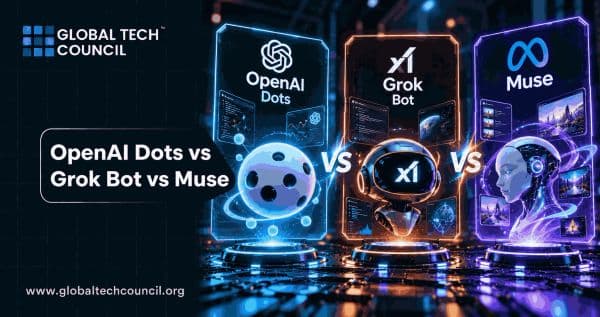
OpenAI Dots vs Grok Bot vs Muse
Compare OpenAI Dots, Grok Bot, and Meta Muse to understand how these persistent AI agents differ in cloud computer use, connected apps, automation, memory, and long-running workflows.
AI & ML
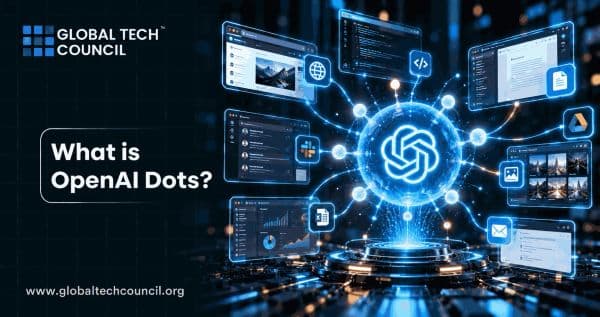
What Is OpenAI Dots?
Learn what OpenAI Dots are, how these always-on AI agents work, and how they use GPT-6 Astra, cloud computers, connected apps, and persistent context to manage ongoing tasks.
Trending Articles
The Role of Blockchain in Ethical AI Development
How blockchain technology is being used to promote transparency and accountability in artificial intelligence systems.
AWS Career Roadmap
A step-by-step guide to building a successful career in Amazon Web Services cloud computing.
Top 5 DeFi Platforms
Explore the leading decentralized finance platforms and what makes each one unique in the evolving DeFi landscape.