

AI in Marketing
 Tosh Marketing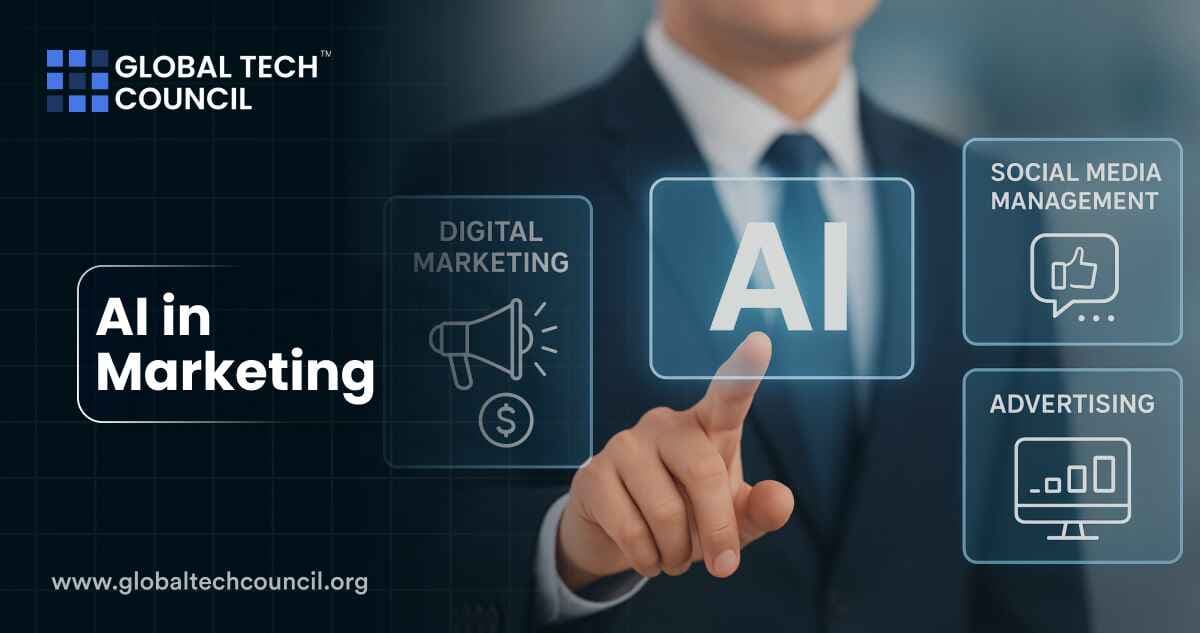
Artificial Intelligence has redefined the way businesses approach marketing in the digital era. With the ability to analyze vast datasets, automate repetitive tasks, and deliver personalized experiences, AI has become a core driver of marketing innovation. Organizations across industries are leveraging AI to enhance customer engagement, optimize campaigns, and improve overall efficiency.
As the demand for AI driven marketing solutions grows, professionals are focusing on building expertise through certifications such as the AI Expert certification and the Agentic AI certification. These programs provide the knowledge required to understand and implement advanced AI technologies in marketing.

This article provides a detailed overview of AI in marketing, covering its core concepts, real world applications, benefits, challenges, and future trends.
Understanding the Concept of AI in Marketing
AI in marketing refers to the integration of intelligent systems that can process data, learn patterns, and make decisions to enhance marketing strategies. These systems rely on technologies such as machine learning, natural language processing, and predictive analytics.
Unlike traditional marketing tools, AI systems continuously evolve by learning from data and user interactions. This allows marketers to create highly targeted campaigns, predict customer behavior, and deliver personalized content at scale.
AI is now widely used across various marketing functions, including customer segmentation, campaign optimization, content creation, and performance analysis.
Factors Driving AI Adoption in Marketing
The rapid adoption of AI in marketing is influenced by several key factors:
Increasing demand for personalized customer experiences
Growth of digital platforms and data sources
Need for real time insights and decision making
Rising competition in the digital marketplace
Automation of repetitive and time consuming tasks
AI enables businesses to address these challenges by improving efficiency and delivering data driven results.
Key Technologies Powering AI Marketing
Machine Learning and Predictive Models
Machine learning allows systems to analyze data, identify patterns, and predict future outcomes. It is widely used for customer segmentation, recommendation engines, and campaign optimization.
Natural Language Processing and Content Intelligence
Natural language processing enables AI to understand and generate human language. It powers chatbots, voice assistants, and automated content creation tools.
Data Analytics and Insights
AI driven analytics tools process large volumes of data to generate actionable insights. These insights help marketers make informed decisions and improve strategies.
Visual Recognition and Media Analysis
Computer vision enables AI to analyze images and videos. It is used for brand monitoring, visual search, and content moderation.
Practical Applications of AI in Marketing
Personalized Customer Engagement
AI enables businesses to deliver tailored experiences by analyzing customer behavior, preferences, and interactions.
For example, streaming platforms recommend content based on viewing history, while ecommerce platforms suggest products based on past purchases. This level of personalization increases engagement and customer loyalty.
Automated Content Generation
AI powered tools can generate content for blogs, social media, and advertisements. These tools help maintain consistency and reduce the time required for content creation.
Dynamic content systems use AI to personalize messages for individual users, improving conversion rates.
Conversational Marketing and Chatbots
AI driven chatbots provide instant responses to customer queries and enhance user experience. They are available around the clock and can handle multiple interactions simultaneously.
Conversational marketing uses AI to engage customers in real time, guiding them through the buying journey.
Predictive Customer Analytics
AI analyzes historical and real time data to predict customer behavior. This helps businesses anticipate needs, identify potential customers, and reduce churn.
Predictive analytics also improves lead scoring, allowing marketers to focus on high value prospects.
Intelligent Advertising and Media Buying
AI automates advertising processes by analyzing user behavior and optimizing ad placement. Programmatic advertising ensures that ads are shown to the right audience at the right time.
This improves targeting accuracy and maximizes return on investment.
Social Media Intelligence
AI tools analyze social media data to identify trends, monitor brand sentiment, and optimize content strategies. They also determine the best times to post content for maximum engagement.
Advantages of AI in Marketing
Enhanced Personalization
AI enables businesses to deliver highly customized experiences that improve customer satisfaction.
Increased Efficiency
Automation reduces manual work and speeds up marketing processes.
Improved Decision Making
AI provides data driven insights that help marketers make informed decisions.
Higher Return on Investment
Optimized campaigns lead to better results and increased profitability.
Better Customer Engagement
AI enables meaningful interactions that strengthen customer relationships.
Challenges in Implementing AI in Marketing
Despite its benefits, AI adoption in marketing comes with several challenges:
Data Privacy and Security
Organizations must ensure that customer data is handled responsibly and securely.
High Initial Investment
Implementing AI technologies can require significant resources.
Lack of Skilled Professionals
There is a growing demand for professionals with expertise in AI and data analytics.
Dependence on Data Quality
AI systems rely on accurate and high quality data for effective performance.
Addressing these challenges is essential for successful implementation.
Role of Technical Expertise in AI Marketing
The development and implementation of AI solutions require skilled professionals. Developers and engineers play a crucial role in building intelligent systems.
Certifications like the AI Powered coding expert certification help individuals gain practical experience in AI development.
Additionally, gaining expertise in advanced technologies through platforms like deeptech certification enables professionals to stay competitive in this rapidly evolving field.
AI in Marketing Careers and Skill Development
AI is creating new career opportunities in the marketing domain. Professionals with AI expertise are highly sought after.
Key roles include:
AI marketing specialist
Data analyst
Marketing automation expert
Content strategist
Customer experience manager
To build expertise, individuals can pursue programs such as the AI powered digital marketing expert certification, which focuses on AI driven marketing strategies.
Emerging Trends in AI Marketing
The future of AI in marketing is shaped by continuous innovation and technological advancements.
Hyper Personalization
AI will deliver more precise and individualized customer experiences.
Voice and Visual Search
Search technologies will become more interactive and user friendly.
Automated Content Creation
AI will generate high quality content at scale.
Predictive Customer Journeys
AI will optimize every stage of the customer journey.
Autonomous Marketing Systems
Agentic AI will enable systems to make independent decisions and manage campaigns.
AI & Technology
As artificial intelligence continues to transform education, students are getting more opportunities to explore technology beyond traditional classroom learning. A Tech Olympiad can help students develop their understanding of AI, logical reasoning, problem-solving, and other technology skills through structured competition.
Best Practices for Using AI in Marketing
To maximize the benefits of AI, businesses should adopt a strategic approach:
Define clear marketing objectives
Invest in high quality data and infrastructure
Select appropriate AI tools and platforms
Train teams to use AI effectively
Continuously monitor and optimize performance
A well planned strategy ensures successful AI implementation.
Conclusion
AI is transforming marketing by enabling personalization, automation, and data driven decision making. Its applications across customer engagement, content creation, and campaign optimization demonstrate its immense potential.
As AI continues to evolve, businesses must adapt to stay competitive. Professionals who invest in skill development and certifications will play a key role in shaping the future of marketing.
The integration of AI is not just enhancing marketing strategies but redefining how businesses connect with their audiences.
Frequently Asked Questions
1. What is AI in marketing?
AI in marketing refers to using artificial intelligence technologies to analyze data, automate marketing tasks, understand customer behavior, personalize experiences, and improve campaign performance. It can support activities across SEO, content marketing, advertising, email marketing, social media, customer segmentation, and analytics.
2. How is AI used in marketing?
AI can be used to:
Analyze customer data
Generate and optimize content
Personalize marketing messages
Identify audience segments
Automate email campaigns
Optimize advertising
Predict customer behavior
Analyze competitors
Improve customer support
Forecast marketing performance
3. How can AI improve digital marketing?
AI can help marketers process large amounts of information faster and identify patterns that may be difficult to detect manually. It can also automate repetitive tasks, allowing marketers to spend more time on strategy, creativity, experimentation, and decision-making.
4. Can AI create marketing content?
Yes. Generative AI can help marketers create blog outlines, social media posts, ad copy, email drafts, product descriptions, video scripts, and other marketing materials.
However, human review remains important to ensure that content is accurate, original, useful, brand-appropriate, and aligned with search and audience expectations.
5. How does AI help with SEO?
AI can support SEO through keyword research, search-intent analysis, content optimization, topic clustering, competitor analysis, internal-link recommendations, technical audits, and performance analysis.
AI should complement SEO expertise rather than replace fundamental SEO practices such as creating helpful content, maintaining a technically sound website, and understanding search intent.
6. Can AI help with keyword research?
Yes. AI can analyze search terms and group them according to search intent, topic, relevance, and potential content opportunities.
For example, marketers can use AI to organize keywords into informational, commercial, navigational, and transactional categories and develop content around relevant topic clusters.
7. How does AI improve personalized marketing?
AI can analyze customer interactions, preferences, purchase history, browsing behavior, and other permitted data to help marketers deliver more relevant experiences.
For example, an ecommerce business might use AI to recommend products based on a customer's previous interactions.
8. Can AI improve digital advertising campaigns?
Yes. AI can assist with audience analysis, creative testing, bidding optimization, campaign forecasting, budget allocation, and performance analysis.
Many major advertising platforms already incorporate machine-learning systems into campaign optimization. Marketers still need to establish appropriate objectives, tracking, budgets, creative strategy, and safeguards.
9. How is AI used in social media marketing?
AI can help marketers with:
Content ideation
Caption generation
Social listening
Audience analysis
Sentiment analysis
Content scheduling
Creative development
Trend identification
Performance reporting
Human oversight is particularly important when AI-generated content represents a brand publicly.
10. Can AI automate email marketing?
Yes. AI can help marketers automate audience segmentation, subject-line testing, content personalization, send-time optimization, customer journeys, and campaign analysis.
For example, different email messages can be created for new subscribers, returning customers, and customers who have previously purchased a particular product.
11. How does AI help marketers understand customers?
AI can process customer data and identify patterns in purchases, website interactions, campaign responses, support conversations, and engagement behavior.
These insights can help businesses understand customer needs and improve targeting, messaging, products, and customer experiences.
12. Can AI predict customer behavior?
AI and machine-learning models can estimate the likelihood of outcomes such as customer churn, conversion, repeat purchases, or engagement when sufficient relevant data is available.
These predictions are probabilities, not guarantees, and their quality depends heavily on the data and methodology used.
13. How can AI help with lead generation?
AI can help identify and prioritize potential customers by analyzing available lead information and behavioral signals. It can also automate parts of lead qualification, chatbot interactions, follow-ups, and CRM workflows.
This can help sales and marketing teams focus their attention on higher-priority opportunities.
14. Can AI improve marketing analytics?
Yes. AI can help analyze marketing data from multiple sources and identify conversion patterns, campaign trends, customer segments, anomalies, and potential performance drivers.
Marketers can use these insights to determine which campaigns and channels deserve further investment.
15. What are the benefits of AI in marketing?
Major benefits include:
Greater automation
Faster data analysis
More personalized campaigns
Improved productivity
Faster content creation
Better audience segmentation
More efficient experimentation
Potentially improved campaign optimization
Faster decision support
The actual results depend on implementation, data quality, marketing strategy, and human oversight.
16. What are the disadvantages of using AI in marketing?
Potential challenges include:
Inaccurate AI-generated information
Generic or repetitive content
Privacy concerns
Bias in models or datasets
Over-automation
Brand-safety risks
Copyright and intellectual-property concerns
Dependence on third-party AI platforms
Lack of human creativity or judgment
A strong AI marketing strategy therefore needs governance, quality control, privacy practices, and human review.
17. Will AI replace marketing professionals?
AI is more likely to change marketing roles than eliminate the need for marketers entirely.
Tasks involving repetitive analysis, drafting, reporting, and automation may increasingly be handled by AI. At the same time, skills such as strategy, creativity, customer understanding, leadership, experimentation, and critical thinking remain highly valuable.
18. How can small businesses use AI for marketing?
Small businesses can start with relatively practical applications such as:
Creating content ideas.
Drafting social media posts.
Analyzing customer feedback.
Automating basic email workflows.
Researching audiences and competitors.
Improving website content.
Generating marketing reports.
Automating repetitive administrative tasks.
The best starting point is usually a specific marketing problem, rather than adopting AI simply because it is popular.
19. What skills do marketers need to work with AI?
Modern marketers can benefit from developing skills in:
AI prompting and workflow design
Data analysis
SEO
Content strategy
Marketing automation
Performance marketing
Customer research
Analytics and measurement
AI ethics and governance
Critical evaluation of AI-generated output
The most valuable combination is often marketing expertise + data literacy + AI proficiency.
20. What is the future of AI in marketing?
The future of AI marketing is likely to move beyond simple content generation toward AI agents, predictive analytics, personalized customer journeys, automated campaign optimization, multimodal content creation, conversational marketing, and increasingly automated marketing workflows.
The strongest marketers will likely use AI as a productivity and decision-support layer while retaining human control over strategy, creativity, brand positioning, ethics, and customer relationships.
Related Articles
View All
AI & ML
Meet Google Playground: Create Games With AI
Meet Google Playground, Google's new experimental platform that lets you create, play, and share custom games with text prompts. Learn how it works, basic game design tips, a sample session, safety and sharing features, Unity Spark plans, and limits.
AI & ML
OpenAI Dots vs Grok Bot vs Muse
Compare OpenAI Dots, Grok Bot, and Meta Muse to understand how these persistent AI agents differ in cloud computer use, connected apps, automation, memory, and long-running workflows.
AI & ML
What Is OpenAI Dots?
Learn what OpenAI Dots are, how these always-on AI agents work, and how they use GPT-6 Astra, cloud computers, connected apps, and persistent context to manage ongoing tasks.
Trending Articles
The Role of Blockchain in Ethical AI Development
How blockchain technology is being used to promote transparency and accountability in artificial intelligence systems.
AWS Career Roadmap
A step-by-step guide to building a successful career in Amazon Web Services cloud computing.
Top 5 DeFi Platforms
Explore the leading decentralized finance platforms and what makes each one unique in the evolving DeFi landscape.