

Research & Knowledge Hub
2,244+ research articles, technical guides, and in-depth analyses authored by council members and industry experts.
Articles - Page 125
2,244 articles

AutoML Libraries for Python, you should know.
AutoML provides tools that automatically discover good machine learning model pipelines for a particular dataset without much user intervention. It is ideal for machine learning practitioners or domain experts new to machine learning to get quick and good results for a predictive modeling task.…

Comprehensive Guide to help you become an Ethical Hacker
Ethical Hacking is a perfect career choice for those interested in communication, IT security, and problem-solving. This article aims at serving as a guide to become an ethical hacker. It includes detailed information about the field, an ethical hacker’s role, some of the skills required, and…
Is Data Science for non-tech people?
Who are non-technical people? Those without an engineering degree? The journey for these people to become a data scientist is not very different from the technical ones. To be in the Data Science Industry, one needs not to be a top-notch engineer with in-depth knowledge of complex topics but should…
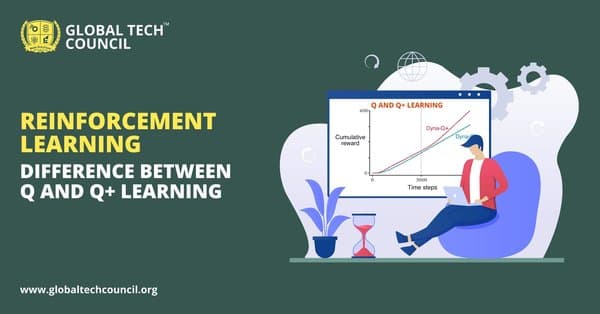
Reinforcement Learning: Difference between Q and Deep Q learning
Artificial Intelligence has an estimated market of 7.35 billion US dollars and is growing by leaps and bounds. As predicted by McKinsey, AI, including reinforcement learning and deep learning techniques, can create $3.5 to 5.8 trillion dollars across nine businesses in 19 industries. Machine…
Big Data Science’s Reliance on Qualified Data Engineers
A distinct discipline is emerging as the area of data science matures: data engineering. The importance of data engineers compared to data scientists is acknowledged by tech giants, including Facebook, Amazon, and Google. That’s why they recruit candidates with expertise such as data…
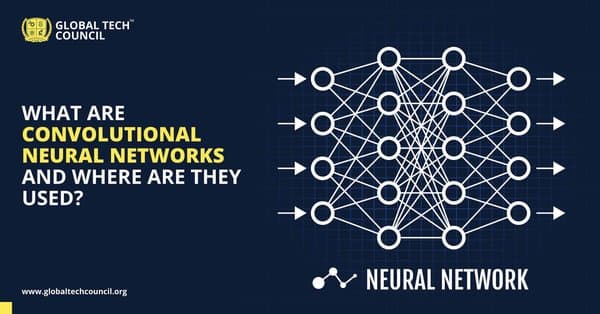
Convolutional Neural Network (CNN)
In today’s instant image sharing era, it’s essential to get the tech ready to talk the language of images. While it is comfortable for our brains to interpret what an image represents and refers to, it is a complex challenge to get a computer to do the same. Computers interpret the…
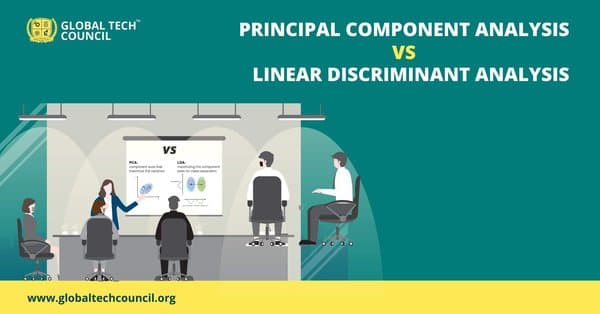
Principal Component Analysis vs Linear Discriminant Analysis
In machine learning, reducing dimensionality is a critical approach. Overfitting of the learning model may result in a large number of features available in the dataset. There are two standard dimensionality reduction techniques used by machine learning experts to evaluate the collection of…

K-Means Clustering vs Hierarchical Clustering
A form of exploratory data analysis in which observations are divided into different groups with standard features is known as clustering analysis. The purpose of classification or cluster analysis is to ensure that different groups must have different observations as possible. The two main types…
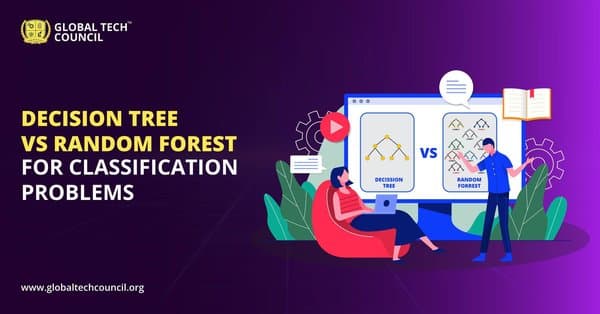
Decision Tree vs. Random Forest for Classification Problems
Decision trees are part of the Supervised Classification Algorithm family. On classification issues, they work very well, the decisional route is reasonably easy to understand, and the algorithm is fast and straightforward. Random Forest is the ensemble variant of Decision Trees. Random forest is a…
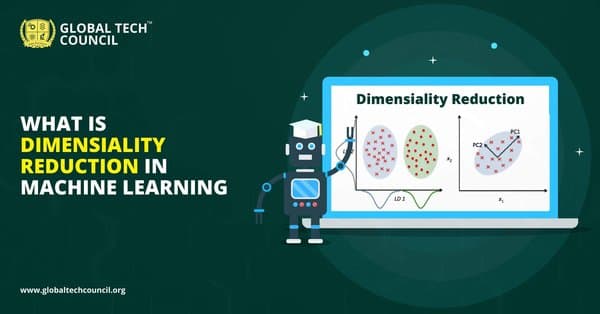
What is Dimensionality Reduction in Machine Learning?
Machine learning is nothing but a research field that allows computers without any specific programming to “learn” like humans. High-dimensionality statistics and dimensionality reduction techniques that have been used for data visualization. These techniques are applied in machine…
How is Naive Bayes used in Machine Learning?
Naïve Bayes is a surprisingly powerful yet simple algorithm for predictive modeling. It is a machine learning model that can handle large volumes of data, including millions of data records. Naïve Bayes is the recommended approach for Natural Language Processing tasks such as sentiment analysis as…

Logistic Regression vs K-Nearest Neighbours vs Support Vector Machine
Machine learning is a scientific technique where computers learn how to solve a problem without directly programming them. The ML race is currently led by deep learning fuelled by improved algorithms, computing power and big data. The classical algorithms of ML still have a firm place in the field.…